Who Is Uranus in Greek Mythology?
Uranus, also spelled Ouranos, is one of the oldest and most mysterious figures in Greek mythology. When people ask, “who is Uranus in Greek mythology?” the simple answer is that Uranus is the primordial god of the sky. He represents the heavens themselves and is one of the first beings to exist in the Greek creation story.
Unlike later Olympian gods such as Zeus, Apollo, or Athena, Uranus is not usually described as having many adventures or personal stories. Instead, he plays a crucial role in the beginning of the cosmos. His story explains the origins of the Titans, the rise of Cronus, and the long chain of divine conflict that eventually leads to the rule of Zeus.
Uranus as the Primordial Sky God
In Greek mythology, Uranus is a primordial deity, meaning he belongs to the earliest generation of gods. These beings are more like living forces of nature than human-like characters. Uranus is the sky, just as Gaia is the earth.
According to the poet Hesiod’s Theogony, one of the most important ancient sources for Greek creation myths, Gaia came into being near the beginning of creation. She then gave birth to Uranus, the starry sky, to cover her completely. Uranus became both Gaia’s son and her consort, a detail that reflects the symbolic union between earth and sky.
Together, Gaia and Uranus produced many powerful children who would shape the future of the mythological world.
The Children of Uranus and Gaia
Uranus and Gaia were the parents of several important groups of divine beings. Their children included:
- The Titans: Twelve powerful gods who came before the Olympians, including Cronus, Rhea, Oceanus, and Themis.
- The Cyclopes: Giant beings with a single eye, known for their strength and skill as craftsmen.
- The Hecatoncheires: Fearsome giants with one hundred hands and fifty heads, known for their immense power.
The Titans would become especially important in later myths. Cronus, the youngest Titan, would overthrow Uranus and become ruler of the cosmos before being overthrown by his own son, Zeus.
Why Did Uranus Imprison His Children?
One of the darkest parts of Uranus’s story concerns his treatment of his children. According to Hesiod, Uranus hated some of his offspring, especially the Cyclopes and the Hecatoncheires, because they were monstrous and powerful. Instead of allowing them to live freely, he forced them back into Gaia’s womb, deep within the earth.
This caused Gaia great pain and anger. She could not bear the suffering any longer, so she created a sharp sickle and called upon her Titan children to help her punish Uranus.
Most of the Titans were afraid to act against their father. Only Cronus, the youngest and boldest, agreed to carry out Gaia’s plan.
The Overthrow of Uranus
Gaia gave Cronus the sickle and told him what to do. When Uranus came to lie with Gaia, Cronus ambushed him and castrated him. This violent act separated sky from earth, creating space between Uranus and Gaia.
The overthrow of Uranus is one of the most important moments in Greek mythology. It marks the first major conflict between generations of gods. This pattern repeats later when Cronus is overthrown by Zeus.
After Uranus was defeated, Cronus became the new ruler of the cosmos. However, the violence of his rise to power foreshadowed his own downfall. Just as he had attacked his father, Cronus would later fear that one of his children would do the same to him.
The Birth of Aphrodite
The story of Uranus also connects to the birth of Aphrodite, the goddess of love and beauty. In Hesiod’s version of the myth, when Cronus threw the severed parts of Uranus into the sea, foam formed around them. From this sea foam, Aphrodite emerged.
This is why Aphrodite is sometimes called “foam-born.” Her birth is unusual because she does not come from a mother in the typical way. Instead, she arises from a powerful and symbolic moment involving sky, sea, violence, and creation.
This version of Aphrodite’s birth differs from other traditions, where she is described as the daughter of Zeus and Dione.
Uranus and the Meaning of His Name
The name Uranus comes from the Greek Ouranos, meaning “sky” or “heaven.” In ancient Greek thought, the sky was not simply empty space above the earth. It was a divine presence, a vast and powerful being who surrounded the world.
Uranus represents the starry heavens, the dome of the sky, and the first cosmic order. Because he is so ancient, he is more abstract than many later gods. He does not have temples, cults, or myths in the same way Zeus or Athena do. His importance lies in his place within the structure of the universe and the genealogy of the gods.
Uranus, Cronus, and Zeus
The story of Uranus begins a cycle of divine succession. This cycle is central to Greek mythology:
- Uranus rules first as the sky god and consort of Gaia.
- Cronus overthrows Uranus and becomes ruler of the Titans.
- Zeus overthrows Cronus and establishes the rule of the Olympian gods.
Each generation struggles against the one before it. This theme reflects ancient ideas about power, fear, rebellion, and the changing order of the world.
Uranus’s defeat also helps explain why Zeus’s rule is important. Zeus ends the cycle of violent succession by securing his authority and creating a more stable divine order among the Olympians.
Uranus in Roman Mythology
In Roman mythology, Uranus is usually identified with Caelus, the god of the sky. Like Uranus, Caelus is an ancient sky deity and the counterpart of the earth goddess Terra, who corresponds to Gaia.
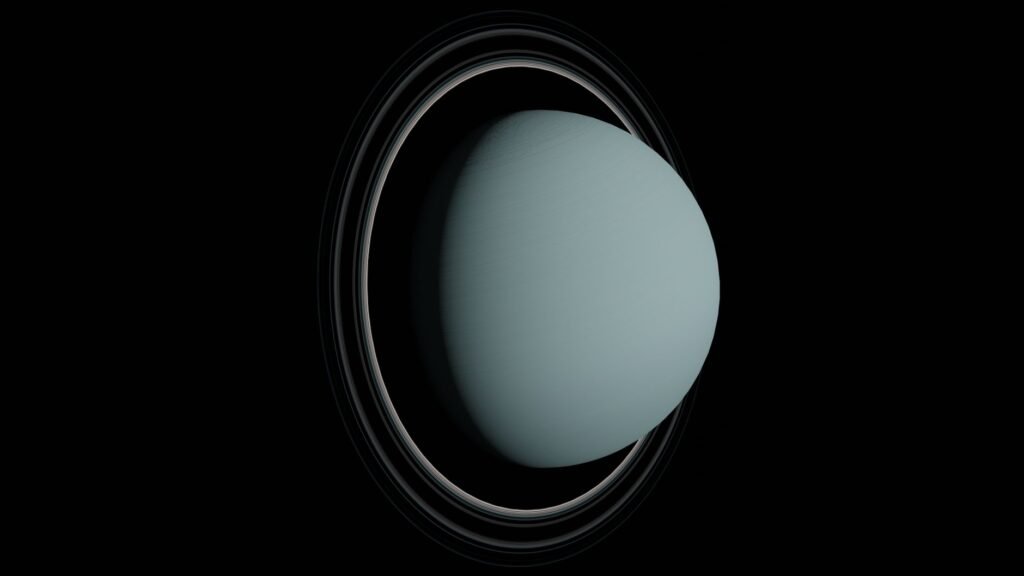
The planet Uranus, discovered in 1781, was named after this ancient sky god. This naming follows the tradition of naming planets after classical deities. Since Saturn is the Roman equivalent of Cronus and Jupiter is the Roman equivalent of Zeus, Uranus fits as the mythological father of Saturn and grandfather of Jupiter.
Why Uranus Matters in Greek Mythology
Uranus may not be as famous as Zeus, Poseidon, or Hades, but he is essential to the Greek mythological family tree. He is the sky itself, the partner of Gaia, the father of the Titans, and the ancestor of the Olympian gods.
His story explains how the first ruling power of the cosmos was overthrown and how conflict between divine generations began. It also connects to major figures such as Cronus, Zeus, and Aphrodite.
So, who is Uranus in Greek mythology? He is the primordial god of the sky, the first great ruler of the heavens, and a key figure in the dramatic origin story of the Greek gods.

Orin Vale has spent the better part of two decades tracing the threads that connect the world’s oldest stories — from the halls of Asgard to the banks of the Nile, from Olympus to the jungles of the Maya. What began as a childhood fascination with flood myths and trickster gods grew into years of independent study across comparative mythology and ancient religion, always chasing the same question: what did these stories mean to the people who first told them? Orin writes for readers who want more than trivia — the ones looking for the beliefs, fears, and truths that myths were built to carry.