In the epic narratives of the Trojan War, wisdom often proved as potent as martial prowess in shaping the course of events. Who was the wise sage of the Trojan War? The answer is not singular, as both the Greek and Trojan camps boasted figures renowned for their counsel. However, among the Greeks, Nestor, the aged king of Pylos, stands as the definitive archetype of the wise elder. His counterpart among the Trojans was Antenor, a counselor who advocated for peace and reason, and the seer Helenus, whose prophetic knowledge ultimately sealed Troy’s fate. These figures collectively embody the strategic and moral wisdom that underpinned the epic conflict, demonstrating that intelligence and foresight were as critical as strength and courage.
Nestor: The Greek Sage
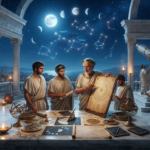
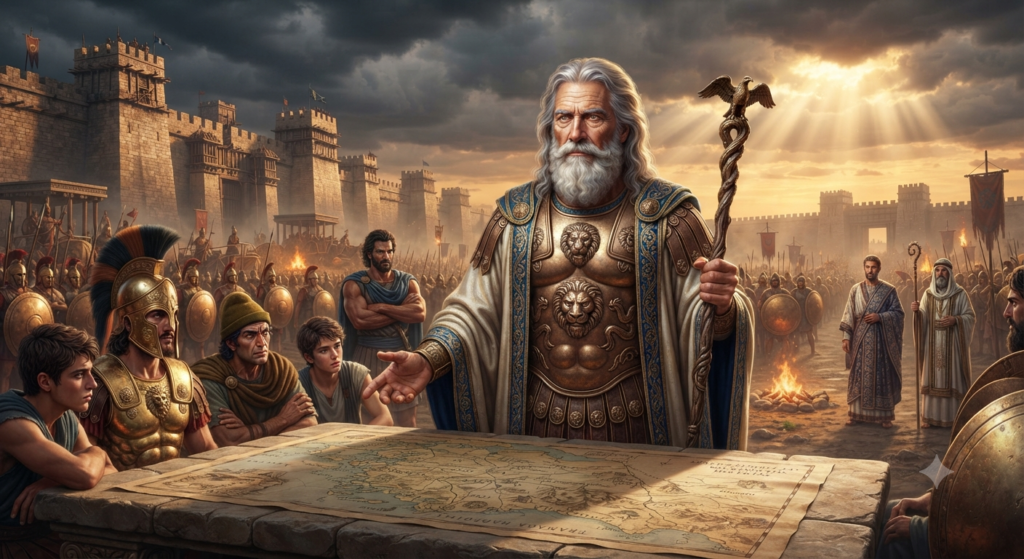
Nestor, the king of Pylos, is the preeminent wise sage among the Achaeans in the Homeric epics. He was the oldest and most experienced of the Greek leaders at Troy, having lived through three generations of mortal men . His advanced age, however, was not a liability but a source of immense authority, as his long life had granted him a wealth of experience and knowledge . In the Iliad, Nestor serves as a voice of reason and a repository of memory, often recalling his youthful exploits to inspire and guide the younger warriors, though he was too old to engage in direct combat .
Nestor’s wisdom was most prominently displayed in his role as a mediator. He famously attempted to reconcile the quarrel between Agamemnon and Achilles in Book I of the Iliad, a dispute that set in motion the tragic events of the epic . Later, he advised Agamemnon to send an embassy to Achilles, bearing gifts in an effort to persuade the great warrior to rejoin the battle . His strategic counsel also extended to Patroclus, Achilles’ companion, whom Nestor advised to either persuade Achilles to fight or, failing that, to don Achilles’ armor and lead the Myrmidons into battle . This counsel, while ultimately leading to Patroclus’ death, demonstrated Nestor’s pragmatic approach to warfare, using the resources at hand to shift the tide of battle. His wisdom was so recognized that his name became a byword for a venerable and wise old man .
The Trojan Wise Men: Antenor and Helenus
On the Trojan side, the figure of the wise counselor is embodied by Antenor, an elder of the city. Antenor was a trusted advisor to King Priam and was known for his prudence and his advocacy for peace . In the Iliad, he is shown advising his fellow Trojans to return Helen to the Greeks to avoid the catastrophic war, but his counsel was ignored by Paris and others . He also argued for the safe passage of the Greek envoys Menelaus and Odysseus when others in the Trojan council sought to harm them . This consistent pattern of wise but unheeded advice marks Antenor as a tragic figure, a voice of reason in a city consumed by pride and conflict.
Adding a different dimension to Trojan wisdom was Helenus, a son of Priam and a renowned seer. Helenus was described as the “cleverest man in the Trojan army,” a counterpart to the cunning Odysseus . Unlike Antenor’s political sagacity, Helenus’s wisdom was prophetic. He was able to interpret the will of the gods and the oracles that protected Troy . After Paris’s death, a quarrel with his brother Deiphobus over Helen led Helenus to leave the city, where he was captured by Odysseus . Forced to reveal the secrets of Troy’s downfall, Helenus prophesied that the Greeks would need the bow of Heracles, the presence of Neoptolemus (Achilles’ son), and the theft of the Palladium, a sacred statue of Athena, to conquer the city . His knowledge, therefore, was not merely advisory but prescriptive, dictating the essential conditions for victory.
Frequently Asked Questions About Who was the wise sage of the Trojan War?
Who was the wisest Greek at Troy?
Nestor, the king of Pylos, is widely regarded as the wisest of the Greeks at Troy. He served as an elderly counselor whose advice was sought by leaders like Agamemnon and Achilles, and his name has become synonymous with wisdom .
Who was the wise Trojan counselor?
Antenor was the chief wise counselor among the Trojans. He advised King Priam to return Helen to the Greeks to prevent the war. His wisdom, however, was often ignored by the Trojan royal family .
What was the role of the seer Helenus?
Helenus was a Trojan prince and a powerful seer. His prophetic wisdom was crucial, as he knew the oracles that protected Troy. After being captured, he revealed to the Greeks the conditions necessary to conquer the city .
Did Nestor fight in the Trojan War?
Nestor was too old to engage in direct combat during the Trojan War, but he commanded the Pylian army and served as a key advisor to the Greek commanders. He was a respected figure whose counsel was highly valued by the younger warriors .
Why was Antenor considered a traitor?
In later traditions, Antenor was depicted as a traitor who opened the gates of Troy to the Greeks. Earlier sources, however, present him merely as an advocate for peace, and his house was famously spared during the sack of the city .
Conclusion
Who was the wise sage of the Trojan War? The answer reveals that wisdom during this legendary conflict was not the province of a single individual but was distributed across various figures on both sides of the conflict. The Greek sage Nestor represented the wisdom of experience and prudent counsel, acting as the elder statesman who guided the younger heroes. Among the Trojans, Antenor embodied a political wisdom that advocated for peace, while Helenus possessed a divine wisdom that foresaw the future. Together, they demonstrate that the Trojan War was as much a battle of wits and foresight as it was of swords and shields. The legacy of these wise figures endures, reminding us that in the face of overwhelming conflict, the voices of reason, experience, and prophecy remain essential, even if their advice is not always heeded.

Orin Vale has spent the better part of two decades tracing the threads that connect the world’s oldest stories — from the halls of Asgard to the banks of the Nile, from Olympus to the jungles of the Maya. What began as a childhood fascination with flood myths and trickster gods grew into years of independent study across comparative mythology and ancient religion, always chasing the same question: what did these stories mean to the people who first told them? Orin writes for readers who want more than trivia — the ones looking for the beliefs, fears, and truths that myths were built to carry.