Among the many terrifying figures found in Greek mythology, few possess a story as tragic and psychologically complex as Lamia. Unlike monsters that were born as creatures of chaos or destruction, Lamia was once described as a beautiful woman whose life was irrevocably changed by the jealousy of the gods. Her myth combines themes of love, divine punishment, grief, revenge, and transformation, making her one of the most compelling characters in ancient Greek legend. For centuries, her name has been associated with fear, yet her story begins not with evil, but with profound loss.
The question “Who is Lamia in Greek mythology?” often leads to conflicting descriptions because her legend evolved over hundreds of years. Early Greek writers portrayed Lamia as a Libyan queen of extraordinary beauty who became the lover of Zeus, the king of the Olympian gods. Later traditions gradually transformed her into a child-devouring monster, while medieval and Renaissance folklore introduced new characteristics that made her resemble a vampire, a serpent, or a seductive demon. These changing portrayals reflect how myths adapt to different cultures and historical periods while preserving their central themes.
Lamia’s legend also reveals much about the worldview of the ancient Greeks. Their myths were not merely entertaining stories but narratives used to explain human emotions, natural events, and moral dilemmas. Through Lamia, Greek mythology explores the devastating effects of jealousy, the abuse of divine power, and the psychological consequences of unbearable grief. Her transformation into a monster serves as a powerful metaphor for how suffering can reshape an individual’s identity when consumed by despair and vengeance.
Today, Lamia continues to fascinate historians, classicists, writers, and mythology enthusiasts alike. She appears in novels, fantasy literature, films, role-playing games, and modern retellings that reinterpret her legend for new audiences. This article examines who Lamia is in Greek mythology, tracing her origins, the tragedy that transformed her into one of Greece’s most feared monsters, the symbolism behind her myth, and the reasons her story continues to endure more than two thousand years after it was first told.
Who Is Lamia in Greek Mythology?
The answer to “Who is Lamia in Greek mythology?” is more complex than simply describing her as a monster. In the earliest Greek traditions, Lamia was not born as a terrifying creature but as a remarkably beautiful woman, often identified as the Queen of Libya and, in many ancient accounts, the daughter of Poseidon, the god of the sea. She was admired for her extraordinary beauty and noble status, qualities that eventually attracted the attention of Zeus, the ruler of the Olympian gods. Their relationship became the catalyst for one of the most tragic transformations in Greek mythology.
Lamia’s story occupies a unique place among the myths of ancient Greece because it blurs the line between victim and villain. Unlike creatures such as Medusa, Scylla, or the Minotaur, whose monstrous forms are central to their identities, Lamia begins her story as a mortal woman. Only after suffering immense personal tragedy does she become the fearsome being remembered in later legends. This progression makes her mythology deeply psychological, emphasizing emotional suffering as the source of her transformation rather than inherent evil.
Ancient authors describe Lamia differently depending on the period in which they wrote. Early Greek traditions emphasize her royal lineage and tragic downfall, while later writers increasingly portray her as a supernatural monster who preyed upon children and wandered the night in search of victims. Over time, her appearance also evolved. Some accounts describe her as a beautiful woman capable of seducing unsuspecting travelers, whereas others depict her as a terrifying hybrid with the upper body of a woman and the tail of a serpent. These variations demonstrate how Greek mythology developed over centuries, with each generation reshaping Lamia’s image to reflect its own cultural fears and beliefs.
Despite these changing portrayals, Lamia’s defining characteristic has always been the tragedy that lies at the heart of her legend. She is not remembered solely because she became a monster, but because her monstrous nature emerged from unbearable grief, divine punishment, and irreversible loss. This emotional depth distinguishes her from many other mythological creatures and explains why scholars continue to study her story as one of the most compelling examples of transformation in classical mythology. Understanding who Lamia is in Greek mythology therefore requires looking beyond her frightening reputation and recognizing the profoundly human tragedy that shaped her destiny.
The Origin of Lamia
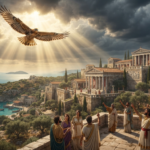
The origins of Lamia vary across ancient sources, reflecting the fluid nature of Greek mythology, where different regions and authors often preserved distinct versions of the same legend. The most widely accepted tradition identifies Lamia as the Queen of Libya, a land that occupied a fascinating place in the Greek imagination. To the Greeks, Libya was both a real geographical region in North Africa and a distant, mysterious land where extraordinary creatures and ancient rulers were believed to exist. This setting added an aura of exoticism and grandeur to Lamia long before she became associated with fear and horror.
Many classical writers also describe Lamia as the daughter of Poseidon, the powerful god of the sea. If this lineage is accepted, it places her among the descendants of one of the most influential Olympian deities, giving her a semi-divine heritage rather than portraying her as an ordinary mortal. Although ancient texts do not always agree on her genealogy, this version reinforces her elevated status within Greek mythology and helps explain why Zeus, the king of the gods, became captivated by her beauty. Whether fully mortal or partially divine, Lamia was consistently portrayed as a woman of exceptional elegance and noble birth.
Before tragedy entered her life, Lamia was celebrated for qualities that extended beyond physical beauty. Ancient traditions describe her as intelligent, graceful, and worthy of ruling a prosperous kingdom. She embodied ideals admired in Greek culture, including dignity, refinement, and royal authority. Unlike many mythological monsters who were born to inspire fear, Lamia initially represented order, civilization, and nobility. This stark contrast between her early life and her eventual fate is one of the reasons her story remains so emotionally compelling.
Lamia’s origins also reveal an important pattern found throughout Greek mythology: extraordinary beauty often attracted the attention of the gods, bringing not only admiration but also danger. Relationships between mortals—or semi-divine figures—and Olympian deities rarely ended peacefully. Instead, they frequently became the source of jealousy, conflict, and divine punishment. Lamia’s life follows this recurring theme, illustrating how a gift that appeared to be a blessing ultimately became the cause of unimaginable suffering. Her royal beginnings therefore serve as the foundation for one of mythology’s most tragic transformations, setting the stage for the events that would forever change her place in Greek legend.
The Tragic Love Story of Lamia and Zeus
The turning point in Lamia’s life began with her relationship with Zeus, the supreme ruler of the Olympian gods. Throughout Greek mythology, Zeus is well known for his numerous relationships with both goddesses and mortal women, many of which became the source of conflict, tragedy, and divine retribution. Lamia’s story follows this familiar pattern, yet it stands apart because of the devastating consequences that followed. What may have begun as a romance ultimately became one of the darkest tales in the Greek mythological tradition.
Ancient sources provide only limited details about the nature of their relationship, leaving later writers to interpret its meaning in different ways. Some portray Lamia as a willing lover who genuinely shared Zeus’s affection, while others suggest she became another victim of the king of the gods’ relentless desires. Regardless of the version, the outcome remains unchanged: Lamia became one of Zeus’s lovers, placing herself in direct opposition to Hera, the queen of the gods and Zeus’s notoriously jealous wife.
Hera occupies a central role in many Greek myths involving Zeus’s affairs. Rather than directing her anger toward Zeus, who repeatedly violated their marriage, she frequently punished the women involved and, in many cases, their children. This recurring theme appears in the stories of Io, Semele, Callisto, Alcmene, and several others. Lamia’s tragedy belongs to this broader pattern, demonstrating how the innocent—or at least the less powerful—often suffered the consequences of divine conflicts beyond their control.
For Lamia, her relationship with Zeus marked the beginning of a dramatic reversal of fortune. The queen who had once been admired for her beauty, status, and prosperity suddenly became the target of Hera’s relentless vengeance. Her privileged life, royal authority, and happiness could not protect her from the wrath of the Olympian queen. Instead, everything she valued would soon be taken from her, transforming what had once appeared to be a blessing into the source of unimaginable sorrow.
Beyond its narrative role, the relationship between Lamia and Zeus also reflects an important theme in Greek mythology: the dangerous imbalance of power between gods and mortals. Zeus possessed absolute authority, while those who attracted his attention often had little control over the consequences that followed. Lamia’s story illustrates how divine actions could dramatically alter human lives, reinforcing the Greek belief that fate, fortune, and suffering frequently lay beyond mortal control. This underlying tension gives her myth an enduring emotional depth that continues to resonate with readers today.
By establishing Lamia’s romance with Zeus before introducing her downfall, the myth creates a powerful contrast between love and loss, privilege and punishment, beauty and monstrosity. It is this contrast that makes Lamia’s legend so memorable. Rather than presenting evil as something inherent, the story suggests that extraordinary suffering can transform even the most admired individual into a figure defined by grief and vengeance. This tragic progression sets the stage for Hera’s curse, the event that forever changes Lamia’s destiny and cements her place among the most feared figures in Greek mythology.
Hera’s Curse
When Hera discovered Zeus’s relationship with Lamia, her response was swift and merciless. In Greek mythology, Hera is often portrayed as the guardian of marriage and the protector of its sacred bonds. Yet her anger rarely fell upon Zeus himself. Instead, it was frequently directed toward the women who became involved with him, whether willingly or not. Lamia became one of the most tragic victims of this recurring pattern, as Hera’s vengeance would destroy every source of happiness she possessed.
Ancient accounts differ in the details of the punishment, but they agree on its devastating consequences. In the most widespread version of the myth, Hera killed Lamia’s children, leaving the grieving queen consumed by unbearable sorrow. Other traditions suggest that Hera caused Lamia to lose her children through different supernatural means or drove them away forever. Although the circumstances vary, the emotional outcome remains the same: Lamia is left completely alone, stripped of the family that had given meaning to her life.
Hera’s punishment did not end with the loss of Lamia’s children. Several ancient and later traditions claim that the queen was cursed with eternal insomnia, making it impossible for her to close her eyes or find peace through sleep. Forced to remain awake day and night, Lamia was condemned to relive her grief without relief or escape. According to later legends, Zeus eventually took pity on her suffering and granted her the extraordinary ability to remove her own eyes whenever she wished, allowing her brief moments of rest before placing them back into their sockets. Although this detail appears primarily in later literary traditions, it became one of the most distinctive aspects of Lamia’s legend.
The curse also shattered Lamia’s mind. Overwhelmed by loss, exhaustion, and despair, her grief gradually transformed into obsession. Rather than accepting what had happened, she became consumed by the memory of her children and by an insatiable desire for revenge. Ancient storytellers used this transformation to illustrate how overwhelming sorrow can distort reason, compassion, and identity. Lamia did not become monstrous overnight; instead, her humanity slowly eroded beneath the weight of relentless suffering.
A useful analogy is to imagine a forest consumed by wildfire. The flames do not destroy everything in a single instant. They spread gradually, feeding on every tree they encounter until the landscape is no longer recognizable. Lamia’s grief functions in much the same way. The initial tragedy was the loss of her children, but the emotional devastation continued to grow, consuming her thoughts, her personality, and eventually her very nature. What remained was no longer the admired Queen of Libya but a woman whose identity had been reshaped by pain.
Hera’s curse serves as one of the clearest examples of the moral complexity found in Greek mythology. Rather than depicting good and evil as simple opposites, the myth explores how divine jealousy, unchecked vengeance, and profound trauma can create tragedy that extends far beyond the original offense. Lamia’s transformation into one of Greece’s most feared monsters begins not with malice but with loss. This psychological depth distinguishes her story from many other myths and prepares the reader for the next stage of her legend, when emotional suffering becomes physical transformation and the once-beautiful queen evolves into the terrifying creature remembered throughout classical antiquity.
Lamia’s Transformation into a Monster
Lamia’s transformation into a monster did not occur as a single dramatic event but as the culmination of prolonged grief, divine punishment, and psychological collapse. Unlike many creatures in Greek mythology who were born with monstrous forms, Lamia became a monster through suffering. This distinction is essential to understanding her legend. Her physical appearance eventually reflected the emotional devastation that had consumed her, illustrating one of the recurring themes in Greek myths: the body often mirrors the condition of the soul.
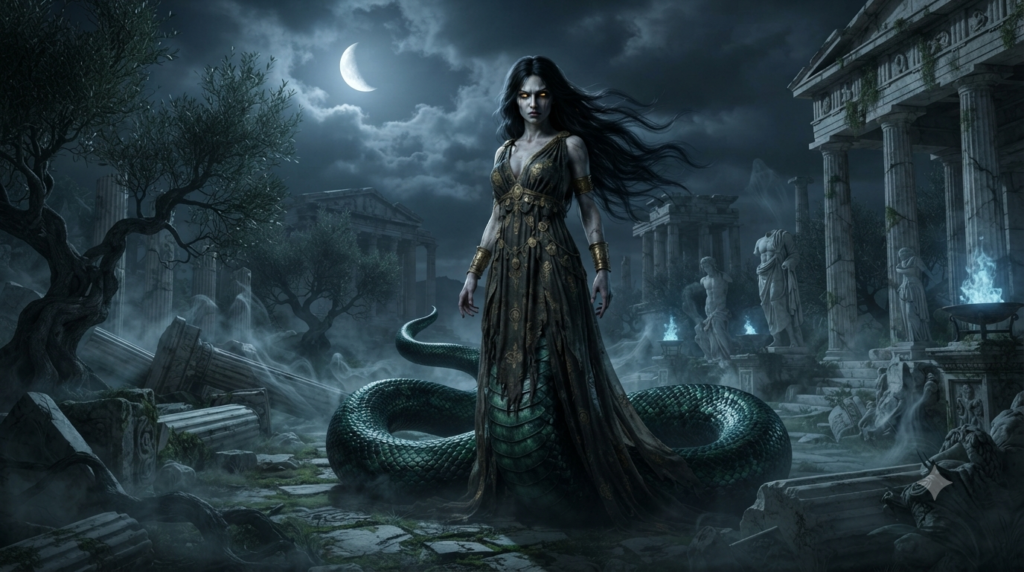
Ancient sources do not provide a single, definitive description of Lamia’s transformation. Some writers focus primarily on her descent into madness, portraying her as a grieving mother driven to insanity after losing her children. Others describe a more literal metamorphosis, in which her once-beautiful appearance gradually gave way to something unnatural and terrifying. Over time, later traditions expanded these descriptions, presenting Lamia as a hybrid creature with the upper body of a beautiful woman and the lower body of a massive serpent. This serpentine imagery became one of her most recognizable characteristics and influenced artistic depictions for centuries.
As Lamia’s legend evolved, so did her supernatural abilities. She was no longer portrayed as an ordinary queen but as a nocturnal predator capable of moving silently through the darkness. Many accounts describe her as possessing extraordinary beauty that allowed her to lure unsuspecting victims before revealing her monstrous nature. This dual appearance—seductive yet horrifying—became a defining feature of her mythology and inspired later legends involving vampires, succubi, and other female supernatural beings who concealed danger behind an attractive exterior.
Another unusual tradition associated with Lamia concerns her eyes. Several ancient authors, most notably Diodorus Siculus, mention that she possessed the remarkable ability to remove and replace her own eyes. According to later interpretations, this gift was connected to Hera’s curse of eternal wakefulness. By removing her eyes, Lamia could temporarily escape the torment of sleeplessness and find brief moments of rest. Although this detail is absent from the earliest versions of her myth, it became one of the most distinctive elements of her character and reinforced her reputation as a creature existing beyond the boundaries of ordinary human experience.
The transformation also carried profound symbolic meaning. Lamia’s monstrous form represents the destructive effects of unresolved grief and all-consuming vengeance. Rather than accepting her suffering, she allowed it to define her existence until compassion was replaced by bitterness and love gave way to hatred. In this sense, her physical metamorphosis is not merely a supernatural event but a visual expression of inner corruption. Greek mythology frequently uses such transformations to demonstrate that unchecked emotions can fundamentally alter a person’s character, gradually replacing their humanity with something darker and more destructive.
By the end of this transformation, Lamia was no longer remembered as the admired Queen of Libya. She had become one of the most feared figures in Greek mythology, a creature whose name inspired terror across generations. Yet beneath the monstrous exterior remained the memory of the woman she had once been. This tragic contrast between her noble origins and her horrifying destiny is what gives Lamia’s myth its enduring emotional power. She is not simply a monster to be feared but a cautionary figure whose story illustrates how overwhelming loss, when consumed by hatred instead of healing, can transform even the most extraordinary life into a legend of darkness.
What Did Lamia Look Like?
The appearance of Lamia changed significantly throughout the history of Greek mythology, making her one of the most visually fascinating figures among ancient monsters. Unlike creatures such as the Minotaur or Medusa, whose physical descriptions remained relatively consistent across traditions, Lamia’s image evolved as different cultures and authors reinterpreted her story. In her earliest representations, she was not described as a monster at all but as an exceptionally beautiful woman whose tragedy transformed her into a terrifying being.
In the oldest versions of her myth, Lamia’s beauty was one of her defining characteristics. As the Queen of Libya, she was portrayed as elegant, graceful, and captivating enough to attract the attention of Zeus himself. Her appearance represented the idealized beauty often associated with noble women in ancient Greek literature. This contrast between her original beauty and her later monstrous identity creates one of the central tensions of her legend: the transformation from a figure admired by gods and mortals into a creature feared by all.
As the centuries passed, later traditions began emphasizing Lamia’s monstrous qualities. Artists and storytellers increasingly depicted her as a hybrid creature, combining the appearance of a woman with the features of a serpent. This imagery connected her to other ancient beings associated with snakes, such as Echidna, the mother of many famous Greek monsters, and reflected the ancient Mediterranean association between serpents and mystery, danger, renewal, and hidden power. The serpent form also reinforced Lamia’s connection to the boundary between civilization and the wild, the familiar and the unknown.
Many later descriptions portray Lamia as possessing the upper body of an attractive woman and the lower body of a serpent or dragon-like creature. This combination created a powerful image: a being capable of attracting victims through beauty while concealing a dangerous nature beneath the surface. This theme appears frequently in mythology, where creatures such as sirens, empusa, and other supernatural beings use appearance as a form of deception. Lamia’s beauty becomes not only a symbol of her former humanity but also a tool associated with fear and temptation.
Her appearance also changed as her story influenced medieval and Renaissance folklore. In later European traditions, Lamia became increasingly similar to vampire-like figures, often described as a supernatural woman who seduced men before consuming them. These interpretations moved away from her original Greek identity and blended her with broader European fears about female monsters, nocturnal predators, and dangerous enchantresses. As a result, the modern image of Lamia is a combination of ancient Greek mythology, later folklore, and artistic imagination.
The evolution of Lamia’s appearance reflects the evolution of her meaning. She is not simply a monster with a frightening physical form; she is a visual representation of transformation, loss, and the destruction caused by unbearable suffering. Her changing appearance mirrors the journey of her character—from a beautiful queen blessed by fortune to a tragic figure shaped by grief and vengeance. This complexity is why Lamia remains one of the most memorable female monsters in Greek mythology, standing as both a symbol of beauty and a warning about the devastating consequences of unchecked despair.
Why Did Lamia Prey on Children?
One of the most disturbing aspects of Lamia’s legend in Greek mythology is her association with the destruction of children. According to later traditions, after losing her own children because of Hera’s punishment, Lamia became consumed by grief and began attacking the children of others. This transformation turned her from a tragic victim into a terrifying figure who represented one of the deepest fears of ancient societies: the vulnerability of children and the possibility of losing them. Her story became a warning tale that explored how unbearable suffering could transform love into destructive obsession.
The connection between Lamia and child predation likely developed as Greek storytellers attempted to explain the existence of childhood fears and tragedies that had no clear explanation. In ancient Greece, infant mortality was tragically common, and the loss of children was one of the greatest sources of emotional suffering for families. By creating a supernatural figure responsible for these losses, communities could give a face to an invisible danger. Lamia became a mythological explanation for the heartbreaking reality that some children did not survive infancy.
However, Lamia’s actions are not presented as simple cruelty. Unlike many monsters in Greek mythology that are motivated by chaos, hunger, or natural violence, Lamia’s violence originates from emotional devastation. She is often portrayed as someone who cannot bear seeing other mothers experience the happiness that was taken from her. Her attacks become a distorted expression of grief and jealousy, as if destroying the happiness of others could somehow lessen her own suffering. This psychological dimension makes Lamia a much more complex figure than a typical monster.
The myth also reflects ancient Greek beliefs about the dangers of excessive emotions. Greek philosophy frequently emphasized the importance of balance and self-control, warning that extreme states of emotion could lead individuals away from reason and virtue. Lamia represents what happens when grief becomes so overwhelming that it completely consumes identity. Her tragedy is not simply that she lost her children, but that she allowed her loss to become the only remaining part of herself.
Another interpretation views Lamia as a symbolic representation of fears surrounding motherhood and protection. A mother losing a child was considered one of the greatest possible tragedies in the ancient world, and Lamia embodies the nightmare version of that experience. She is both the grieving mother and the terrifying threat, combining two opposing images that create emotional tension within her myth. This duality explains why Lamia remained such a powerful figure in folklore for centuries.
In later traditions, the image of Lamia evolved beyond the specific theme of harming children and became associated with a broader category of female monsters that prey upon humans. Medieval and Renaissance writers often portrayed Lamia as a seductive creature who hunted adults as well as children, blending her legend with stories about vampires and supernatural temptresses. Even with these changes, the central idea remained the same: Lamia represents the transformation of suffering into destruction.
Ultimately, Lamia’s association with children is what makes her one of the most tragic monsters in Greek mythology. She is frightening not because she was always evil, but because her humanity was destroyed by circumstances beyond her control. Her story explores a difficult question that appears throughout mythology and literature: what happens when grief is allowed to replace love, and when pain becomes stronger than compassion? Through Lamia, the ancient Greeks created a figure who represents both the horror of loss and the consequences of allowing sorrow to consume the soul.
Powers and Abilities of Lamia
Throughout the development of her legend, Lamia acquired a wide range of supernatural abilities that transformed her from a tragic queen into one of the most feared creatures in Greek mythology. These powers vary depending on the source and historical period, but they consistently portray Lamia as a being who exists between the human and monstrous worlds. Her abilities reflect both her former beauty and her corrupted transformation, combining attraction, deception, and supernatural danger.
Unlike many Greek monsters that rely purely on physical strength, Lamia’s greatest power was often considered to be her ability to manipulate perception. Her legend preserved the idea that she could appear as a beautiful woman capable of attracting and deceiving her victims. This connection between beauty and danger appears frequently in Greek mythology, where external appearances often hide deeper threats. Lamia’s beauty became a weapon, allowing her to approach victims without immediately revealing her monstrous nature.
Supernatural Beauty
One of Lamia’s most distinctive characteristics was her extraordinary beauty. Before her transformation, she was described as a woman of remarkable elegance whose appearance attracted the attention of Zeus himself. Even after becoming associated with monstrosity, many later traditions maintained that she retained the ability to appear attractive when necessary.
This duality between beauty and horror became central to Lamia’s identity. She represented the idea that danger could exist beneath an appealing exterior, a theme also found in other mythological figures such as the Sirens, Empusa, and certain interpretations of Aphrodite’s darker aspects. Her beauty was not simply a physical trait but a symbol of deception, temptation, and the unpredictable nature of appearances.
In later folklore, this ability to disguise herself became even more pronounced. Lamia was sometimes portrayed as a creature that could assume the appearance of an ordinary woman in order to approach unsuspecting victims. This evolution helped connect her mythology with later European legends about vampires and seductive supernatural beings.
Shape-Shifting Abilities
Many later versions of Lamia’s myth describe her as possessing the ability to change her appearance. Although the earliest Greek sources do not always emphasize this ability, it became a common feature as her legend developed across different cultures.
Her shape-shifting nature reinforced the idea that Lamia existed between categories. She was neither completely human nor entirely monstrous, neither belonging fully to the world of mortals nor the realm of supernatural creatures. This uncertainty made her especially frightening because she represented something that could not be easily recognized or understood.
The ability to transform also connected Lamia with broader themes found throughout Greek mythology. Many supernatural beings possessed changing forms, including gods who disguised themselves among humans and monsters who concealed their true nature. Transformation was often associated with power, mystery, and the crossing of boundaries between different states of existence.
Seduction and Enchantment
Lamia’s ability to attract victims through charm and beauty became one of her most famous characteristics in later traditions. Similar to creatures such as the Sirens, she used attraction as a means of gaining control over those who encountered her.
This aspect of her mythology reflects ancient Greek concerns about temptation and the dangers of uncontrolled desire. Many Greek myths warn that appearances can be deceptive and that individuals who pursue beauty without wisdom may encounter destruction. Lamia became a symbolic representation of this warning, combining fascination with danger.
Her seductive qualities also contributed to her later association with female monsters and night creatures in European folklore. Over time, she became connected with stories about supernatural women who preyed upon men, influencing later concepts of vampires and similar beings.
Immortality and Supernatural Existence
Because of her connection to divine beings and supernatural forces, Lamia is often portrayed as existing beyond normal human limitations. Although she was not considered an Olympian goddess, her transformation placed her among the supernatural creatures of Greek legend.
Her existence after tragedy represents a form of cursed immortality. Unlike the gods, who enjoyed eternal life as a blessing, Lamia’s continued existence became a punishment. She was forced to endure endless suffering, carrying the memory of her lost children and her former life indefinitely.
This idea of immortality as a curse rather than a gift is a recurring theme in mythology and literature. Eternal existence without peace or happiness becomes a form of suffering, and Lamia embodies this darker interpretation of supernatural longevity.
Night Hunting and Predatory Nature
Later traditions often associate Lamia with the night, darkness, and secret attacks. Like many ancient monsters, she was believed to operate outside the boundaries of civilized society, appearing when humans were most vulnerable.
Her connection with darkness reflects her symbolic association with grief, hidden fears, and the unknown. Night in mythology often represents uncertainty and danger, making it the natural setting for creatures that exist between worlds.
Although Lamia’s predatory behavior makes her a frightening figure, it is important to remember the tragedy behind it. Her monstrous abilities are not presented as natural expressions of evil but as the result of transformation caused by suffering. This complexity is what separates Lamia from simple villains and places her among the most psychologically interesting creatures in Greek mythology.
Ultimately, Lamia’s powers represent the different stages of her identity: her beauty reflects the woman she once was, her transformations represent the loss of her former self, and her supernatural abilities reveal the monster created by grief and divine punishment. Through these characteristics, Lamia became not only a creature of fear but also a symbol of how tragedy can reshape a person’s entire existence.
Is Lamia a Goddess, Monster, or Demon?
The classification of Lamia is one of the most interesting aspects of her mythology because she does not fit neatly into a single category. When people ask “Who is Lamia in Greek mythology?”, they often expect a simple answer: a monster. However, the ancient traditions surrounding her reveal a much more complicated figure. Lamia exists between several identities: she was once a mortal queen, later became a supernatural being, and eventually evolved into one of the most feared monsters in Greek folklore. Her story demonstrates how mythology often transforms characters over time, blending different interpretations and cultural fears.
In her earliest traditions, Lamia was not a monster or demon but a woman of royal status. As the Queen of Libya, she was associated with beauty, power, and nobility. Some accounts connect her lineage to Poseidon, which gives her a divine connection, although she was not considered one of the Olympian gods. Her relationship with Zeus placed her close to the world of the gods, but her tragedy came from being caught in conflicts among divine beings rather than from possessing inherent evil.
The transformation from queen to monster occurred after her devastating loss and curse. In later Greek traditions, Lamia became known as a creature that hunted children and preyed upon humans. This version of Lamia places her among the many frightening beings found in Greek mythology, alongside creatures such as Medusa, Empusa, Echidna, and Scylla. However, unlike many of these monsters, Lamia’s terrifying nature is directly connected to her emotional suffering. Her monstrosity is a consequence of tragedy rather than a natural state of being.
The term “demon” is often used when discussing Lamia today, but this description requires caution. The concept of demons in the modern religious sense does not perfectly match the beliefs of ancient Greece. Greek mythology contained many supernatural beings, spirits, and creatures that could harm humans, but they were not necessarily equivalent to later ideas of evil demons. Lamia was better understood as a monster or supernatural creature rather than a demon in the traditional sense.
The evolution of Lamia’s identity also reflects changes in storytelling across different historical periods. Ancient Greek writers focused on her tragic origins, while later European folklore emphasized her frightening characteristics. During the medieval and Renaissance periods, Lamia became increasingly associated with vampire-like creatures, seduction, and nocturnal predation. These later interpretations transformed her into a darker figure, closer to the idea of a female demon or supernatural predator.
Despite these changes, Lamia remains a unique figure because she represents both victim and threat. She is a monster, but she is also a symbol of suffering. She is feared, but her story invites sympathy. This contradiction is precisely what makes her mythology so powerful. Unlike creatures that exist only to represent chaos or destruction, Lamia carries a tragic human element that forces audiences to question where the boundary between victim and villain truly lies.
From a mythological perspective, the most accurate description is that Lamia is a Greek monster with tragic origins, rather than a goddess or demon. Her story combines elements of divine punishment, supernatural transformation, and human emotion, creating one of the most complex female figures in ancient mythology. Her legend survives because it explores a universal theme: how profound suffering can transform someone into something entirely different from who they once were.
Symbolism of Lamia
The myth of Lamia carries deep symbolic meanings that extend far beyond the image of a frightening creature. Like many figures in Greek mythology, Lamia represents more than a simple character in a story. She embodies powerful ideas about grief, loss, revenge, transformation, and the consequences of uncontrolled emotions. Her legend continues to attract attention because it explores psychological themes that remain relevant even in modern society.
One of the strongest symbols associated with Lamia is maternal grief. Her transformation begins with the loss of her children, which represents one of the greatest tragedies imaginable within ancient Greek culture. The bond between mother and child was considered sacred, and the destruction of that bond created a level of suffering beyond ordinary human experience. Lamia’s sorrow becomes so overwhelming that it changes her entire identity, turning love into obsession and grief into destruction.
Lamia also symbolizes the destructive power of revenge. After losing everything she valued, she becomes focused on causing suffering to others. Her actions demonstrate how the desire for revenge can trap individuals within their own pain. Instead of healing from her loss, Lamia allows anger and resentment to control her existence. Greek storytellers used her myth as a warning about the dangers of allowing suffering to become the foundation of one’s identity.
Another important symbol connected to Lamia is transformation. Her physical change from a beautiful queen into a terrifying monster reflects an internal transformation caused by trauma. Greek mythology frequently uses physical metamorphosis as a way to represent emotional or moral changes. Figures such as Medusa, Arachne, and Narcissus also experience transformations that reflect deeper aspects of their stories. Lamia’s monstrous form represents the visible result of invisible emotional destruction.
The serpent imagery associated with Lamia adds another layer of symbolism. Throughout ancient cultures, snakes represented many opposing ideas: danger and protection, death and rebirth, wisdom and deception. In Greek mythology, serpents often appear connected to mystery, the underworld, and hidden knowledge. By giving Lamia serpent-like characteristics, later traditions emphasized her connection to the unknown and her position between the human world and the realm of monsters.
Lamia also symbolizes the fear of the unknown and the dangers that exist beyond civilization. Ancient Greek communities often used monster myths to represent threats that could not be easily controlled or understood. Monsters lived at the edges of maps, in dark forests, distant lands, or mysterious places beyond human influence. Lamia’s association with the night and hidden dangers reflects these ancient fears of forces outside human control.
Perhaps the most meaningful interpretation of Lamia is that she represents the fragile boundary between humanity and monstrosity. Her story asks an uncomfortable question: what happens when a person experiences suffering so extreme that it changes who they are? Unlike monsters who are evil from birth, Lamia becomes monstrous through tragedy. This makes her a symbol of the human capacity for both love and destruction, showing how unresolved pain can reshape even the strongest individuals.
For this reason, Lamia remains one of the most psychologically fascinating figures among Greek mythological creatures. She is not remembered simply because she was frightening, but because her story explores universal emotions that every civilization understands: love, loss, anger, and the search for meaning after tragedy. Her legend continues to endure because it reminds audiences that the greatest monsters are sometimes created not from darkness alone, but from wounds that were never healed.
Lamia in Ancient Greek Literature
The story of Lamia has survived through fragments of ancient literature, historical writings, and later interpretations that gradually shaped her identity as one of the most recognizable Greek mythological creatures. Unlike figures such as Hercules, Achilles, or Medusa, whose stories were preserved through extensive epic traditions, Lamia appears in a more fragmented way across different sources. This makes her mythology especially interesting because her character evolved through centuries of storytelling, with each author emphasizing different aspects of her tragic transformation.
One of the earliest known references to Lamia appears in the works of Aristophanes, the famous Greek playwright of the fifth century BCE. In his comedy Peace, Lamia is mentioned in a context that suggests she was already recognized by audiences as a frightening figure associated with danger and fear. Although Aristophanes does not provide a complete narrative of her origins, the reference demonstrates that Lamia’s reputation as a terrifying being was already established in ancient Greek culture.
Another important source is Diodorus Siculus, a Greek historian from the first century BCE, who recorded traditions about Lamia connected to her identity as a ruler of Libya. His writings preserve elements of the earlier version of the myth in which Lamia was not originally a monster but a beautiful and powerful woman. Through these accounts, historians can observe the transition between the earlier image of Lamia as a tragic queen and the later depiction of her as a supernatural predator.
The philosopher and biographer Plutarch also contributed to the development of Lamia’s legend. Although his references are not focused entirely on her myth, they demonstrate that Lamia had become a cultural symbol associated with fear, illusion, and deception. In ancient Greek society, mythological figures were often used as examples in philosophical discussions, moral lessons, and social commentary. Lamia’s story provided a powerful example of how emotions such as grief and jealousy could overwhelm reason.
The writings of Philostratus, particularly his work Life of Apollonius of Tyana, helped strengthen Lamia’s association with supernatural deception. In this text, a similar creature appears in the form of a beautiful woman who conceals a monstrous nature beneath an attractive appearance. Although this figure is not identical to the earlier Lamia of Greek mythology, it contributed to the later tradition of Lamia as a seductive and dangerous being. This connection influenced medieval and Renaissance interpretations, where Lamia became increasingly similar to vampire-like creatures.
The evolution of Lamia in literature reveals an important characteristic of mythology: myths are not fixed stories but living traditions that change as societies reinterpret them. The earliest versions emphasize tragedy, divine punishment, and personal loss, while later versions focus more heavily on horror, danger, and supernatural abilities. These different interpretations do not necessarily contradict each other; instead, they reveal how Lamia became a symbol capable of representing multiple fears and emotions across different historical periods.
Ancient Greek literature often used monsters not only as enemies for heroes to defeat but also as reflections of human struggles. In this sense, Lamia occupies a unique position. She is not merely a creature to be destroyed but a figure whose existence raises questions about suffering, identity, and the consequences of divine interference in human lives. Her literary legacy demonstrates why she remains one of the most complex female figures in Greek mythology.
Lamia Compared to Other Greek Monsters
Lamia belongs to a vast tradition of supernatural beings found throughout Greek mythology, yet she differs significantly from many famous monsters of the ancient world. While creatures such as Medusa, Echidna, Scylla, and the Minotaur are often remembered primarily because of their frightening appearances or encounters with heroes, Lamia’s story is centered on transformation and tragedy. Comparing her with other Greek monsters reveals why her legend has remained uniquely powerful.
| Creature | Main Characteristics | Difference from Lamia |
|---|---|---|
| Medusa | A woman transformed into a monster with snakes for hair and a deadly gaze | Medusa becomes monstrous through Athena’s curse, while Lamia’s transformation is connected to grief and loss |
| Echidna | A half-woman, half-serpent creature known as the mother of monsters | Echidna is naturally monstrous, while Lamia was originally human |
| Scylla | A sea monster that attacks sailors passing through dangerous waters | Scylla represents physical danger, while Lamia represents emotional tragedy and psychological suffering |
| Minotaur | A creature with the body of a man and head of a bull imprisoned in the Labyrinth | The Minotaur is associated with physical strength and isolation, while Lamia’s myth focuses on transformation |
| Empusa | A female supernatural creature connected with deception and night attacks | Empusa shares similarities with Lamia through seduction and predatory behavior |
Lamia and Medusa
The comparison between Lamia and Medusa is particularly fascinating because both figures begin as beautiful women who experience devastating transformations. In many later interpretations, Medusa was once a beautiful maiden before being cursed by Athena, while Lamia was a beautiful queen before becoming a monster after suffering divine punishment. Both myths explore themes of injustice, transformation, and the consequences of conflicts involving gods.
However, their symbolic meanings are different. Medusa is often associated with protection, danger, and the power of the feminine after her transformation. Her image eventually became an apotropaic symbol used to ward off evil. Lamia, on the other hand, became associated with grief, motherhood, and the destructive consequences of emotional suffering. While Medusa’s story centers on violation and punishment, Lamia’s focuses on loss and revenge.
Lamia and Echidna
Lamia is frequently compared with Echidna because both figures are associated with serpent imagery and monstrous femininity. Echidna, often described as the “Mother of Monsters,” was believed to be the ancestor of many famous creatures in Greek mythology, including Cerberus, the Chimera, and the Hydra.
The major difference is their origin. Echidna was born as a primordial monster, while Lamia’s tragedy begins with humanity. This distinction makes Lamia more emotionally complex because her monstrous identity is something that developed over time. Echidna represents the existence of monsters within the mythological world, while Lamia represents the possibility that suffering can create one.
Lamia and Empusa
Among Greek monsters, Empusa shares perhaps the closest similarities with Lamia. Both are female supernatural beings associated with the night, deception, and attacks against humans. Later traditions sometimes blurred the distinction between the two, causing their characteristics to overlap.
However, Empusa is generally portrayed as a servant of Hecate, the goddess associated with magic, crossroads, and the underworld, while Lamia has her own tragic origin story connected to Zeus and Hera. Empusa represents a type of supernatural predator, while Lamia represents a specific individual whose suffering transformed her into a monster.
The comparison between Lamia and other Greek monsters highlights one of the most important aspects of her mythology: she is not frightening simply because she is dangerous. She is frightening because she represents the loss of humanity itself. Her story explores the painful question of how someone can become something terrible after experiencing something terrible. This emotional complexity is what separates Lamia from many other creatures in the ancient Greek imagination.
Lamia in Modern Culture
Although Lamia originated in ancient Greek mythology, her legend has continued to evolve and influence storytelling for centuries. Her combination of beauty, tragedy, and horror has made her an especially attractive figure for modern writers, artists, filmmakers, and creators of fantasy worlds. Unlike many mythological creatures that remain limited to ancient texts, Lamia has successfully crossed into contemporary culture, appearing in literature, movies, video games, comics, and role-playing games.
One reason for Lamia’s continued popularity is the complexity of her character. Modern audiences are often drawn to figures who cannot be classified as entirely good or entirely evil, and Lamia represents exactly this type of morally complicated character. She is simultaneously a victim of divine cruelty and a source of terror. This ambiguity allows modern interpretations to explore themes such as trauma, identity, revenge, and the consequences of emotional suffering.
In literature, Lamia has inspired numerous reinterpretations that move beyond her traditional role as a child-devouring monster. Some writers portray her as a tragic heroine struggling against a cruel destiny, while others emphasize her dangerous and supernatural nature. One of the most famous literary adaptations is the poem “Lamia” by John Keats, published in 1820. In Keats’s work, Lamia appears as a beautiful supernatural woman whose story explores themes of illusion, desire, love, and the conflict between imagination and reason.
Keats’s interpretation is particularly important because it transformed Lamia from a simple monster into a figure of emotional complexity. Rather than focusing only on fear, the poem presents her as a character capable of love and vulnerability. This approach influenced later writers who began viewing mythological monsters not merely as villains but as figures whose stories reveal deeper aspects of human nature.
In modern fantasy literature, Lamia is often adapted as a serpent woman or a magical creature with both human and animal characteristics. This interpretation appears frequently in fantasy novels, tabletop role-playing games, and video games, where creatures inspired by Greek mythology are reimagined as complex beings with unique abilities and histories. These modern versions often preserve her connection to serpents, transformation, and supernatural beauty while introducing new elements suited to contemporary storytelling.
The influence of Lamia can also be seen in horror media. Her association with the night, seduction, and predatory behavior has made her a natural inspiration for stories involving vampires, demons, and supernatural creatures. Many modern fictional characters share characteristics with Lamia, including the ability to appear human while hiding a dangerous nature. This reflects the lasting influence of her myth on the broader tradition of female monsters in fantasy and horror.
Video games have also contributed to the continued popularity of Lamia. Many fantasy games include Lamia-inspired creatures as enemies, allies, or playable characters. These interpretations often emphasize her serpent-like appearance, magical abilities, and connection to ancient mythology. While some versions portray her as a villain, others explore her tragic origins and present her as a misunderstood or powerful figure.
Beyond entertainment, Lamia remains a subject of academic interest because her story provides valuable insight into ancient Greek attitudes toward gender, motherhood, suffering, and supernatural beliefs. Scholars continue to analyze how her image changed from a tragic queen into a feared monster and how those changes reflect different cultural concerns throughout history.
The enduring appeal of Lamia demonstrates the power of Greek mythology to adapt across generations. Her story survives because it addresses emotions that remain universal: love, loss, anger, loneliness, and transformation. Whether portrayed as a monster, a tragic heroine, or a symbol of hidden danger, Lamia continues to represent one of the most fascinating examples of how ancient myths can evolve while preserving their original emotional impact.
Lessons from the Myth of Lamia
The story of Lamia offers several important lessons about human emotions, suffering, and the consequences of allowing pain to control one’s identity. Although she is remembered as one of the terrifying creatures of Greek mythology, her legend is not simply a tale about a monster. Beneath the frightening imagery lies a story about loss, trauma, and the destructive path that can emerge when grief is left unresolved.
One of the central lessons of Lamia’s myth is the danger of allowing suffering to completely define a person. Lamia’s transformation begins with a devastating tragedy: the loss of her children. Her grief is understandable, and ancient audiences could recognize the depth of her pain. However, instead of finding a way to heal, her sorrow gradually becomes anger, and her anger becomes destruction. Her story illustrates how emotional wounds, when left untreated, can reshape a person’s actions and perception of the world.
Another important lesson involves the consequences of revenge. After experiencing unbearable loss, Lamia turns her suffering outward, seeking to harm others. Greek mythology frequently warns that revenge rarely restores what has been lost. Instead, it often creates a cycle of suffering that expands beyond the original tragedy. Lamia’s attempt to escape her pain by causing pain to others only deepens her isolation and transforms her into the very thing she fears.
The myth also explores the theme of transformation. Lamia’s physical change into a monster represents a deeper internal transformation. Greek myths often use supernatural changes to symbolize emotional or moral states. A person’s actions, choices, and experiences can gradually shape who they become. Lamia serves as a reminder that identity is not only determined by circumstances but also by how individuals respond to those circumstances.
Another lesson from Lamia’s story concerns the dangers of unchecked power. The involvement of Zeus and Hera highlights the imbalance between gods and mortals in Greek mythology. Lamia’s tragedy is partly the result of conflicts among powerful divine beings, showing how those without power can suffer the consequences of decisions made by others. This theme appears throughout Greek myths and reflects ancient concerns about justice, fate, and the unpredictable nature of life.
Lamia’s legend also encourages compassion when examining figures considered monstrous. While ancient stories often present monsters as threats to be defeated, Lamia’s background invites readers to consider what created the monster in the first place. Her story does not excuse her actions, but it provides context for understanding them. This complexity is one reason she remains a fascinating character: she challenges the simple distinction between victim and villain.
Ultimately, the myth of Lamia teaches that pain can either be transformed into wisdom or allowed to become destruction. Her tragedy is not only that she lost her children, but that her loss consumed everything else that remained of her humanity. Through Lamia, Greek mythology explores a timeless question: when someone experiences unimaginable suffering, what determines whether they become stronger or are destroyed by it?
For this reason, Lamia remains more than a frightening creature from ancient stories. She is a symbol of grief, transformation, and the fragile boundary between humanity and monstrosity. Her legend continues to remind audiences that behind many fears lies a deeper story of loss, choices, and the emotional struggles that define the human experience.
Frequently Asked Questions
Who is Lamia in Greek mythology?
Lamia is a tragic figure in Greek mythology who evolved from a beautiful queen into one of the most feared supernatural creatures of ancient legend. According to many traditions, she was originally the Queen of Libya and became associated with Zeus after attracting the attention of the king of the Olympian gods. Her life changed dramatically after Hera punished her for this relationship, leading to the loss of her children and her eventual transformation into a monster.
Unlike many Greek monsters that were created as purely evil beings, Lamia’s origins are deeply connected to suffering and tragedy. Her story explores themes of grief, revenge, transformation, and the consequences of divine punishment. Over time, she became known as a creature that preyed upon children, but the emotional foundation of her myth remained centered on the loss of her humanity.
Today, Lamia is often recognized as one of the most complex female figures in Greek mythology because she represents both victim and threat. She is remembered not only as a monster but also as a symbol of how overwhelming sorrow and despair can transform an individual.
Was Lamia originally human?
Yes. One of the most important aspects of Lamia’s mythology is that she was originally portrayed as a human woman rather than a monster. Many traditions describe her as a beautiful queen who ruled Libya before her tragic transformation. This detail separates Lamia from creatures such as Echidna or the Hydra, which were considered monstrous by nature.
Her transformation occurred after a series of devastating events involving Zeus, Hera, and the loss of her children. The myth suggests that Lamia’s monstrous identity was not something she was born with but something created through suffering, punishment, and emotional destruction.
This idea of transformation from human to monster is common in Greek mythology. Figures such as Medusa and Arachne also experience dramatic changes that reflect deeper themes of injustice, punishment, and identity. Lamia’s story fits within this tradition by showing how extraordinary circumstances can completely alter a person’s existence.
Why did Hera curse Lamia?
Hera cursed Lamia because of her relationship with Zeus. As the wife of Zeus and queen of the gods, Hera was often portrayed as extremely jealous and protective of marriage. Many myths describe her punishing Zeus’s lovers rather than confronting Zeus directly, and Lamia became one of the most tragic examples of this pattern.
According to the most common versions of the myth, Hera caused the death or loss of Lamia’s children. This punishment destroyed Lamia emotionally and became the event that eventually led to her transformation into a monster. Some later traditions also describe Hera cursing Lamia with eternal sleeplessness, forcing her to remain awake and trapped in her grief.
The story reflects a recurring theme in Greek mythology: mortals and lesser divine beings often suffered because of conflicts among the gods. Lamia’s tragedy demonstrates the vulnerability of those caught between powerful supernatural forces.
Is Lamia a snake?
Lamia is often depicted as having serpent-like characteristics, but this was not always part of her earliest mythology. The image of Lamia as a half-woman, half-serpent creature developed gradually through later traditions and artistic interpretations.
In earlier versions of the myth, Lamia was primarily described as a beautiful woman. As her legend evolved, storytellers began emphasizing her connection to serpents, darkness, and the monstrous aspects of her existence. This transformation reflected broader Greek associations between snakes and mystery, danger, rebirth, and the underworld.
The serpent imagery also helped connect Lamia with other famous Greek creatures such as Echidna, who was known as the mother of monsters. However, unlike Echidna, Lamia’s serpent form was not her original nature but a symbol of the transformation caused by her suffering.
Is Lamia a vampire?
Lamia is not a vampire in the original Greek mythological tradition, but later folklore gave her characteristics that resemble vampire legends. Over time, European storytellers associated Lamia with creatures that hunted humans at night, seduced victims, and consumed their life force.
These later interpretations influenced the development of vampire-like figures in European literature and folklore. Lamia’s combination of beauty, danger, and supernatural abilities made her a natural predecessor to certain concepts associated with female vampires and seductive monsters.
However, it is important to distinguish between the original Greek mythology Lamia and later adaptations. In ancient Greece, she was primarily understood as a tragic supernatural creature connected to loss, motherhood, and transformation rather than a vampire in the modern sense.
Is Lamia evil?
The answer depends on how her myth is interpreted. From the perspective of her victims, Lamia is certainly a terrifying monster responsible for harming innocent people. Her actions after her transformation make her a dangerous figure within Greek mythology.
However, her origins make her a more complicated character than a simple representation of evil. Lamia begins as a woman who suffers an unimaginable tragedy and becomes corrupted by grief and revenge. Her story encourages audiences to examine how pain and trauma can influence behavior.
This complexity is one of the reasons Lamia remains such a fascinating figure. She represents both the consequences of destructive choices and the tragedy of a person who was transformed by suffering. Rather than being purely evil, she is a symbol of how humanity can be lost when grief becomes overwhelming.
What is Lamia’s connection to Greek monsters?
Lamia belongs to the broader group of supernatural creatures found in Greek mythology, including figures such as Medusa, Scylla, Empusa, and Echidna. However, her story differs because her monstrous identity is based on transformation rather than birth.
Many Greek monsters represented external dangers that heroes needed to overcome. Lamia represents something more internal: the possibility that suffering, anger, and despair can transform a person into something frightening. This psychological dimension makes her one of the most unique creatures in ancient Greek legend.
Her continued popularity demonstrates that mythology is not only about battles between heroes and monsters. It is also about exploring human emotions, fears, and the consequences of life-changing experiences.
Conclusion
The question “Who is Lamia in Greek mythology?” reveals a story far more complex than that of a simple monster. Lamia was originally portrayed as a beautiful queen of Libya whose life was transformed by her relationship with Zeus and the devastating punishment that followed. Her journey from admired woman to feared creature represents one of the most tragic transformations found in ancient Greek mythology.
Unlike many mythological monsters that exist only as symbols of chaos or destruction, Lamia carries a deeply human tragedy within her legend. Her transformation was not caused by an inherently evil nature but by unbearable grief, loss, and the inability to escape suffering. This emotional foundation makes her one of the most psychologically complex figures among Greek mythological creatures.
Her story explores timeless themes that continue to resonate today: the consequences of jealousy, the dangers of revenge, the impact of trauma, and the fragile boundary between humanity and monstrosity. Through Lamia, ancient Greek storytellers examined how extreme emotions can reshape identity and how suffering can influence the choices people make.
Although her image has changed throughout history—from a tragic queen to a serpent-like monster and later a vampire-inspired figure—Lamia has remained an enduring symbol of transformation and loss. Her legend continues to inspire writers, artists, and storytellers because it reflects universal human experiences that remain relevant across generations.
For these reasons, Lamia remains one of the most fascinating figures in Greek mythology. She is not remembered merely because she was frightening, but because her story asks a deeper question: how does someone become a monster, and how much of their original humanity remains after experiencing unimaginable suffering?

Orin Vale has spent the better part of two decades tracing the threads that connect the world’s oldest stories — from the halls of Asgard to the banks of the Nile, from Olympus to the jungles of the Maya. What began as a childhood fascination with flood myths and trickster gods grew into years of independent study across comparative mythology and ancient religion, always chasing the same question: what did these stories mean to the people who first told them? Orin writes for readers who want more than trivia — the ones looking for the beliefs, fears, and truths that myths were built to carry.