What Was Zep Tepi? Understanding “The First Time” in Ancient Egyptian Thought
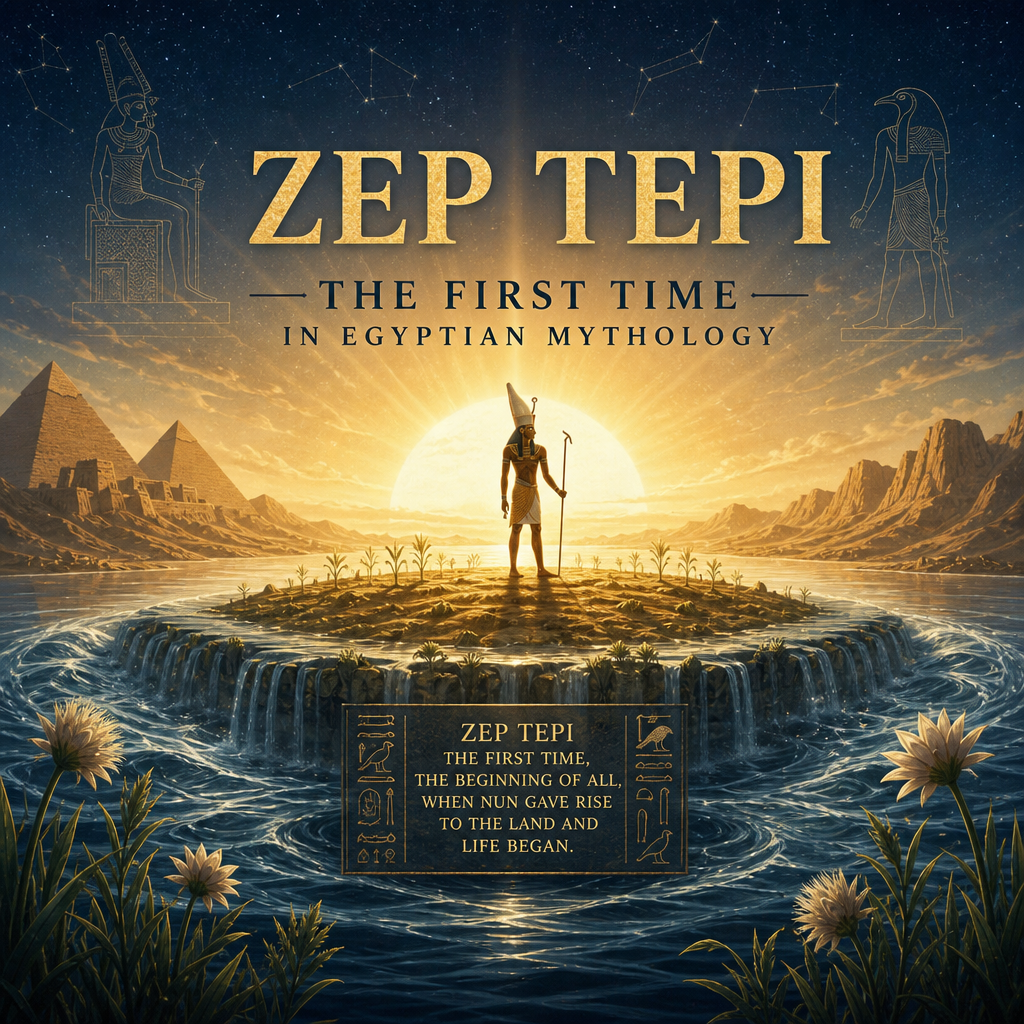
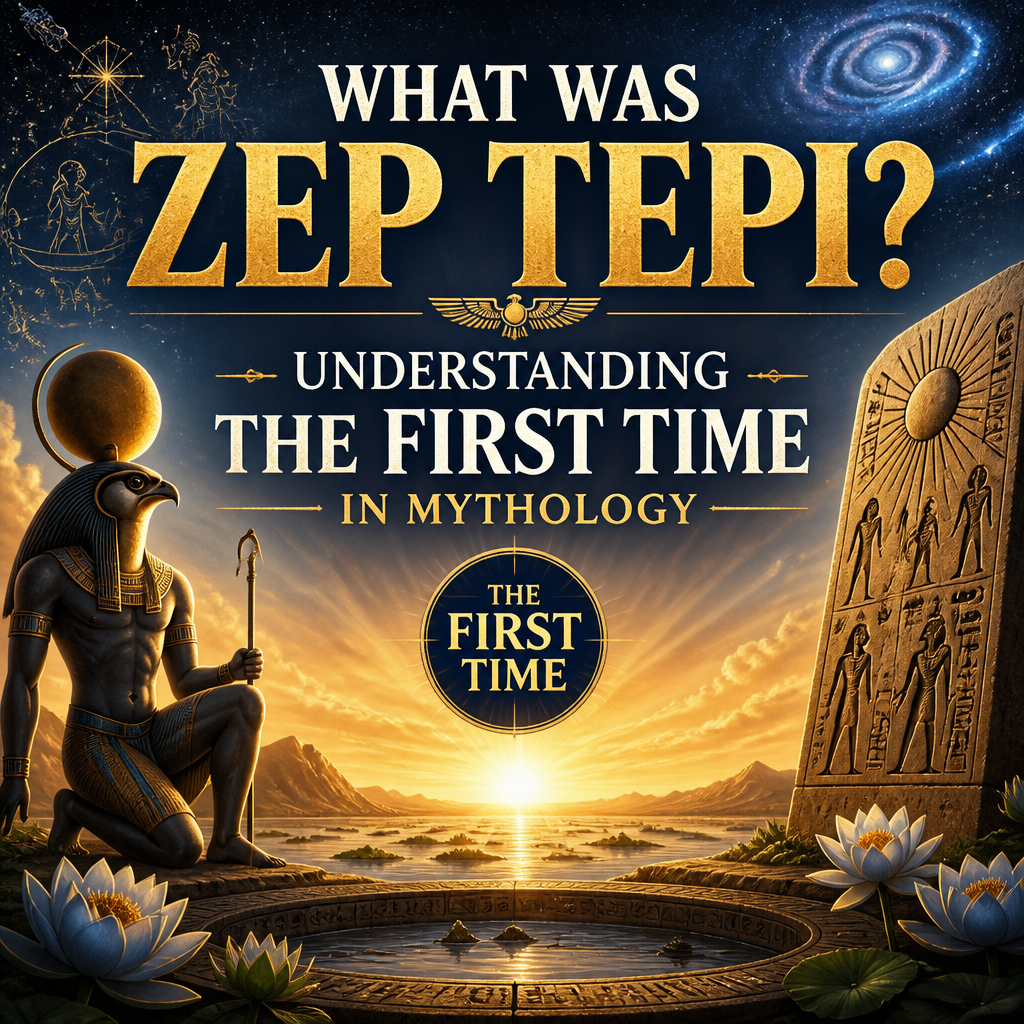
Zep Tepi, often translated as “the first time,” is one of the most fascinating ideas from ancient Egyptian religion and mythology. It refers to the mythical age of creation, when the gods first brought order out of chaos and established the patterns that would shape the world forever.
For the ancient Egyptians, Zep Tepi was not simply a story about the distant past. It was a sacred model for life, kingship, temples, rituals, and cosmic balance. To understand Zep Tepi is to understand how the Egyptians viewed time, creation, and humanity’s relationship with the divine.
The Meaning of Zep Tepi
The phrase Zep Tepi comes from ancient Egyptian and is commonly rendered as “the first occasion” or “the first time.” It describes the earliest moment of existence, before the world as humans know it had fully taken shape.
In Egyptian belief, before creation there was a dark, formless ocean of chaos called Nun. This watery void contained potential, but it had no structure, land, light, or life. Out of this chaos, the first god or creator deity emerged and began the process of forming the cosmos.
Different Egyptian cities had different creation myths, so the details varied. However, the central idea remained consistent: Zep Tepi was the sacred beginning when divine order first appeared.
Creation and the Birth of Order
At the heart of Zep Tepi is the movement from chaos to order. Ancient Egyptians called cosmic order Ma’at, a concept that included truth, justice, harmony, balance, and proper functioning of the universe.
During “the first time,” the gods established Ma’at by separating sky from earth, creating light, forming the land, and setting natural cycles in motion. The rising and setting of the sun, the annual flooding of the Nile, the growth of crops, and the rhythms of life and death were all understood as part of this divine order.
Zep Tepi was therefore not only about creation as a one-time event. It was about the original establishment of the right way for things to be.
Different Versions of the First Time
Ancient Egypt did not have one single creation story. Instead, several major religious centers developed their own accounts of how Zep Tepi unfolded.
Heliopolis and the Sun God
In the Heliopolitan tradition, the creator god Atum emerged from the waters of Nun and brought forth the first divine beings. Atum was closely connected with the sun and with the rising mound of creation.
This image of a primeval mound rising from the waters may have been inspired by the Nile flood, when fertile land reappeared after being covered by water.
Memphis and Ptah
In Memphis, the god Ptah was seen as the creator. According to this tradition, Ptah created the world through thought and speech. He conceived creation in his heart and brought it into being with his tongue.
This version emphasizes the power of divine intelligence and spoken words.
Hermopolis and the Ogdoad
In Hermopolis, creation was linked to a group of eight primordial deities known as the Ogdoad. They represented qualities of the pre-creation state, such as darkness, hiddenness, and boundlessness.
From their mysterious powers, the first light or cosmic order emerged.
Zep Tepi and Sacred Kingship
Zep Tepi was deeply connected to the role of the pharaoh. The king was not viewed as an ordinary political ruler. He was the earthly representative of divine order and had the responsibility to maintain Ma’at.
By performing rituals, building temples, making offerings, and upholding justice, the pharaoh symbolically renewed the conditions of “the first time.” His rule was meant to echo the original perfection established by the gods.
This is why Egyptian temples were so important. They were not merely places of worship; they were sacred spaces designed to recreate the moment of creation. The temple sanctuary represented the primeval mound, and daily rituals helped sustain the universe.
Time as a Cycle, Not a Straight Line
Modern people often think of time as linear: past, present, and future. The ancient Egyptians had a more cyclical understanding of time. Events repeated in sacred patterns, just as the sun rose each morning and the Nile flooded each year.
Zep Tepi existed in the distant beginning, but it could also be ritually renewed. Every sunrise was a small reenactment of creation. Every successful harvest reflected the return of divine order. Every temple ceremony helped restore the world to its original sacred balance.
In this way, “the first time” was not locked away in the past. It was a living reality that could be accessed through ritual and myth.
Why Zep Tepi Still Fascinates People
Zep Tepi continues to attract interest because it touches on big questions:
- How did the universe begin?
- What existed before creation?
- Why is order so important to human life?
- Can sacred origins be renewed in the present?
Some modern writers have also connected Zep Tepi with alternative history theories, suggesting it may refer to a lost ancient civilization or a forgotten golden age. While these ideas are popular in some circles, mainstream Egyptology understands Zep Tepi primarily as a religious and mythological concept.
Its importance lies not in proving a hidden historical era, but in revealing how the ancient Egyptians made sense of existence.
The Legacy of “The First Time”
Zep Tepi was the sacred beginning, the divine moment when chaos became cosmos. It shaped Egyptian religion, kingship, architecture, ritual, and ideas about time itself.
For the ancient Egyptians, the world needed constant renewal. Disorder was always a threat, but through Ma’at, ritual, and divine kingship, creation could be maintained. The memory of “the first time” gave meaning to the present and offered a model of cosmic harmony.
In that sense, Zep Tepi was more than a myth of origins. It was a vision of the world as it was meant to be: ordered, balanced, sacred, and continually renewed.

Orin Vale has spent the better part of two decades tracing the threads that connect the world’s oldest stories — from the halls of Asgard to the banks of the Nile, from Olympus to the jungles of the Maya. What began as a childhood fascination with flood myths and trickster gods grew into years of independent study across comparative mythology and ancient religion, always chasing the same question: what did these stories mean to the people who first told them? Orin writes for readers who want more than trivia — the ones looking for the beliefs, fears, and truths that myths were built to carry.