Actaeon and Artemis
Introduction

The myth of Actaeon and Artemis is one of the best-known stories in Greek mythology, combining themes of divine power, transgression, punishment, and the dangerous boundary between human and god. In the most familiar version, the hunter Actaeon accidentally sees the goddess Artemis bathing, and she transforms him into a stag. His own hunting dogs, no longer recognizing him, tear him apart. The tale has endured for centuries because it dramatizes the fragility of human limits before divine authority and the severe consequences of crossing sacred boundaries.
The story is important not only as a myth of punishment, but also as a reflection of ancient Greek ideas about purity, vision, secrecy, and the sanctity of the gods. It has been retold in literature, art, and later culture from antiquity to the modern era.
Origin and Meaning
The name Actaeon (Ancient Greek: Ἀκταίων, Aktaíōn) has uncertain etymology. Ancient and modern scholars have proposed different explanations, but no single derivation is universally accepted. The name may be connected to Greek roots related to “radiance,” “point,” or possibly “coast” or “promontory,” though such proposals remain speculative.
Artemis (Ἄρτεμις) is the Greek goddess of the hunt, wilderness, wild animals, and chastity, and later also associated with the moon. Her name is also of uncertain origin. It predates the classical Greek period and likely belongs to the older religious substrate of the Aegean world.
The myth of Actaeon and Artemis appears in several ancient traditions, and the details vary. The core narrative, however, is stable:
- Actaeon, a hunter, encounters Artemis in a private, sacred moment.
- The goddess reacts with anger or protective severity.
- Actaeon is transformed into a stag.
- His hunting dogs kill him.
Historical Context
The myth belongs to the broader world of ancient Greek religion and storytelling, where gods were understood as powerful, emotionally responsive beings whose presence could be both beneficent and dangerous. Artemis was especially associated with liminal spaces: forests, mountains, wild animals, and transitions between childhood and adulthood.
Religious and Cultural Background
In Greek thought, certain spaces and acts were sacred and inviolable. Bathing, especially bathing connected with a deity, could represent purification, renewal, or hidden divine presence. To see a god in a forbidden context was often perilous.
The story also reflects Greek attitudes toward:
- Cultural boundaries between human and divine realms
- The danger of accidental offense
- The sanctity of female privacy
- The violence of the hunt and the wild
Artemis was not simply a “gentle nature goddess.” She could be protective of her own domain and merciless to those who violated it. The myth of Actaeon therefore belongs to a pattern of tales in which divine wrath punishes not only deliberate crimes, but also unintended transgressions.
Myth and Ritual
Although Actaeon’s story is not known as a central ritual myth in the same way as some other Greek narratives, it resonates with ritual ideas about purity, initiation, and taboo. It also reflects the ancient Greek fear of seeing what should not be seen, especially when the unseen belongs to a god.
Main Characteristics
Actaeon
Actaeon is typically portrayed as:
- A skilled hunter
- A youthful or noble figure
- A man associated with the wilderness and hunting culture
- A tragic victim of divine punishment
In some traditions, his defining characteristic is not moral guilt but vulnerability. He is often presented as either careless, unlucky, or simply at the wrong place at the wrong time.
Artemis
Artemis is characterized by:
- Virginity and chastity
- Mastery of the hunt
- Protection of wild animals
- Archer-like precision
- Independence from male domination
- A severe response to violation or disrespect
In the Actaeon myth, Artemis appears as a goddess whose privacy is sacred and whose anger is absolute.
The Transformation Motif
A central feature of the myth is metamorphosis. Actaeon becomes a stag, an animal closely associated with the wilderness and the hunt. This transformation is symbolically fitting: the hunter becomes hunted. The reversal is one of the myth’s most powerful narrative devices.
Family and Genealogy
Actaeon’s Family
The genealogy of Actaeon varies by source.
Common ancient traditions describe him as the son of:
- Aristaeus and Autonoë
- or occasionally other parentage in local versions
He is often described as a member of a Theban or Boeotian lineage. His mother Autonoë is usually identified as a daughter of Cadmus and Harmonia, which places Actaeon within an important mythic family connected with Thebes.
Children and Spouses
In many sources, Actaeon is not strongly associated with a spouse or children. However, some later traditions and local genealogies expand his family relationships. These details are not consistent across ancient accounts and are not central to the myth itself.
Artemis’s Family
Artemis is a major Olympian deity. In classical tradition, she is the daughter of:
- Zeus
- Leto
Her twin brother is:
- Apollo
Artemis is not usually depicted as married or as the mother of children in Greek myth, since her virginity is a defining characteristic.
Symbols
The myth of Actaeon and Artemis is closely connected to several symbolic elements.
| Symbol | Associated Figure | Meaning |
|---|---|---|
| Bow and arrows | Artemis | Power, precision, divine authority |
| Stag or deer | Actaeon / Artemis | Wilderness, hunting, vulnerability, sacred animal |
| Hunting dogs | Actaeon | Human mastery over nature, later turned against him |
| Water / bath | Artemis | Purity, privacy, sacred space |
| Forest and mountains | Artemis | Untamed nature, liminal space |
| Metamorphosis | Actaeon | Punishment, identity loss, reversal of roles |
Interpretive Meaning
The stag symbolizes more than animal form. It represents a reversal: the hunter becomes prey. The dogs, once instruments of control, become agents of destruction. Artemis herself may be understood as the guardian of boundaries, especially those connected to her virginity and sacredness.
Sacred Animals
Artemis and the Deer
The deer is the most important sacred animal associated with Artemis. The goddess is frequently accompanied by deer or stag imagery in Greek art and literature. In the Actaeon story, this association is especially significant because Actaeon is changed into the very animal linked to the goddess’s domain.
Other animals connected with Artemis include:
- Dogs, especially hunting dogs
- Bears in some cult contexts
- Wild animals of the forest
The Hunting Dogs of Actaeon
Actaeon’s hunting dogs are individually named in some ancient sources, particularly in later poetic treatments. Their names vary by author, and lists can be lengthy. Their role is symbolically important:
- They represent loyalty and the hunting craft
- They become tools of tragic irony
- They illustrate how transformation destroys recognition and kinship
Sacred Plants
No single plant is uniquely central to the myth of Actaeon and Artemis, but several plants are commonly associated with Artemis in broader Greek religious contexts:
- Cypress
- Laurel in wider divine symbolism, though more strongly associated with Apollo
- Willow or other moisture-loving plants in certain local cult environments
- Oak and woodland vegetation in general
Because Artemis is a wilderness goddess, her plant associations are often environmental rather than exclusive. The forest itself functions as her sacred botanical space.
Sacred Places
Thebes and Boeotia
Actaeon is often linked to Thebes and the surrounding region of Boeotia through his family connections. Some versions place the myth in the wooded areas near Mount Cithaeron, a region rich in mythic associations.
Mount Cithaeron
Mount Cithaeron is one of the best-known landscapes connected with the story. It appears frequently in Greek myth as a wild, dangerous, and liminal place. In the Actaeon tradition, it is often the setting of the hunt and the scene of his death.
Sacred Groves and Springs
The myth’s bathing episode implies a secluded natural setting, perhaps a spring, pool, or grove. While no universally accepted historical sanctuary of Actaeon is known, the environment reflects Artemis’s broader sacred spaces:
- woods
- mountain slopes
- springs
- remote hunting grounds
Artemis Sanctuaries
Artemis was worshipped in many places throughout Greece, including major cult centers such as:
- Brauron in Attica
- Ephesus in Asia Minor
- Orthia at Sparta
The Actaeon myth does not belong exclusively to one sanctuary, but it fits the goddess’s cultic identity across the Greek world.
Powers and Attributes
Artemis’s powers in mythology include:
- Mastery of hunting
- Protection of wild creatures
- Control over liminal spaces
- Punishment of offense or disrespect
- Association with childbirth in some traditions
- Protection of young girls in certain cult contexts
In the Actaeon myth, her most visible attribute is her ability to transform a human being by divine power. This transformation is not merely physical; it strips Actaeon of identity and social status.
Actaeon himself has no divine powers. His “attribute,” so to speak, is his status as a hunter, which becomes tragically ironic. His expertise offers no protection against the goddess.
Main Myths
The Bathing Episode
The central myth occurs when Actaeon comes upon Artemis while she is bathing. Ancient sources vary on whether this encounter is accidental or deliberate.
Different Traditions
- Accidental sighting: In many versions, Actaeon stumbles upon Artemis by chance.
- Intentional spying: Some later or less sympathetic versions suggest that he knowingly attempted to see the goddess.
- Punishment for boasting: In a few traditions, the offense may be related to hubris or some other form of disrespect.
The most influential literary treatment comes from Ovid’s Metamorphoses, where Actaeon is transformed after unexpectedly seeing Artemis/Diana bathing.
Transformation into a Stag
After the offense, Artemis transforms Actaeon into a stag. This is the crucial moment of metamorphosis. He retains human consciousness in many versions, which intensifies the tragedy. He cannot speak or explain himself when his dogs attack.
Death by His Own Dogs
Actaeon’s own dogs, trained to hunt, chase and kill the stag. Because he has become a stag, they do not recognize him. This is one of the most famous examples in mythology of tragic irony.
The dogs are sometimes portrayed as acting instinctively; in other accounts, their attack reflects the goddess’s deliberate orchestration. Either way, the result is the same: the hunter is destroyed by his own instruments.
Alternative Traditions
Ancient authors preserve different explanations for why Actaeon is punished:
- He saw Artemis bathing.
- He boasted that he was a better hunter than Artemis.
- He desired Semele or another woman connected to divine affairs.
- He committed some unspecified offense against the goddess.
The bathing version is the best known, but an encyclopedia-style account should note that the myth was not fully uniform across antiquity.
Relationship with Other Mythological Figures
Artemis and Apollo
Artemis’s closest divine relationship is with her twin brother Apollo. Both are archers and deities of precision, though Apollo is more associated with order, music, prophecy, and the sun, while Artemis is associated with the hunt and wilderness.
Artemis and Leto
As her mother, Leto is part of Artemis’s divine genealogy. Artemis frequently appears as a protective daughter in myths involving Leto, though this is not central to the Actaeon story.
Actaeon and Aristaeus
If Actaeon is the son of Aristaeus, that places him within a family of rural and pastoral associations. Aristaeus himself is linked with husbandry, beekeeping, and rustic life. This fits Actaeon’s identity as a figure tied to nature and the countryside.
Actaeon and Other Mortals
Actaeon’s story resembles other Greek myths in which mortals encounter divinity too closely and are destroyed. It belongs to the broader category of cautionary narratives about mortal limits.
Worship and Cult
There is no evidence that Actaeon himself had a major cult comparable to those of gods and heroes widely worshipped across Greece. However, the hero may have been venerated locally in some regions, especially where genealogical or geographic traditions linked him to Thebes or Boeotia. Evidence is limited and varies by location.
Artemis Worship
Artemis, by contrast, was one of the most widely worshipped goddesses in the Greek world. Her cult often involved:
- offerings of animals
- rites connected with girls and coming-of-age
- dedications at sanctuaries
- processions and local festivals
- attention to purity and sacred boundaries
At Brauron, for example, Artemis was associated with the transition of girls into adulthood. At Sparta, she had a stern and martial cult character in some contexts. While these forms of worship are not directly tied to Actaeon, they help explain the divine atmosphere of the myth.
Ritual Significance of the Myth
The Actaeon story may have reinforced broader cultural ideas about:
- reverence for divine privacy
- respect for sacred space
- the danger of hubris
- the ambiguity of hunting, which can shift suddenly from control to vulnerability
Ancient Sources
The myth of Actaeon and Artemis appears in several classical sources, and these sources do not always agree.
Major Ancient Authors
- Hesiod: fragments and genealogical traditions connect Actaeon’s family line.
- Apollodorus: gives mythographic summaries, including versions of Actaeon’s transformation.
- Euripides: allusions to Actaeon appear in tragic context and mythic references.
- Pausanias: records local traditions and regional variants.
- Ovid: in the Metamorphoses, provides the most influential Roman literary version of the bathing and transformation narrative.
- Callimachus: Artemis appears in hymnic contexts, helping define her character.
- Hyginus: preserves mythological summaries with variant details.
Source Variation
Ancient sources differ on:
- Actaeon’s exact parentage
- whether his offense was accidental or deliberate
- the reason for Artemis’s punishment
- the details of the transformation
- the names and number of his dogs
This variation is normal in Greek and Roman mythology, where no single canonical version was universally authoritative.
Roman Equivalent
Artemis was identified by the Romans with Diana, who became her main Roman counterpart. In Roman literature, the myth is usually told as the story of Diana and Actaeon.
Diana
Diana shares many traits with Artemis:
- goddess of the hunt
- protector of wild spaces
- associated with chastity
- linked to the moon in later tradition
Ovid’s retelling in Latin literature strongly shaped later European understanding of the myth. In Roman versions, Diana often becomes the central figure, and the story is framed within Roman poetic and moral sensibilities.
Influence on Modern Culture
The myth of Actaeon and Artemis has had a long afterlife in art, literature, music, and visual culture.
Literature
Writers have used the story to explore:
- voyeurism
- punishment and innocence
- the instability of identity
- the power of the gaze
It appears in both direct retellings and symbolic adaptations.
Visual Arts
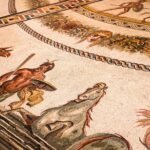
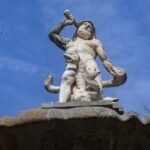
The scene of Artemis or Diana bathing and Actaeon’s transformation has been a major subject in Western painting, sculpture, and illustration. Artists have often emphasized:
- the contrast between exposed and hidden bodies
- the dramatic instant of discovery
- the erotic tension of the scene
- the violent reversal of the hunt
Opera, Film, and Television
The myth has been referenced or adapted in operatic works, modern films, television, and theatrical productions, often as a symbol of forbidden vision or divine punishment. Even when not retold directly, the story influences narratives about looking where one should not look.
Games and Popular Media
In modern fantasy, games, and comics, Artemis/Diana may appear as a huntress figure, and Actaeon’s fate sometimes serves as a mythic reference for transformation, curse, or tragic irony.
Curiosities
- The myth is one of the best-known examples of a hunter becoming the hunted.
- Actaeon’s dogs are sometimes listed by name in ancient literature, especially in poetic sources.
- The bathing scene is often read through the lens of secrecy and the forbidden gaze, not only as a punishment tale.
- Some ancient versions make Actaeon’s offense accidental, while others make it intentional or boastful.
- The story has influenced discussions of metamorphosis in literature since antiquity, especially through Ovid.
- Artistic depictions often focus more on Diana/Artemis than on Actaeon himself, reflecting the goddess’s continuing cultural prominence.
- The myth belongs to a wider group of Greek tales in which humans suffer for encountering divine reality too directly.
Frequently Asked Questions
1. Who was Actaeon in Greek mythology?
Actaeon was a hunter, often described as a noble or youthful figure from Boeotian or Theban mythic tradition. He is best known for being transformed into a stag by Artemis and killed by his own dogs.
2. Why did Artemis punish Actaeon?
Ancient sources give different reasons. The most famous version says he saw Artemis bathing, which violated her privacy and sacredness. Other traditions suggest he boasted, spied deliberately, or offended the goddess in another way.
3. What happened to Actaeon’s dogs?
After Actaeon was transformed into a stag, his hunting dogs failed to recognize him and killed him. Their attack is a central part of the myth’s tragic irony.
4. Is Actaeon’s story in Homer or Hesiod?
The story is not a major Homeric episode, but Actaeon and Artemis appear in various ancient sources, including mythographic and poetic traditions. Later authors such as Ovid provide the most famous literary version.
5. Is Artemis the same as Diana?
Yes, in Roman religion and literature, Artemis was identified with Diana. Roman retellings usually call the goddess Diana while preserving the basic structure of the myth.
6. Was Actaeon’s punishment considered fair?
Ancient sources do not explicitly frame the story in modern legal terms. In mythic logic, divine anger is not measured by human standards. Some versions make Actaeon more clearly guilty than others.
7. What does the stag symbolize in the myth?
The stag symbolizes wilderness, vulnerability, and reversal. Since the stag is a sacred animal of Artemis, the transformation also intensifies the irony of the punishment.
Conclusion
The myth of Actaeon and Artemis remains one of the most compelling narratives in Greek mythology because it combines divine majesty, tragic irony, and the fragility of human identity. Actaeon’s transformation into a stag and death by his own dogs captures a powerful mythic reversal: the hunter becomes prey, the observer becomes the victim, and the boundary between human and divine proves fatal.
Artemis emerges in the story as a goddess of the wilderness whose privacy and authority cannot be violated without consequence. Across ancient literature, Roman adaptation, and modern art, the myth continues to resonate as a meditation on sight, transgression, and the dangers of approaching the sacred too closely.

Orin Vale has spent the better part of two decades tracing the threads that connect the world’s oldest stories — from the halls of Asgard to the banks of the Nile, from Olympus to the jungles of the Maya. What began as a childhood fascination with flood myths and trickster gods grew into years of independent study across comparative mythology and ancient religion, always chasing the same question: what did these stories mean to the people who first told them? Orin writes for readers who want more than trivia — the ones looking for the beliefs, fears, and truths that myths were built to carry.