Chariot of Helios
Introduction
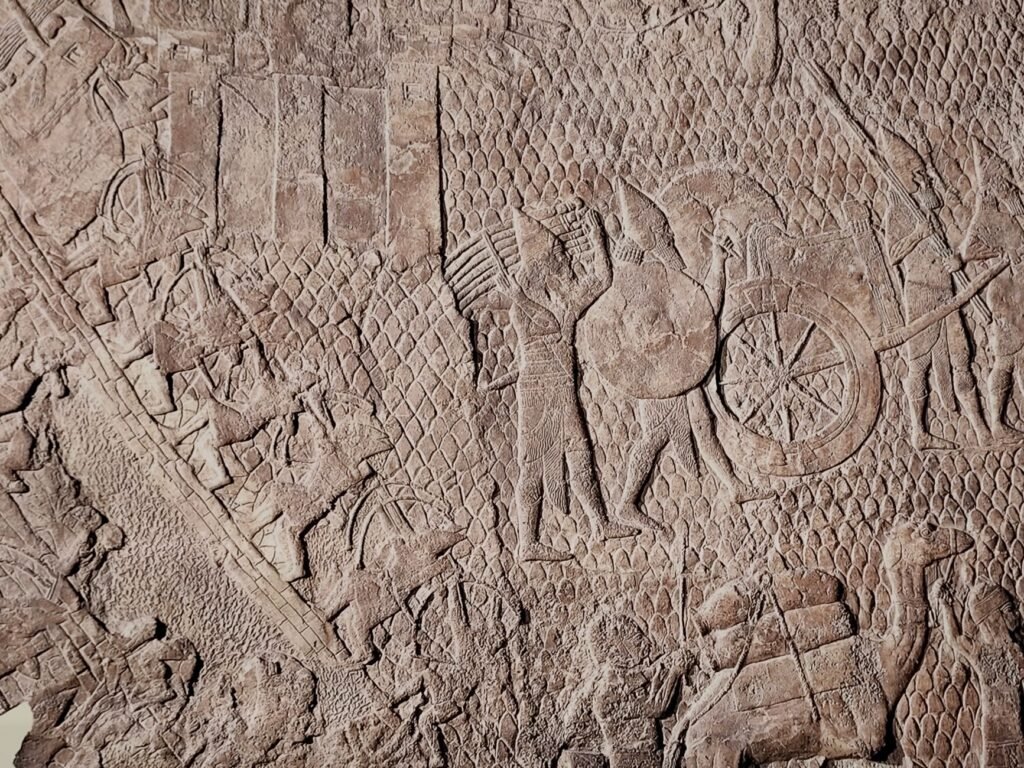
The Chariot of Helios is one of the most enduring images in Greek mythology: the radiant vehicle by which Helios, the personification of the Sun, crosses the sky each day. In ancient literature, art, and later cultural imagination, the chariot symbolizes light, cosmic order, divine sight, and the regular movement of time. It is not simply a vehicle in a narrative sense; it is the mechanism through which the Greeks imagined the sun’s daily journey from east to west and, in some traditions, through the ocean and the underworld back to dawn.
The chariot of Helios matters because it sits at the intersection of myth, cosmology, and religion. It explains a natural phenomenon in divine terms, but it also carries moral and symbolic weight. In famous myths, especially the story of Phaethon, the chariot becomes a test of divine power and human ambition. Across classical and later traditions, it remains a potent emblem of solar authority and celestial motion.
Origin and Meaning
The name Helios comes from the Greek Ἥλιος (Hēlios), meaning “sun.” The chariot itself is not usually given a separate proper name in ancient sources; rather, it is identified as the chariot of Helios or the sun-chariot.
The concept likely developed from early Greek attempts to explain the sun’s passage across the sky in mythic terms. In archaic and classical poetry, Helios is a divine figure who travels daily in a brilliant vehicle drawn by horses. This image has parallels in other Indo-European and Near Eastern traditions, where solar deities are often associated with horses, wheels, or chariots. However, the Greek form of the myth is distinctive in its literary richness and symbolic complexity.
Because ancient authors do not always describe the chariot in exactly the same way, modern summaries should treat its features as part of a broader mythic tradition rather than a rigidly fixed object.
Historical Context
The chariot of Helios emerged within the religious imagination of ancient Greece, where gods were closely linked to natural forces. Helios was one of the solar divinities known to the Greeks, though his role varied across time and region. In Homeric epic, Helios is already a powerful god who sees all things and is invoked as a witness to oaths. In later Greek religion, he gained stronger associations with cosmic order, day, and surveillance.
The chariot image reflects an ancient worldview in which the sky was conceived as a traversable space. The rising and setting sun was understood not as an abstract astronomical process but as the journey of a divine being. This idea was reinforced by poetic tradition, vase painting, and later philosophical reinterpretation.
Helios was not the only solar figure in Greece. Over time, especially in philosophical and later religious contexts, he could be identified with Apollo, although the two were originally distinct. The chariot remained most closely tied to Helios himself and to the older mythic language of celestial travel.
Main Characteristics
The chariot of Helios is typically described as a golden or shining vehicle drawn by powerful horses. Its principal features include:
- Radiance and brilliance: the chariot is associated with the blazing light of the sun.
- Daily motion across the sky: it carries Helios from east to west each day.
- Divine control: Helios governs the chariot and its horses with supernatural skill.
- Cosmic function: the chariot explains sunrise, daylight, sunset, and the sun’s regularity.
- Dangerous power: in myths, especially when misused or momentarily uncontrolled, it can scorch the earth.
Ancient authors do not give one universally fixed count or name for the horses in all contexts. In some later sources, the horses are individually named, but the names vary by author and tradition. What remains consistent is that they are fiery, swift, and difficult to govern.
Typical visual features
| Feature | Common description | Symbolic meaning |
|---|---|---|
| Material | Gold, bronze, or radiant light | Solar brilliance, divine wealth |
| Draft animals | Horses, often fiery or winged in later art | Speed, power, vitality |
| Movement | East to west across the sky | Daily cycle, time, cosmic order |
| Driver | Helios himself | Divine mastery, omniscient witness |
| Light | Strong, blazing, unwavering | Truth, revelation, life |
Family and Genealogy
Helios is usually presented in Greek tradition as a Titanic deity, though genealogies vary. He is commonly described as the son of Hyperion and Theia, both Titans. In some accounts, he is also linked with Euryphaessa as a mother figure, depending on the source tradition.
His family connections are extensive and vary by author:
- Parents: commonly Hyperion and Theia
- Sister(s): often Selene (the Moon) and Eos (Dawn) in poetic tradition, though this grouping differs among sources
- Spouse(s): various traditions name different consorts, including Perse or Clymene
- Children: several mythic figures are attributed to Helios, including Phaethon, Circe, Aeëtes, and Pasiphaë in many accounts
These genealogies are not uniform. Ancient authors often disagree on the parentage or offspring of divine figures, and local cult traditions could preserve separate family lines.
The chariot itself is not personified as a family member, but it is inseparable from Helios’s role as sun god. In myth, it serves almost as an extension of his divine being.
Symbols
The chariot of Helios is associated with a number of symbolic elements:
- The chariot: motion, sovereignty, and celestial journey
- Horses: speed, force, and the energizing power of the sun
- Fire and light: vitality, divine energy, revelation
- Gold: brilliance, incorruptibility, celestial status
- The crown or halo: often used in art to mark solar divinity
- The east and west: sunrise and sunset, birth and completion
- The sky and ocean: the chariot’s domain of travel
In visual art, Helios may be shown with a radiant crown, a youthfully idealized face, and a chariot emerging from or descending into the horizon. In such representations, the chariot is not merely transport; it is a cosmic sign.
Sacred Animals
The primary animals connected with the chariot of Helios are the horses that draw it. Their symbolic significance is central to the myth.
Horses of Helios
In Greek thought, horses were natural symbols of speed, nobility, and force. For Helios, they also represent the unstoppable movement of sunlight. In some traditions, the horses are imagined as fiery or blazing, emphasizing the intense heat of the sun.
Their significance includes:
- Speed: the sun’s rapid arc across the sky
- Power: the force of daylight and heat
- Control: the necessity of divine mastery
- Danger: the destructive capacity of excessive solar fire
Other animals are not as directly or consistently associated with the chariot. In broader solar symbolism, however, birds, eagles, and lions may also appear in later art or comparative mythology, though these are not core elements of the classical Greek tradition of Helios.
Sacred Plants
Ancient sources do not strongly attach a specific plant to the chariot of Helios in the way that certain gods are linked to particular flora. However, several plants appear in wider solar symbolism or in myths involving Helios:
- Heliotrope: later tradition connected this flower with the sun because it turns toward light. This association is more botanical-symbolic than strictly classical mythological.
- Laurel: not specifically tied to Helios’s chariot, but common in solar and divine symbolism in the Greco-Roman world.
- Grain and ripened crops: indirectly associated with the sun’s life-giving power and agricultural fertility.
Because direct evidence is limited, it is best to distinguish between ancient mythic associations and later interpretive symbolism.
Sacred Places
The chariot of Helios is connected less to temples in a narrow sense than to cosmic locations and to places touched by his journey.
Key locations in myth
- The eastern horizon: the place of dawn and ascent
- The western horizon: the place of descent at day’s end
- The Oceanus: in archaic cosmology, Helios’s route often involved the encircling river Oceanus
- The island of Rhodes: especially important in later Greek tradition and cult, strongly associated with Helios
- Corinth and other Greek centers: local worship of solar divinities existed in several places, though not always centered on the chariot myth
- Hades or the underworld passage: in some accounts, the sun’s nightly return involves travel through the oceanic or subterranean realm
Rhodes and Helios
Rhodes became particularly famous for Helios in both religion and art. The island’s strong solar identity culminated in the celebrated Colossus of Rhodes, one of the ancient world’s most famous statues, though this was a Hellenistic monument rather than a feature of archaic myth. The association of Rhodes with Helios later shaped how the chariot was imagined in art and literature.
Powers and Attributes
Helios’s chariot expresses the god’s powers and responsibilities. These include:
- Bringing daylight to the world
- Marking time through the daily cycle
- Witnessing events from above
- Shining truth on hidden actions
- Sustaining life through warmth and light
- Punishing excess when the sun’s force becomes destructive
Helios is often described as an all-seeing deity. In myth, this makes him especially important as a witness to secret acts, broken promises, and divine wrongdoing. The chariot is the means by which this cosmic surveillance is enacted.
The chariot also represents the paradox of solar power: it is necessary for life, but too much of it can be harmful. The Phaethon myth dramatizes this danger dramatically.
Main Myths
Several myths define the cultural meaning of the chariot of Helios.
The daily journey of the sun
The most basic myth is the chariot’s daily travel across the sky. Helios rises in the east, journeys overhead in his shining vehicle, and descends in the west. In some poetic accounts, he then returns by a hidden route, sometimes through the encircling Oceanus, so that he may rise again the next day.
This myth explains the regularity of the sun and gives cosmic order a divine personality.
The myth of Phaethon
The most famous story involving the chariot is the tale of Phaethon, the son of Helios. According to the best-known versions, Phaethon sought proof of his divine parentage and asked to drive his father’s chariot for a day. Helios, after warning him of the danger, reluctantly agreed or was compelled by oath in some accounts.
Phaethon proved unable to control the horses. He veered too high, freezing the world, then too low, scorching the earth. To stop the catastrophe, Zeus struck him down with a thunderbolt. The myth explains climatic extremes, desert lands, and the dangers of overreaching ambition.
The Phaethon narrative became one of the most influential solar myths in antiquity and later literature. It turns the chariot into a symbol of power that only a god can bear.
Witness to divine crimes
Helios’s all-seeing nature appears in myths where he observes events hidden from others. In some stories, he witnesses the abduction of Persephone, the adultery of Aphrodite and Ares, or other secret actions. His vision reinforces the moral dimension of sunlight: nothing remains concealed under the sun.
Return through the Ocean or underworld
Ancient cosmology sometimes imagines the sun’s nightly passage by boat, chariot, or a hidden route beyond the visible world. The details differ among authors. What matters is the idea that Helios’s movement is continuous and divinely maintained, not random or mechanical.
Relationship with Other Mythological Figures
The chariot of Helios interacts with a wide network of divine and heroic figures.
Zeus
Zeus is the supreme Olympian god and the one who ultimately controls cosmic order. In the Phaethon myth, Zeus intervenes when the chariot endangers the world. This underlines the hierarchy between solar power and thunderbolt authority.
Apollo
Apollo and Helios were originally distinct deities. Apollo became increasingly associated with the sun in later Greek and Roman thought, especially in philosophical and literary traditions. In these later contexts, the chariot of Helios could overlap with Apollo’s solar identity. However, classical sources do not support a simple equation in early Greek religion.
Selene and Eos
Helios is often paired conceptually with Selene (Moon) and Eos (Dawn). Together they structure the temporal cycle of sky, light, and daily renewal. While not always presented as a formal family triad in every source, they are frequently linked in poetic imagery.
Phaethon
Phaethon is the central mortal figure associated with the chariot. His relationship with Helios combines paternity, recognition, inheritance, and tragic failure. The myth has remained especially important in interpretations of hubris and cosmic disorder.
Poseidon, Oceanus, and the sea
Because the sun’s route could be imagined as moving into or across the waters at day’s end, Helios’s chariot is sometimes connected with sea deities or oceanic imagery. Oceanus in particular belongs to the older cosmological framework in which the world is encircled by water.
Worship and Cult
Helios was worshipped in ancient Greece, though his cult varied greatly by region and period. Direct evidence for worship specifically of the chariot is limited; more commonly, the cult focused on Helios himself as a solar deity.
Cultic features
- Prayers and invocations to Helios as a witness and source of life
- Oaths taken in the sun’s presence, emphasizing truth and visibility
- Offerings that may include libations or sacrifices, depending on local custom
- Festivals connected especially with Rhodes, where Helios had major importance
Rhodes and the Heliaca
The island of Rhodes is famous for solar worship and celebrations in honor of Helios. Ancient sources mention festivals and rituals connected with the god there, though details vary and are not always fully preserved. The island’s strong identification with Helios made it one of the most important cult centers associated with solar divinity in the Greek world.
Later religious reinterpretation
In Hellenistic and Roman contexts, Helios could be absorbed into broader theological or allegorical systems. Philosophers and poets sometimes treated the sun as a visible manifestation of divine reason or cosmic intelligence. In such frameworks, the chariot could be read symbolically rather than strictly mythologically.
Ancient Sources
The Chariot of Helios appears across multiple ancient sources, though not always in the same form.
Key authors and works
| Author | Work | Relevance |
|---|---|---|
| Homer | Iliad, Odyssey | Early references to Helios as divine witness and powerful god |
| Hesiod | Theogony | Genealogical and cosmic background for divine figures |
| Homeric Hymns | Various hymns | Broader divine imagery of light and motion |
| Pindar | Odes | Solar imagery, divine praise, and mythic elaboration |
| Apollodorus | Bibliotheca | Mythographic summaries, including Phaethon traditions |
| Ovid | Metamorphoses | The most famous literary retelling of Phaethon and the sun-chariot |
| Pausanias | Description of Greece | Local cults and Greek religious geography |
| Diodorus Siculus | Library of History | Rationalized or comparative accounts of gods and myths |
| Lucian | Various works | Later literary and satirical references |
Importance of Ovid
Although Roman rather than Greek, Ovid’s Metamorphoses became the most influential ancient literary source for the Phaethon episode and the chariot of Helios. His vivid narrative strongly shaped later European art and literature. It is worth noting, however, that Ovid is a poet, not a historian, and his version should be read as a literary retelling of an older myth.
Roman Equivalent
The closest Roman equivalent of Helios is Sol. In Roman religion, Sol was the sun god, and in later periods he gained enhanced prominence, especially in imperial iconography.
The Roman adaptation of the chariot tradition includes:
- Sol’s chariot as a familiar image in art and poetry
- Syncretism with Helios, especially in Hellenized contexts
- Imperial symbolism, where solar imagery could represent power, triumph, and cosmic legitimacy
In Roman art, the sun-chariot often appears in mosaics, reliefs, and later allegorical scenes. The distinction between Greek Helios and Roman Sol could blur considerably, especially in late antiquity.
Influence on Modern Culture
The Chariot of Helios has had a long afterlife in modern culture, especially through the Phaethon myth and solar symbolism.
Literature
Writers from the Renaissance onward have used the sun-chariot as a metaphor for ambition, danger, enlightenment, and artistic aspiration. The Phaethon story in particular became a favorite subject for poets, dramatists, and moralists.
Visual art
Artists have depicted Helios in classical revival painting, sculpture, and decorative arts. The image of a radiant chariot drawn by horses remains a recognizable motif in neoclassical and allegorical art.
Music and performance
Operas, symphonic works, and stage pieces have occasionally drawn on solar mythology, including references to Helios and his chariot as emblems of grandeur and transformation.
Film, television, and games
In contemporary fantasy, comics, and video games, Helios or sun-chariot imagery often appears as a symbol of divine power, celestial motion, or heroic challenge. The motif is frequently adapted loosely rather than with strict fidelity to classical sources.
Popular symbolism
The chariot remains a cultural shorthand for:
- the power of the sun,
- unstoppable motion,
- overambition,
- and the burden of divine or kingly authority.
Curiosities
- The Phaethon myth is one of the earliest and most famous warnings in Western literature about power beyond one’s capacity to control.
- Helios is sometimes confused with Apollo, but they are not originally the same god.
- Ancient Greek artists occasionally portrayed Helios in a way that resembles later depictions of sun gods across the Mediterranean.
- The chariot’s horses are often left unnamed in early sources, showing that the symbolic function mattered more than fixed details.
- The image of a sun god driving a chariot has parallels in other cultures, though the Greek version developed its own unique literary identity.
- In philosophical interpretation, the chariot could be seen not only as a mythic vehicle but as a symbol of the ordered universe.
- The sun’s daily journey in Greek myth combines observation, movement, and moral visibility in a single image.
Frequently Asked Questions
1. What is the Chariot of Helios?
It is the golden or radiant chariot driven by Helios, the Greek sun god, as he travels across the sky each day.
2. Why is the Chariot of Helios important in mythology?
It explains the daily movement of the sun and symbolizes divine power, cosmic order, and the dangers of uncontrolled ambition.
3. Which myth is most closely associated with the chariot?
The best-known myth is the story of Phaethon, who tried to drive the chariot and lost control of it.
4. Are Helios and Apollo the same god?
No. They are separate figures in early Greek tradition, although later writers and religious thought sometimes identified or closely associated them.
5. What do the horses of Helios represent?
They represent speed, strength, solar energy, and the difficult power that must be carefully guided.
6. Was the Chariot of Helios worshipped directly?
Not usually as a separate object. Worship was directed to Helios himself, though the chariot formed part of his divine identity and iconography.
7. What is the Roman equivalent of Helios’s chariot?
The closest Roman counterpart is the chariot of Sol, the Roman sun god.
8. Where was Helios especially important?
Helios was especially important in Rhodes, which became one of the most famous centers of his worship and symbolism.
Conclusion
The Chariot of Helios is more than a mythic vehicle. It is a foundational image of ancient Greek cosmology, expressing how the Greeks understood the sun’s daily movement, the visibility of truth, and the power of divine order. Through myths such as the tragedy of Phaethon, the chariot also became a lasting emblem of danger, excess, and the limits of human ambition.
Its influence extends from archaic poetry and classical art to later Roman religion, Renaissance literature, and modern popular culture. Because it combines natural explanation with symbolic depth, the chariot of Helios remains one of the most recognizable and enduring images in the mythology of the ancient world.

Orin Vale has spent the better part of two decades tracing the threads that connect the world’s oldest stories — from the halls of Asgard to the banks of the Nile, from Olympus to the jungles of the Maya. What began as a childhood fascination with flood myths and trickster gods grew into years of independent study across comparative mythology and ancient religion, always chasing the same question: what did these stories mean to the people who first told them? Orin writes for readers who want more than trivia — the ones looking for the beliefs, fears, and truths that myths were built to carry.