Luna
Introduction
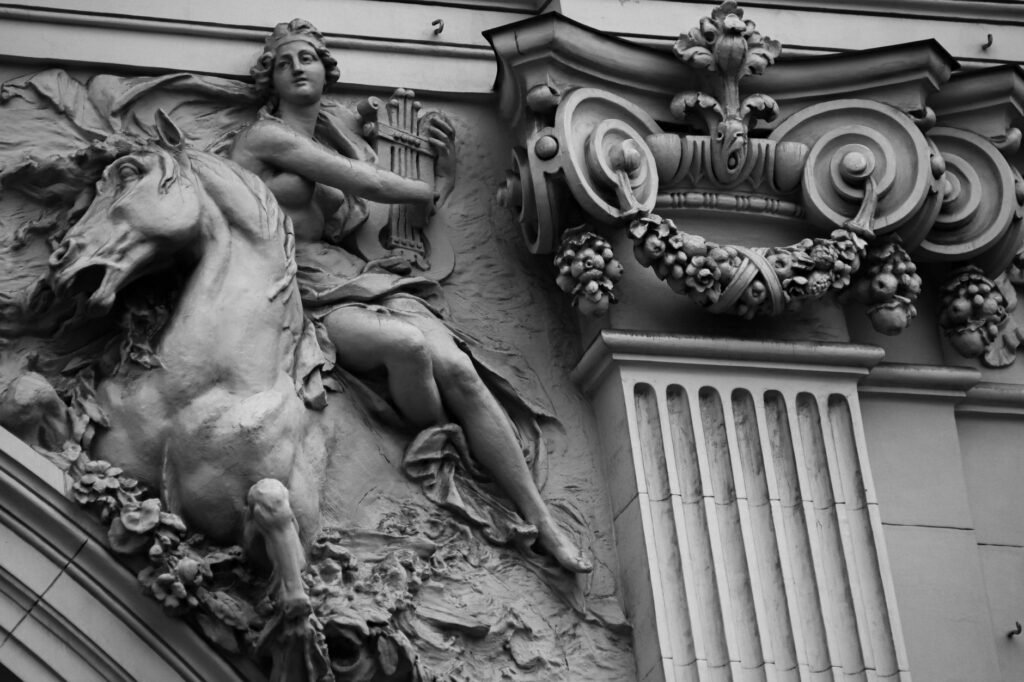
Luna is the Roman goddess of the Moon, a major divine figure in classical religion and later literary tradition. In Roman thought, Luna represented the visible moon in the sky as both a celestial body and a divine power with influence over time, fertility, night, and the cycles of nature. She was especially important in a culture that closely associated lunar phases with calendars, agriculture, religious observance, and the measurement of time.
Although Luna is often compared with the Greek goddess Selene, she is not simply a direct copy. Roman religious language, iconography, and cult practice gave Luna her own identity within the wider Mediterranean world of moon deities. Her presence appears in poetry, inscriptions, ritual contexts, and later artistic traditions, where she became a lasting symbol of femininity, change, and celestial beauty.
Origin and Meaning
The name Luna comes from the Latin word lūna, meaning “moon.” The term is related to the Latin adjective lūcidus and to the idea of light, though its deeper Indo-European etymology is complex and not always explained in identical terms by modern scholars. In Roman usage, luna referred both to the physical moon and to the goddess personifying it.
The goddess’s name was therefore transparent in meaning: she was literally “Moon” personified. This differs from some mythological figures whose names require etymological reconstruction. In Latin literature, the word could denote:
- the celestial moon itself
- the goddess Luna
- lunar cycles or monthly time
- poetic and symbolic uses connected with night, femininity, and change
Because Latin often used divine names and natural phenomena interchangeably, the distinction between Luna as deity and luna as the moon was not always rigid in ancient texts.
Historical Context
Luna belongs to the religious and symbolic world of ancient Italy and Rome, where celestial bodies were not treated merely as objects of observation but as divine powers with practical and sacred significance. The Romans linked the moon to chronology, ritual timing, and agricultural rhythms. Lunar cycles helped structure months, festivals, and the religious calendar.
In Roman religion, Luna was part of a broader divine framework that also included:
- Sol, the Sun
- Diana, often connected with moonlight and wilderness
- Noctiluca, an obscure night-light deity or epithet in some traditions
- Trivia, a goddess associated with crossroads and often linked with lunar and chthonic symbolism
Roman writers also inherited and adapted Greek mythology, where the moon was often personified by Selene. As Roman culture became increasingly shaped by Greek literature and art, Luna absorbed some Hellenic features while remaining distinct in name and context.
The goddess mattered not only in poetry and myth but also in state religion and local cult practice. Her worship is less extensive in surviving evidence than that of major Olympian or Capitoline deities, yet she appears in inscriptions and literary references that show she was recognized as an important celestial goddess.
Main Characteristics
Luna is primarily identified as the goddess personifying the moon. Her most common characteristics derive from lunar phenomena: brightness, cyclical change, and nocturnal movement across the sky.
Principal traits
- Celestial sovereignty: Luna governs the moon and its visible motion.
- Cyclical nature: She symbolizes waxing, waning, renewal, and recurrence.
- Night association: Like many moon deities, she belongs to the nocturnal sphere.
- Female divinity: She is strongly identified with femininity, though this varies by culture and literary tradition.
- Illumination: Luna brings light to the darkness of night.
In art and poetry, Luna is often imagined as a radiant woman traveling through the heavens in a chariot, though some depictions are closer to Greek Selene than to uniquely Roman iconography. She is frequently presented as serene, luminous, and remote, yet powerful in her ability to mark time and influence earthly life.
Family and Genealogy
The genealogy of Luna varies according to source and tradition. Roman and Greek literary traditions did not always present a single fixed family tree for lunar divinities.
Common associations
| Figure | Relationship to Luna | Notes |
|---|---|---|
| Hyperion | Sometimes father in Greek-influenced tradition | A Titan associated with celestial light in Greek myth |
| Theia | Sometimes mother in Greek-influenced tradition | Titaness linked with sight and heavenly radiance |
| Sol | Sibling or counterpart | The Sun often paired with the Moon in myth and symbolism |
| Aurora | Cosmic parallel | Dawn deity, often part of the celestial cycle |
| Endymion | Lover in later mythic tradition | Especially prominent in Greek and Roman literary retellings |
Because Luna is fundamentally a personification, she is less often embedded in a detailed family narrative than anthropomorphic gods with multiple myth cycles. Her relationships are therefore more symbolic than genealogical in many Roman contexts.
Symbols
Luna’s symbols are closely tied to the moon itself and to imagery of light in darkness.
Common symbols and motifs
- Crescent moon: the most recognizable emblem of lunar divinity
- Full moon: symbol of fullness, completion, and brilliance
- Chariot: often shown as a vehicle pulled across the sky
- Torches or lamps: reminders of nocturnal light
- Veils or flowing garments: associated with celestial mist and feminine grace
- Crown or diadem: sign of divine status
In Roman and later art, Luna may appear with a crescent on her head or surrounded by starry motifs. The crescent became one of the most enduring signs of lunar identity in the broader Western iconographic tradition.
Sacred Animals
No single animal is universally or exclusively sacred to Luna in the way that certain animals are strongly fixed to some other deities. However, several animals are associated with lunar symbolism in Roman and later tradition.
Frequently associated animals
- Horses: often linked to the moon’s imagined chariot
- Oxen or cattle: sometimes connected with lunar imagery in agrarian cultures
- Dogs: associated with nocturnal alertness and, in some traditions, with lunar or crossroads deities
- Serpents: in broader Mediterranean symbolism, linked to cyclical renewal and earth-bound mystery
Because Luna’s identity is celestial rather than zoological, her animal associations are generally symbolic and contextual rather than formal and fixed. Artistic conventions can vary widely by region and period.
Sacred Plants
There is no single plant universally and exclusively devoted to Luna in surviving ancient sources. Nevertheless, several plants were frequently connected with lunar and nocturnal symbolism.
Plants commonly linked with lunar imagery
- White flowers: often used in lunar symbolism because of their pale color and nocturnal visibility
- Lily: associated in later tradition with purity and brightness
- Moonflower: a modern name reflecting lunar symbolism rather than ancient cult practice
- Willow: sometimes tied to moisture, night, and liminal spaces
- Mugwort: in later folk traditions, associated with the moon and feminine power
In classical antiquity, plants related to sacred lunar rites would have varied by location and festival. Since Luna was a celestial goddess rather than a strongly localized agricultural deity, plant associations are less prominent than those of deities such as Ceres or Bacchus.
Sacred Places
The ancient evidence for formal cult sites of Luna is less abundant than for many other Roman gods, but she is linked with several significant locations and sacred contexts.
Important places and settings
| Place | Significance |
|---|---|
| Temple of Luna on the Aventine Hill | Traditionally associated with Roman lunar worship, though evidence is limited and details are not always secure |
| Aventine Hill, Rome | A major religious and political area, home to several cults associated with plebeian and foreign traditions |
| Mounts and high places | Natural elevated sites suited to celestial worship |
| Night sky | Luna’s most universal sacred “place,” as her realm is the heavens |
Ancient texts and later scholarly reconstruction suggest that Luna may have had cult significance on the Aventine, a hill associated with several non-Capitoline or more outward-facing cults. However, the surviving record is not as rich as it is for Jupiter, Juno, or Diana, and careful distinction should be made between literary reference, cultic reality, and later antiquarian interpretation.
Powers and Attributes
Luna’s powers arise from her role as the divine Moon. These powers are not always described in a systematic theological way in Roman sources, but their implications are clear.
Main areas of influence
- Night illumination
- Lunar phases
- Timekeeping and calendrical order
- Fertility and menstruation in symbolic traditions
- Tidal and natural rhythms in later interpretive traditions
- Dreams, change, and liminality
- Poetic inspiration and romantic atmosphere
In classical thought, the moon was often linked to natural cycles and changeable conditions. Because the lunar month roughly corresponds to women’s reproductive cycles, Luna also became associated in some traditions with fertility and feminine biology. At the same time, her shifting visibility made her a symbol of mutability, mystery, and distance.
Main Myths
Luna appears in a smaller and less standardized body of myth than many major gods, but she features in several important stories and poetic traditions.
Luna and Endymion
One of the best-known lunar myths involves Endymion, a beautiful mortal or semi-divine youth. In Greek tradition, the moon goddess Selene loves Endymion, who is granted eternal sleep or ageless youth. Roman poets adapted this story and often identified the goddess as Luna.
The story varies, but its core elements are consistent:
- Luna sees Endymion and falls in love.
- He is associated with beauty, sleep, and longing.
- Their relationship is marked by distance, since Luna moves across the night sky while Endymion remains in suspended sleep.
This myth became a favorite subject in later poetry and art because it expresses the tension between celestial permanence and mortal vulnerability.
Luna’s nightly course
A less narrative but highly important mythic image is Luna’s daily journey across the heavens. In poetic imagination, she rises after sunset, travels through the sky, and sets with dawn. This cosmic motion was often described as if it were a divine procession or chariot ride.
Lunar change and hiddenness
Lunar myths also explain visibility and disappearance. The moon’s phases were interpreted through divine imagery:
- the new moon as hiddenness or renewal
- the waxing moon as growth
- the full moon as power and brightness
- the waning moon as decline and retreat
These phases made Luna a natural symbol for transformation, a theme that appears throughout ancient and modern literature.
Relationship with Other Mythological Figures
Luna’s relationships with other figures are important for understanding her place in Roman religion.
With Sol
Luna is most naturally paired with Sol, the Sun. Together they form a cosmic complement: day and night, brightness and reflected light, masculine and feminine in some later traditions, though gender associations vary across cultures.
With Diana
Luna is frequently connected with Diana, the Roman goddess of the hunt, wilderness, childbirth, and often the moon. In some Roman contexts, Diana absorbed lunar attributes, especially in poetry and later religious imagination. However, Diana and Luna are not identical in all sources. Diana is a multifaceted goddess, while Luna is specifically lunar.
With Selene
In Greek literature, Selene is the moon goddess most closely comparable to Luna. Roman authors often translated or adapted Selene’s mythology into Latin, so the two names may function nearly interchangeably in poetry. Still, Luna is the Roman goddess and should not be collapsed entirely into the Greek figure.
With Endymion
Endymion is the mortal beloved most strongly associated with Luna in literary tradition. Their relationship is primarily romantic and symbolic, often illustrating beauty, longing, and the unattainable distance between heaven and earth.
With nocturnal and chthonic divinities
Luna also overlaps at times with figures such as Trivia, Hecate, and other night-associated deities in Greco-Roman religion. These connections are not always direct or consistent, but they reveal a wider symbolic network linking the moon with boundaries, magic, and liminal spaces.
Worship and Cult
Compared with major state gods, Luna’s cult is less fully documented, but she was certainly honored in Roman religion.
Forms of worship
Evidence suggests that Luna was worshipped through:
- prayers and invocations in ritual and poetic contexts
- dedications and inscriptions
- association with lunar calendars and timekeeping
- possibly temple cult in Rome and elsewhere
Offerings and ritual associations
Specific sacrificial practices dedicated to Luna are not as well documented as those for more prominent gods. In the absence of extensive evidence, it is best to avoid overstatement. However, as a celestial deity, Luna would have been honored with rites appropriate to night, the moon, and cyclical renewal.
Festivals and calendar
The Roman calendar was deeply connected to lunar observation in its early development. The words kalends, nones, and ides reflect an older calendrical system influenced by the moon’s phases. While not all these dates were dedicated to Luna herself, they belong to the same religious world in which lunar observation was essential.
Ancient Sources
Luna appears in several ancient literary and antiquarian sources, though not always as a central cult goddess.
Key authors and texts
- Cicero: discusses gods and celestial religion in philosophical and antiquarian contexts
- Ovid: frequently uses lunar imagery and mythology, especially in poetic narratives
- Virgil: employs the moon symbolically in epic and pastoral poetry
- Propertius and Tibullus: use lunar imagery in elegiac contexts
- Horace: refers to celestial and divine cycles in lyric and civic poetry
- Macrobius: preserves antiquarian material on Roman religious concepts
- Varro: valuable for Roman religious nomenclature and interpretation, though surviving material is fragmentary
- Pausanias: useful mainly for Greek parallel traditions related to moon worship
- Apollodorus and other mythographic sources: preserve the broader Greek mythic background relevant to Selene and Endymion
Because Roman religion was often interpreted through literary and philosophical lenses, ancient sources can differ in emphasis. Some focus on the goddess as a cosmic figure, others on ritual terminology, and others on poetic symbolism.
Roman Equivalent
Luna herself is the Roman lunar goddess, so she does not require a Roman equivalent in the same way a Greek deity does. However, she is often treated as the Roman counterpart of Selene.
Comparison with Selene
| Feature | Luna | Selene |
|---|---|---|
| Cultural setting | Roman | Greek |
| Primary identity | Personification of the Moon | Personification of the Moon |
| Literary prominence | Moderate, especially in Latin poetry | Strong in Greek mythic tradition |
| Iconography | Often Romanized but similar to Greek forms | Commonly depicted in Greek art as a moon goddess |
| Mythic associations | Endymion, nocturnal imagery, Roman celestial symbolism | Endymion, Helios, broader Greek cosmic myth |
In practice, Roman authors often blended the two traditions. However, Luna remains distinct as a Roman divine figure with Roman names, religious language, and cultural context.
Influence on Modern Culture
Luna has had a lasting influence on literature, visual art, music, popular culture, and naming traditions.
Literature and poetry
The moon goddess remains a powerful literary symbol for:
- femininity
- romance
- distance and longing
- transformation
- mystery and intuition
Modern poets continue to use “Luna” as both a mythological reference and a poetic name for the moon itself.
Art and visual culture
In painting, sculpture, and decorative arts, Luna is often depicted as:
- a radiant woman
- a charioteer in the night sky
- crowned with a crescent
- accompanied by stars or horses
Her image has persisted in neoclassical, romantic, and fantasy art.
Cinema, television, and games
In modern media, the name Luna is widely used for characters, places, ships, and magical objects. Its associations with moonlight make it especially common in fantasy and science fiction. While many such uses do not reference the Roman goddess directly, they draw on her symbolic legacy.
Astrology and spiritual traditions
Luna continues to appear in astrological language, where the moon is associated with emotion, instinct, and cyclical change. In modern pagan and esoteric practices, lunar symbolism often draws on classical sources, including Roman terminology.
Personal names and brands
Luna has become a popular given name in many countries. Its appeal comes from its softness, elegance, and celestial meaning. The name is also used widely in branding, fashion, and product names because of its immediate recognition and positive associations.
Curiosities
- The Latin word luna became a root in many modern Romance-language words for the moon.
- In astrology, the Moon is still commonly referred to as the Luna in technical or poetic usage.
- Roman poets often used Luna not only as a goddess but also as a metaphor for beauty, secrecy, and emotional distance.
- The myth of Luna and Endymion became especially influential in Renaissance and later European art.
- In some artistic traditions, Luna is shown with a crescent while solar deities are shown with a radiant crown, creating a visual pair.
- The word lunatic, historically linked to moon-related ideas about madness, reflects the long cultural association between lunar phases and human behavior, though this idea is not supported by modern science.
Frequently Asked Questions
1. Who is Luna in mythology?
Luna is the Roman goddess of the Moon and a personification of lunar light, cycles, and celestial movement.
2. Is Luna the same as Selene?
They are closely related but not identical. Selene is the Greek moon goddess, while Luna is her Roman counterpart. Roman literature often blends the two traditions.
3. What does the name Luna mean?
The name means “moon” in Latin. It is both the name of the goddess and the ordinary Latin word for the moon.
4. What is Luna associated with?
Luna is associated with the moon, night, cycles, time, feminine symbolism, and sometimes fertility and romantic longing.
5. Did the Romans worship Luna?
Yes. Although the surviving evidence is limited compared with major civic gods, Luna was recognized in Roman religion and appears in literary, ritual, and antiquarian contexts.
6. What are Luna’s main symbols?
Her most common symbols include the crescent moon, chariot, stars, torches, and flowing garments.
7. Who is Luna’s lover in myth?
Her best-known lover in later tradition is Endymion, a beautiful youth who appears in Greek and Roman poetic accounts.
8. Why is Luna important today?
Luna remains important because she represents one of the oldest and most enduring ways humans have understood the moon: as a divine, changing, and deeply symbolic presence.
Conclusion
Luna is one of the most enduring figures of Roman mythology and religious imagination. As the goddess of the Moon, she embodies light in darkness, cyclical change, and the measured rhythms of time. Her importance lies not only in ancient worship but also in her deep cultural legacy, which has shaped poetry, art, astrology, and modern naming traditions for centuries.
Though less extensively documented than some major Roman gods, Luna has remained powerful precisely because her domain is universal and visible to all: the moon itself. Her image continues to symbolize beauty, mystery, transformation, and the enduring human habit of finding meaning in the night sky.

Orin Vale has spent the better part of two decades tracing the threads that connect the world’s oldest stories — from the halls of Asgard to the banks of the Nile, from Olympus to the jungles of the Maya. What began as a childhood fascination with flood myths and trickster gods grew into years of independent study across comparative mythology and ancient religion, always chasing the same question: what did these stories mean to the people who first told them? Orin writes for readers who want more than trivia — the ones looking for the beliefs, fears, and truths that myths were built to carry.