Aurora
Introduction
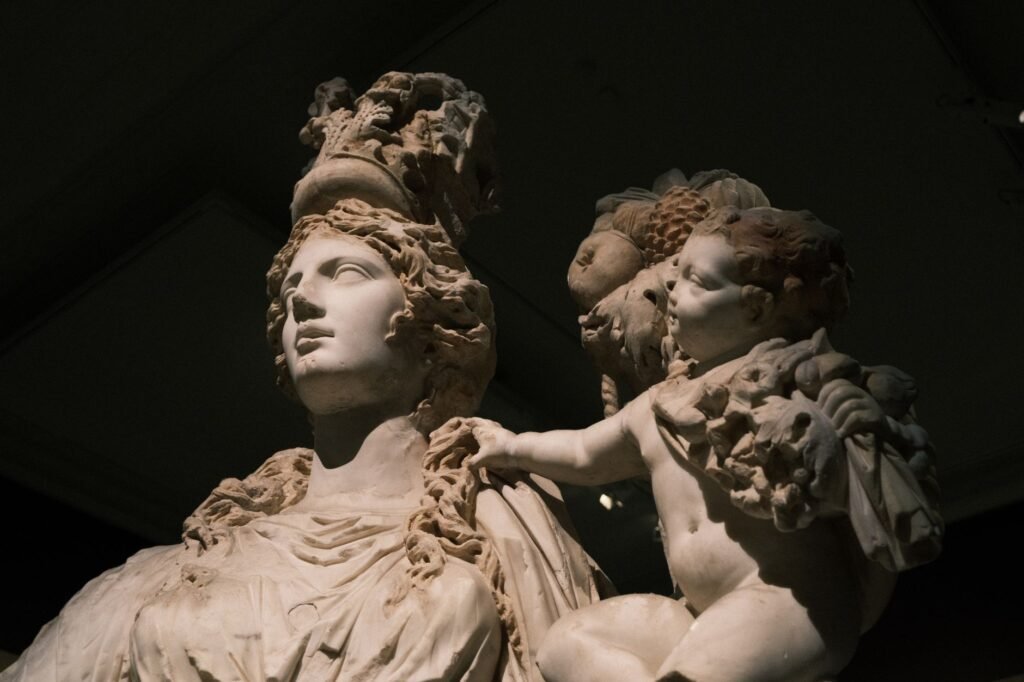
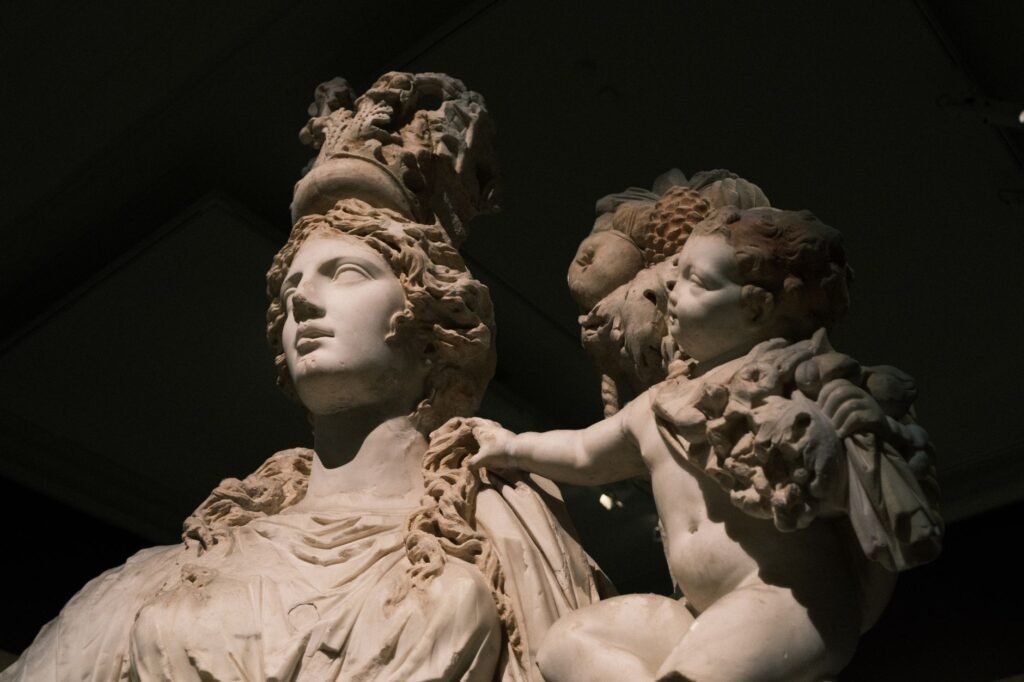
Aurora is the Roman goddess of dawn, the divine personification of the first light that breaks the darkness of night. In Roman mythology she is both a cosmic figure and a poetic symbol of renewal, awakening, and the transition between night and day. Her Greek equivalent is Eos, a major early-morning deity who appears in Homeric epic and later classical literature.
Aurora occupies an important place in ancient religion and literary tradition because she embodies a daily natural event that was also imagined as a divine being. In poetry, she often appears as the radiant herald of the sun, opening the gates of morning and announcing the coming of light. Her image influenced Roman and later European art, literature, and symbolism, where “aurora” came to mean not only a goddess but also dawn itself.
Origin and Meaning
The name Aurora is the Latin word for “dawn.” It is connected to the Proto-Indo-European root aus- or h₂éwsōs, meaning “to shine” or “dawn,” a root that also appears in other Indo-European traditions. This linguistic connection places Aurora within a wider family of dawn goddesses found across ancient cultures.
Related forms of the same ancient dawn figure appear in:
- Greek Eos
- Sanskrit Uṣas
- Baltic Aušrinė
- Vedic and other Indo-European dawn personifications
The consistency of this dawn motif suggests a very old mythological inheritance, though each culture developed its own character, stories, and ritual associations. In Roman usage, aurora could refer generally to the morning light, but in poetic and mythological contexts it also designated a goddess with distinct attributes.
Historical Context
Aurora belongs to the religious and literary world of ancient Rome, which inherited much of its divine imagery from Greece while preserving older Italic and Indo-European concepts. Roman religion often treated deities as powers manifested in natural phenomena, and dawn was one of the most visible and symbolically rich of these.
In literature, Aurora appears most often in epic and poetic texts. Roman poets used her to structure time, mark the beginning of action, and create vivid descriptions of mornings, voyages, battles, and divine interventions. Because dawn is a recurring and universal event, Aurora became a flexible figure in both sacred and literary language.
The goddess also had a place in broader mythological imagination. Dawn was not merely a time of day but a threshold: the moment when darkness receded and order returned. As a result, Aurora became associated with hope, motion, and transformation.
Main Characteristics
Aurora is usually described as a beautiful young woman, radiant and moving swiftly across the sky. Ancient and later artistic traditions often portray her as bringing light with her presence. She is sometimes imagined in a chariot or as a winged figure.
Common characteristics include:
- Radiance: her appearance is linked to light, brightness, and gold or rose-colored dawn skies
- Movement: she travels across heaven at the opening of day
- Youth and beauty: poets regularly emphasize her freshness and elegance
- Transition: she marks the passage from night to day
- Harbinger role: she announces the sun’s arrival
Aurora’s imagery is highly poetic. She is not a distant abstract force but a visible, active figure who participates in the cosmic order. In many texts she is described with metaphors of color, flowers, or light, reinforcing her connection to the beauty of morning.
Family and Genealogy
Different ancient traditions provide different genealogies for Aurora, especially because Roman religion adapted Greek material.
Roman and Greek Tradition
In the most common classical literary tradition, Aurora corresponds to Eos, daughter of the Titans Hyperion and Theia, though some sources vary the genealogy. In other accounts, the dawn goddess is linked to the Titan Pallas and the nymph Styx, or to other primordial or Titanic lineages.
Because Roman authors often identified Aurora directly with Greek Eos, her family relationships in Roman literature follow Greek mythological patterns.
Consorts and Children
Aurora is best known for her relationships with mortal and divine lovers. Among the figures associated with her are:
- Tithonus, a Trojan prince
- Cephalus, a mortal beloved in some traditions
- Astraeus, a star-related deity in some sources
The most famous offspring associated with Aurora in classical myth include:
- Memnon, king of the Ethiopians, son of Aurora and Tithonus in many accounts
- The Winds: sometimes linked to Aurora and Astraeus in Greek tradition, especially Boreas, Zephyrus, Notus, and Eurus
- In some traditions, the Morning Star or related celestial beings are associated with her family
Because ancient sources do not always agree, genealogical details should be treated cautiously. Classical mythology frequently presents multiple overlapping versions rather than a single fixed family tree.
Symbols
Aurora is associated with symbols that evoke sunrise, freshness, and the boundary between night and day.
Common Symbols
| Symbol | Meaning |
|---|---|
| Dawn light | Beginning, renewal, and revelation |
| Rosy or golden colors | The color of morning skies and divine radiance |
| Chariot | Movement across the heavens |
| Wings | Speed and celestial mobility |
| Flowers or dew | Freshness, delicacy, and the morning hour |
| Torch or light-bearing imagery | The arrival of illumination |
Aurora is less defined by cult objects than some other deities. Her symbolism is primarily poetic and visual, rooted in natural observation rather than elaborate temple iconography.
Sacred Animals
Ancient sources do not strongly emphasize a fixed set of sacred animals for Aurora in the way they do for some other gods. However, poetic and artistic traditions often connect her with animals that suit her dawn role.
Associated Animals
- Horses: strongly associated with the movement of the sun and dawn across the sky
- Birds: especially those announcing morning, such as cocks in later symbolic usage
- Swallows and other early-rising birds: often linked with the coming day in literary imagery
The horse is especially important in ancient solar and dawn imagery. In many classical traditions, divine chariots drawn by horses symbolize speed and the orderly progression of celestial time.
Sacred Plants
Aurora does not have a universally fixed sacred plant in the surviving sources. Yet dawn imagery is often expressed through plants that bloom early or are associated with freshness and light.
Plants Associated with Dawn Imagery
- Roses: common in poetic descriptions of dawn’s rosy colors
- Lilies and blossoms: symbols of beauty and the opening of the day
- Flowers covered in dew: used to evoke morning freshness
These associations are more literary than cultic. Ancient poets used floral imagery to describe the goddess’s appearance and the delicate beauty of sunrise.
Sacred Places
Aurora, as a dawn deity, is associated less with one fixed sanctuary than with the eastern horizon and the daily path of the sun. Her “place” is cosmic rather than local.
Mythic and Symbolic Locations
- The eastern sky: the region from which dawn appears
- The gates of heaven: often imagined as opened by or for Aurora
- The margins of the world: in epic poetry, dawn originates from the edges of the earth or sea
Because Aurora is a celestial deity, ancient literature generally situates her in the sky rather than in a specific temple. Unlike gods with major local cult centers, she is primarily experienced through natural phenomenon and poetic invocation.
Powers and Attributes
Aurora’s domain is dawn, but her powers extend symbolically to all that dawn represents.
Core Attributes
- Bringing light
- Announcing the sun
- Dispelling darkness
- Marking time
- Renewing the world each morning
- Serving as a messenger of cosmic order
Aurora is not usually depicted as a warrior or ruler. Instead, her power lies in timing and transformation. She opens the day, and through that action she restores visibility, movement, and life.
In literature, her arrival may signal:
- the start of travel
- the beginning of battle
- the awakening of gods and mortals
- the end of nocturnal danger or secrecy
She therefore functions as both a natural force and a narrative device.
Main Myths
Aurora appears in several major myths, especially in relation to her lovers, children, and role in the cycle of cosmic renewal.
The Story of Tithonus
One of the most famous myths involving Aurora is her love for Tithonus, a mortal prince of Troy. In many versions, Aurora asks Zeus to grant Tithonus immortality, but she forgets to ask for eternal youth. As a result, Tithonus lives forever but continues aging, becoming increasingly frail.
This story is often interpreted as a meditation on the limits of divine gifts and the tragedy of immortality without renewal. It also highlights Aurora’s association with endless daily return: she herself renews every morning, while the mortal body does not.
Memnon and the Trojan Cycle
Aurora is also mother of Memnon, a heroic king who fought for Troy. After Memnon’s death at the hands of Achilles, ancient tradition says Aurora mourned him deeply. Some sources describe her tears as dew or morning mist, a poetic image linking divine grief with natural phenomena.
This myth gave Aurora a tragic maternal dimension. She is not only the bringer of day but also a grieving mother whose sorrow is renewed with each dawn.
Bringing the Day
In epic poetry, Aurora regularly appears at the moment of dawn to begin the actions of the day. Though not always the subject of a standalone myth, her repeated appearance makes her a structural presence in ancient storytelling.
Examples of her function include:
- awakening the gods
- allowing ships to sail
- bringing armies into motion
- ending night’s concealment
Her recurring role gives her a mythic importance beyond any single narrative.
Relationship with Other Mythological Figures
Aurora’s relationships with other mythological beings are shaped by her position as a dawn goddess.
With the Sun
Aurora is closely connected to the sun, which follows her into the sky. In poetic language, she often precedes or heralds Sol in Roman tradition and Helios in Greek tradition.
With the Moon and Night
Aurora also stands in contrast to Noctis or Night, even when not explicitly personified as an enemy. Her arrival ends the reign of darkness and creates the transition between celestial opposites.
With Zeus and Other Olympian Figures
In Greek myth, Eos interacts with Zeus and other Olympian gods, especially in stories involving her lovers and children. Roman adaptations preserve this broader divine network.
With Mortal Heroes
Aurora is frequently connected to mortal or semi-mortal figures, including:
- Tithonus
- Cephalus
- Memnon
These relationships emphasize the tension between divine immortality and human limitation.
Worship and Cult
Compared with major Olympian or Roman state deities, Aurora does not appear to have had an extensive, independent public cult with large temple complexes. Her significance was primarily poetic, symbolic, and cosmological.
Forms of Reverence
Likely forms of devotion to a dawn deity in the ancient world included:
- general prayer at sunrise
- poetic invocation
- symbolic association with beginnings, travel, and purification
- inclusion in broader solar and celestial worship
Roman religion often operated through ritual precision and practical offerings, but the surviving record does not point to a major standardized cult of Aurora comparable to Jupiter, Mars, Venus, or Vesta.
Festivals and Ritual Context
No major widely attested festival specifically dedicated to Aurora is firmly established in the surviving classical record. References to her are more common in literary texts than in ritual calendars.
That said, dawn itself was an important ritual time in many ancient religions, and Aurora’s symbolism would have resonated with prayers, domestic rites, and the opening of sacred activities.
Ancient Sources
Aurora is mentioned and developed across a wide range of classical sources, especially in works that preserve Greek dawn mythology under Roman names.
Key Ancient Authors
- Homer: often describes Eos, the Greek counterpart of Aurora, as “rosy-fingered” dawn
- Hesiod: includes genealogical and cosmological material involving dawn figures
- Apollodorus: preserves mythographic summaries relevant to Eos/Aurora and her family
- Pausanias: records local traditions and mythic variants
- Ovid: offers rich poetic treatments of Aurora in the Metamorphoses and other works
- Virgil: uses Aurora frequently in epic style to mark the beginning of day
- Propertius, Catullus, and other Roman poets: employ Aurora as a literary and emotional image
Important Literary Features
In classical texts, Aurora is often:
- a stylistic marker for dawn
- a divine being with personal agency
- a figure associated with beauty and desire
- a symbol of time’s passage
The diversity of sources means that Aurora should be understood not as a single rigid mythic portrait, but as a recurring divine figure shaped by poetic tradition.
Roman Equivalent
Aurora is the Roman counterpart of the Greek goddess Eos. In most Roman literary contexts, the two figures are essentially equivalent, though their names belong to different cultural systems.
Comparison with Greek Eos
| Aspect | Aurora | Eos |
|---|---|---|
| Tradition | Roman | Greek |
| Name meaning | Dawn | Dawn |
| Main role | Brings morning light | Brings morning light |
| Literary prominence | Frequent in Latin poetry | Prominent in Homer and later Greek literature |
| Cult evidence | Limited and not central | Also limited compared with major Olympian cults |
Roman authors adopted much of the Greek dawn goddess’s mythology while integrating her into Latin language, Roman poetic style, and Roman religious imagination.
Influence on Modern Culture
Aurora has had a long afterlife in art, literature, science, and popular culture. The name remains widely used in many languages, often chosen for its associations with light, beauty, and renewal.
In Literature and Art
Aurora appears in Renaissance and later European art as a classical goddess of the dawn, often depicted in flowing garments, riding in a chariot, or scattering flowers and light. Poets have used her as a symbol of hope, awakening, love, and new beginnings.
In Music and the Visual Arts
The name has been used in titles and imagery for:
- operas and ballets
- paintings of sunrise
- allegorical works on time and light
- decorative and neoclassical art
In Film, Television, and Games
Aurora appears frequently in modern fantasy and entertainment as:
- a character name
- a divine or magical dawn figure
- a symbol of awakening or destiny
In Astronomy and Science
The word aurora also designates the luminous atmospheric phenomenon known as the aurora borealis and aurora australis. Although scientifically different from the goddess, the term preserves the ancient association with light in the sky.
Curiosities
- Aurora’s story is one of the oldest surviving mythic patterns linked to dawn across Indo-European cultures.
- The phrase “rosy-fingered dawn” is famous from Homeric poetry and strongly shaped later descriptions of Aurora.
- The tragedy of Tithonus became a classic example in literature of the danger of immortality without youth.
- Aurora is one of the few major mythological figures whose “temple” is essentially the sky itself.
- In Roman poetry, Aurora often serves as a poetic clock, marking the beginning of action.
- Her connection to dew in some stories reflects an ancient attempt to explain natural morning phenomena through myth.
- The modern feminine name Aurora remains popular in many countries because of its clear association with light and beauty.
Frequently Asked Questions
Who is Aurora in mythology?
Aurora is the Roman goddess of dawn, equivalent to the Greek goddess Eos. She personifies the first light of day and is often described as bringing the sun into the sky.
Is Aurora the same as Eos?
Yes, in most Roman literary and mythological contexts, Aurora is the Roman equivalent of Eos. The two figures share the same basic role, though their names belong to different traditions.
What is Aurora known for?
Aurora is known for her role as the bringer of dawn, her beauty, and her mythic relationships with figures such as Tithonus and Memnon.
Did Aurora have a major cult in ancient Rome?
No major independent cult of Aurora is well attested in surviving sources. She was more prominent in poetry and symbolic representation than in formal temple worship.
What are Aurora’s most famous myths?
Her best-known myths involve her love for Tithonus, the birth of Memnon, and her daily arrival at dawn to announce the coming of light.
What does Aurora symbolize?
Aurora symbolizes dawn, renewal, hope, awakening, and the transition from darkness to light.
Why is Aurora important in literature?
Aurora is important because she provides poets with a vivid divine image for dawn and a way to structure time, emotion, and cosmic order in narrative.
Conclusion
Aurora is one of the most enduring figures in Roman mythology: a goddess of dawn whose presence is felt every morning in the natural world and in the language of poetry. Though she does not have the large ritual profile of some major Roman deities, her mythic and symbolic importance is considerable. She represents the return of light, the renewal of time, and the beauty of transition between darkness and day.
Through her Greek counterpart Eos, Aurora belongs to a very ancient Indo-European tradition of dawn personifications, yet she also stands distinctly within Roman literature as a powerful emblem of beginning, movement, and divine radiance. Her myths, especially those of Tithonus and Memnon, add depth and tragedy to her otherwise luminous image. In later culture, Aurora has remained a compelling symbol of beauty and hope, ensuring that the goddess of dawn continues to shine in memory, art, and language.

Orin Vale has spent the better part of two decades tracing the threads that connect the world’s oldest stories — from the halls of Asgard to the banks of the Nile, from Olympus to the jungles of the Maya. What began as a childhood fascination with flood myths and trickster gods grew into years of independent study across comparative mythology and ancient religion, always chasing the same question: what did these stories mean to the people who first told them? Orin writes for readers who want more than trivia — the ones looking for the beliefs, fears, and truths that myths were built to carry.