Aquila (Roman Eagle Standard)
Introduction
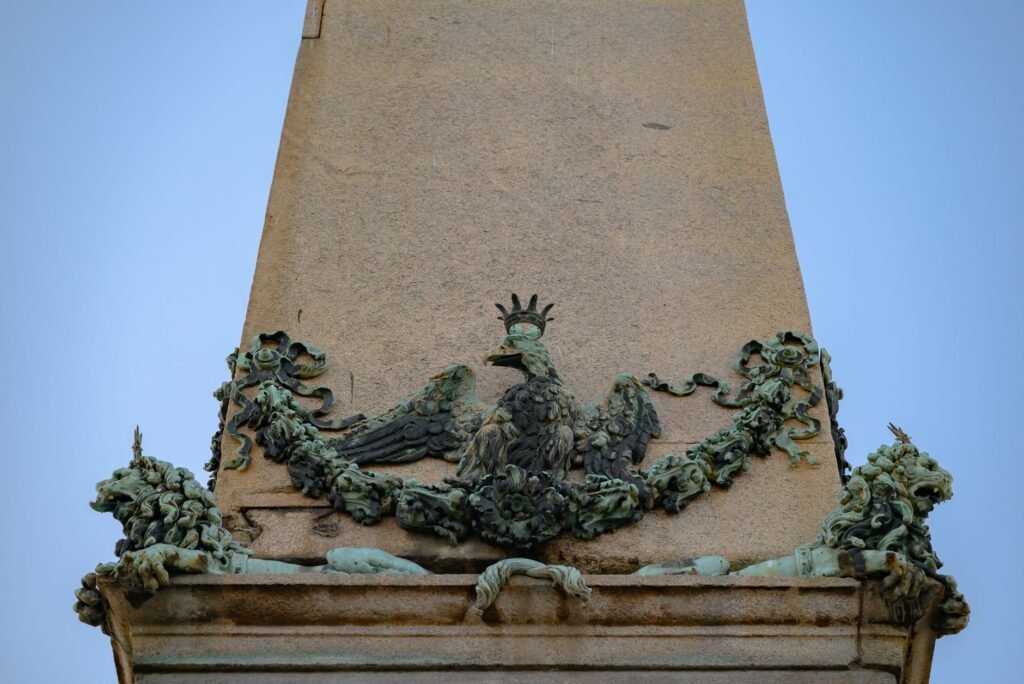
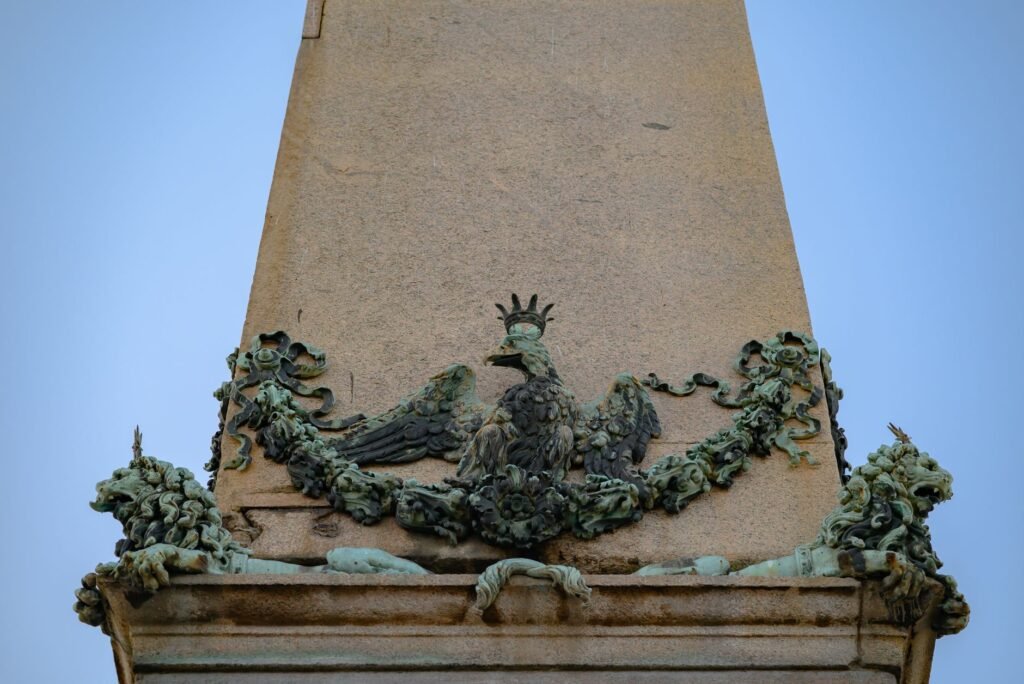
The aquila was the eagle standard of a Roman legion and one of the most iconic military symbols of the ancient world. More than a battlefield emblem, it represented the honor, continuity, and collective identity of a legion. To lose an aquila was a grave disgrace; to recover one was a matter of immense prestige. In Roman military culture, the eagle embodied power, divine favor, and the authority of Rome itself.
Although often discussed alongside other military standards, the aquila was unique. It was not merely a marker for unit identification. It was a sacred object, ceremonially protected and often associated with religious reverence. Its image survived long after the Roman Empire ended, becoming one of the most enduring symbols of imperial power, martial discipline, and state authority in Western history.
Origin and Meaning
The Latin word aquila means “eagle.” In Roman usage, the term referred both to the bird and to the eagle standard carried by a legion. The eagle had long been associated with sky, thunder, victory, and Jupiter, king of the Roman gods. Because of these associations, it was a natural emblem for military authority.
The origin of the aquila as the principal legionary standard is traditionally linked to the Marian reforms of the late Roman Republic, often dated to Gaius Marius in 104 BCE. Ancient authors present Marius as the reformer who made the eagle the sole standard of the legion. However, the historical details are not entirely certain. Earlier Roman armies used several animal standards, including the wolf, minotaur, boar, horse, and eagle. The aquila became preeminent over time, and by the late Republic it was firmly established as the principal standard of a legion.
Etymological and symbolic significance
| Term | Meaning | Significance |
|---|---|---|
| Aquila | Eagle | Power, height, divine association |
| Signum | Standard or signal | General military marker |
| Vexillum | Flag or banner | Used for detachments and special units |
| Imago | Image or likeness | Often associated with imperial portrait standards |
The aquila was therefore both a practical military object and a sacred symbol of Roman identity.
Historical Context
The Roman army relied heavily on standards to organize troops, communicate commands, and maintain cohesion in combat. In a premodern battlefield, where visibility, dust, noise, and chaos made control difficult, the standard served as a rallying point. The aquila was especially important because Roman legionary identity was intensely collective. Soldiers belonged not simply to an army in general but to a specific legion with its own history, honors, and traditions.
The eagle also fit the broader Roman political and religious worldview. Roman public life was deeply intertwined with omens, auspices, and divine approval. The eagle, linked to Jupiter and the heavens, reinforced the idea that Rome’s military success had sacred legitimacy.
The aquila gained exceptional importance during the late Republic and early Empire, when the Roman military became more professionalized and the legion became the central unit of imperial expansion. Under the Principate, the eagle stood at the heart of imperial military pageantry. It was guarded by the aquilifer, a soldier of high status chosen to carry it.
Main Characteristics
The aquila was usually a sculpted or metal eagle mounted on a staff. Ancient depictions suggest that it could be made of silver, bronze, gold, or gilded metal, depending on period and unit. The exact appearance varied, but the bird was typically shown with outspread wings or in a poised, alert stance.
Key characteristics
- Form: eagle figure placed atop a staff
- Material: metal, often precious or semi-precious
- Function: legionary standard and rallying point
- Custodian: carried by the aquilifer
- Status: highest standard of a legion
- Religious significance: treated with reverence and protected carefully
The aquila was distinct from other standards in rank and symbolism. A legion had many standards, but the eagle was the supreme one. It represented the entire legion rather than a single cohort or century. Because of this, its loss in battle could symbolize the defeat or humiliation of the whole unit.
The aquila was often decorated in keeping with Roman military aesthetic values: solemn, disciplined, and authoritative rather than ornate for its own sake. Its prestige came not from lavish decoration alone, but from the collective meaning attached to it.
Family and Genealogy
As a military standard rather than a deity or mythological character, the aquila does not have a family or genealogy in the literal sense. However, it existed within a broader hierarchy of Roman standards and military offices.
Related standards and personnel
- Aquila: the legion’s principal eagle standard
- Signa: standards carried by centuries or maniples
- Vexilla: small flags used for detachments or specialized formations
- Imago: imperial portrait standard, especially in the Imperial period
- Aquilifer: soldier assigned to carry the aquila
- Signifer: standard-bearer for smaller tactical units
In symbolic terms, the aquila can be seen as the “head” of the legion’s standard system. Other standards were subordinate to it, and the eagle was often the focus of ceremonial veneration.
Symbols
The aquila was itself the central symbol, but it was also associated with a network of Roman military and religious symbols.
Common symbolic associations
| Symbol | Meaning |
|---|---|
| Eagle | Jupiter, victory, imperial authority |
| Lightning | Divine power and celestial sanction |
| Laurel | Victory and triumph |
| Military wreaths | Valour, reward, and honor |
| Staff or pole | Authority, command, and continuity |
The eagle’s association with Jupiter was especially significant. In Roman religion, Jupiter was the supreme god of sky and thunder, and the eagle was his bird. This link made the aquila not only a military emblem but also a sign of divine endorsement.
The standard could also acquire symbolic weight through battle history. A legion’s eagle represented accumulated honor, service, and memory. It was a material focus for unit pride and loyalty.
Sacred Animals
The primary sacred animal associated with the aquila is, naturally, the eagle itself. In Roman culture, the eagle had multiple meanings:
- Jupiter’s bird: linked to the highest deity
- Sky and power: associated with elevation and dominance
- Victory: a symbol of triumph and military success
- Imperial authority: later tied to emperors and imperial iconography
The eagle was not the only bird with symbolic value in Roman religion, but it was the most prestigious in military contexts. Its soaring flight made it an apt symbol of reach and command over vast territories.
Other animals were used as military emblems in earlier Roman tradition, but none achieved the same prominence as the eagle. The aquila ultimately superseded them as the defining standard of the legion.
Sacred Plants
The aquila is not directly tied to a specific sacred plant in the way some deities or cults are. However, several plants were regularly associated with Roman military and religious symbolism and may appear in connection with the eagle standard in broader contexts.
Relevant plant symbols
- Laurel: a major symbol of victory, triumph, and honor
- Oak: associated with Jupiter and civic virtue in Roman culture
- Myrtle: linked to victory and ritual purity in some contexts
Of these, laurel is the most important in military imagery. While not unique to the aquila, laurel wreaths often accompanied triumphal and honorific symbolism. The aquila, as an emblem of victory and divine favor, belonged to the same symbolic world.
Sacred Places
The aquila was not tied to one single sacred location, but several places and settings in Roman life were connected to its meaning and use.
Important locations
- Military camps and forts: where standards were kept in the center or near the command area
- Legionary headquarters: the administrative and ritual heart of a unit
- Temples of Jupiter: reflecting the eagle’s divine associations
- Rome’s public ceremonial spaces: especially during triumphs and imperial processions
- Battlefields and war monuments: where captured or recovered standards were commemorated
In Roman camps, the standards held a special place. They were not treated as ordinary equipment. The area where standards were kept could become a focal point of loyalty, oath-taking, and ritual attention.
The recovery of lost standards from foreign lands also became politically and emotionally significant. Famous diplomatic or military recoveries of standards were celebrated as proof that Rome’s honor had been restored.
Powers and Attributes
Strictly speaking, the aquila did not possess powers in a supernatural sense. However, Roman thought often treated it as if it had an almost animate authority because of the meanings attached to it.
Core attributes
- Authority: represented the legion’s official identity
- Unity: provided a visible point of cohesion
- Honor: embodied the dignity of the unit
- Continuity: linked present soldiers with predecessors
- Legitimacy: symbolized Roman military and divine sanction
The aquila’s “power” lay in its ability to unify men under a shared standard. In battle, soldiers could orient themselves by it. In camp, they could gather around it. In memory, it preserved the fame of the legion.
Because the aquila carried such significance, its bearer was often selected from experienced and respected soldiers. The standard was sometimes adorned with garlands or wreaths on special occasions, reflecting its ceremonial importance.
Main Myths
Unlike figures from Greek or Roman mythology, the aquila is not the subject of a large body of myth in the narrative sense. Nevertheless, it appears in historical stories, legendary accounts, and imperial ideology.
Key narrative themes
1. The reform of military standards
Ancient tradition attributes the eagle standard’s elevation to Marius, who is said to have made the aquila the sole legionary standard. This account is central to later Roman military history, though the details are debated by modern historians.
2. The loss of standards
The loss of an aquila in battle was treated as catastrophic. Roman memory preserved such defeats as moments of shame. The emblem’s importance is highlighted by the intensity of Roman reactions to lost standards.
3. The recovery of standards
The return of captured standards became a major theme in imperial propaganda. One of the most famous examples is the recovery of the legionary standards lost to the Parthians after the disaster of Carrhae in 53 BCE. Augustus turned their return into a powerful symbol of Roman restoration, even presenting it as a triumph of diplomacy and imperial prestige.
4. The eagle and imperial power
Roman authors and later tradition associated eagles with the ascent of rulers, victory in battle, and the apotheosis of emperors. The eagle was especially prominent in imperial funerary symbolism, where it could signify the soul’s rise to the heavens.
A note on historical uncertainty
Some popular accounts compress later Roman practices into a single origin story. In reality, the aquila’s development was gradual, and ancient sources do not all present the same chronology. The symbol’s significance is clear; its exact beginnings are less certain.
Relationship with Other Mythological Figures
As a Roman military emblem, the aquila is not a mythological being with personal relationships. Still, it had strong conceptual connections to divine and historical figures.
Major associations
- Jupiter: the aquila’s chief divine association
- Mars: as god of war, indirectly linked to military standards
- The emperor: especially in the Imperial period, when the aquila symbolized imperial power
- The Roman legion: the aquila represented the unit’s collective identity
- Victory personifications: Roman visual culture often paired eagles with victory imagery
The aquila also interacted symbolically with foreign enemies. Capturing an enemy’s standards was a sign of superiority. In Roman ideology, the eagle could stand above rival peoples and armies, reflecting Rome’s claim to universal rule.
Worship and Cult
The aquila was not worshipped as a god, but it could be treated with quasi-religious reverence. Roman military religion often blurred the line between civic symbol and sacred object.
Forms of reverence
- Ceremonial guarding: the aquila was protected carefully
- Oaths: soldiers swore loyalty in the presence of standards
- Decorations and garlands: standards could be honored on festive or victorious occasions
- Religious associations: the eagle’s link to Jupiter gave it sacred authority
- Public honors: recovered standards could be celebrated formally by the state
In the camp, standards had a central position in rituals of military identity. Their presence helped reinforce discipline and collective spirit. The aquila’s role in oath-taking reflects its function as a moral and institutional anchor.
The standard-bearer, the aquilifer, was not merely a porter. He held a position of prestige, responsibility, and symbolic importance. His role underscored the fact that the aquila was both an object and a representation of the legion’s soul.
Ancient Sources
The aquila is known through a wide range of ancient literary and material sources, though no single author provides a complete history of it.
Important ancient references
- Vegetius, De Re Militari — a key source for Roman military organization and standards
- Julius Caesar, Commentarii de Bello Gallico and de Bello Civili — useful for legionary practice and military context
- Tacitus, Annals and Histories — valuable for standards, loyalty, and military symbolism
- Livy — preserves earlier Roman traditions and military history
- Dio Cassius — important for imperial policy and standard recovery narratives
- Pliny the Elder — useful for Roman religious and symbolic attitudes
- Suetonius — especially for imperial symbolism and portents
- Ovid — relevant for eagle imagery and Roman religious symbolism more broadly
Material evidence, including sculpture, reliefs, coins, and inscriptions, also supports the literary record. Roman art frequently shows eagles on standards, altars, and military scenes.
On source criticism
Ancient sources sometimes differ in emphasis. Some focus on military procedure; others on political symbolism or moral lessons. Modern scholarship therefore treats them critically, distinguishing between legendary tradition and documented practice.
Roman Equivalent
The aquila was not an adaptation of a Greek equivalent in a simple sense, although Roman culture absorbed many Greek ideas. Greek armies used their own standards and symbols, but the Roman aquila developed within a distinctly Roman military and religious framework.
If one seeks a Roman “equivalent” within its own system, the closest broader category is the military signum or standard, of which the aquila was the most important. The Roman Empire also used the vexillum for detachments and the imago for imperial portrait standards.
In later Roman and post-Roman usage, the eagle continued as a symbol of statehood and power. Its Roman military form influenced Byzantine, medieval, and modern heraldry, including the double-headed eagle in some later empires.
Influence on Modern Culture
The aquila has had a profound afterlife in modern culture, especially as a symbol of authority, empire, and military tradition.
Major areas of influence
- Heraldry: eagles are widespread in coats of arms, national emblems, and military insignia
- State symbolism: many countries use eagles to represent sovereignty or strength
- Military insignia: modern armed forces often adopt eagle motifs for rank or unit identity
- Literature and historical fiction: Roman standards appear frequently in novels and historical narratives
- Film and television: depictions of Roman legions often emphasize the aquila as a visual shorthand for Rome
- Games: strategy and role-playing games commonly use Roman eagle standards as recognizable symbols
- Architecture and sculpture: eagle motifs continue to suggest grandeur, victory, and authority
Modern audiences often recognize the aquila even when they do not know its name. It has become a shorthand for Roman military discipline and imperial identity.
Curiosities
- The loss of an aquila could be remembered for generations and became a political issue, not just a military one.
- The aquilifer often wore a distinctive bearskin or animal pelt in later Roman depictions, though details vary by period and artistic convention.
- Roman standards were central to camp religion as well as battlefield command.
- The aquila is one reason the eagle became so closely linked with Western ideas of empire.
- Augustus exploited the return of lost standards as a propaganda victory, turning a military embarrassment into a symbol of restored Roman greatness.
- Some Roman standards were believed to have near-sacred status, reflecting the intense emotional bond between soldiers and their units.
- The eagle’s association with ascent and divine power helped it survive as a symbol long after the pagan Roman cults had disappeared.
Frequently Asked Questions
What was the aquila in ancient Rome?
The aquila was the eagle standard of a Roman legion. It was the legion’s most important standard and a symbol of its identity, honor, and unity.
Who carried the aquila?
The aquila was carried by the aquilifer, a specially selected standard-bearer who held a prestigious role within the legion.
Why was the aquila so important?
It represented the legion’s collective honor and was treated as a sacred emblem. Losing it was a great disgrace, while recovering it was a major triumph.
Was the aquila a religious object?
Not a god, but it had strong religious associations, especially through its connection with Jupiter and Roman military ritual.
Did all Roman units have an aquila?
No. The aquila was specifically the principal standard of a legion. Other units used different standards such as the signum or vexillum.
Did the aquila always look the same?
No. Its artistic form varied across periods and depictions, but it generally featured an eagle mounted on a staff.
Is the aquila the same as the Roman eagle on coins and emblems?
It is related, but not always identical in use. The aquila was specifically a military standard, while eagles on coins, monuments, and emblems could serve broader symbolic purposes.
What happened if an aquila was lost?
Its loss was considered a serious humiliation. Rome often made great efforts to recover captured standards, and recovered eagles were celebrated publicly.
Conclusion
The Aquila (Roman Eagle Standard) was far more than a military banner. It embodied the discipline, honor, and religious symbolism of the Roman legion, while also serving as a powerful image of Jupiter-inspired authority and imperial legitimacy. From the late Republic through the Empire, the eagle standard stood at the center of Roman military identity and ceremonial life.
Its importance extended well beyond antiquity. The aquila helped shape later traditions of heraldry, state emblems, and military symbolism, leaving a lasting mark on Western political imagery. As both an object and an idea, the Roman eagle standard remains one of the most recognizable and enduring symbols of Rome’s power and legacy.

Orin Vale has spent the better part of two decades tracing the threads that connect the world’s oldest stories — from the halls of Asgard to the banks of the Nile, from Olympus to the jungles of the Maya. What began as a childhood fascination with flood myths and trickster gods grew into years of independent study across comparative mythology and ancient religion, always chasing the same question: what did these stories mean to the people who first told them? Orin writes for readers who want more than trivia — the ones looking for the beliefs, fears, and truths that myths were built to carry.