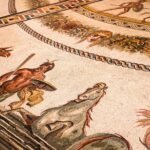
Girdle of Venus
Introduction

The Girdle of Venus is a famous mythological object associated with Venus in Roman religion and with Aphrodite in Greek mythology. In ancient literature, it is described as a powerful belt, sash, or embroidered band that belongs to the goddess of love, beauty, desire, and attraction. The object appears most prominently in Homer’s Iliad, where it is said to contain the qualities that make Venus irresistible: love, charm, persuasion, and seductive power.
Although the Girdle of Venus is not a central cult object in the way that a temple statue or sacred emblem might be, it has had a lasting cultural importance. In mythology, it represents the transformative force of erotic attraction and the idea that beauty is not merely physical but also magical and persuasive. Later writers, artists, and poets used the girdle as a symbol of feminine allure, enchantment, and the power of desire.
Origin and Meaning
The English phrase “Girdle of Venus” refers to the Roman goddess Venus, whose Greek counterpart is Aphrodite. The word girdle comes from Old English gyrdel, meaning a belt, sash, or binding band worn around the waist. In classical contexts, the object is often translated from the Greek kestos himas (κέστος ἱμάς), usually rendered as “embroidered girdle,” “wondrous belt,” or “magic sash.”
The term is historically significant because the girdle is not just decorative. In ancient literary tradition, it is a mythic accessory endowed with divine power. When Hera borrows it in the Iliad, the girdle is described as containing several personified powers, including desire, persuasion, wooing speech, and love. This makes it one of the most symbolically rich objects in Greek and Roman mythology.
The name “Girdle of Venus” is therefore a later, interpretive label for a mythological item originally associated with Aphrodite. In scholarship and popular writing, the phrase is used to refer to the same object across Greek and Roman traditions, even though ancient sources may present it in slightly different ways.
Historical Context
The Girdle of Venus belongs to the broader mythological and religious world of the ancient Mediterranean, where gods and goddesses were understood to interact with human life through gifts, emblems, and sacred powers. Aphrodite/Venus occupied a unique position among the Olympian deities because she governed not only beauty but also the emotional and physical bonds that shape marriage, courtship, fertility, and desire.
In Greek culture, divine adornments often had symbolic meaning. Clothing, jewelry, and textiles could signify status, divinity, and power. A girdle, specifically, had strong associations with the body and with control over sexuality or social role. In the case of Aphrodite, the girdle became a mythic instrument of attraction: it was something the goddess wore, but it could also be loaned to another goddess and used to affect gods and mortals alike.
The best-known narrative involving the girdle occurs in the Trojan cycle. Hera borrows the belt from Aphrodite to seduce Zeus, in order to distract him from the battlefield and aid the Greeks. This episode shows that the girdle was imagined as more than an ornament. It functioned as a divine technology of persuasion, a symbolic concentration of the goddess’s influence.
Because the object appears in epic poetry rather than in archaeological records, its significance is primarily literary and religious rather than material. There is no universally attested historical cult object called the Girdle of Venus in the same way one might speak of a temple relic. Instead, its importance lies in the way ancient authors imagined the goddess’s power.
Main Characteristics
The Girdle of Venus is usually characterized as:
- A belt or sash, often embroidered or beautifully woven
- A divine garment, linked directly to the goddess of love
- A source of enchantment, not merely decoration
- A symbol of erotic power and persuasion
- A transferable object, since Hera borrows it in one major myth
In Homeric description, the girdle is associated with the goddess’s ability to inspire desire and produce attraction. Ancient translators and commentators often emphasize that it contains named qualities, suggesting that the belt is almost like a container or embodiment of abstract forces.
Common identifying features
| Feature | Description |
|---|---|
| Form | Belt, girdle, sash, or embroidered strap |
| Owner | Aphrodite in Greek myth; Venus in Roman adaptation |
| Function | Inspires love, desire, persuasion, and charm |
| Symbolism | Erotic attraction, beauty, seduction, divine influence |
| Literary role | Used in the Iliad and later mythological retellings |
The girdle is not usually described as a weapon or a magical object in the modern fantasy sense. Its power is subtler: it influences emotions, speech, and social dynamics. This makes it one of the most psychologically sophisticated symbols in classical myth.
Family and Genealogy
The Girdle of Venus is an object, not a deity, so it does not have a genealogy in the literal sense. However, it is connected to the family and relationships of Aphrodite/Venus.
Aphrodite’s mythological relationships
Different ancient traditions give different accounts of Aphrodite’s origins:
- In Hesiod’s Theogony, Aphrodite is born from the sea foam that formed after Uranus was castrated.
- In Homer, she is generally presented as the daughter of Zeus and Dione.
These two traditions are both important in classical mythology and should not be conflated. The girdle belongs to the goddess regardless of which origin story is followed.
Related divine figures
The girdle’s mythological meaning is strengthened by its association with:
- Hera, who borrows it in the Iliad
- Zeus, the target of Hera’s seduction
- Ares, frequently associated with Aphrodite in later mythic tradition
- Eros/Cupid, who represents desire and may be seen as conceptually related to the girdle’s powers
Because the girdle is a symbol of erotic influence, it belongs within a network of divine relationships centered on attraction, marriage, infidelity, and persuasion.
Symbols
The Girdle of Venus is itself a symbol, but it is also associated with a wider symbolic field.
Main symbolic meanings
- Love and desire: Its most direct meaning
- Persuasion and charm: It influences speech and behavior
- Female beauty: It is linked to adornment and grace
- Erotic power: It suggests that attraction can be active and effective
- Divine authority over intimacy: It marks the goddess’s domain over human and divine passion
Related symbolic objects
Depending on the artistic or literary context, the girdle may appear alongside:
- Doves
- Roses
- Myrtles
- Mirrors
- Perfumes
- Fine textiles
- Flowers and garlands
These associated objects reinforce the themes of beauty, sensuality, and attraction.
Sacred Animals
There is no universally fixed list of sacred animals specifically attached to the Girdle of Venus, but the object belongs to the symbolic world of Aphrodite/Venus, who is often associated with certain animals in classical tradition.
Common animals linked to Aphrodite/Venus
| Animal | Symbolic meaning |
|---|---|
| Dove | Love, gentleness, peace, desire |
| Swan | Beauty, grace, elegance |
| Sparrow | Fertility and erotic energy in some traditions |
| Goose | Occasionally linked to domesticity and sacred presence |
| Dolphin | Sea-born associations and divine movement |
| Rabbit or hare | Fertility and reproduction in later symbolic traditions |
Among these, the dove is the most widely recognized. It reflects the gentle, seductive, and harmonious side of the goddess’s power. While these animals are associated with the goddess herself rather than the girdle specifically, they belong to the same symbolic world.
Sacred Plants
No ancient source establishes a formal list of plants specifically dedicated to the Girdle of Venus. However, several plants are traditionally linked with Aphrodite/Venus and may be considered part of her mythic and cultic environment.
Plants often associated with Aphrodite/Venus
- Myrtle: Commonly connected with the goddess; symbolizes love and marriage
- Rose: A classical emblem of beauty and passion
- Apple: Linked to desire, choice, and the judgment of beauty
- Anemone: Associated in later myth with loss and fleeting beauty
- Violet: Sometimes connected with spring and tenderness
These plants do not belong to the girdle in a literal sense, but they enrich the symbolic framework of love, beauty, and seasonal fertility surrounding Venus. In art and poetry, such plants often appear with the goddess as visual cues for her domain.
Sacred Places
The Girdle of Venus is not tied to one single shrine, but it is associated with the sacred geography of Aphrodite/Venus worship.
Important locations associated with Aphrodite/Venus
| Place | Significance |
|---|---|
| Cyprus | One of the major cult centers of Aphrodite |
| Cythera | Another early and important cultic site |
| Corinth | Famous in antiquity for Aphrodite’s cult |
| Paphos | A major sanctuary of Aphrodite in Cyprus |
| Knidos | Known for the celebrated statue of Aphrodite by Praxiteles |
| Mt. Olympus | Mythological dwelling place of the gods |
Cultural significance of these sites
In these locations, Aphrodite was worshipped in forms that could emphasize fertility, maritime safety, civic prosperity, or sensual beauty. The girdle’s symbolism fits especially well with sanctuaries dedicated to the goddess as a power over attraction and relationship. However, the object itself is not known to have been preserved or venerated as a shrine relic.
Powers and Attributes
The Girdle of Venus embodies a cluster of divine powers traditionally associated with Aphrodite.
Primary powers
- Love: The capacity to inspire affection and attachment
- Desire: The force of erotic longing
- Persuasion: The power to move hearts and minds
- Seduction: The ability to attract and enchant
- Charm: Grace and beauty that influence others
- Union: The joining of lovers, spouses, and desire-driven relationships
In the Iliad, the belt is not simply an accessory but a concentrated expression of these attributes. Its power lies in transformation: when worn, it can alter how others perceive and respond to the wearer.
Interpretive significance
The girdle can be read as a symbol of the ancient idea that desire is compelling but not always visible. The object externalizes an inner force. It turns abstract emotional influence into a tangible item, which is a common feature of mythic thought.
Main Myths
The most important myth involving the Girdle of Venus is the episode in Homer’s Iliad.
Hera borrows the girdle
In Book 14 of the Iliad, Hera plans to distract Zeus so that the Greeks may gain advantage in the Trojan War. To do this, she asks Aphrodite for the girdle. Aphrodite’s response is significant: she is reluctant but ultimately lends it. The girdle is described as containing powers such as:
- Love
- Desire
- Persuasion
- Cunning speech
- Seductive allure
Hera then uses it to make herself irresistibly attractive to Zeus.
Meaning of the myth
This story has several layers of significance:
The power of divine femininity
Aphrodite’s belt represents the potency of female attraction, not as passive beauty but as active influence.Erotic power as strategic force
Desire becomes a political tool in the divine world.The boundary between beauty and manipulation
The myth suggests that attraction can be used ethically or strategically, depending on the context.Shared divine domains
Even a goddess such as Hera must borrow Aphrodite’s power, indicating that love and persuasion are distinct from majesty or authority.
Other traditions
Later mythic and literary sources occasionally refer to Aphrodite’s adornments or magical beauty, but the Homeric scene is the central and most influential account. There is no broad cycle of myths centered entirely on the girdle itself.
Relationship with Other Mythological Figures
The Girdle of Venus is connected to several major mythological figures through Aphrodite’s role in the pantheon.
Hera
Hera’s borrowing of the girdle is the key interaction. The episode suggests both respect and rivalry. Hera needs Aphrodite’s aid to carry out her plan, which implies that love and persuasion belong to Aphrodite’s sphere, not Hera’s.
Zeus
Zeus is the target of the girdle’s influence in the Iliad. The myth dramatizes the power of desire even over the king of the gods.
Ares
Aphrodite’s relationship with Ares is a recurring theme in later tradition, and the girdle fits naturally into such narratives because it symbolizes erotic magnetism and passionate connection.
Eros
Eros personifies desire itself. Although not directly linked to the girdle in every source, he belongs to the same conceptual world of attraction, longing, and emotional compulsion.
Mortal figures
In many myths, Aphrodite affects mortals through beauty, persuasion, or desire. The girdle can be seen as a poetic embodiment of that influence, though it is not always directly used in mortal stories.
Worship and Cult
There is no clear evidence that the Girdle of Venus was worshipped as a standalone cult object. Instead, it belongs to the religious imagination surrounding Aphrodite/Venus.
Cultic context
Aphrodite was worshipped in many regions of the Greek and Roman world. Her cults could emphasize:
- Fertility
- Marriage
- Maritime protection
- Sexual attraction
- Civic well-being
- Sacred prostitution in some historical discussions, though the extent and interpretation of such practices are debated and should be treated cautiously
Ritual and symbolic use
In a broad sense, the girdle fits into rituals concerned with:
- Marriage preparation
- Beauty and adornment
- Gift-giving to the goddess
- Offerings of perfume, flowers, and textiles
- Prayers for love or reconciliation
Because textiles and clothing were often valuable votive gifts in the ancient world, the idea of a divine girdle would have resonated strongly with worshippers. Yet the girdle itself remains chiefly a literary symbol rather than a documented cult artifact.
Ancient Sources
The principal ancient source for the Girdle of Venus is Homer’s Iliad.
Key sources and references
| Author | Work | Relevance |
|---|---|---|
| Homer | Iliad | Main account of Hera borrowing Aphrodite’s girdle |
| Hesiod | Theogony | Provides Aphrodite’s genealogy and divine context |
| Apollodorus | Bibliotheca | Summarizes mythological traditions related to Aphrodite and the gods |
| Pausanias | Description of Greece | Useful for cult and local traditions, though not focused on the girdle |
| Ovid | Metamorphoses and other works | Roman literary treatment of Venus and love motifs |
| Later commentators | Scholia and mythographic compendia | Preserve interpretive details and summaries |
Important caution
Different ancient sources do not always present Aphrodite in identical terms. Some emphasize her sea-born origin, others her parentage by Zeus and Dione. The girdle episode, however, remains strongly associated with the Homeric tradition and is the best-attested narrative.
Roman Equivalent
The Roman equivalent of Aphrodite is Venus. In Roman religion and literature, Venus absorbed many of the Greek goddess’s functions, though she also developed a broader Roman identity connected with fertility, lineage, state ideology, and imperial symbolism.
The Girdle of Venus in Roman usage is therefore an adaptation of the Greek mythic object rather than an independent Roman invention. Roman poets such as Ovid helped reinforce Venus’s role as a goddess of beauty, desire, and enchantment.
Roman reinterpretation
Roman culture often emphasized:
- Venus as mother of the Roman people in certain myths
- Venus as a patroness of love and fertility
- Venus in connection with political legitimacy and ancestry
- Venus as an elegant literary and artistic figure
The girdle, when referenced in Roman contexts, serves as a symbolic shorthand for Venus’s irresistible charm.
Influence on Modern Culture
The Girdle of Venus has influenced modern literature, art, and scholarship, even when the object itself is not named directly.
Literature and poetry
Writers have used the girdle as a metaphor for:
- Seduction
- Alluring speech
- The power of beauty
- Feminine enchantment
Because the object is so strongly tied to classical myth, it often appears in poetic or learned references to beauty and desire.
Visual art
Artists depicting Venus, Hera, or classical scenes from the Iliad sometimes include ornate belts, drapery, or symbolic garments to evoke the girdle’s meaning. Even when not explicitly identified, such details reinforce the association with charm and sensuality.
Popular culture
The mythic image of a magical belt or sash has influenced modern fantasy, comics, and gaming, where enchanted garments often grant charisma, persuasion, or attractiveness. While these are not direct retellings, they show the lasting appeal of the idea.
Fashion and metaphor
The phrase “Girdle of Venus” has also been used metaphorically in discussions of beauty, waist adornment, and classical aesthetics. In modern contexts, it may appear as a literary reference, a title, or a symbolic expression rather than a literal mythological item.
Curiosities
- The girdle is one of the rare mythic objects whose power is psychological rather than physical.
- In Homer, the belt is borrowed, suggesting that even divine beauty can be shared, transferred, or strategically used.
- The ancient Greek term often translated as “girdle” can also imply a woven or embroidered band, which highlights craftsmanship as part of its symbolism.
- The myth shows that persuasion and desire were imagined as divine forces with political consequences.
- The girdle is not a major cult relic in surviving archaeology, yet it remains one of the best-known symbolic objects connected with Aphrodite/Venus.
- Its episode in the Iliad is one of the clearest literary examples of a goddess’s accessory having magical efficacy.
- The girdle’s fame is greater in modern reference than in ancient ritual practice, demonstrating how literary scenes can outlast cultic use.
Frequently Asked Questions
What is the Girdle of Venus?
The Girdle of Venus is a mythological belt or sash associated with the goddess Venus, or Aphrodite in Greek mythology. It symbolizes love, desire, persuasion, and beauty.
Where does the Girdle of Venus appear in ancient literature?
Its most famous appearance is in Homer’s Iliad, where Hera borrows the girdle from Aphrodite to seduce Zeus.
What powers does the girdle have?
It is described as containing or embodying love, desire, seductive charm, and persuasive influence.
Is the Girdle of Venus the same as Aphrodite’s belt?
Yes. In mythological context, the Girdle of Venus is the Romanized way of referring to Aphrodite’s girdle or embroidered sash.
Was the girdle used in worship?
There is no clear evidence of a specific cult dedicated to the girdle itself. It is primarily a literary and symbolic object associated with Aphrodite/Venus.
Why is the girdle important?
It is important because it represents the idea that love and attraction are powerful divine forces capable of influencing gods, mortals, and events.
Is the Girdle of Venus mentioned by Roman authors?
Roman writers and poets refer to Venus and her attributes, but the best-known and most detailed account of the girdle comes from Greek epic tradition.
What does the girdle symbolize today?
Today it often symbolizes beauty, seduction, feminine power, and the persuasive force of charm in literature and art.
Conclusion
The Girdle of Venus is a small mythological object with a large symbolic legacy. In ancient literature, it embodies the irresistible power of love, desire, and persuasion. Its most famous appearance in Homer’s Iliad gives it a lasting place in the classical imagination, where it functions not merely as clothing but as a concentrated emblem of Aphrodite’s divine influence.
As a mythic symbol, the girdle reveals how ancient cultures understood beauty and attraction: not as superficial qualities, but as forces capable of shaping relationships, decisions, and even the course of war. Through Greek and Roman tradition, the Girdle of Venus remains a vivid reminder of the enduring power of myth to turn a simple object into an icon of enchantment.

Orin Vale has spent the better part of two decades tracing the threads that connect the world’s oldest stories — from the halls of Asgard to the banks of the Nile, from Olympus to the jungles of the Maya. What began as a childhood fascination with flood myths and trickster gods grew into years of independent study across comparative mythology and ancient religion, always chasing the same question: what did these stories mean to the people who first told them? Orin writes for readers who want more than trivia — the ones looking for the beliefs, fears, and truths that myths were built to carry.