Cauldron of the Dagda
Introduction
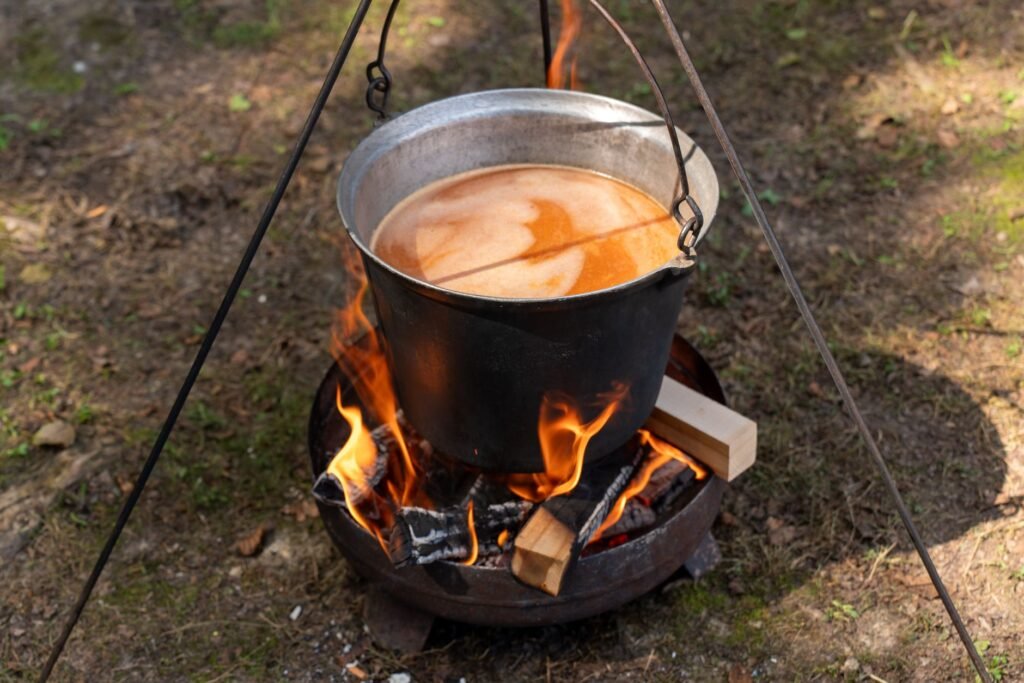
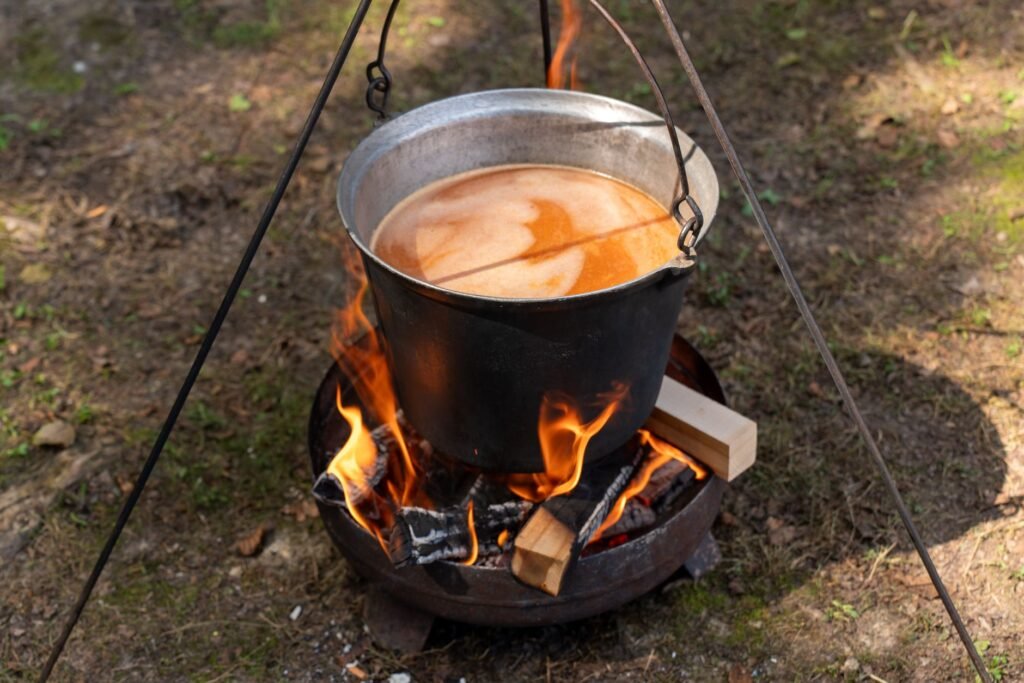
The Cauldron of the Dagda is one of the most evocative objects in Irish mythology. It belongs to the Dagda, a major supernatural figure of the Tuatha Dé Danann, the divine or semi-divine people who occupy a central place in the medieval Irish mythological cycle. In surviving texts, the cauldron is usually presented as a vessel of abundance, capable of feeding all who approach it and symbolizing the Dagda’s role as a provider, protector, and ruler associated with fertility, hospitality, and sovereignty.
Unlike many mythic objects that are defined by a single fixed story, the Cauldron of the Dagda appears within a broader web of Irish legendary tradition. Its exact powers, size, and symbolism vary across sources and later retellings. Nevertheless, it remains one of the classic Four Treasures of the Tuatha Dé Danann, alongside the Stone of Fál, the Spear of Lugh, and the Sword of Nuada. Because of this, the cauldron occupies an important place in discussions of Celtic religion, mythic kingship, and the symbolism of sacred hospitality.
Origin and Meaning
The word Dagda is generally interpreted as meaning “the good god” or “the great god,” though the precise linguistic history is debated. In Old Irish, dag means “good,” and the figure’s name has often been understood as a title rather than a personal name. The cauldron associated with him is usually referred to in English as the Cauldron of the Dagda, though the original Old Irish wording varies depending on manuscript and modern translation.
The term cauldron itself refers to a large cooking vessel, but in Irish myth it has a wider symbolic field. A cauldron can represent:
- Provision and abundance
- Hospitality and social order
- Transformation and renewal
- Knowledge, inspiration, or supernatural nourishment
In the mythological context of the Dagda, the cauldron is less a kitchen utensil than a sacred emblem of inexhaustible plenty. It is not always described in technical detail, and different sources emphasize different features. Some traditions stress its ability to satisfy every guest; others place it among other miraculous objects of the Tuatha Dé Danann.
Historical Context
The Cauldron of the Dagda belongs to the world of medieval Irish literature, not to a single recoverable “pagan scripture.” Our knowledge comes from manuscripts written by Christian scribes who preserved earlier oral traditions, heroic narratives, and mythic material. As a result, the cauldron should be understood within a layered historical context:
Pre-Christian Irish beliefs and ritual imagination
Some mythic themes likely reflect older ideas about kingship, fertility, feasting, and sacred wealth.Early medieval literary transmission
Irish monks and scholars recorded traditional stories in texts such as mythological cycles and pseudo-historical compilations.Christian reinterpretation and preservation
The stories were copied in a Christian environment, which shaped how pagan figures were presented, without fully erasing their older significance.
In Irish tradition, feasting was never merely social. A ruler’s legitimacy was often linked to the ability to distribute food, maintain hospitality, and protect the community. The Dagda’s cauldron therefore fits into a broader symbolic system in which abundance is a mark of rightful power. The object also reflects the importance of the mead-hall and feast in early Irish and wider Indo-European cultural memory.
Main Characteristics
The Cauldron of the Dagda is usually characterized by its inexhaustible generosity. While descriptions vary, the most common traits include the following:
| Feature | Description |
|---|---|
| Type | Magical cauldron or vessel |
| Owner | The Dagda |
| Main function | Providing food and abundance |
| Symbolic value | Hospitality, sovereignty, fertility, plenty |
| Mythic status | One of the treasures of the Tuatha Dé Danann |
Identifying Features
- It is linked to the Dagda as part of his broader identity as a provider.
- It is often treated as a miracle vessel, capable of satisfying many people at once.
- It belongs to the class of sacred treasures that define the Tuatha Dé Danann’s mythic supremacy.
- In some traditions, it is associated with a bottomless or never-empty quality, though exact phrasing differs by source.
The cauldron’s significance is not only practical but symbolic. It represents the ideal ruler’s ability to feed the people, while also evoking the otherworldly abundance associated with divine lands and supernatural kingship.
Family and Genealogy
The cauldron itself has no genealogy, but the Dagda does, and his family connections help explain the object’s mythic status.
The Dagda’s Family
In Irish myth, the Dagda is generally presented as a prominent member of the Tuatha Dé Danann. His parentage varies or is not consistently emphasized across texts, which is common in early Irish tradition. Different sources may describe him more by role than by lineage.
Figures often associated with the Dagda include:
- Bodb Derg, sometimes treated as a close kin or successor within the Tuatha Dé Danann tradition
- Brigid, a major figure in Irish tradition who is sometimes presented as his daughter in certain sources
- Aengus (Óengus), frequently identified as his son in mythic genealogies
- The Morrígan, who is connected to him in several stories, though the nature of the relationship differs by tradition
Because sources differ, it is safest to say that the Dagda belongs to the central divine family of Irish mythology, and that the cauldron reflects his role within that family as a source of nourishment and authority.
Symbols
The Cauldron of the Dagda is associated with a cluster of symbolic ideas rather than one fixed emblem.
Major Symbols
- Cauldron / vessel: abundance, sustenance, sacred hospitality
- Feast: communal well-being and legitimate rule
- Fire and cooking: transformation, renewal, and the movement from raw to life-sustaining
- Overflowing plenty: divine generosity and unending provision
Related Symbolic Meanings
The cauldron can also be read as a symbol of:
- Sovereignty, because a true ruler provides for the land and its people
- Otherworldly fertility, since the Tuatha Dé Danann are connected with the supernatural landscape of Ireland
- Cosmic order, in the sense that nourishment is part of a stable and just world
Although the color symbolism attached to the cauldron is not standardised in the sources, later Celtic-inspired interpretations sometimes connect cauldrons with darkness, depth, and hidden wisdom, reflecting the vessel’s association with the unseen interior where transformation takes place.
Sacred Animals
The Dagda is not as closely defined by a single sacred animal as some other mythic figures, and the Cauldron of the Dagda is not consistently linked to one specific beast. However, animal associations can be inferred from the Dagda’s broader identity.
Possible Animal Associations
- Cattle: especially important in Irish myth because wealth, kingship, and food supply are closely linked to cattle
- Boar: often associated with feasting and abundance in Celtic storytelling
- Wild animals of the landscape: reflecting the Dagda’s connection to nature, fertility, and seasonal power
Because the cauldron is a vessel of feeding, its symbolic relationship to animals often comes through the idea of sustenance rather than direct mythic companionship. The broader mythic economy of Ireland makes cattle especially significant, since livestock were central to wealth and hospitality.
Sacred Plants
No plant is universally and securely established as sacred to the Cauldron of the Dagda in the surviving sources. Still, certain plants are culturally relevant in Irish mythic settings.
Plants Commonly Associated with Irish Mythic Contexts
- Oak: a symbol of strength, sovereignty, and sacred tradition
- Hazel: associated with wisdom and inspiration in Irish lore
- Rowan: often linked in later folklore with protection
- Herbs used in feasting and healing: reflecting the cauldron’s connection to nourishment and restoration
It is important to distinguish between attested tradition and later symbolic interpretation. The surviving texts do not provide a fixed plant inventory for the cauldron, so any plant associations should be treated as contextual rather than definitive.
Sacred Places
The Cauldron of the Dagda is linked less to a single shrine than to the mythic geography of the Tuatha Dé Danann and the early Irish literary landscape.
Important Places in the Broader Tradition
- Mag Tuired: a major mythic battlefield in stories of the Tuatha Dé Danann
- Brú na Bóinne: especially associated with the otherworldly power of Aengus and the mythic royal landscape
- The Otherworld / sídhe mounds: supernatural sites where the Tuatha Dé Danann often dwell
- Tara and other kingship sites: linked to sovereignty, hospitality, and sacred rule in Irish tradition
The cauldron’s meaning is reinforced by these places because they are all tied to authority, prosperity, and contact with the otherworld. In mythic logic, a magical vessel that feeds all guests belongs naturally to the sacred center of the land.
Powers and Attributes
The primary power of the Cauldron of the Dagda is inexhaustible nourishment. It stands for the ability to feed everyone who comes to it, a quality that mirrors the ideal of boundless hospitality.
Main Attributes
- Unlimited provision
- Feeding the community
- Sign of divine or royal abundance
- Association with festivity and wellbeing
- Symbol of a just and generous ruler
Mythic Functions
The cauldron may also imply broader powers:
- Social cohesion: feeding people creates bonds
- Sacred legitimacy: a ruler or deity who provides food supports order
- Transformation: cooking turns raw materials into sustenance
- Renewal: the feast restores strength and life
It is worth noting that Irish myth often presents sacred objects through their effects, not through mechanical explanation. The cauldron’s power is therefore best understood as a mythic truth about abundance rather than a literal inventory of magical properties.
Main Myths
The Cauldron of the Dagda appears within a network of Irish myths, especially those involving the Tuatha Dé Danann and their treasures.
The Four Treasures of the Tuatha Dé Danann
The best-known framework for the cauldron is its inclusion among the Four Treasures brought by the Tuatha Dé Danann to Ireland. These treasures are usually listed as:
- The Stone of Fál
- The Spear of Lugh
- The Sword of Nuada
- The Cauldron of the Dagda
Not all texts present the list identically, and some details vary. Still, the cauldron’s presence in this set marks it as one of the defining divine possessions of the mythic people.
The Cauldron as a Vessel of Plenty
In traditions that describe its function more directly, the cauldron is said to provide food for all without exhausting its contents. This makes it a mythic expression of perfect hospitality, a value highly prized in early Irish society.
The Dagda’s Hospitality and Feasting
The Dagda himself is strongly associated with appetite, generosity, and the large-scale provision of food and drink. In myths where he is depicted as a figure of immense size and strength, the cauldron serves as a fitting extension of his nature: he is not only powerful but also able to sustain the community.
Destruction, Loss, or Rediscovery
Some mythological objects in Irish tradition undergo theft, concealment, or transfer. The cauldron’s exact narrative history varies, and not all sources describe a single dramatic episode involving it. Where the texts do focus on the treasures of the Tuatha Dé Danann, they often emphasize their importance as markers of divine authority rather than detailing one continuous biography for each object.
Relationship with Other Mythological Figures
The Cauldron of the Dagda is connected to several important figures through the Dagda’s role and through the wider mythological system.
The Dagda
The cauldron is the Dagda’s defining vessel. He is the figure most directly associated with it, and its symbolism reflects his status as a generous and powerful deity-like being.
The Tuatha Dé Danann
As one of their treasures, the cauldron belongs to the collective identity of the Tuatha Dé Danann. It helps express their supernatural skill, wealth, and right to mythic kingship.
Lugh, Nuada, and Other Divine Figures
Because the cauldron is part of the group of sacred treasures, it is indirectly linked to other major figures:
- Lugh, associated with the spear
- Nuada, associated with the sword
- The Stone of Fál, associated with legitimacy and kingship
These figures belong to the same mythological system, and the treasures together create a symbolic map of sovereignty, warfare, and providence.
The Morrígan and Other Powerful Figures
In broader Dagda traditions, the Morrígan and other supernatural beings appear in stories of alliance, conflict, and prophecy. While not specifically tied to the cauldron in the surviving sources, they belong to the same mythic world in which abundance, battle, and sovereignty are deeply connected.
Worship and Cult
There is no securely documented historical cult devoted specifically to the Cauldron of the Dagda. It is best understood as a mythic object known from literature rather than as a surviving ritual artifact with an attested temple cult.
Possible Religious Significance
Even without direct evidence of formal worship, the cauldron likely reflects older religious and social values:
- Hospitality as sacred duty
- Feasting as a marker of rank
- The ruler as provider
- The land’s fertility as a divine blessing
Ritual and Symbolic Parallels
In early Irish society, ritual meals, gift-giving, and public hospitality had political and social importance. The cauldron may therefore preserve memory of a sacred ideal in which food distribution legitimized authority. Later folklore and modern Celtic spirituality often treat cauldrons as symbols of inspiration and renewal, though these interpretations should not be confused with ancient practice.
Ancient Sources
The Cauldron of the Dagda is known mainly from medieval Irish sources, not from Greco-Roman authors such as Homer or Hesiod. The most relevant materials include Irish saga literature and mythological compilations.
Important Source Traditions
- Lebor Gabála Érenn (The Book of the Taking of Ireland): a pseudo-historical compilation that helps frame the Tuatha Dé Danann and their treasures
- Cath Maige Tuired (The Battle of Mag Tuired): one of the major mythological texts concerning the Tuatha Dé Danann
- Other Irish sagas and manuscript traditions: which preserve references to the Dagda and his attributes
Notes on Source Reliability
These texts were written down centuries after the likely origin of the oral traditions they preserve. They combine myth, genealogy, history-like narrative, and Christian scholarship. Therefore:
- They are invaluable for understanding Irish mythic tradition.
- They do not provide a single, unified “original” account.
- Different manuscripts may preserve different versions of the same story.
Roman Equivalent
There is no exact Roman equivalent to the Cauldron of the Dagda. Roman mythology does not offer a one-to-one counterpart with the same combination of divine hospitality, sovereignty, and supernatural feeding.
That said, some broad analogies can be made cautiously:
- Ceres or Ops may be compared in terms of fertility and abundance, though they are not equivalent.
- Diana or Mercury are sometimes invoked in comparative studies of Celtic religion, but again without direct correspondence.
- Roman banquet culture and divine feasting motifs can help explain how sacred food and ritual abundance worked in ancient societies.
The absence of a precise Roman analogue is important. The cauldron belongs to a specifically Irish mythological and Celtic symbolic framework.
Influence on Modern Culture
The Cauldron of the Dagda continues to appear in modern retellings of Celtic myth, fantasy literature, role-playing games, and popular discussions of Irish folklore.
Modern Literary and Artistic Influence
- Fantasy fiction often adapts the idea of a magical cauldron of abundance.
- Illustration and visual art frequently portray the Dagda as a large, benevolent figure with a sacred vessel.
- Celtic revival movements have helped renew interest in the Tuatha Dé Danann and their treasures.
Games and Popular Media
In modern games and world-building, cauldrons inspired by the Dagda may appear as:
- Items of healing or unlimited food
- Symbols of druidic or ancient power
- Quest objects connected to lost Celtic relics
Cultural Legacy
The cauldron is also part of broader modern fascination with:
- Celtic mythology
- Sacred kingship
- Mythic abundance
- The symbolic power of vessels and containers
Its appeal lies in the enduring human image of a vessel that never empties and a world where hospitality itself is magical.
Curiosities
- The Cauldron of the Dagda is often discussed alongside other famous mythic vessels from world mythology, but its meaning is distinctly Irish.
- The Dagda is sometimes described in modern summaries as a “good god,” yet the title can also imply broader greatness or usefulness, not simply moral goodness.
- Irish myth frequently connects legitimacy with feasting, making the cauldron a political symbol as well as a magical one.
- The object is one of the best examples of how ordinary household technology can become sacred in myth.
- Some modern interpretations compare the cauldron with the Holy Grail, but the two belong to different traditions and should not be conflated.
- The cauldron’s mythic power is less about spectacle than about sustaining life, which is one reason it remains so resonant.
Frequently Asked Questions
What is the Cauldron of the Dagda?
It is a magical cauldron associated with the Dagda in Irish mythology. It is typically described as a vessel of abundance that can feed all who approach it.
Is the Cauldron of the Dagda one of the Four Treasures?
Yes. In common tradition, it is one of the Four Treasures of the Tuatha Dé Danann, alongside the Stone of Fál, the Spear of Lugh, and the Sword of Nuada.
What does the cauldron symbolize?
It symbolizes hospitality, sovereignty, fertility, and divine plenty. It also reflects the ideal of a ruler or deity who provides for the people.
Are the stories about the cauldron consistent across all sources?
No. Irish myth survives in multiple medieval manuscripts, and details can vary. Some sources emphasize its abundance, while others focus more on its place among the treasures.
Is the Cauldron of the Dagda similar to the Holy Grail?
Only in a broad, comparative sense as a sacred vessel. It belongs to a separate Irish tradition and has different meanings and functions.
Was the cauldron actually worshipped in ancient Ireland?
There is no secure evidence of a direct cult devoted specifically to the cauldron. It is known primarily through mythological literature.
Why is the Dagda connected to a cauldron?
Because the Dagda is a figure of generosity, fertility, and provision. The cauldron suits his role as a provider of food and order.
Where does the Cauldron of the Dagda appear in literature?
It appears in medieval Irish sources, especially texts relating to the Tuatha Dé Danann and the mythological battles and treasures of Ireland.
Conclusion
The Cauldron of the Dagda is a powerful symbol of Irish mythological thought. As one of the treasures of the Tuatha Dé Danann, it expresses central values of ancient and medieval Irish culture: hospitality, sovereignty, abundance, and the sacred duty to nourish. Although the surviving sources do not give a single uniform account of the cauldron, they consistently present it as an object of divine plenty and deep symbolic importance.
Its lasting appeal lies in the way it transforms an everyday object into a mythic ideal. The cauldron is not merely a vessel for cooking; it is a sign of a world in which rightful power feeds the land, the feast binds the community, and generosity itself becomes magical.

Orin Vale has spent the better part of two decades tracing the threads that connect the world’s oldest stories — from the halls of Asgard to the banks of the Nile, from Olympus to the jungles of the Maya. What began as a childhood fascination with flood myths and trickster gods grew into years of independent study across comparative mythology and ancient religion, always chasing the same question: what did these stories mean to the people who first told them? Orin writes for readers who want more than trivia — the ones looking for the beliefs, fears, and truths that myths were built to carry.