Salmon of Knowledge
Introduction
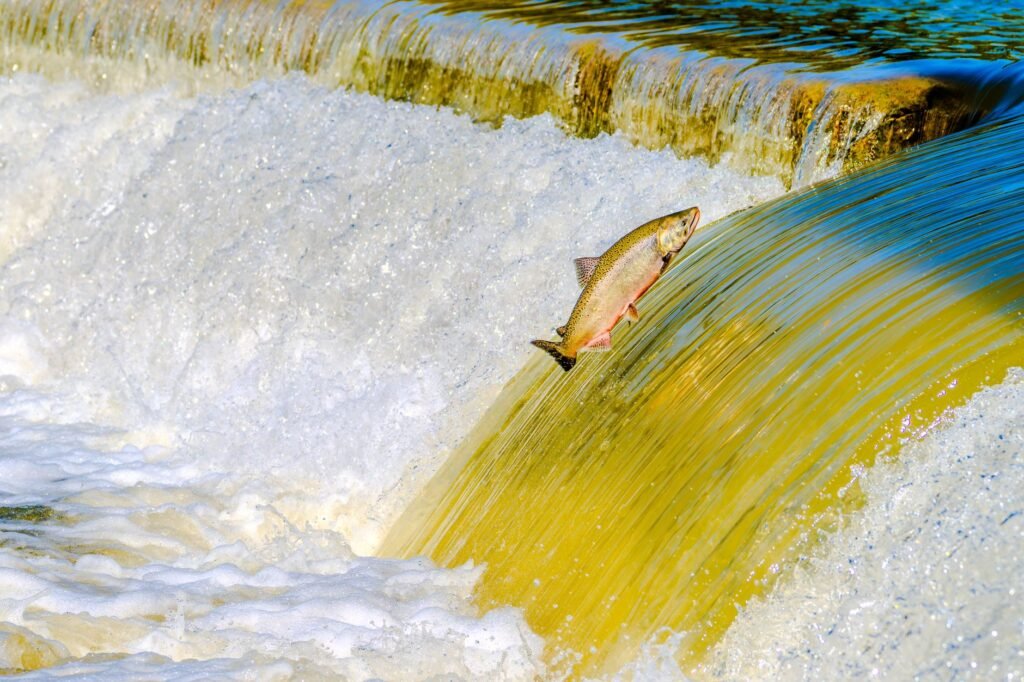
The Salmon of Knowledge is one of the most enduring figures in Irish mythology. It appears most famously in the story of Fionn mac Cumhaill (Finn McCool), where the fish contains all the wisdom of the world and grants insight to the person who eats it. In Irish tradition, the salmon is not merely an animal but a vessel of sacred learning, memory, and poetic inspiration.
This myth has had a lasting cultural importance because it connects several central themes of early Irish literature: wisdom, sacred water, the transformation of knowledge into physical form, and the idea that true insight is gained only through destiny, discipline, and the proper ritual. The Salmon of Knowledge remains a powerful symbol in Irish folklore, literary studies, and modern cultural identity.
Origin and Meaning
The English phrase “Salmon of Knowledge” translates the Irish concept usually given as An Bradán Feasa, meaning “the Salmon of Wisdom” or “the Salmon of Knowledge.”
The name reflects an older mythological pattern in which extraordinary knowledge is embodied in a special creature or object. In the Irish tale, the salmon acquires wisdom by eating nuts that fall into a sacred well, a motif that links the fish to both the Otherworld and the source of inspiration. The fish becomes a living repository of hidden understanding.
Different Irish texts preserve the story in slightly different forms. In some versions, the salmon is associated directly with a single well, while in others it is tied to broader traditions about wisdom gained from the Otherworld. The core meaning, however, remains stable: the salmon represents complete or total knowledge, especially the kind of wisdom that cannot be reached by ordinary means.
Historical Context
The Salmon of Knowledge belongs to the mythological and heroic traditions of medieval Ireland, though the story likely preserves much older oral material. The tale was recorded by learned scribes in a Christian monastic environment, but it reflects pre-Christian Celtic ideas about sacred places, prophetic knowledge, and the power of nature.
Early Irish literature often presents knowledge as something supernatural and dangerous rather than merely academic. Wisdom may be hidden in:
- animals,
- wells,
- trees,
- poetic traditions,
- or the Otherworld.
The Salmon of Knowledge fits this wider pattern. It emerges from a mythic landscape in which rivers, wells, hazel trees, and salmon are all associated with inspiration and truth. In Irish tradition, hazel nuts are especially linked to wisdom, and the salmon’s connection to those nuts is central to the tale.
The story also reflects the importance of the fili or poets, who were traditionally guardians of learning, genealogy, and social memory in early Irish society. Knowledge in this context was not abstract; it had ritual, legal, and political value.
Main Characteristics
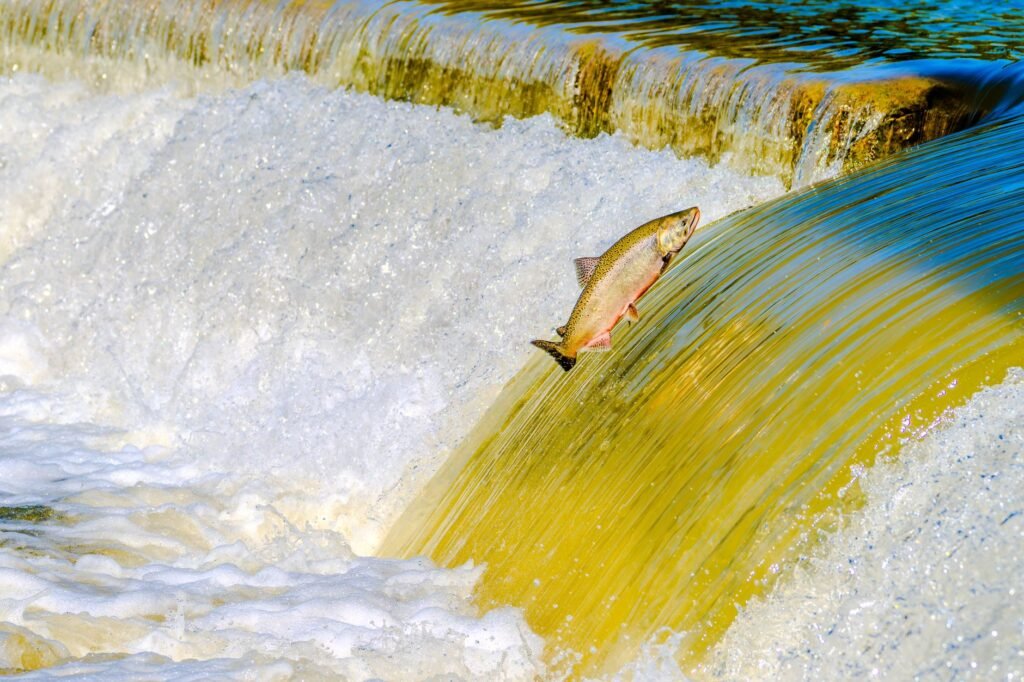
The Salmon of Knowledge is distinguished less by appearance than by what it contains. It is typically described as an ordinary-looking salmon, except for the extraordinary fact that it has absorbed all wisdom.
Key traits
- Bearer of universal knowledge
- Linked to sacred water and hidden wells
- Connected to hazel nuts and poetic inspiration
- Often associated with destiny and unintended acquisition
- A source of wisdom through consumption
The salmon itself is not usually depicted as speaking or acting like a trickster. Instead, its significance comes from its symbolic role. It is the final object in a chain of mythic events involving otherworldly knowledge, a sacred river, and a heroic apprentice.
In the best-known version of the story, the salmon’s wisdom is transferred to Fionn mac Cumhaill after he accidentally burns his thumb while cooking the fish and places it in his mouth. This accidental act becomes the moment of enlightenment.
Family and Genealogy
As a mythic fish, the Salmon of Knowledge does not have a family in the human genealogical sense. However, it is embedded in a network of mythic relationships.
Mythic relationships
| Figure | Relationship to the Salmon of Knowledge |
|---|---|
| The hazel trees | Their nuts are said to confer wisdom, and the salmon eats them |
| The sacred well | The source of the salmon’s connection to knowledge |
| Fionn mac Cumhaill | The hero who ultimately gains its wisdom |
| Finegas / Finnegas | The poet who catches and attempts to eat the salmon |
| The Otherworld | Broader mythic context for its supernatural wisdom |
In many versions, the salmon’s wisdom is indirectly connected to a teacher figure, usually Finegas or Finnegas, a poet living by the River Boyne. He spends years trying to catch the fish and is told to eat it only after it has been prepared. Fionn, who serves him, receives the salmon’s power by chance.
The story therefore creates a symbolic genealogy of knowledge:
- wisdom originates in the sacred well,
- it passes into the salmon,
- it is sought by the poet,
- and it is ultimately inherited by the young hero.
Symbols
The Salmon of Knowledge is associated with several important symbols in Irish myth.
Main symbolic elements
| Symbol | Meaning |
|---|---|
| Salmon | Wisdom, endurance, hidden knowledge, life in sacred waters |
| Hazel nuts | Inspiration, poetic insight, sacred learning |
| Well or spring | Source of truth, Otherworld connection, hidden origin |
| Thumb | Sudden access to knowledge; bodily transmission of insight |
| Fire/cooking | Transformation, revelation, danger, ritual completion |
The thumb is especially important in the most famous version of the tale. Fionn burns his thumb while cooking and instinctively sucks it to ease the pain. By doing so, he gains the salmon’s knowledge. This detail has often been interpreted as a sign that wisdom can emerge through direct experience, not only through formal instruction.
The combination of water and fire is also notable. Water is linked to origin and mystery, while fire represents transformation and human participation. The fish moves between these elements, making it a bridge between the natural and supernatural worlds.
Sacred Animals
The Salmon of Knowledge is itself the central sacred animal of the myth. In addition, the story reflects a broader Irish reverence for certain animals as carriers of meaning.
Associated animals
- Salmon: wisdom, perseverance, hidden truth
- Hound: in the wider Fionn cycle, associated with hunting and loyalty
- Boar: in Irish heroic tales, often linked to danger and feasting
- Deer: sometimes associated with Otherworld encounters
- Birds: frequently connected to inspiration and prophecy in Celtic tradition
The salmon is significant because it is a creature of both movement and return. Salmon migrate through rivers and seas, which made them potent symbols of cyclical journeying, memory, and return to origin. In a myth of knowledge, that biological pattern resonates with the idea of wisdom traveling from source to recipient.
Sacred Plants
The Salmon of Knowledge is most closely associated with the hazel tree.
The hazel in Irish tradition
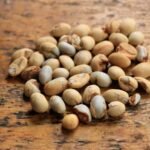
Hazel trees are repeatedly linked to wisdom, poetry, and sacred springs in Irish literature. In the Salmon of Knowledge story, nine hazel trees grow around the well, and their nuts fall into the water. Salmon eat the nuts, becoming infused with knowledge.
This association is important because the hazel appears in several Irish texts as a tree of inspiration. It represents:
- poetic authority,
- hidden wisdom,
- abundance of learning,
- and the interface between the natural world and sacred insight.
Other plants are not central to the myth in the same way, though the broader Irish mythic landscape often includes sacred trees, especially the yew, oak, and apple. In the Salmon of Knowledge tale itself, however, the hazel remains the essential plant symbol.
Sacred Places
The myth is connected to several important locations in Irish tradition, especially rivers and wells.
Notable places
| Place | Significance |
|---|---|
| River Boyne | Commonly associated with the poet Finnegas and the catching of the salmon |
| Sacred well | Source of wisdom; in some accounts the origin of the salmon’s knowledge |
| Hazel grove | Place where wisdom enters the water |
| Otherworld landscapes | Mythic background for sacred knowledge and transformation |
The River Boyne is one of the most prominent settings in the story. It is a river of great mythological importance in Ireland and appears in multiple legends. Its association with the Salmon of Knowledge adds to its sacred reputation.
The well at the center of the myth is not always named consistently across sources. This is common in early Irish literature, where the precise geography of myth can vary according to local tradition and manuscript version. What remains consistent is the role of the well as a hidden source of wisdom.
Powers and Attributes
The Salmon of Knowledge is not usually described as a deity with a full set of divine powers. Instead, its primary attribute is the concentration and transmission of wisdom.
Main powers and attributes
- Contains all knowledge
- Transfers wisdom to the one who eats it
- Connects humans to sacred learning
- Represents inspired insight
- Serves as a mythic object of destiny
The myth does not suggest that the salmon grants unlimited magical power in a broad sense. Rather, it grants knowledge, especially the kind useful to a hero, poet, or ruler. In the case of Fionn, the knowledge includes a form of heightened awareness and instant understanding.
This power is often interpreted as symbolic rather than literal. The fish does not simply make someone omniscient; it marks the transition from apprenticeship to mastery. Fionn gains the ability to access wisdom when needed, making the salmon a metaphor for latent intelligence and trained intuition.
Main Myths
The Salmon of Knowledge is most famous for a single story, though there are variations.
The story of Fionn mac Cumhaill and the salmon
The best-known account begins with a poet or druid-like figure, usually Finnegas or Finegas, who has spent years attempting to catch the Salmon of Knowledge. He knows that whoever eats the salmon will gain all the world’s wisdom. Eventually, he captures the fish and instructs his young servant, Fionn, to cook it but not to taste it.
While cooking, Fionn burns his thumb on the fish. Instinctively, he puts the thumb into his mouth to relieve the pain. At that moment, he receives the salmon’s knowledge. When the poet asks whether he has tasted the fish, Fionn truthfully says no, because he did not intentionally eat it. The poet then tells him to finish the meal, recognizing that destiny has chosen the boy.
After this event, Fionn is said to be able to access wisdom by biting or sucking his thumb, a detail that becomes one of the most memorable motifs in Irish heroic legend.
The mythic background
The story is connected to a prior event in which wisdom is held in a sacred place and transmitted to the salmon via hazel nuts. In some tellings, only one salmon gains the knowledge; in others, the myth implies a general process by which wisdom circulates through the Otherworld.
Variations in the story
Different sources emphasize different details:
- the name of the poet varies,
- the exact location of the well varies,
- the number of hazel trees may differ,
- and the precise mechanics of the wisdom transfer are sometimes presented differently.
Despite these differences, the core narrative remains the same: a sacred fish becomes the vessel of knowledge, and an unintended act grants that wisdom to the future hero Fionn.
Relationship with Other Mythological Figures
The Salmon of Knowledge is most closely linked to the figures of the Fionn Cycle, especially Fionn mac Cumhaill and Finnegas.
Fionn mac Cumhaill
Fionn is the central recipient of the salmon’s wisdom. He later becomes a leader of the Fianna, the warrior band associated with heroism, loyalty, and roaming protection. The salmon myth explains his exceptional intelligence and insight.
Finnegas / Finegas
Finnegas is the poet who spends years trying to catch the fish. His role is significant because it places learned authority alongside heroic destiny. In some interpretations, his failure to keep the salmon for himself underscores the idea that wisdom is granted according to fate, not merely effort.
Other Irish figures
The Salmon of Knowledge also fits into a wider mythological system that includes:
- druids and poets, as guardians of learned tradition,
- river and well spirits, as sources of sacred power,
- and other heroes of the Fenian cycle, who operate in a world shaped by personal honor and supernatural insight.
The myth does not present the salmon as a rival or enemy of these figures. Rather, it is a mediator through which knowledge passes among them.
Worship and Cult
There is no clear evidence of a formal cult devoted specifically to the Salmon of Knowledge in the way that some ancient deities or sacred animals were honored. The story belongs primarily to myth and literary tradition, not to a documented public religion.
However, it does reflect ritual and cultural attitudes toward sacred knowledge in early Ireland.
Possible ritual resonances
- reverence for wells and springs,
- the symbolic importance of hazel trees,
- the authority of poets and learned men,
- and the idea that certain animals could embody sacred power.
In medieval Irish culture, learning itself had a quasi-sacred quality. Poets were trained in complex systems of verse, genealogy, and law, and they often occupied an elevated social role. The Salmon of Knowledge myth dramatizes the ideal that wisdom must be earned, recognized, and properly transmitted.
Ancient Sources
The Salmon of Knowledge is best known from Irish medieval literature rather than from classical Greco-Roman authors. Since it is an Irish myth, classical sources such as Homer, Hesiod, or Ovid do not discuss it.
Important Irish sources and traditions
| Source / tradition | Relevance |
|---|---|
| Fenian Cycle | Main mythic framework for Fionn mac Cumhaill |
| Medieval Irish manuscripts | Preserve different versions of the tale |
| The story of Fionn and Finnegas | Core narrative of the salmon and the transfer of wisdom |
| Irish learned tradition | Preserves associations between hazel, wells, salmon, and knowledge |
The tale survives in a manuscript tradition shaped by Christian scribes, which means the versions we read today may reflect both older oral narratives and later literary adaptation. Because of this, caution is necessary when reconstructing the earliest form of the myth.
Some modern retellings treat the story as if it were uniform and fixed, but in historical terms it is better understood as a cluster of related variants.
Roman Equivalent
There is no direct Roman equivalent to the Salmon of Knowledge. Roman mythology does not contain a comparable figure in which a fish embodies total wisdom and transmits it through accidental consumption.
That said, there are broad thematic parallels in world mythology:
- sacred animals containing divine power,
- objects that grant wisdom or prophecy,
- and heroes who gain insight through contact with the supernatural.
Any comparison should remain limited, however, because the Irish myth is distinct in both setting and meaning. It arises from the specific symbolic world of early Irish tradition, not from Greco-Roman religion.
Influence on Modern Culture
The Salmon of Knowledge continues to appear in modern Irish and international culture, especially in literature, education, and symbolic branding.
Modern cultural influence
- Literature: The story is frequently retold in collections of Irish myths and children’s literature.
- Education: It is often used to introduce students to Irish folklore and the Fenian cycle.
- Branding and design: The salmon appears in logos, place names, and cultural institutions in Ireland.
- Popular culture: The story influences fantasy writing and adaptations of Celtic myth.
- Tourism and heritage: Sites associated with Fionn and the Boyne region often reference the myth.
The Salmon of Knowledge has also become a shorthand expression for sudden insight or rare wisdom in modern Irish cultural discourse. Because the myth is memorable and visually clear, it is well suited to retelling in classrooms, museums, and media.
Curiosities
- The salmon gains wisdom by eating hazel nuts, not by being magically created as wise from the beginning.
- In the famous story, Fionn gains knowledge accidentally, which makes the myth memorable and morally complex.
- The act of sucking the burnt thumb became a lasting symbol of instant access to wisdom in Irish tradition.
- The myth combines several recurring Celtic motifs: wells, trees, animals, and sacred learning.
- The tale is often connected to the River Boyne, one of Ireland’s most mythologically significant rivers.
- The salmon’s wisdom is usually described as complete or universal, but the text traditions do not always explain exactly what this means.
- The story has been used by modern writers as a metaphor for inspiration, intuition, and inherited cultural memory.
Frequently Asked Questions
What is the Salmon of Knowledge?
The Salmon of Knowledge is a mythic fish in Irish tradition that contains all the world’s wisdom. It is most famous for granting knowledge to Fionn mac Cumhaill.
Why is the salmon important in Irish mythology?
It symbolizes hidden knowledge, poetic inspiration, and the transfer of wisdom from the Otherworld into human life. It is one of the best-known symbols in the Fionn cycle.
How did the salmon become wise?
In the myth, the salmon ate hazel nuts that fell into a sacred well. This connection to the nuts and the well infused it with wisdom.
Who ate the Salmon of Knowledge?
In the best-known version, Fionn mac Cumhaill gains the salmon’s wisdom accidentally after burning his thumb while cooking it. The poet Finnegas had intended to eat it himself.
What does the thumb symbolize in the story?
The thumb represents sudden, embodied access to knowledge. In the tale, Fionn learns that wisdom can come through instinct and direct experience as well as formal learning.
Is the Salmon of Knowledge a god?
No. It is not usually treated as a deity. It is a mythic animal with sacred significance and symbolic power.
Are there different versions of the story?
Yes. Different Irish sources vary in details such as names, locations, and exact sequencing. The central idea, however, remains the same.
Does the Salmon of Knowledge have a Roman equivalent?
No direct Roman equivalent is known. It is a distinctly Irish mythological figure.
Conclusion
The Salmon of Knowledge is a central figure in Irish mythology because it brings together several enduring themes: sacred nature, poetic wisdom, heroic destiny, and the mysterious transmission of insight. Its most famous story, involving Fionn mac Cumhaill and Finnegas, has shaped how generations understand the relationship between learning and transformation.
Although it is not a god or a cult figure in the strict sense, the Salmon of Knowledge occupies an important place in the symbolic world of Ireland. It represents the idea that wisdom may be hidden in unexpected forms and revealed only at the right moment. For that reason, it remains one of the most recognizable and meaningful images in Irish myth and folklore.

Orin Vale has spent the better part of two decades tracing the threads that connect the world’s oldest stories — from the halls of Asgard to the banks of the Nile, from Olympus to the jungles of the Maya. What began as a childhood fascination with flood myths and trickster gods grew into years of independent study across comparative mythology and ancient religion, always chasing the same question: what did these stories mean to the people who first told them? Orin writes for readers who want more than trivia — the ones looking for the beliefs, fears, and truths that myths were built to carry.