Aos Sí: Fairy Folk vs Gods
Introduction
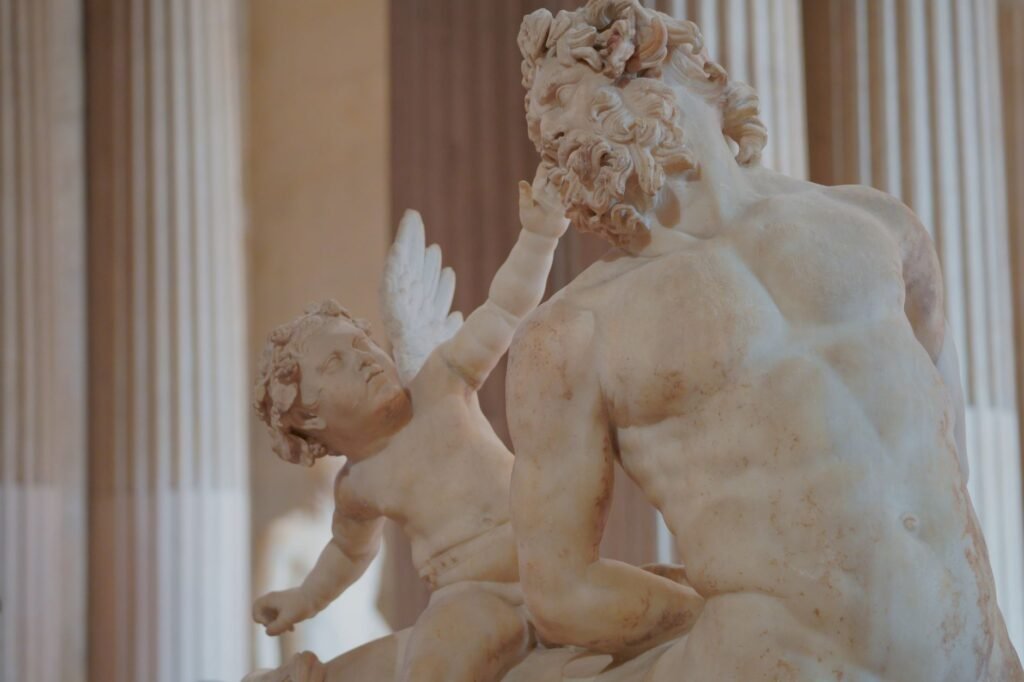
The Aos Sí (also spelled Aes Síde, Aes Sídhe, or Aos Sidhe) are among the most enduring figures in Irish and broader Gaelic tradition. They are often described in English as the “fairy folk,” but this translation can be misleading. In older Irish sources, the Aos Sí are not simply tiny folkloric fairies; they are otherworldly beings associated with the síde or ancient mound-dwellings of the Otherworld. In some traditions they resemble a faded class of divine or semi-divine beings, while in later folklore they become the fairy folk of rural belief.
The question “fairy folk vs gods” is important because the Aos Sí sit at the intersection of religion, mythology, and folklore. They reflect how pre-Christian deities, ancestral spirits, and landscape-based supernatural powers were reinterpreted after Christianization. Their history shows how mythological beings can change status over time: from potential gods or divine beings to the ambivalent fairies of later oral tradition.
Origin and Meaning
The name Aos Sí is modern Irish, usually understood as “people of the mounds” or “people of the fairy mounds.” The older form Aes Síde appears in medieval Irish texts.
Etymology
- Aos / Aes: “people,” “tribe,” or “folk.”
- Sí / Sídhe / Síde: associated with the síde, the burial mounds, fairy hills, or Otherworld dwellings.
The term síd in early Irish literature refers to a mound or hill connected to the supernatural realm. Over time, the word came to signify both the place and the beings who inhabit it. Thus, the Aos Sí are literally the “people of the síd.”
Historical Origin
The phrase arises from early medieval Irish sources, but the beliefs behind it are older than the texts that record them. Scholars generally view the Aos Sí as a product of the interaction between:
- pre-Christian Irish sacred geography,
- local ancestor and mound cults,
- mythological traditions about supernatural races,
- and Christian reinterpretation of older divine beings as fairies.
Different sources and later folklore do not always agree on whether the Aos Sí are:
- ancient gods diminished in status,
- spirits of the dead,
- inhabitants of a parallel Otherworld,
- or a distinct race of fairy beings.
Historical Context
Beliefs about the Aos Sí developed in a Celtic-speaking Ireland that preserved rich oral traditions before and after the arrival of Christianity.
Pre-Christian Background
In pre-Christian Ireland, sacred places such as burial mounds, hills, springs, and lakes were often associated with supernatural beings. These beings may have been tied to the sovereignty of the land, fertility, war, kingship, and ancestral protection. While direct evidence for “the gods” of pre-Christian Ireland is limited, medieval literature preserves many traces of older mythic religion.
Christianization and Transformation
As Christian scribes wrote down Irish myths, they often preserved older material while reframing it through Christian concepts. Supernatural beings were not necessarily erased; instead, they were sometimes reclassified as:
- ancient peoples,
- magical beings,
- demons,
- or fairies.
The Aos Sí became part of folklore in a Christian society where explicit worship of them was discouraged or condemned. This shift is central to the fairy folk vs gods debate: the same beings may once have been treated as divine or semi-divine, but later survived as the fairy folk.
Folklore and Rural Belief
In later Irish and Scottish Gaelic folklore, the Aos Sí were treated as real and dangerous neighbors of the human world. People avoided disturbing fairy paths, fairy trees, ringforts, and mounds. Offerings and cautious speech were common in many local traditions.
Main Characteristics
The Aos Sí are not a single standardized group. They vary by region and source, but they are commonly described as:
- inhabiting mounds, hills, or invisible Otherworld spaces,
- possessing supernatural beauty or strangeness,
- capable of generosity or hostility,
- highly sensitive to human disrespect,
- linked to the land and its ancient places.
Fairy Folk or Gods?
This is the central interpretive issue. In older mythological material, the beings associated with the síde sometimes appear closer to the Tuatha Dé Danann, Ireland’s mythic divine race, than to the small fairies of modern imagination. After the coming of Christianity, they were increasingly understood as:
- diminished gods,
- nonhuman nature spirits,
- or fairy folk who retained divine-like powers.
In short, the Aos Sí can be seen as fairy folk in later folklore and as echoes of older gods in mythic interpretation.
Common Traits
| Trait | Description |
|---|---|
| Otherworldly residence | Live in fairy mounds, hills, and invisible realms |
| Ambivalence | Can aid humans or bring harm |
| Territoriality | Guard sacred places and boundaries |
| Glamour and disguise | Often appear beautiful, strange, or deceptive |
| Hospitality rules | Respect and offerings matter greatly |
| Time distortion | Otherworld time may differ from human time |
Family and Genealogy
The genealogy of the Aos Sí is complex and varies widely by text and tradition.
Relationship to the Tuatha Dé Danann
In many scholarly interpretations, the Aos Sí are closely linked to the Tuatha Dé Danann, the supernatural race central to Irish myth. In the mythological cycles, the Tuatha Dé Danann arrive in Ireland as a powerful people associated with wisdom, magic, and kingship. After being defeated by the Milesians in later mythic history, they are said in some traditions to retreat into the síde.
This narrative has often been interpreted as a mythic explanation for how older gods became fairies:
- once sovereign and divine,
- later hidden in hills and mounds,
- finally remembered as the fairy folk.
However, not all texts present this transition in the same way, and some scholars caution against reducing all Aos Sí traditions to a single origin story.
Kinship and Lineage
Specific family trees among the Aos Sí are not consistently documented. Unlike Greek or Roman gods, they are not usually organized into a stable pantheon with fixed parentage. Instead, they may be grouped by:
- mound,
- locality,
- lineage within a mythic race,
- or association with a particular clan or landscape.
Some prominent mythological figures connected to the síde, such as Brigid, Étaín, or Midir, are better treated as individual mythic beings rather than typical members of a later fairy hierarchy.
Symbols
The Aos Sí are associated with symbols that reflect their connection to landscape, sovereignty, and the invisible world.
Common Symbols
- Mounds and hills: primary dwelling places and visible signs of the hidden Otherworld.
- Circles and rings: connected with fairy rings and liminal spaces.
- Crossroads and thresholds: places of transition and danger.
- Whorls, spirals, and knots: sometimes linked in broader Celtic art to continuity and supernatural continuity, though specific associations vary by source.
- Green clothing: in later folklore, often associated with fairies, though this is more a modern folkloric stereotype than an ancient fixed symbol.
Meaning of Symbols
The symbolic world of the Aos Sí emphasizes:
- hidden power beneath the earth,
- the overlap between the visible and invisible worlds,
- territorial sanctity,
- and the danger of crossing boundaries without respect.
Sacred Animals
No single animal is universally and exclusively sacred to the Aos Sí, but several animals recur in fairy belief and related Irish tradition.
Frequently Associated Animals
- Cattle: central to wealth, fertility, and fairy theft in many stories.
- Horses: linked to Otherworld travel, sovereignty, and swift movement.
- Dogs: often appear as guardians or omens in supernatural contexts.
- Deer: sometimes connected with liminal movement and the Otherworld.
- Birds: especially swans and other birds associated with transformation or enchantment.
Symbolic Significance
Animals linked to the Aos Sí often represent:
- fertility and abundance,
- mobility between worlds,
- guardianship,
- or the instability of human control over wealth and land.
In some stories, the supernatural can manifest in animal form, reinforcing the idea that the Otherworld is close to ordinary nature.
Sacred Plants
Plants associated with the Aos Sí are usually part of later folklore and ritual caution rather than formal worship.
Commonly Mentioned Plants
- Hawthorn: perhaps the best-known fairy tree in Irish tradition.
- Holly: sometimes linked to protection and winter symbolism.
- Ash: often significant in Gaelic tradition as a tree of power.
- Rowan: widely used in folk protection against harmful supernatural forces.
- Yew: associated broadly with death, endurance, and sacred landscapes.
Importance in Tradition
Hawthorn is especially important because isolated hawthorn trees were often believed to be fairy trees. Cutting or damaging such trees was traditionally thought dangerous. This reflects the broader belief that the Aos Sí inhabit or guard places of natural power.
Sacred Places
The Aos Sí are profoundly tied to landscape. Their “sacred places” are usually not temples in the classical sense, but natural or ancient sites.
Key Places
- Sídhe mounds: burial mounds, hillocks, and ancient earthworks.
- Ringforts: later folk belief often linked these enclosed earthworks with fairy activity.
- Lakes and springs: liminal waters associated with otherworldly access.
- Certain hills and mountains: treated as fairy dwellings or gateways.
- Fairy trees and groves: especially solitary thorn trees.
Notable Mythic Locations
Some famous Irish sites associated with the síde include:
- Brú na Bóinne (Newgrange area), a major prehistoric complex later woven into mythic tradition.
- The Hill of Tara, associated with kingship and supernatural significance.
- Loughcrew and other ancient mounds, often linked by folklore to Otherworld beings.
- Sidhe hills across Ireland, each understood locally as a habitation of the Aos Sí.
These places matter because the Aos Sí are not abstract gods residing in a distant heaven. They are embedded in the land itself.
Powers and Attributes
The powers of the Aos Sí vary by tradition, but common attributes include the following.
Main Domains
- Otherworldly knowledge
- Invisibility and disguise
- Protection or punishment of territory
- Influence over fertility and prosperity
- Control of enchantment, music, and illusion
- Possible interaction with fate and human fortune
Human Encounters
Human beings might encounter the Aos Sí in dreams, in liminal spaces, or through disturbances at sacred places. Such encounters could be:
- beneficial, bringing gifts or guidance,
- dangerous, causing illness or misfortune,
- transformative, leading to loss of time or altered perception.
Fairy Folk vs Gods
In divine terms, gods usually have a more public, cultic, and cosmological role. The Aos Sí often operate more locally and ambiguously. Yet in some older interpretations, they preserve features of gods:
- control over land,
- sovereignty,
- knowledge,
- and supernatural authority.
This is why many scholars regard them as a de-divinized survival of earlier mythic powers, though that is not the only interpretation.
Main Myths
The Aos Sí appear throughout Irish myth and folklore in different forms.
The Coming of the Tuatha Dé Danann
One of the most important mythic frameworks places the Tuatha Dé Danann in Ireland before later human settlers. After their defeat, they retreat into the síde. This story explains how powerful divine beings became hidden.
The Wooing of Étaín
The tale of Étaín involves the supernatural world, transformation, and conflict among mythic figures such as Midir. It is significant because it preserves a world in which Otherworld beings possess powers and status that are very close to those of gods.
The Descent into the Mounds
In several tales, supernatural beings live below ground in splendid halls inside hills. This underworld is not always a place of death alone; it may also be a realm of beauty, abundance, and timelessness.
Fairy Abduction and Exchange
Later folklore contains many stories of humans abducted into fairy society or of changelings left in place of human children. These tales are not “god myths” in a formal sense, but they show how powerful and socially meaningful belief in the Aos Sí became.
The Fairy Host and Wild Processions
The fairy host or spectral fairy processions appear in folklore as dangerous nocturnal beings. These stories connect the Aos Sí with dread, seasonal transition, and the fragile border between worlds.
Relationship with Other Mythological Figures
The Aos Sí are connected to many important figures in Irish tradition.
The Tuatha Dé Danann
This is the closest and most important relationship. The Aos Sí are frequently identified with, descended from, or interpreted through the Tuatha Dé Danann.
Dagda, Brigid, Lugh, and Others
Many prominent mythological figures from the Irish mythological cycle are often linked to the divine or supernatural sphere that later folklore absorbs into fairy belief. However, direct equivalence between a specific deity and a specific fairy being should be treated cautiously.
Humans
The Aos Sí frequently interact with humans:
- demanding respect,
- rewarding hospitality,
- punishing trespass,
- or entering marriage and kin relations in mythic narratives.
Christian Figures
In later tradition, Christian saints sometimes replace or oppose fairy power. This reflects the historical process by which older sacred landscapes were reinterpreted within Christianity.
Worship and Cult
Whether the Aos Sí were “worshipped” depends on the period and the kind of source being considered.
Pre-Christian and Early Traditions
There is no universally documented cult of the Aos Sí comparable to state temple worship in the classical world. However, there is strong evidence for ritual respect, taboo, and local custom involving sacred places.
Possible practices included:
- leaving offerings,
- avoiding disturbance of mounds and trees,
- speaking carefully near fairy places,
- and observing seasonal thresholds.
Later Folk Practice
In historical folklore, people often:
- left milk or food,
- avoided building on fairy sites,
- respected the boundaries of fairy paths,
- and sought protection against fairy harm.
These customs are best understood as popular belief and ritual caution, not as organized religion in a formal institutional sense.
Festivals
The Aos Sí are especially associated with the liminal times of the Celtic year, including:
- Samhain,
- Beltane,
- and other seasonal moments when the boundary between worlds was thought to be thin.
Ancient Sources
The Aos Sí are not described in one single canonical source. Their identity emerges from many texts and traditions.
Important Primary Sources
- Lebor Gabála Érenn (The Book of the Taking of Ireland): important for the mythic history of the Tuatha Dé Danann.
- The Second Battle of Mag Tuired: key text for the mythic race associated with later fairy interpretation.
- The Wooing of Étaín: crucial for Otherworld themes and transformation.
- The Dindshenchas: place-lore that links landscapes with supernatural narratives.
- Annals and sagas preserved by medieval Irish scribes.
- Later folklore collections from Ireland and Scotland, which preserve living belief in fairy mounds and fairy people.
Classical Greek or Roman Sources?
Unlike Greek gods, the Aos Sí are not discussed by Homer, Hesiod, or Ovid. Their evidence comes from Irish and Gaelic tradition instead. This distinction is important for historical accuracy.
Roman Equivalent
There is no exact Roman equivalent to the Aos Sí.
That said, Roman readers sometimes compare them loosely to:
- numina or local divine powers,
- genius loci or spirits of a place,
- lares or household protectors,
- or, in broader terms, to nature spirits and lesser deities.
These comparisons are only approximate. The Aos Sí are rooted in a specifically Irish and Gaelic worldview and should not be reduced to Roman categories.
Influence on Modern Culture
The Aos Sí have had a substantial influence on modern literature, folklore revival, fantasy, and popular culture.
Literature
Irish writers and folklorists played a major role in preserving and reimagining fairy traditions. The Aos Sí appear in:
- folklore collections,
- fantasy literature,
- neo-pagan and Celtic revival writing,
- and modern retellings of Irish myth.
Art and Media
Modern art often depicts the Aos Sí as:
- luminous fairy beings,
- ancient mound-dwellers,
- elegant Otherworld inhabitants,
- or dangerous, uncanny powers of the land.
Film, Television, and Games
In fantasy media, the Aos Sí frequently inspire:
- fairy courts,
- hidden mound kingdoms,
- changeling stories,
- and Otherworld aesthetics.
They also influence role-playing games, video games, and worldbuilding that draws on Celtic myth. However, such portrayals often simplify or romanticize their original complexity.
Cultural Identity
The Aos Sí remain important in Irish and Scottish cultural memory. They are part of the living legacy of Gaelic folklore and a symbol of how ancient belief can survive in transformed form.
Curiosities
- The word sí can refer both to the mound itself and to the supernatural beings associated with it.
- In many Irish traditions, fairies were not cute or harmless; they could be dangerous, proud, and deeply territorial.
- The Aos Sí were often treated with a level of caution similar to that shown toward powerful local rulers.
- Some scholars interpret fairy belief as a way of preserving memory of older sacred landscapes after Christianity.
- The distinction between “fairies” and “gods” is not always clear in the sources; it becomes sharper only when viewed through later religious and literary categories.
- Many so-called fairy sites are ancient monuments, showing how prehistoric landscapes were reimagined by later communities.
- The Aos Sí are one reason why Irish folklore is often described as preserving a “mythic ecology,” where land and supernatural life are closely intertwined.
Frequently Asked Questions
1. Are the Aos Sí gods or fairies?
They are best understood as fairy folk in later tradition and as possible survivals of older divine beings in mythological interpretation. Different sources and scholarly views emphasize different aspects.
2. Are the Aos Sí the same as the Tuatha Dé Danann?
They are often identified with the Tuatha Dé Danann or seen as their transformed descendants in later folklore, but the equation is not identical in every source.
3. Do the Aos Sí appear in ancient pagan religion?
Direct evidence for organized worship of the Aos Sí is limited. What survives is a mixture of mythic narrative, sacred-place belief, and later folklore.
4. Why are fairy mounds important?
Fairy mounds are the symbolic and physical homes of the Aos Sí. They represent a link between the visible world and the Otherworld.
5. Are the Aos Sí always dangerous?
No. They can be benevolent, neutral, or hostile depending on the story. However, they are typically portrayed as powerful beings who require respect.
6. What is the difference between the Aos Sí and modern fantasy fairies?
Modern fantasy fairies are often small, decorative, and harmless. The Aos Sí are older, more complex, and often much more formidable.
7. Are there equivalents in Scotland and Wales?
Yes, related beliefs exist in Scottish Gaelic and other Celtic traditions, though names, details, and local traditions vary.
Conclusion
The Aos Sí occupy a unique place in Irish and Gaelic tradition. They are not simply fairy tale characters, nor can they be treated straightforwardly as gods. Instead, they represent a long cultural transformation: ancient sacred beings tied to land and mound, later remembered as the fairy folk of folklore. Their enduring significance lies in this ambiguity. The Aos Sí reveal how mythology survives by changing form, how older divinities can become fairies, and how landscape, memory, and belief remain intertwined across centuries.
In the debate of fairy folk vs gods, the most accurate answer is that the Aos Sí belong to both worlds. They are fairies in later tradition, but they also preserve the shadow of something older, deeper, and more godlike within Ireland’s mythic past.

Orin Vale has spent the better part of two decades tracing the threads that connect the world’s oldest stories — from the halls of Asgard to the banks of the Nile, from Olympus to the jungles of the Maya. What began as a childhood fascination with flood myths and trickster gods grew into years of independent study across comparative mythology and ancient religion, always chasing the same question: what did these stories mean to the people who first told them? Orin writes for readers who want more than trivia — the ones looking for the beliefs, fears, and truths that myths were built to carry.