Introduction
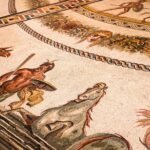
The Abduction of Persephone is one of the most influential myths in Greek mythology. It tells how Persephone, daughter of Demeter, was taken to the Underworld by Hades, the god of the dead and ruler of the realm beneath the earth. The story explains the changing seasons, the cycle of life and death, and the ancient Greek understanding of agricultural renewal.
This myth was not only a tale of divine conflict and family separation. It also became central to religious practice, especially in the Eleusinian Mysteries, one of the most important sacred traditions of ancient Greece. Across centuries, the abduction of Persephone has remained a powerful symbol of loss, transformation, descent, return, and rebirth.
Origin and Meaning

The name Persephone has an uncertain etymology. Ancient and modern scholars have offered several explanations, but no single derivation is universally accepted. In Greek literature, she is commonly called Persephone or Kore (“maiden” or “girl”), the latter emphasizing her youth and unmarried status before her descent to the Underworld.
The word abduction in this context reflects the Greek myths in which Persephone is seized by Hades and taken away from her mother. In some traditions, this event is described as a rape in the ancient sense of abduction and forced taking, not merely a kidnapping narrative in the modern legal sense. Different sources vary in how directly they describe the act, but the central idea remains the same: Persephone is removed from the surface world into the realm of the dead.
Historically, the myth developed within the religious and poetic traditions of ancient Greece, with major versions recorded in archaic and classical literature. It likely reflects older agrarian beliefs about seasonal disappearance and return.
Historical Context
The abduction of Persephone belongs to the broader ancient Mediterranean pattern of fertility and descent myths. In agricultural societies, the annual cycle of planting, dormancy, and harvest often inspired stories of a divine figure who disappears and returns.
In Greek religion, Persephone occupied a unique position:
- She was linked to vegetation and fertility through her mother Demeter.
- She was also Queen of the Underworld, associated with death and the dead.
- Her myth united two powerful realities of human experience: the productivity of the earth and the inevitability of mortality.
The myth was especially important in Eleusis, near Athens, where the Eleusinian Mysteries honored Demeter and Persephone. These rites promised initiates a more hopeful understanding of death and the afterlife, although the full details of the rituals remain secret and are known only indirectly from ancient references.
The story also reflects ancient Greek social ideas about marriage. In some readings, Persephone’s descent resembles a bride’s transition from her father’s house to her husband’s household, though the myth presents this transition in violent and cosmic terms rather than as a normal marriage.
Main Characteristics
Persephone’s myth is defined by a number of distinctive features:
- Dual identity: She is both maiden and queen, both life-giving and death-associated.
- Seasonal movement: Her time above and below ground explains the seasonal cycle.
- Mother-daughter bond: Her relationship with Demeter is central to the story.
- Forced marriage: Her union with Hades is often portrayed as arranged or imposed.
- Transformation: Her descent marks a change in status, from Kore to Queen of the Underworld.
In many artistic and literary traditions, Persephone is depicted with symbols of spring and growth when above ground, and with solemn or regal imagery when in the Underworld. Her myth therefore embodies contradiction: she is both innocent maiden and powerful chthonic goddess.
Family and Genealogy
Persephone’s family relationships are among the best-known in Greek mythology.
| Relationship | Figure | Notes |
|---|---|---|
| Mother | Demeter | Goddess of grain, harvest, and fertility |
| Father | Zeus | Usually named as her father in Greek sources |
| Husband | Hades | God and ruler of the Underworld |
| Child | Melinoe or Zagreus in some later traditions | These traditions vary and are not consistent across all ancient sources |
| Associated kin | Hecate | Not family, but often closely involved in the myth |
The central family tension is between Demeter and Zeus, since Zeus is often portrayed as having consented to or arranged Persephone’s marriage to Hades without Demeter’s knowledge. This makes the abduction not only a myth about the Underworld but also a story of divine authority, parental power, and female agency constrained by male decision-making in mythic terms.
Ancient traditions differ on whether Persephone becomes the mother of any children. Some later accounts connect her with figures such as Melinoe, Zagreus, or Macaria, but these genealogies are not uniform and should be treated cautiously.
Symbols
Persephone’s symbols reflect her twofold nature as both maiden and queen of the dead.
Common Symbols
- Pomegranate: The most famous symbol of her myth. Eating pomegranate seeds binds her to the Underworld.
- Torches: Associated with Demeter’s search for her daughter and with mystery cult imagery.
- Grain and ears of wheat: Signify fertility, agriculture, and the cycle of growth.
- Throne or scepter: Emblems of her status as Queen of the Underworld.
- Flowers: Especially spring flowers, which evoke her maiden aspect.
The pomegranate is especially significant because it appears in ancient sources as the decisive object linking Persephone to Hades. Its seeds symbolize binding, fertility, blood, and the underworld transition. In later interpretation, it has often been read as a sign of marriage, sexuality, and the unavoidable ties that bind life to death.
Sacred Animals
Greek mythology does not assign Persephone a large fixed set of sacred animals in the way that some deities are strongly linked to specific creatures. However, several animals appear in relation to her cult and iconography.
Associated Animals
- Snakes: Often connected to chthonic powers, the earth, and renewal.
- Pigs: Linked with fertility rites and, in some cult contexts, with offerings to Demeter and Persephone.
- Dogs: More often associated with Hecate and the Underworld generally, but present in chthonic imagery around Persephone.
- Butterflies in later symbolism: Sometimes associated with transformation and the soul, though this is more interpretive than strictly classical.
These animals are not all equally important in ancient sources. Snakes and pigs are the most culturally grounded within Greek religious practice, especially in agricultural and underworld contexts.
Sacred Plants
Plants are essential to Persephone’s myth, since she is closely linked to seasonal vegetation.
Important Plants
| Plant | Meaning |
|---|---|
| Pomegranate | Bond to the Underworld, marriage, fertility, and return |
| Grain | Agriculture, nourishment, and Demeter’s sphere |
| Barley | Central in Eleusinian ritual and agricultural symbolism |
| Wheat | Harvest, abundance, and cycles of life |
| Narcissus | In some versions, the flower associated with Persephone’s enticement or disappearance |
The narcissus appears in one of the best-known Homeric Hymn versions, where Persephone is drawn by a beautiful flower before being seized. The plant’s role is symbolic: it marks the moment of transition from innocence and surface beauty to the hidden world below.
Sacred Places
The myth of Persephone is linked to several places across the Greek world and beyond.
Key Locations
- Eleusis: The most important cult center associated with Demeter and Persephone.
- The Underworld: Not a geographic place in the ordinary sense, but the mythic realm ruled by Hades.
- Sicily: In later tradition, especially in Roman and local Greek narratives, the island is connected with the abduction.
- Mount Olympus: The divine council of the gods, where Zeus’s role in the myth is often implied.
- Nysa or fertile landscapes: In some traditions, the scene of Persephone’s plucking of flowers before her descent.
The Eleusinian sanctuary is especially significant because the myth was not merely told there; it was ritually enacted and interpreted as part of initiation. The sacred geography of the myth connected agricultural land, subterranean spaces, and the hopeful threshold between life and death.
Powers and Attributes
Persephone’s powers evolved from maiden goddess to chthonic queen.
Main Domains
- Vegetation and fertility
- Springtime renewal
- The Underworld
- Death and the dead
- Transition and liminality
- Mystery and hidden knowledge
As Kore, she is associated with the freshness of vegetation and youthful life. As Persephone, she rules beside Hades and takes part in the administration of the dead. In this dual role, she stands between worlds.
Her myth does not present her as a goddess of arbitrary destruction. Rather, her influence lies in transformation. She mediates between what grows and what decays, what is visible and what is concealed.
Main Myths
The abduction of Persephone is best known through a small number of major ancient narratives.
The Homeric Hymn to Demeter
The most important source is the Homeric Hymn to Demeter. In this account:
- Persephone is gathering flowers with companions.
- The earth opens and Hades emerges.
- He seizes her and takes her to the Underworld.
- Demeter searches for her daughter in grief.
- Demeter’s sorrow causes the earth to become barren.
- Zeus intervenes to restore balance.
- Persephone is allowed to return, but she has eaten pomegranate seeds.
- Because she has eaten food in the Underworld, she must spend part of the year below and part above ground.
This hymn is foundational for understanding the myth in Greek religion. It also emphasizes Demeter’s power: the fertility of the world depends on her emotional state.
Other Ancient Traditions
Different sources provide different details:
- Some accounts say Persephone was taken with Zeus’s consent.
- Others emphasize Hades’ sudden seizure and Persephone’s unwillingness.
- Some later writers specify exact numbers of pomegranate seeds.
- In certain local traditions, the setting and circumstances vary.
The core pattern remains stable, but the myth’s details are not identical in every version.
Seasonal Explanation
A popular interpretation links Persephone’s descent and return to the seasons:
- Her descent corresponds to winter or the dormant season.
- Her return corresponds to spring and renewed fertility.
This explanation is especially influential in later reception, although ancient Greeks did not always frame the myth in exactly this scientific or allegorical way. The seasonal reading is nonetheless deeply embedded in traditional understanding.
Relationship with Other Mythological Figures
Persephone interacts with several major gods and goddesses.
Demeter
Her relationship with Demeter is the emotional core of the myth. Demeter’s grief and anger drive the story and affect the natural world. Their bond is one of the strongest mother-daughter relationships in Greek mythology.
Hades
Hades is both husband and captor. Ancient sources vary in tone, but the dominant myth presents his action as a forced taking. In later art and literature, their relationship is sometimes softened into one of solemn marriage. Even then, the imbalance of power remains central.
Zeus
Zeus often functions as the authority who permits or arranges the marriage. This makes him a distant but crucial figure in the myth’s injustice. His role reveals the hierarchy among the gods and the limits of maternal power in Olympian politics.
Hecate
Hecate frequently appears as a witness, helper, or guide in the search for Persephone. In some accounts, she hears Persephone’s cries and later accompanies Demeter.
Hermes
Hermes serves as messenger and negotiator, traveling between the worlds and helping mediate Persephone’s return.
The Dead and Chthonic Deities
As Underworld queen, Persephone is associated with chthonic powers, spirits, and the dead. She is not merely a victim in myth but also a ruler within the realm to which she is taken.
Worship and Cult
The cult of Demeter and Persephone was among the most important in ancient Greece, especially in Eleusis.
Eleusinian Mysteries
The Eleusinian Mysteries were secret initiatory rites connected with the myth. Although the ritual details remain hidden, ancient testimony suggests they involved:
- purification
- fasting or ritual preparation
- symbolic objects and sacred actions
- initiation into sacred knowledge
- promises or hopes concerning the afterlife
These mysteries were celebrated for centuries and attracted participants from across the Greek world. They demonstrate that Persephone’s myth was not just literary but profoundly religious.
Offerings and Ritual Practices
Offerings associated with Demeter and Persephone may have included:
- grain and barley
- cakes
- first fruits
- pigs in certain rites
- libations
Some rites emphasized fertility and agricultural blessing, while others focused on purification and the passage between life and death.
Religious Significance
Persephone was not merely feared as a figure of death. She was also honored as a divine presence who made renewal possible. Her cult expresses the ancient Greek belief that death and fertility are linked rather than fully separate.
Ancient Sources
Several ancient texts are essential for studying the abduction of Persephone.
Major Primary Sources
- Homeric Hymn to Demeter: The most important and detailed source.
- Hesiod: Offers genealogical context, especially in the Theogony.
- Apollodorus: Provides mythographic summaries in the Bibliotheca.
- Pausanias: Describes local cults, sanctuaries, and traditions.
- Ovid: Reworks the myth in Roman literary form, especially in the Metamorphoses.
- Diodorus Siculus: Preserves historical and mythic variants.
- Strabo and other authors: Mention local traditions and sacred geography.
Because the myth survives across different genres—hymn, epic, mythology handbook, travel writing, and Roman poetry—its details are not always consistent. This variation is one of its defining features.
Roman Equivalent
The Roman equivalent of Persephone is Proserpina. In Roman mythology and literature, Proserpina largely inherits Persephone’s role as the daughter of Ceres and the wife of Pluto.
Roman authors, especially Ovid and later Latin poets, helped shape the story for a broader literary audience. The Roman version often emphasizes dramatic abduction, sorrow, and the emotional landscape of Ceres’s search. However, the underlying structure remains recognizably Greek.
Influence on Modern Culture
The abduction of Persephone has had a lasting impact on modern literature, visual art, and popular culture.
In Literature and Poetry
The myth has inspired:
- modern retellings of the underworld descent
- feminist reinterpretations of Persephone’s agency
- poems about loss, seasonal change, and rebirth
- psychological readings of descent and return
Writers often treat Persephone as a symbol of adolescence, marriage, or inner transformation.
In Art
Artists have repeatedly depicted:
- Hades’ chariot or dark descent
- Demeter’s grief
- Persephone among flowers
- the pomegranate episode
- the reunion of mother and daughter
From ancient vase painting and relief sculpture to Renaissance and modern art, the myth’s visual power has remained strong.
In Film, Television, and Games
Persephone appears in contemporary adaptations of Greek myth, fantasy series, graphic novels, and video games. These portrayals vary widely. Some emphasize romance, others trauma, and others the goddess’s dual role as both spring maiden and Underworld queen.
In Modern Interpretation
The myth is often used to discuss:
- seasonal cycles
- women’s transitions and autonomy
- the relationship between life and death
- ecological renewal
- the psychology of separation and return
Its flexibility helps explain its continued relevance.
Curiosities
- The abduction of Persephone is sometimes called the Rape of Persephone in older scholarship, but modern writing often prefers abduction because the myth centers on forced removal rather than the modern legal concept alone.
- In the Homeric Hymn, the flower Persephone picks before her abduction includes a narcissus, a plant associated with beauty and danger.
- Persephone’s myth is one of the strongest examples of a Greek goddess who is both maiden and queen.
- The number of pomegranate seeds she eats varies in later traditions; the exact count is not uniform.
- Ancient initiates of the Eleusinian Mysteries likely regarded the myth not as a simple story, but as sacred truth embedded in ritual.
- Persephone’s double identity may reflect the ancient Greek tendency to bind opposite forces together: fertility and death, surface and depth, innocence and sovereignty.
Frequently Asked Questions
1. Why was Persephone abducted by Hades?
In myth, Hades took Persephone as his bride and carried her to the Underworld. Some sources suggest Zeus consented, while others stress the act as a sudden seizure. The story reflects ancient ideas about marriage, divine power, and the division between life and death.
2. How does the myth explain the seasons?
The myth says Persephone spends part of the year with Hades and part with Demeter. When she is below ground, Demeter mourns and the earth becomes barren. When Persephone returns, fertility and growth resume.
3. What is the significance of the pomegranate?
The pomegranate is the key symbol that binds Persephone to the Underworld. Eating its seeds prevents her from returning permanently to the surface world. It represents attachment, marriage, fertility, and the inescapable link between life and death.
4. Was Persephone willing to marry Hades?
Ancient sources differ in emphasis. Some traditions portray the union as arranged by Zeus and later accepted within the cosmic order. Others present it as clearly forced. Modern readers often stress the myth’s violent and coercive elements.
5. What are the Eleusinian Mysteries?
The Eleusinian Mysteries were secret religious rites in honor of Demeter and Persephone. They were centered at Eleusis and promised initiates a deeper understanding of life, death, and renewal. The exact rituals remain unknown.
6. Is Persephone the same as Kore?
Kore is a title or name meaning “maiden” or “girl,” used especially for Persephone before her descent. Persephone and Kore are closely connected, but the distinction highlights her transformation from youthful daughter to Underworld queen.
7. Who are Persephone’s parents?
In the standard Greek tradition, her parents are Demeter and Zeus. Some local or later traditions may vary, but this is the most widely attested genealogy.
Conclusion
The Abduction of Persephone is one of the central myths of the ancient world because it brings together agriculture, seasonal change, marriage, death, and rebirth in a single powerful narrative. Its emotional center is the separation of mother and daughter, while its religious significance lies in the promise that descent is not the end of the story.
Through the Homeric Hymn to Demeter, the Eleusinian Mysteries, and centuries of artistic and literary reinterpretation, Persephone became far more than a mythic victim. She is a figure of transformation, ruling both the flowering surface of the earth and the hidden realm below. Her story continues to endure because it speaks to universal human experiences: loss, transition, return, and the mystery of what lies beneath visible life.

Orin Vale has spent the better part of two decades tracing the threads that connect the world’s oldest stories — from the halls of Asgard to the banks of the Nile, from Olympus to the jungles of the Maya. What began as a childhood fascination with flood myths and trickster gods grew into years of independent study across comparative mythology and ancient religion, always chasing the same question: what did these stories mean to the people who first told them? Orin writes for readers who want more than trivia — the ones looking for the beliefs, fears, and truths that myths were built to carry.