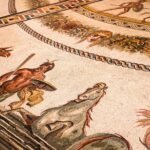
Golden Fleece
Introduction

The Golden Fleece is one of the most famous objects in Greek mythology. It is the golden wool of a magical ram and the central treasure in the story of Jason and the Argonauts. In ancient literature, the Golden Fleece symbolizes kingship, divine favor, legitimacy, and the difficult pursuit of a seemingly unattainable prize. It is also closely linked to the Argonautic expedition, one of the great heroic journeys of the Greek mythic tradition.
The story of the Golden Fleece has had enduring cultural importance because it combines several major mythic themes: perilous travel, divine intervention, betrayal, rightful succession, and the tension between civilization and wilderness. Ancient writers, later poets, artists, and modern storytellers have repeatedly returned to it. While the legend is rooted in myth, it may also reflect older memories of long-distance trade, royal competition, and the symbolic value of wealth and authority.
Origin and Meaning
The phrase “Golden Fleece” refers to the fleece, or wool, of a ram described in myth as golden in color and sometimes as possessing divine qualities. In Greek, it is commonly rendered as chrysómallon déras (χρυσόμαλλον δέρας), meaning “golden-woolled skin” or “golden fleece.”
The origin of the object in myth is tied to the ram Chrysomallos, a divine or semi-divine creature sent by the gods to rescue two royal children, Phrixus and Helle. After the ram carried them away, its fleece was later preserved in Colchis, a land at the edge of the Greek world. The fleece became the prize that Jason had to obtain in order to reclaim the throne of Iolcus.
The myth’s meaning is not fixed to a single ancient interpretation. In ancient and modern scholarship, it has been understood as:
- a symbol of royal legitimacy
- a mark of divine approval
- an emblem of heroic quest and initiation
- a possible reflection of wealth, trade, or metallurgical practices
The exact historical origin of the myth is uncertain. No single source explains how it first arose, and different Greek traditions preserve different details.
Historical Context
The Golden Fleece belongs to the wider world of Greek heroic myth, especially the stories surrounding the generation of heroes before the Trojan War. These narratives were shaped in the context of oral tradition, later recorded by poets and mythographers.
The story is most fully associated with the Argonautic cycle, the tale of Jason and the Argonauts who sailed aboard the ship Argo to Colchis. This cycle likely developed over centuries, drawing on older legendary motifs such as:
- the quest for a wondrous object
- travel to distant and dangerous lands
- encounters with kings, monsters, and gods
- the restoration of dynastic order through heroic action
The legend also reflects the Greek imagination of the far eastern edges of the known world. Colchis, usually identified with the region on the eastern coast of the Black Sea, represented a distant and culturally foreign land. In Greek literature, such places often served as settings for tests of endurance, encounters with otherness, and the acquisition of extraordinary treasures.
Although the Golden Fleece is mythological, some scholars have proposed historical resonances. These include connections to:
- the prestige of wool and textile production
- gold washing methods using fleece or skins in mountain streams
- the exchange of goods between the Aegean and Black Sea regions
These theories remain speculative and should not be treated as established fact.
Main Characteristics
The Golden Fleece is usually described as the fleece of a golden ram and as an object of extraordinary beauty and power. Its most important characteristics vary slightly across ancient accounts, but several features recur consistently.
Core attributes
- Golden appearance: It is shimmering, radiant, or golden in color.
- Sacred origin: It comes from a ram associated with the gods, especially Hermes in some traditions.
- Protective function: It saves Phrixus and Helle during their flight.
- Cultic placement: It is hung or guarded in a sacred grove in Colchis.
- Guarded prize: In later myth, it is protected by a fearsome dragon or serpent.
Symbolic meanings
The Golden Fleece can represent:
- authority and rightful rule
- wealth and prosperity
- the favor of the gods
- the completion of a difficult task
- the transition from youth to heroic status
The object is not merely a trophy. It is often treated as a test of character and an instrument through which divine and human interests collide.
Family and Genealogy
The Golden Fleece is not a person, so its genealogy is indirect. Its significance lies in the family relationships around its original owner and later seeker.
Associated figures
Chrysomallos
The ram connected with the fleece is commonly named Chrysomallos. In many traditions, the ram is sent by Nephele, a cloud-nymph or divine mother figure, to rescue her children.
Nephele
Nephele is generally described as the mother of Phrixus and Helle. Some accounts present her as a cloud-goddess or a figure created by Zeus from a cloud.
Phrixus and Helle
These are the children rescued by the ram. Helle falls into the sea during the journey; the strait where she drowned was later called the Hellespont in her honor. Phrixus survives and reaches Colchis.
King Aeëtes
In Colchis, Phrixus is received by Aeëtes, usually identified as the son of Helios, the sun god. Phrixus gives the ram’s fleece to Aeëtes, who places it under guard.
Jason
Jason is the hero who later seeks the fleece. He is the son of Aeson, a rightful king displaced from the throne of Iolcus.
Table: Key family links in the Golden Fleece myth
| Figure | Relationship | Role in the myth |
|---|---|---|
| Nephele | Mother of Phrixus and Helle | Sends or receives help for their rescue |
| Chrysomallos | Divine ram | Carries the children and provides the fleece |
| Phrixus | Nephele’s son | Survives and brings the fleece to Colchis |
| Helle | Nephele’s daughter | Falls into the sea during the flight |
| Aeëtes | Host of Phrixus; keeper of the fleece | Guards the fleece in Colchis |
| Jason | Later seeker of the fleece | Undertakes the Argonautic quest |
Symbols
The Golden Fleece is rich in symbolism, both in antiquity and in later interpretation.
Common symbolic associations
- Gold: Value, splendor, divine favor, and kingship
- Wool/fleece: Prosperity, pastoral wealth, and sacrifice
- Ram: Vitality, protection, sacrificial power, and leadership
- Dragon or serpent guardian: Danger, sacred boundaries, and the difficulty of obtaining legitimacy
- Ship Argo: Collective heroism and organized expedition
The fleece also functions as a legitimizing object. In Jason’s story, it is not simply a treasure to be stolen; it is the condition for regaining his inheritance. This makes the object a symbol of lawful restoration, even though the quest itself involves deception, danger, and moral ambiguity.
Sacred Animals
The central sacred animal is the ram.
The ram
In Greek myth, the ram associated with the Golden Fleece is often described as extraordinary or divine. Its importance includes:
- rescue: it saves Phrixus and Helle
- sacrifice: the ram is later transformed into the fleece
- royal symbolism: rams can signify strength, fertility, and leadership
- divine connection: its origin is linked to the gods or to a divine mother
Guardian creatures
In Colchis, the fleece is protected by a dragon or serpent. This guardian is one of the most iconic elements of the myth. It represents the peril attached to sacred or royal treasures. In some versions, Jason must overcome or lull the creature before taking the fleece.
Sacred Plants
No single plant is uniquely and universally tied to the Golden Fleece in the way that some deities are linked to specific flora. However, a few botanical associations appear in the wider mythic context.
Laurel and other ritual plants
In Greek religion more broadly, plants such as laurel, olive, and oak carry sacred associations. In the Argonautic story, these are not central symbols of the fleece itself, but they belong to the broader ritual world in which heroic narratives were told.
Grove of Ares
Some traditions place the fleece in a sacred grove dedicated to Ares. Such groves in Greek thought were liminal spaces, neither fully cultivated nor fully wild, and thus suitable for guarded sacred objects.
Because ancient sources do not consistently emphasize a particular sacred plant connected with the fleece, any botanical association should be treated cautiously.
Sacred Places
Several places are strongly associated with the Golden Fleece myth.
Iolcus
Iolcus, in Thessaly, is the starting point of Jason’s quest. It is the seat of his family’s royal claim and the place from which he is displaced by Pelias, his uncle or kinsman depending on the source.
Colchis
Colchis is the destination of the Argonauts and the location of the Golden Fleece. It lies at the far eastern edge of the Greek mythic world, commonly associated with the region near the eastern Black Sea.
Hellespont
The Hellespont takes its name from Helle, who falls into the sea during the ram’s flight. This geographic explanation is a classic example of mythic etiology, where a story explains a place name.
Grove of Ares
In some accounts, the fleece is hung in a sacred grove of Ares in Colchis. This location emphasizes the object’s guarded, quasi-sacred status.
Mounts and seas
The Argonautic voyage also connects the fleece to the broader geography of the Mediterranean and Black Sea, including:
- the Aegean Sea
- the Bosporus
- the Black Sea
- the lands bordering the eastern seaboard
Powers and Attributes
The Golden Fleece itself is not a deity, so it does not possess “powers” in the strict sense. Nevertheless, it is associated with several important functions and attributes.
Main roles
- Test of heroism: Only a heroic expedition can secure it.
- Token of legitimacy: Jason’s success proves his claim.
- Divine object: Its origin and preservation imply sacred status.
- Protective treasure: In its earlier role, the fleece helps preserve life.
- Marker of transformation: The quest changes Jason and the Argonauts.
The fleece’s importance lies less in magical effects than in what it represents. Its power is narrative, symbolic, political, and religious.
Main Myths
The Golden Fleece appears in two major mythic episodes.
The rescue of Phrixus and Helle
The first myth concerns Phrixus and Helle, threatened by a hostile family situation and saved by a ram sent from the gods. As they fly across the sea, Helle falls and dies. Phrixus reaches Colchis, where he sacrifices the ram to the gods in thanksgiving and gives the fleece to Aeëtes.
Different traditions vary in detail:
- some make Nephele the direct sender of the ram
- others stress Hermes or another divine agent
- some account for the ram’s golden quality differently
The quest of Jason and the Argonauts
The second and more famous myth is Jason’s expedition. His uncle Pelias sets him the seemingly impossible task of retrieving the Golden Fleece from Colchis.
Jason gathers a company of heroes, the Argonauts, including figures such as Heracles, Orpheus, Castor and Polydeuces, Atalanta in some later traditions, and many others depending on the source. Their ship, Argo, becomes one of the great symbols of collective heroism.
In Colchis, Jason faces the commands of Aeëtes, who imposes deadly tasks, including:
- yoking fire-breathing bulls
- plowing a field
- sowing dragon’s teeth
- defeating armed warriors who spring from the earth
In many versions, Medea, Aeëtes’ daughter, falls in love with Jason and helps him by giving him magical assistance. She provides the means to survive the trials and to overcome the guardian of the fleece. Jason then takes the fleece and escapes with Medea.
Table: Two major mythic episodes
| Episode | Central figures | Outcome |
|---|---|---|
| Rescue of Phrixus and Helle | Phrixus, Helle, Nephele, Chrysomallos | Phrixus survives; Helle dies; the fleece is given to Aeëtes |
| Quest of Jason | Jason, Argonauts, Aeëtes, Medea | Jason obtains the fleece and returns, though the aftermath is tragic and complex |
Relationship with Other Mythological Figures
The Golden Fleece is deeply embedded in a network of mythological relationships.
Jason and Pelias
Pelias uses the fleece as a means of testing or eliminating Jason. Their relationship reflects a struggle over legitimate kingship. Jason’s voyage is both heroic and politically charged.
Jason and Medea
Medea is essential to the success of the quest in many versions. Her role transforms the story from a simple heroic adventure into a tragedy of alliance, betrayal, and fate. Her assistance is linked to love, divine influence, and her own complicated family ties.
Aeëtes and Helios
Aeëtes is often presented as a son of Helios, connecting the fleece to solar and royal imagery. His resistance to surrendering the fleece underscores its value and the sovereignty it represents.
The Argonauts
The collective nature of the Argonauts distinguishes this myth from single-hero narratives. The fleece becomes a shared object of ambition, bravery, and mutual dependence.
Gods and divine agents
Several gods and divine powers are involved across the tradition:
- Zeus, as guarantor of the broader moral order
- Hermes, in some versions connected to the ram
- Hera, who in later poetic retellings supports Jason
- Aphrodite and Eros, whose influence helps explain Medea’s love
- Athena, who may support the voyage in some traditions
Ancient sources do not always agree on the extent and nature of divine intervention.
Worship and Cult
The Golden Fleece is not itself the object of a widespread independent cult in the way a god or goddess might be. However, it appears in a religious and ritualized mythic framework.
Sacrifice and thanksgiving
In the Phrixus story, the ram is associated with sacrifice. Phrixus’ offering of the ram or its fleece to the gods is a key act of gratitude and piety.
Heroic cult and local memory
The myth contributed to the cultural identity of places such as Iolcus and regions connected to the Argonauts. In Greek tradition, heroic narratives often shaped local memory, festivals, and claims to prestige.
Ritual significance
The fleece’s placement in a sacred grove indicates that it occupies a liminal space between treasure and offering. It is both prized and consecrated.
Ancient Sources
The Golden Fleece appears in many ancient authors, and the details vary according to genre and period.
Major sources
- Homer: The Homeric poems do not provide a full Argonaut story, but later Greek tradition places the voyage in the heroic age surrounding Homeric epic.
- Hesiod: The Hesiodic tradition includes early references to heroic genealogies and mythic cycles.
- Pindar: The Pythian Odes allude to Jason and the Argonauts.
- Apollonius of Rhodes: The Argonautica is the most important surviving epic retelling of the voyage and the fleece.
- Apollodorus: The Bibliotheca provides a concise mythographic summary.
- Euripides: In Medea, the fleece is part of the background to the tragic action.
- Ovid: The Metamorphoses and other works revisit parts of the mythic complex.
- Pausanias: His Description of Greece preserves local traditions and antiquarian details.
Source comparison
| Author | Contribution |
|---|---|
| Apollonius of Rhodes | Full epic account of Jason’s journey |
| Apollodorus | Mythographic summary of the main events |
| Pindar | Early poetic references to the Argonauts |
| Euripides | Tragic framing through Medea |
| Ovid | Roman poetic reinterpretation |
| Pausanias | Local and descriptive traditions |
Because these sources do not always agree, the Golden Fleece myth should be understood as a tradition with multiple versions rather than a single fixed narrative.
Roman Equivalent
There is no exact Roman equivalent to the Golden Fleece as a standalone divine object. However, the myth was adopted into Roman literature and education as part of the broader Greek heroic tradition.
Roman authors, especially Ovid, retold the Jason and Medea story and helped preserve the fleece’s fame in the Latin literary world. In Roman culture, the Golden Fleece became a symbol of:
- difficult enterprise
- imperial ambition
- exotic distance
- learned literary allusion
It was not typically replaced by a separate Roman cult object, but it remained recognizable as part of the shared Greco-Roman mythological heritage.
Influence on Modern Culture
The Golden Fleece has had a large and lasting influence on modern culture.
Literature
The myth appears in retellings, poems, novels, children’s literature, and scholarly works. It often serves as a template for the classic quest narrative.
Visual art
Painters and illustrators have long depicted:
- Jason presenting the quest
- the Argonauts aboard the Argo
- Medea assisting Jason
- the dragon guarding the fleece
Film and television
The story has inspired films, television dramas, animated adaptations, and documentaries about mythology. The fleece is often used as a visual shorthand for heroic adventure.
Games and popular storytelling
In fantasy literature and games, “golden fleece” can signify:
- a rare artifact
- a quest item
- a symbol of royal legitimacy
- an object guarded by monsters
Political and cultural language
Outside mythology, the phrase golden fleece can metaphorically describe something highly desired, valuable, or difficult to obtain. It is also used in titles, branding, and commentary to evoke prestige or ambition.
Curiosities
- The Hellespont is traditionally explained through the death of Helle, one of the children rescued by the ram.
- The Argonauts are among the earliest large heroic companies in Greek myth, making the fleece story unusual in its collective structure.
- The fleece is both a treasure and a sacred object, which makes it more complex than a simple prize.
- Some modern theories connect the myth to gold-panning techniques in the Caucasus, but this remains speculative.
- The story of Jason and Medea became more famous in later literature than the original rescue of Phrixus and Helle.
- The fleece’s importance is partly political: it helps explain why Jason should rule, not merely why he should be admired.
- In ancient storytelling, treasures at the edge of the world often functioned as symbols of civilization’s reach and heroic ambition.
Frequently Asked Questions
What is the Golden Fleece in Greek mythology?
The Golden Fleece is the golden wool of a divine ram. It becomes the goal of Jason’s quest in the Argonaut myth and is associated with kingship, divine favor, and heroic achievement.
Who owned the Golden Fleece?
In myth, the fleece was originally associated with the ram that rescued Phrixus and Helle. After Phrixus reached Colchis, the fleece was given to King Aeëtes, who kept it under guard.
Why did Jason need the Golden Fleece?
Jason was required to obtain the fleece as part of a test imposed by Pelias, who hoped to prevent him from claiming the throne of Iolcus. The fleece served as proof of Jason’s success and legitimacy.
Who helped Jason get the Golden Fleece?
In many versions, Medea helped Jason by using magic and strategy to overcome the dangers in Colchis. The Argonauts also accompanied him on the voyage.
What does the Golden Fleece symbolize?
It commonly symbolizes royal legitimacy, wealth, divine blessing, and the difficult pursuit of a great goal. It can also represent sacrifice and transformation.
Is the Golden Fleece a historical object?
No historical Golden Fleece is known. It belongs to Greek mythology, though some scholars have proposed possible historical inspirations such as textile production or gold extraction methods.
Where was the Golden Fleece kept?
In most versions, it was kept in Colchis, often in a sacred grove and guarded by a dragon or serpent.
Which ancient author tells the full story best?
The most detailed surviving ancient epic version is Apollonius of Rhodes’ Argonautica. Other important versions appear in Apollodorus, Ovid, and Pindar.
Conclusion
The Golden Fleece remains one of the most enduring symbols of Greek mythology. As the prize sought by Jason and the Argonauts, it represents much more than a magical object. It stands for rightful rule, divine approval, arduous testing, and the high cost of heroic ambition. Its story links rescue, sacrifice, love, betrayal, and the search for legitimacy, which helps explain why it has remained central to Western mythic imagination.
Across ancient literature and modern culture, the Golden Fleece continues to function as a powerful emblem of the quest for something precious and difficult to obtain. Its lasting appeal lies in the combination of wonder and meaning: a luminous treasure at the edge of the world, guarding the boundary between myth, power, and destiny.

Orin Vale has spent the better part of two decades tracing the threads that connect the world’s oldest stories — from the halls of Asgard to the banks of the Nile, from Olympus to the jungles of the Maya. What began as a childhood fascination with flood myths and trickster gods grew into years of independent study across comparative mythology and ancient religion, always chasing the same question: what did these stories mean to the people who first told them? Orin writes for readers who want more than trivia — the ones looking for the beliefs, fears, and truths that myths were built to carry.