Helm of Darkness
The Helm of Darkness is one of the most evocative magical objects in Greek mythology. Best known as the invisibility helmet associated with Hades, the god of the underworld, it appears in myths involving gods, heroes, and divine gifts that alter the balance between visibility and concealment. In ancient literature, the helm symbolizes not only supernatural stealth but also the hidden, inaccessible power of the underworld itself.
Although modern readers often connect the Helm of Darkness primarily with Hades, ancient sources vary in how the object is named, who uses it, and what it can do. It is sometimes called the Cap of Invisibility, Helm of Hades, or Kunee of Hades depending on translation and source. Its significance extends beyond a single myth: it reflects ancient Greek ideas about divine power, secrecy, and the boundary between life and death.
Origin and Meaning
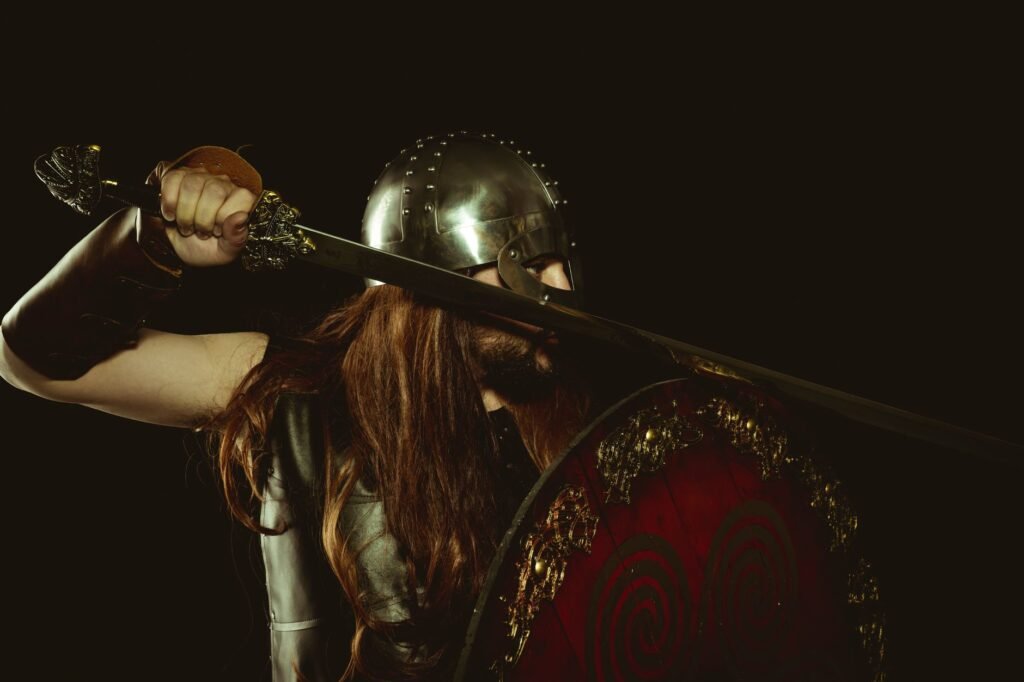
The term “Helm of Darkness” is a modern English rendering used for an ancient Greek object associated with invisibility and the underworld. In Greek, the item is commonly linked to the word κυνέη (kuneē), which can mean a helmet or cap, often made from leather or hide. Ancient authors and later scholars sometimes describe it as a helmet, sometimes as a cap, and in English it is frequently translated as a “helm” because of its martial and mythic character.
The phrase “of Darkness” reflects its connection to Hades, both the god and the underworld realm, which was imagined as hidden, shadowy, and outside the living world. The object’s central attribute is concealment: whoever wears it becomes unseen. This is not merely a practical device but a mythic expression of invisibility as a divine power.
In some traditions, the Helm of Darkness is one of several extraordinary gifts made by the Cyclopes for the Olympian gods during the war against the Titans. In this context, it belongs to a larger family of divine weapons and protective objects, alongside Zeus’s thunderbolt and Poseidon’s trident.
Historical Context
The Helm of Darkness belongs to the religious and literary world of ancient Greece, where gods were thought to possess specific domains and powers that could be symbolized by objects. Greek myth often assigns divine attributes to physical items: a weapon, cloak, sandal, or cap may encode a god’s function and authority.
The underworld in Greek thought was not simply “hell” in the later Christian sense. It was the invisible realm of the dead, ruled by Hades and associated with shadow, absence, and separation from the sunlight of the living world. A helmet that makes its wearer unseen fits this symbolic environment.
Historically, myths involving the Helm of Darkness appear in the works of poets and mythographers from the Archaic and Classical periods and were later repeated by Roman writers. The object is especially notable because it is not merely decorative: it is often essential to a plot, enabling hidden movement, rescue, surveillance, or combat strategy.
Main Characteristics
The Helm of Darkness is defined by a small set of recurring features.
Core attributes
- Invisibility: its most important power.
- Divine origin: usually linked to the Cyclopes or the gods.
- Underworld association: connected with Hades and the realm of the dead.
- Mobility and stealth: used in myth for covert action.
- Transformative function: it changes the wearer’s visibility, not their identity.
Appearance in ancient descriptions
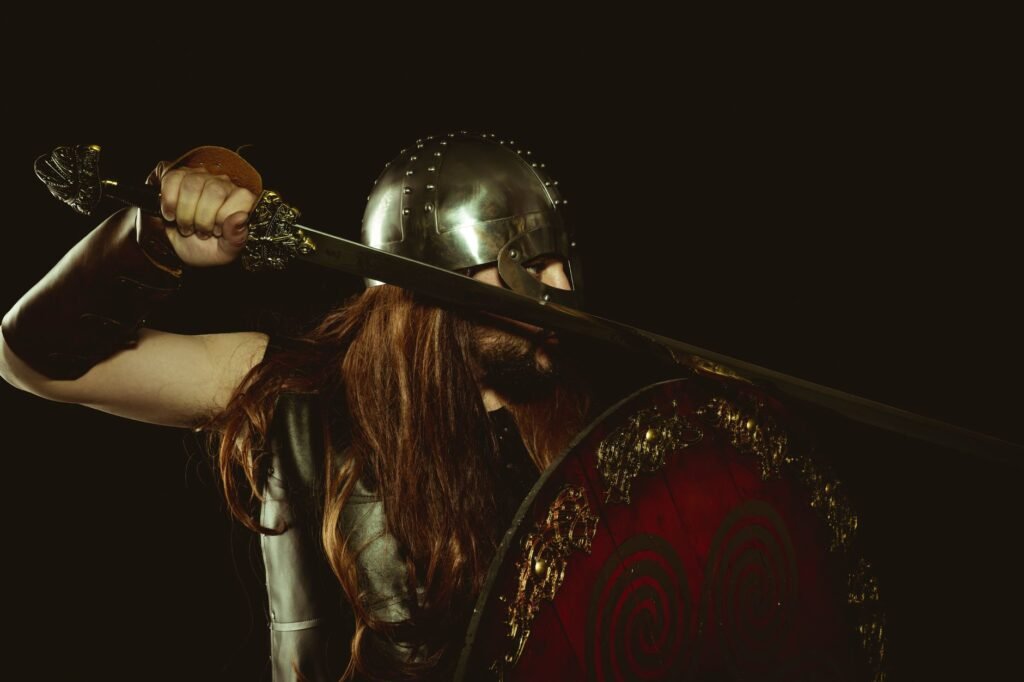
Ancient texts do not give a single uniform visual description. Depending on the source and translation, it may be presented as:
- a helmet
- a cap
- a dogskin cap or hide cap
- a magical piece of war gear
The lack of fixed iconography is typical of Greek mythic objects, where function mattered more than physical detail.
Key identifying feature
Its defining trait is that it makes the wearer unseen. This invisibility can be complete, although some retellings emphasize tactical concealment rather than literal disappearance. The effect allows gods or heroes to move undetected among enemies or through forbidden spaces.
Family and Genealogy
The Helm of Darkness is an object, not a person, so it does not have genealogy in the strict sense. However, its mythic “family” can be described through the figures associated with its origin, ownership, and use.
Associated figures
| Figure | Relationship to the Helm of Darkness |
|---|---|
| Hades | Most common divine owner or user in later tradition |
| The Cyclopes | Often credited with forging divine weapons and gifts, including the helm in some accounts |
| Perseus | One of the most famous mortal users of the helm |
| Athena | In some versions, she helps secure or lend divine equipment |
| Hermes | Frequently associated with magical aid and movement in related myths |
Mythic context of origin
In traditions about the Titanomachy—the war between the Olympians and the Titans—the Cyclopes provide weapons to the gods. Zeus receives the thunderbolt, Poseidon the trident, and Hades the invisible helm. This places the helm within a divine arsenal forged for cosmic conflict.
Symbols
The Helm of Darkness is associated with a cluster of symbolic meanings rather than a single emblem.
Major symbols and their meanings
- Helmet or cap: authority, protection, and martial power.
- Darkness: the hidden, the underworld, and the unseen.
- Invisibility: secrecy, divine privilege, and strategic advantage.
- Hide or skin: archaic, primal protection and magical transformation.
- War gear: the connection between invisibility and battle cunning.
The helm symbolizes the power to cross boundaries without being detected. In mythic terms, invisibility can mean more than stealth; it can signify access to forbidden knowledge, secret spaces, and divine prerogative.
Sacred Animals
There is no universally established sacred animal specifically tied to the Helm of Darkness in the way that certain gods are linked to particular creatures. However, animals associated with Hades and the underworld provide indirect symbolic context.
Associated animals in broader underworld symbolism
- Dogs: especially guard dogs, such as Cerberus, symbolizing threshold-keeping and the boundary between worlds.
- Snakes: often linked with chthonic power, the earth, and hidden forces.
- Owls: not specific to Hades but relevant to darkness, night, and hidden sight in Greek symbolism.
- Black animals: in ritual and myth, black victims were sometimes associated with chthonic deities and underworld rites.
These associations are not exclusive to the helm itself, but they reinforce its thematic link to concealment, night, and the underworld.
Sacred Plants
No plant is directly and consistently associated with the Helm of Darkness in surviving ancient sources. Nonetheless, plants with chthonic or funerary connotations help situate the object in its mythic environment.
Plants relevant to underworld symbolism
- Cypress: commonly linked to mourning, death, and cemeteries in the Greek and later Mediterranean world.
- Asphodel: associated in ancient literature with the meadows of the dead.
- Pomegranate: connected with the underworld through the myth of Persephone.
- Myrtle: used in ritual contexts and sometimes connected to the dead or to sacred transitions.
These plants are not “sacred plants of the helm” in a strict sense, but they belong to the symbolic landscape of Hades and the realm of darkness.
Sacred Places
The Helm of Darkness is not tied to a single cult site, but it is connected to locations central to the myths of Hades, the Cyclopes, and heroic journeys.
Mythically relevant places
| Place | Significance |
|---|---|
| The Underworld | The helm’s primary symbolic realm |
| Mount Olympus | Scene of the Olympian order and divine conflict |
| The cave or forge of the Cyclopes | Possible mythic setting for the making of divine weapons |
| Tartarus | Deep chthonic space associated with confinement and cosmic punishment |
| Troy and related heroic landscapes | Indirectly relevant through stories of divine intervention and hidden action |
Because the helm is a mythic object rather than a cult statue or temple deity, its “sacred places” are primarily narrative and cosmological.
Powers and Attributes
The Helm of Darkness is above all an object of invisibility. This power is the foundation for every story in which it appears.
Main powers
- Rendering the wearer invisible
- Enabling covert movement
- Assisting divine or heroic missions
- Providing strategic advantage in war or pursuit
- Symbolizing access to hidden realms
Mythic significance of invisibility
In Greek myth, invisibility can serve several purposes:
- Protection — the wearer avoids detection.
- Surveillance — the wearer can observe others unseen.
- Combat advantage — the wearer can attack or escape unexpectedly.
- Boundary crossing — the wearer can enter places inaccessible to ordinary beings.
The helm’s power is therefore practical and symbolic. It allows a god or hero to act without being seen, embodying the power of hidden forces.
Main Myths
The Helm of Darkness appears in several important myths, though not always in exactly the same form.
The Titanomachy and the gifts of the Cyclopes
One of the central traditions links the helm to the Cyclopes, who forge divine weapons for the Olympians. In this account, the gods use these gifts to defeat the Titans. The helm belongs to Hades, just as Zeus receives thunder and Poseidon receives the trident. This myth emphasizes the cooperative construction of Olympian power.
Perseus and Medusa
The best-known mortal use of the Helm of Darkness appears in the myth of Perseus. In many versions, Perseus receives magical help from the gods to complete his quest to slay Medusa. He is commonly equipped with several divine objects, including the helm that makes him invisible. This allows him to move unnoticed and escape danger after obtaining Medusa’s head.
Ancient and later sources vary on the exact sequence of gifts. Some traditions emphasize that Hermes and Athena help Perseus, while the invisibility helm is often associated with Hades. The object’s role in the story is consistent even if the details differ: it facilitates stealth and survival.
Other mythic uses
In some traditions, divine beings use the helm to move unseen in the world of mortals or among enemies. These stories are less standardized than the Perseus cycle, but they reinforce the helm’s function as an instrument of concealed divine action.
Summary of key mythic roles
- a weapon of the Olympian victory over the Titans
- a gift used by Perseus in his heroic quest
- a symbol of invisible divine intervention
Relationship with Other Mythological Figures
The Helm of Darkness is closely linked to a network of gods and heroes.
Hades
Hades is its most famous owner. Since the underworld god governs what is hidden beneath the earth, an invisibility helm suits his nature. However, some ancient sources emphasize Hades as a giver or user without implying that he is the sole or original owner in all traditions.
Zeus
Zeus is indirectly related through the myth of the Cyclopes’ gifts. The helm is part of the same divine armament that supports Zeus’s rise to cosmic kingship.
Poseidon
Poseidon also belongs to the same mythic set of recipients. The trident and helm together represent the different domains of divine power among the Olympians.
Perseus
Perseus is the figure most closely associated with the helm in heroic myth. The object becomes a means of overcoming monstrous danger and completing a divinely sanctioned mission.
Athena and Hermes
These deities often appear in related narratives as helpers of heroes. While not the primary owners of the helm, they are part of the divine network that makes heroic action possible.
Worship and Cult
There is no well-attested independent cult of the Helm of Darkness itself. Ancient Greeks did not worship it as an autonomous sacred object in the way that some cultures venerate relics or talismans. Instead, the helm belongs to mythic narrative and divine symbolism.
Religious context
- It is connected to Hades, a major deity with limited but important cult presence.
- It belongs to stories of divine craftsmanship and heroic assistance.
- It reflects beliefs about hidden powers operating beyond ordinary human sight.
Offerings and rituals
Direct ritual practices for the helm are not clearly documented. However, rites connected to Hades and chthonic gods often involved:
- libations
- dark animals
- nocturnal or underground settings
- funerary offerings
These are broader underworld practices rather than ceremonies for the helm itself.
Ancient Sources
The Helm of Darkness is known through a range of ancient literary sources, though the details differ across authors.
Important ancient authors and texts
- Hesiod: In the Theogony, the Olympians’ rise and the role of the Cyclopes in divine armament are foundational to later accounts.
- Homer: The epic tradition helps establish Hades as a major underworld figure, though the helm is not central in the Homeric poems.
- Apollodorus: The Bibliotheca is a major source for mythological summaries, including the Perseus story and the divine gifts.
- Pausanias: Offers travel-literary and antiquarian observations that preserve local traditions.
- Hyginus: The Fabulae provide Roman-era myth summaries, sometimes including variants.
- Ovid: In the Metamorphoses, Roman poetic treatment reshapes Greek myth, including Perseus and magical equipment.
Important note on source variation
Ancient sources do not always agree on:
- who first possessed the helm
- whether it is a helmet, cap, or other covering
- how extensively its invisibility works
- which god or hero used it in a specific episode
An encyclopedic account should therefore treat the helm as a stable mythic motif with variable narration.
Roman Equivalent
The Roman world inherited Greek myth and adapted it into Latin literature and religion. The Helm of Darkness has no exact Roman deity equivalent as an independent cult object, but it was absorbed into the Roman understanding of Dis Pater or Pluto, the Roman counterpart of Hades.
In Roman literature, the object is often referred to in Latinized form as a magical invisibility device associated with Pluto or the underworld. Roman authors such as Ovid reworked Greek myths for Latin audiences, preserving the core idea of supernatural invisibility while fitting it into Roman poetic style.
Thus, the Roman equivalent is not a separate object with a separate cult, but a literary and mythological adaptation within the broader Greco-Roman tradition.
Influence on Modern Culture
The Helm of Darkness has remained influential because invisibility is one of mythology’s most adaptable motifs. Its image has entered modern fantasy, gaming, literature, and visual culture.
Common modern appearances
- Fantasy literature: magical helmets or cloaks of invisibility often echo the Greek model.
- Video games: items granting stealth or invisibility frequently borrow from mythic naming conventions.
- Comics and superhero media: the concept appears in artifacts that conceal identity or movement.
- Films and television: adaptations of Greek myths sometimes include the helm as a prop or plot device.
- Art and illustration: depictions of Hades, Perseus, or magical armor may include the helm or reference its invisibility power.
Cultural influence
The helm contributes to a broader modern fascination with:
- hidden power
- stealth technology imagined through myth
- divine artifacts
- the aesthetics of darkness and secrecy
Even when not named directly, its idea survives in countless stories about cloaking devices and magical concealment.
Curiosities
- The Helm of Darkness is often mistaken for a uniquely Hades-centered object, but in some traditions it is part of a larger divine equipment set created for the Olympians.
- Ancient texts do not fully standardize its appearance; it may be a helmet, cap, or hide covering depending on the source.
- The object’s power is not merely “disappearance” but invisibility, which makes it a mythic predecessor to later fictional cloaking devices.
- In the Perseus myth, the helm is one of several divine aids, and the exact list of items can vary between tellings.
- The helm’s association with Hades reflects a deep Greek symbolic logic: what belongs to the underworld should itself be hidden from sight.
- Unlike many famous mythic objects, the Helm of Darkness has no major cult of its own, which makes it primarily a literary and symbolic artifact.
- Its popularity today is partly due to the enduring appeal of invisibility as a supernatural power.
Frequently Asked Questions
1. What is the Helm of Darkness in Greek mythology?
The Helm of Darkness is a magical object that makes its wearer invisible. It is most commonly associated with Hades, the god of the underworld, and appears in myths involving gods and heroes.
2. Who wore the Helm of Darkness?
In myth, the helm is associated with Hades, but one of its most famous users is Perseus, who uses it during his quest to defeat Medusa and escape danger.
3. Was the Helm of Darkness the same as a regular helmet?
No. Although it is sometimes translated as a helmet or cap, it is a magical object with supernatural powers, especially invisibility.
4. Where did the Helm of Darkness come from?
Some ancient traditions say it was made by the Cyclopes as part of the divine weapons given to the Olympian gods during their war against the Titans.
5. Is the Helm of Darkness mentioned by Homer?
The Homeric epics are foundational to Greek mythology, but the helm is not central in Homer in the way it appears in later mythographic and heroic traditions. Later authors such as Apollodorus are especially important for its story.
6. Does the Helm of Darkness have a Roman equivalent?
There is no exact Roman cult equivalent. In Roman literature, it is usually absorbed into the mythology of Pluto or Dis Pater, the Roman counterparts of Hades.
7. Why is the Helm of Darkness important?
It is important because it combines several major themes in Greek mythology: invisibility, divine power, underworld symbolism, and heroic assistance. It is also one of the most recognizable magical objects in classical myth.
Conclusion
The Helm of Darkness is a compact but powerful symbol of Greek mythic imagination. Whether understood as Hades’s invisibility cap, a Cyclopean divine gift, or a heroic tool used by Perseus, it represents concealment, strategic power, and the hidden workings of the divine world. Its enduring appeal lies in the elegance of its mythic function: by making its wearer unseen, it turns invisibility into a sign of supernatural authority.
As a literary and cultural motif, the Helm of Darkness has outlasted many specific ancient narratives. It remains a vivid emblem of the underworld, of stealth, and of the ancient Greek belief that the most potent forces are often those concealed from ordinary sight.

Orin Vale has spent the better part of two decades tracing the threads that connect the world’s oldest stories — from the halls of Asgard to the banks of the Nile, from Olympus to the jungles of the Maya. What began as a childhood fascination with flood myths and trickster gods grew into years of independent study across comparative mythology and ancient religion, always chasing the same question: what did these stories mean to the people who first told them? Orin writes for readers who want more than trivia — the ones looking for the beliefs, fears, and truths that myths were built to carry.