Jorogumo
Introduction

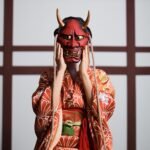
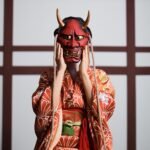
Jorogumo is a creature of Japanese folklore, usually described as a giant spider that can transform into a woman or control human-like illusions. In popular imagination, it is among the most memorable yōkai—supernatural beings in Japanese tradition—because it combines beauty, danger, deception, and predatory instinct. The jorogumo appears in stories that reflect older anxieties about the hidden threat of nature, the instability of appearances, and the vulnerability of travelers or lone men.
Unlike major deities in mythological systems, the jorogumo is not a goddess with a standardized cult or a fixed role in ritual religion. It belongs instead to the broader world of folktale, local legend, and later artistic representations. Its importance lies in how it illustrates the variety of Japanese supernatural traditions and the way folklore adapts regional beliefs, moral warnings, and entertainment into a single compelling figure.
Origin and Meaning
The word jorogumo is generally written as 絡新婦 or 女郎蜘蛛 in Japanese, though the name and its spelling vary by source and context. In common usage, the term is often understood as referring to a “courtesan spider” or “prostitute spider,” reflecting the creature’s association with a seductive female form and its deadly nature.
The etymology is not always treated uniformly in historical sources, and the term may have developed through folk interpretation rather than from a single documented origin. In modern Japanese, the creature is widely understood as a spider yokai that becomes a beautiful woman to lure victims. The name therefore carries a layered meaning:
- joro may imply a woman of sexual or social allure, especially a courtesan
- gumo / kumo relates to spider, though spelling conventions vary
- the combination emphasizes the creature’s deceptive feminine appearance
As with many yōkai names, popular explanations and regional traditions often overlap with later literary and visual depictions. The result is a being whose identity is partly linguistic and partly imaginative.
Historical Context
The jorogumo belongs to the larger Japanese tradition of yōkai, a category that includes ghosts, spirits, monsters, transformed animals, and anomalous beings. Yōkai are not a single religion or doctrine but a flexible cultural system shaped by:
- local oral storytelling
- Buddhist and Shinto influences
- medieval and early modern literature
- theater, woodblock prints, and later popular media
Spider-related supernatural ideas existed in Japan long before the modern popular image of the jorogumo. Spiders often inspired ambivalent reactions. They could be seen as ordinary creatures, but also as uncanny, patient, and symbolic of hidden danger. Their ability to produce webs suggested entrapment and fate, while their silent movement suited stories about ambush and transformation.
The jorogumo is especially associated with later folklore and Edo-period cultural production, when yōkai became popular subjects of books, prints, and theatrical works. In that environment, many monsters acquired more fixed visual identities and narrative traits. The jorogumo became one of the most famous examples of a spider yokai with human disguise.
Main Characteristics
The jorogumo is typically characterized by a combination of spider and woman imagery. Accounts vary, but several traits recur across traditions.
Common features
- Spider origin: usually a large spider, sometimes said to be extraordinarily old
- Transformation: may become a beautiful woman or illusionary human figure
- Seduction and deception: uses charm, music, conversation, or beauty to draw victims close
- Predatory behavior: captures or consumes humans, often men
- Web symbolism: associated with invisible traps, entanglement, and manipulation
Some traditions describe the jorogumo as a spider that grows powerful after reaching an advanced age. In these stories, age is linked to spiritual transformation, a common motif in Japanese folklore where animals may become yōkai after long life or accumulation of power.
The creature is not always described in the same way. In some accounts it is a single spider that becomes human-like; in others it is a more general class of spider spirit or monster. The details depend on region, storyteller, and period.
Typical narrative pattern
A common jorogumo story follows this sequence:
- A traveler or lonely man encounters an attractive woman.
- She invites him into a secluded house, room, or inn.
- He notices something strange, such as strings, webs, or hidden activity.
- The woman reveals her true nature as a giant spider.
- The victim is trapped, attacked, or narrowly escapes.
This pattern emphasizes vulnerability to illusion and the danger of mistaking appearances for reality.
Family and Genealogy
The jorogumo is not a deity with a genealogical family tree in the way that gods in formal mythological systems often are. However, folklore frequently gives it a kind of life history rather than ancestry.
Folkloric “lineage”
In many traditions, a jorogumo is said to be:
- an ordinary spider that has lived for many years
- a spider that has acquired supernatural power
- a being transformed by age, impurity, or spiritual force
This is not a genealogical family in the human sense, but a conceptual origin rooted in transformation. Some regional tales also identify it with specific spider species or local giant spiders, though such identifications are generally folkloric rather than zoologically exact.
Spouses and descendants
No consistent tradition gives the jorogumo a spouse or descendants. Because the jorogumo is a monster or yōkai rather than a divinity, questions of marriage and lineage are usually absent. In some later fictional works, however, spider women may be given personalities, relationships, or backstories that go beyond older folktales.
Symbols
The jorogumo is associated with symbols that express deception, danger, and entrapment.
| Symbol | Meaning |
|---|---|
| Web | Trap, fate, deception, invisibility |
| Beautiful woman | Seduction, illusion, disguise |
| Spider | Patience, predation, hidden threat |
| Strings or threads | Control, manipulation, entanglement |
| Darkness or secluded spaces | Hidden danger, liminality |
Web symbolism
The spider’s web is the most important symbol. It represents a trap that is both physical and metaphorical. In a moral or psychological sense, the web can stand for temptation, false comfort, or the invisible mechanisms by which someone is caught.
Feminine disguise
The female form is central to the jorogumo’s symbolic power. In older folklore, this is not simply about gender but about appearance as a mask. The woman’s beauty is part of the trap, making the jorogumo a creature of both attraction and threat.
Sacred Animals
Strictly speaking, the jorogumo does not belong to a formal sacred animal tradition. However, the spider itself is the animal most closely connected with the creature and therefore functions as its emblematic animal.
Symbolic significance of spiders
In folklore, spiders may symbolize:
- patience and method
- hidden craftsmanship
- danger concealed in ordinary life
- webs as metaphors for fate or entrapment
In the jorogumo legend, these meanings intensify into menace. The spider is not sacred in a positive devotional sense, but it is symbolically powerful.
Sacred Plants
There are no universally recognized sacred plants specifically associated with the jorogumo. Unlike some deities or local spirits tied to certain trees, flowers, or crops, the jorogumo does not have a stable botanical cult.
That said, plants may appear in stories as part of the settings where the creature hides:
- forest vegetation
- reeds or grasses near water
- old houses surrounded by overgrowth
- secluded mountain paths
These are narrative environments rather than sacred botanicals. In folklore, dense vegetation often reinforces the sense of concealment and ambush.
Sacred Places
The jorogumo is not attached to a single temple, city, or mountain in the way that some kami or legendary beings are. Instead, it appears in liminal or isolated places, which heightens its role as a danger encountered away from community safety.
Common settings in legend
- mountain roads
- forested areas
- secluded inns or houses
- caves or hidden dwellings
- places near water or cliffs
These locations are important because they are spaces where travelers are vulnerable and where the boundary between ordinary and supernatural life becomes unstable.
Local variation
Some Japanese regions preserve local tales involving spider spirits in specific landscapes. However, these should be understood as regional folklore rather than universally recognized sacred geography.
Powers and Attributes
The jorogumo’s powers are derived from its hybrid nature as spider and woman. The exact abilities vary by story, but several are common.
Main powers
- Shapeshifting: transforming into a beautiful woman or human form
- Illusion: creating deceptive appearances or false impressions
- Web-spinning: trapping victims physically or symbolically
- Luring victims: using speech, beauty, or music
- Predatory strength: overpowering or consuming prey
- Longevity-based power: in some stories, power gained through age
Domains
The jorogumo does not govern a cosmic domain like a creator deity. Its domain is narrative and symbolic rather than theological. It represents:
- seduction
- hidden danger
- entrapment
- transformation
- the vulnerability of isolated travelers
Moral or social function
As with many folkloric monsters, the jorogumo often serves a warning function. Stories may caution against:
- trusting strangers too quickly
- traveling alone at night
- being deceived by appearances
- ignoring signs of danger
Main Myths
The jorogumo appears in numerous folktales and later artistic retellings, but no single canonical myth exists. Instead, the creature is known through recurring story patterns.
The woman in the house
One of the most widespread motifs involves a traveler meeting a beautiful woman in a house or inn. She appears welcoming and refined, but the surroundings may reveal spider silk, strange movements, or hidden prey. Once the victim is caught, the woman becomes a spider or is revealed as one.
The musician’s entrapment
In some versions, the jorogumo uses music, especially the shamisen or another instrument, to enchant or distract its victim. This motif emphasizes the blend of elegance and danger.
The old spider that gains power
Another common theme is the transformation of a spider that has lived for a long time. After accumulating age or spiritual force, it becomes a jorogumo. This reflects a wider folklore pattern in which long-lived animals acquire supernatural status.
Regional legends
Local tales sometimes describe spider monsters in specific areas of Japan, and later storytellers may identify them as jorogumo even if the older local name differs. Because of this, the creature functions as a flexible folkloric template for spider-related supernatural stories.
Relationship with Other Mythological Figures
The jorogumo interacts more with other yōkai than with formal gods or major mythic heroes. Its place in the tradition is comparative and thematic.
Relation to other yōkai
The jorogumo is often grouped with:
- tsuchigumo, another spider-like or earth spider monster in Japanese lore
- oni, demonic beings that share a general aura of menace
- kitsune and tanuki, shapeshifting creatures that also deceive humans
- yūrei, ghosts, when the atmosphere of deception or haunting overlaps
Tsuchigumo and ambiguity
The relationship between jorogumo and tsuchigumo can be complex. Some modern readers treat them as similar spider monsters, but historical traditions do not always identify them as the same being. Tsuchigumo can refer to different things depending on source, including ancient enemies or monstrous spider-like creatures. It is best to say that the two are related in folklore imagery rather than identical in every account.
Human figures
The jorogumo is often opposed to travelers, priests, warriors, or other men who enter its territory. In these narratives, human intelligence, vigilance, or spiritual purity may help prevent defeat, though many stories are more concerned with suspense than moral triumph.
Worship and Cult
There is no major religious cult or formal worship tradition devoted to the jorogumo. It is not generally prayed to, enshrined, or honored as a deity in mainstream Japanese religion.
Folklore rather than worship
The jorogumo belongs to the realm of:
- oral storytelling
- didactic tales
- entertainment literature
- visual arts
- local superstition
In some folk contexts, stories about spider spirits may have served as warnings or explanations for unexplained events, but this is not the same as organized worship.
Ritual significance
Any ritual associations are indirect. For example, Buddhist or Shinto practices aimed at protection from dangerous spirits might theoretically include such creatures in broader apotropaic concerns, but the jorogumo itself does not occupy a major ritual position in surviving canonical traditions.
Ancient Sources
The jorogumo is not as prominent in the oldest surviving Japanese mythological texts as some major kami or legendary figures. It is better known through later folklore collections, regional legends, and early modern cultural works.
Source context
Because the creature belongs to yōkai tradition, its documentation often appears in:
- folkloric compilations
- Edo-period books on supernatural beings
- local oral traditions recorded later
- woodblock prints and illustrated reference works
Important note on sources
Unlike Greek or Roman myth, where authors such as Homer, Hesiod, Apollodorus, Pausanias, and Ovid provide recognizable textual canons, jorogumo traditions are more diffuse. Accounts vary, and later compilations may standardize or embellish earlier oral material. For that reason, scholars usually treat jorogumo as a folkloric construct with multiple regional and literary versions, not as a figure with a single authoritative ancient text.
Roman Equivalent
There is no direct Roman equivalent to the jorogumo.
If a rough comparison is needed, the closest parallels are not exact counterparts but themes found in Roman myth and folklore:
- deceptive female figures such as sirens in broader Mediterranean imagination
- monsters that lure and destroy
- symbolic associations of weaving, fate, and entrapment
However, these are only comparative analogies. The jorogumo is specifically Japanese in origin and meaning, and any Roman comparison should be treated cautiously.
Influence on Modern Culture
The jorogumo has had a strong afterlife in modern Japanese and global popular culture. Its visual contrast—beautiful woman and monstrous spider—makes it especially adaptable to horror and fantasy media.
In literature and visual art
The creature appears in:
- modern retellings of Japanese folklore
- manga and anime
- fantasy illustrations
- contemporary horror fiction
Artists often emphasize the dual identity of the jorogumo by blending human elegance with arachnid anatomy, such as multiple eyes, legs emerging from clothing, or web motifs integrated into costume design.
In film and television
Japanese film and television have repeatedly drawn on yōkai imagery, and the jorogumo is a recognizable part of that tradition. It may appear as a monster, a supernatural seductress, or a metaphor for hidden predation.
In games and pop culture
In video games and tabletop fantasy, jorogumo often appears as:
- a spider demon or monster
- a shapeshifting enemy
- a seductive boss character
- a folkloric creature with stealth and web-based abilities
International appeal
Outside Japan, the jorogumo has become widely known because it combines several globally familiar horror motifs:
- the femme fatale
- the spider as predator
- shapeshifting deception
- the threat of being trapped
This has made the creature a durable figure in translated folklore collections and fantasy media.
Curiosities
1. The jorogumo is a yōkai, not a goddess
Although it is sometimes discussed in mythological contexts, the jorogumo is best understood as a folklore monster rather than a deity.
2. Its image changed over time
Earlier oral traditions, Edo-period illustrations, and modern fantasy media do not always portray the jorogumo the same way. Some versions are more animalistic, while others are strongly anthropomorphic.
3. It is often linked to age
A recurring motif is that a spider becomes a jorogumo only after living a long time and acquiring supernatural power.
4. The name can be confusing
The written forms and readings associated with jorogumo can vary, and some modern readers encounter alternative spellings or interpretations.
5. It appears in both horror and beauty aesthetics
Unlike many monsters, the jorogumo is not only frightening. It is also visually associated with elegance, refinement, and allure, which makes it especially effective in artistic representations.
Frequently Asked Questions
What is a jorogumo?
A jorogumo is a Japanese folkloric creature usually described as a spider that can transform into a beautiful woman or use human disguise to lure victims.
Is the jorogumo a demon or a ghost?
Not exactly. It is best classified as a yōkai, a broad category of supernatural beings in Japanese tradition. Depending on the story, it may seem demonic, ghost-like, or animalistic.
Does the jorogumo come from old Japanese religion?
The jorogumo is more strongly associated with folklore and later popular culture than with formal religious doctrine. It is not a central figure in mainstream Shinto or Buddhist worship.
What does the jorogumo symbolize?
It commonly symbolizes deception, entrapment, hidden danger, and the risk of trusting appearances too readily.
Is the jorogumo always female?
In most familiar stories, the jorogumo appears as a female-presenting being or a woman disguised as a spider. However, traditions vary, and not every spider yōkai story uses the same gendered form.
Is there only one jorogumo story?
No. There are many regional and literary versions. The jorogumo is a flexible folkloric type rather than a single fixed character.
How is the jorogumo different from tsuchigumo?
They are related in spider-monster imagery, but they are not always identical. Different sources use the names differently, so it is safest to treat them as distinct yet overlapping figures in Japanese folklore.
Conclusion
The jorogumo is one of the most striking creatures in Japanese folklore because it unites beauty and menace, human disguise and animal predation, local legend and artistic imagination. As a spider yōkai that often appears as a seductive woman, it embodies themes of deception, entrapment, and the instability of appearances.
Although it has no formal cult, no fixed genealogy, and no single canonical myth, the jorogumo remains culturally important. Its enduring presence in storytelling, art, and modern media shows how Japanese folklore continues to shape global understandings of monsters and metamorphosis. The jorogumo survives not as a worshiped deity, but as a powerful symbol of hidden danger woven into the fabric of myth.

Orin Vale has spent the better part of two decades tracing the threads that connect the world’s oldest stories — from the halls of Asgard to the banks of the Nile, from Olympus to the jungles of the Maya. What began as a childhood fascination with flood myths and trickster gods grew into years of independent study across comparative mythology and ancient religion, always chasing the same question: what did these stories mean to the people who first told them? Orin writes for readers who want more than trivia — the ones looking for the beliefs, fears, and truths that myths were built to carry.