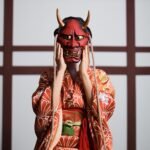
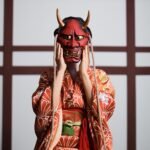
Futakuchi-onna
Introduction

Futakuchi-onna is a figure from Japanese folklore known as the “two-mouthed woman.” She belongs to the wide tradition of yōkai, the supernatural beings, monsters, and strange phenomena that populate Japanese legend. Unlike many yōkai that appear only as external monsters, futakuchi-onna is memorable because her horror is bound to the body itself: a hidden second mouth appears at the back of her head and demands food.
The legend is important because it combines several recurring themes in Japanese folktales: concealed identity, punishment, excessive appetite, domestic unease, and the unsettling possibility that an apparently ordinary person may conceal something supernatural. In modern discussions of yōkai, futakuchi-onna is often cited as one of the most vivid examples of a being whose strangeness is revealed through everyday behavior, especially eating.
Origin and Meaning
The name futakuchi-onna is written as 二口女, literally meaning “two-mouth woman” or “woman with two mouths.”
- Futa (二) means “two.”
- Kuchi (口) means “mouth.”
- Onna (女) means “woman.”
The name describes the being’s defining feature: a second mouth, usually located at the back of the head, beneath the hair. In many versions of the story, the second mouth is hidden until the woman eats.
The precise historical origin of the futakuchi-onna legend is difficult to determine. Like many yōkai narratives, it appears to have developed through a long process of oral storytelling, regional variation, and later literary compilation. The figure is widely known from Edo-period and later yōkai collections, but the underlying ideas may be older. Scholars generally treat futakuchi-onna not as a single fixed myth with one authoritative source, but as a folk narrative motif that evolved across regions and retellings.
Historical Context
Futakuchi-onna should be understood in the broader historical context of Japanese beliefs about spirits, household misfortune, and bodily anomalies. In premodern Japan, folklore often explained unusual events through the presence of yōkai, vengeful spirits, or karmic retribution. A person’s body could become the site of supernatural revelation, especially when social norms were violated.
Several cultural ideas shaped the futakuchi-onna tradition:
- Moral explanations for misfortune: Folktales often tied strange bodily transformations to greed, abuse, hidden wrongdoing, or neglect.
- Domestic anxieties: Many yōkai stories emerge in or around the home, where family relations, food, and labor are central concerns.
- Feminized supernatural threat: Japanese folklore contains many tales of women transformed by suffering, resentment, or taboo behavior. Futakuchi-onna fits within this pattern, though specific versions vary.
- Concern with appetite and scarcity: In agrarian societies where food management mattered greatly, a being that secretly consumes large amounts of food symbolized household danger.
Futakuchi-onna became especially recognizable through Edo-period compendiums of strange beings. These collections did not always “invent” the creatures, but they helped standardize and popularize them for a wider audience.
Main Characteristics
Futakuchi-onna is usually described as a woman who appears outwardly normal but has a hidden second mouth on the back of her head. This mouth is often concealed by her hair. When she is hungry, the second mouth may open, move, or speak independently. In some stories, it eats with its own teeth, lips, and even a separate personality.
Common characteristics include:
- A second mouth hidden beneath the hair
- Excessive or unnatural appetite
- A body that reveals hidden truths
- A connection to household food stores
- A supernatural or cursed origin
- Possible speech or consciousness in the second mouth
The second mouth is the core of the legend. Different sources vary on whether the mouth develops gradually, whether it is the result of punishment, or whether it is a manifestation of a spirit. In some stories, it appears after the woman experiences starvation or mistreatment. In others, it is linked to greed or a moral failing.
A common narrative effect is the reversal of appearance and reality. The woman looks modest and ordinary, but the hidden mouth exposes a destructive inner condition. This makes futakuchi-onna a powerful symbol of concealed hunger, concealed desire, and concealed danger.
Family and Genealogy
Unlike gods or heroic figures with fixed genealogies, futakuchi-onna does not have a single canonical family line. She is a folkloric being, and her relationships vary by story.
Common relational patterns
- Husband: In some versions, she is a wife whose unusual appetite or condition becomes visible to her husband.
- Stepson or child: Certain tales include a child who notices the hidden mouth or a family member who discovers her secret.
- Household relationships: The legend often centers on domestic life, so the figure’s place within a family is usually more important than any mythic ancestry.
Because futakuchi-onna is not part of a unified religious pantheon, there is no standard genealogy. Different local traditions and modern retellings may alter her backstory substantially.
Symbols
The futakuchi-onna legend contains several symbolic elements that recur across versions.
| Symbol | Meaning |
|---|---|
| Second mouth | Hidden hunger, concealed desire, doubled identity |
| Hair covering the mouth | Secrecy, repression, and concealed truth |
| Food consumption | Domestic strain, greed, survival, scarcity |
| Woman’s body as supernatural site | Social anxieties about femininity, family, and morality |
| Uncontrolled appetite | Excess, punishment, or unresolved suffering |
Symbolic interpretation
The second mouth is often read as a metaphor rather than merely a frightening anatomical oddity. It may symbolize:
- Repressed need that eventually becomes visible
- Punishment for selfishness or neglect
- The burden of hidden labor and hunger
- The instability of identity
- The fear that ordinary domestic life hides something monstrous
As with many yōkai, the symbolism is not fixed. Folklorists and cultural historians may interpret the legend differently depending on the version and region being studied.
Sacred Animals
There are no universally recognized sacred animals associated specifically with futakuchi-onna in the way that certain deities are linked to foxes, serpents, or crows. However, Japanese folklore sometimes associates yōkai with animals in broader symbolic ways.
Indirect animal associations
- Foxes and raccoon dogs: Not directly tied to futakuchi-onna, but often used in Japanese folklore to represent transformation and hidden identity.
- Serpentine imagery: The hidden, coiling, or consuming quality of the second mouth can resemble broader snake symbolism in East Asian tradition.
- Vermin or insects in some retellings: Because the mouth often appears in a concealed, bodily, and unsettling form, modern visual depictions sometimes emphasize parasitic or predator-like qualities.
Any animal association should be treated cautiously. Unlike certain kami or shrine cult figures, futakuchi-onna does not have a stable animal cult attached to her.
Sacred Plants
No plant is canonically sacred to futakuchi-onna. Still, plants may appear symbolically in artworks or retellings.
Commonly relevant plant imagery
- Hair and combs: Since the mouth is usually hidden under the hair, haircare objects can be important visual symbols.
- Rice: As the staple food of Japan, rice often functions as a cultural symbol of sustenance, household stability, and scarcity in folktales involving appetite.
- Grains and cooked meals: These are not sacred in a religious sense, but they are often central to the story’s meaning.
In some broader yōkai contexts, plants are used to signal seasonal change, ritual purity, or liminal spaces. For futakuchi-onna, however, there is no established sacred plant tradition.
Sacred Places
Futakuchi-onna is not strongly associated with a single temple, mountain, shrine, or city. Her stories are domestic and portable, usually taking place in homes or villages rather than fixed sacred landscapes.
Typical settings in the tradition
- The family home
- Rural households
- Kitchen or food storage spaces
- Village interiors
- Private domestic spaces hidden from public view
This domestic setting is significant. Many yōkai stories occur at thresholds, edges, or isolated places, but futakuchi-onna is especially tied to the interior of the house. Her presence turns the home into a site of uncanny revelation.
Powers and Attributes
Futakuchi-onna is not usually presented as a powerful sorceress or a divine being. Her attributes are more intimate and bodily than cosmic. The power of the figure lies in the uncanny agency of the second mouth.
Typical attributes
- Appetite without visible restraint
- Possible independent movement of the hidden mouth
- Ability to consume large amounts of food
- A deceptive outward appearance
- A relationship to hunger, deprivation, or guilt
In some stories, the second mouth behaves almost like a separate creature. It may complain, demand food, or reveal the woman’s hidden condition. This creates an eerie duality: one body, two hungers; one face, two sites of expression.
The figure does not typically command storms, fortunes, or fate. Her influence is narrower but psychologically powerful. She disrupts the household by consuming its resources and exposing the fragility of domestic order.
Main Myths
There is no single universally accepted “main myth” of futakuchi-onna. Instead, there are several related narrative patterns. Different sources present different causes for the second mouth.
1. The punishment for stinginess or greed
In one common type of story, the woman is miserly and withholds food. Her hidden second mouth then emerges as a form of punishment or karmic consequence. The second mouth must be fed constantly, creating the very burden she once inflicted on others.
2. The starving woman transformed by neglect
Another type of tale presents the woman as someone who has suffered starvation or abuse. The second mouth appears after prolonged deprivation, turning the body into a symbol of unmet need. In this version, the story can be read less as moral punishment and more as a supernatural dramatization of hunger.
3. The hidden mouth discovered in marriage
Some stories focus on the husband’s discovery of the second mouth. The woman may carefully conceal the additional mouth during the day, but at night or during meals it becomes active. The revelation often brings horror, embarrassment, or domestic crisis.
4. The mouth with its own will
In certain tellings, the second mouth is not passive. It may eat on its own, speak independently, or even possess a personality distinct from the woman’s main face. This motif enhances the feeling that the body is divided against itself.
Narrative function
Across these variants, the legend usually serves one or more of the following functions:
- Explaining strange appetite
- Warning against stinginess
- Dramatizing hidden suffering
- Creating a frightening domestic mystery
- Reinforcing the idea that inner truth eventually appears outwardly
Relationship with Other Mythological Figures
Futakuchi-onna belongs to the larger world of Japanese yōkai and shares themes with several other figures, though she is not identical to them.
Comparable figures and motifs
| Figure or motif | Relationship to futakuchi-onna |
|---|---|
| Rokurokubi | Another female yōkai associated with bodily transformation and concealed abnormality |
| Ubume | A female spirit connected to motherhood and sorrow, though with different themes |
| Onryō | Vengeful female spirits, sometimes linked to suffering and unresolved grievance |
| Noppera-bō | A face-less apparition; like futakuchi-onna, it disturbs ordinary bodily expectation |
| Tengu or oni | General yōkai categories used in folklore, though not directly related |
Futakuchi-onna is often discussed alongside rokurokubi, since both involve women whose bodies harbor hidden supernatural features. However, the specifics differ: rokurokubi is usually associated with a stretching neck or detached head in some traditions, whereas futakuchi-onna centers on a hidden mouth.
The legend also shares a broad kinship with stories of female spirits transformed by deprivation or resentment, though it should not be reduced to a single pattern. Japanese folklore is diverse, and similar themes may serve different local meanings.
Worship and Cult
There is no established cult, shrine ritual, or formal worship dedicated to futakuchi-onna. She is a folklore figure, not a kami with a standardized religious institution.
What exists instead
- Storytelling and oral transmission
- Literary compilation in yōkai encyclopedias
- Folkloric retelling in family and local settings
- Modern popular culture adaptation
Because she is not an object of worship, there are no conventional offerings or festivals specifically associated with her. However, her legend reflects cultural concerns that can intersect with ritual ideas about purity, food, and domestic order.
In a broader sense, Japanese folk belief often treats supernatural beings as something to be avoided, appeased, or carefully recognized rather than worshipped in a formal sense. Futakuchi-onna fits this pattern.
Ancient Sources
Futakuchi-onna is not known from the major classical mythological texts in the way that gods from the Kojiki or Nihon Shoki are. She belongs mainly to the tradition of yōkai literature and folk narrative rather than ancient state mythology.
Important source traditions
- Edo-period yōkai compilations: These helped shape the modern image of many Japanese monsters.
- Kaidan literature: Collections of strange and eerie tales contributed to the spread of supernatural motifs.
- Folklore studies: Later ethnographic and scholarly work recorded regional variations and interpreted them in cultural context.
Important note on sources
Because futakuchi-onna is a folkloric being, there is no single “authoritative” ancient source comparable to Homer for Greek mythology. Rather, the figure emerges from a network of tales, illustrations, and later popularizations. Different printed collections may present different explanations for her condition.
Roman Equivalent
There is no direct Roman equivalent to futakuchi-onna. Roman religion and mythology contain monstrous women, hungry spirits, and bodily transformations, but no standard figure matching the “two-mouthed woman.”
If a loose comparison is needed, one might think of:
- Lamia, a devouring female monster in later Greek and Roman tradition
- Striges, night-associated beings linked to harm and predation
- Lurking household dangers in Roman folklore
These are only partial analogies. None corresponds closely to the specific image of a hidden second mouth located on the back of the head.
Influence on Modern Culture
Futakuchi-onna remains a recognizable figure in contemporary depictions of Japanese folklore and horror.
Areas of influence
- Manga and anime: Yōkai frequently appear in modern Japanese visual media, and futakuchi-onna is often referenced or adapted.
- Film and television: Horror anthologies and folklore-inspired works sometimes include her or creatures based on her design.
- Video games: Yōkai-based games and fantasy titles may feature creatures inspired by the two-mouthed woman.
- Illustration and art: Artists are drawn to the striking visual contrast between a normal face and the hidden second mouth.
- Internet culture: The figure circulates in lists of Japanese monsters and in folklore-based horror content.
Her appeal in modern media comes from a combination of factors:
- The concept is easy to understand.
- The visual image is memorable.
- The theme of hidden bodily horror fits modern supernatural storytelling.
- The legend is adaptable to psychological, body-horror, or feminist readings.
Modern interpretations sometimes emphasize the futakuchi-onna as a metaphor for starvation, domestic pressure, or repression rather than simply as a monster. This reflects the flexibility of yōkai in contemporary culture.
Curiosities
- Futakuchi-onna is often grouped with yōkai that expose the difference between outward appearance and hidden reality.
- Her story is especially effective in visual media because the second mouth can be hidden until a dramatic reveal.
- The legend can be interpreted in both moral and sympathetic ways, depending on the version.
- Some versions place the mouth at the back of the head, while others describe it more ambiguously; the key idea is the hidden second mouth, not an exact anatomical standard.
- The tale is frequently discussed in relation to appetite, which makes it one of the most food-centered yōkai stories.
- Unlike many Japanese supernatural beings, futakuchi-onna is not strongly tied to a particular shrine or region in widely known tradition.
- The story’s domestic setting makes it distinct from yōkai that inhabit mountains, rivers, or abandoned roads.
Frequently Asked Questions
What is futakuchi-onna?
Futakuchi-onna is a Japanese yōkai, or supernatural being, described as a woman with a hidden second mouth, usually on the back of her head.
Why does futakuchi-onna have two mouths?
Different stories give different explanations. Some say it is punishment for stinginess or greed, while others connect it to starvation, neglect, or supernatural transformation. There is no single fixed origin.
Is futakuchi-onna a goddess or spirit?
She is not usually considered a goddess. She is better understood as a folkloric yōkai or monster-like supernatural being.
Is there a real historical source for futakuchi-onna?
She is known mainly through folklore, yōkai collections, and later literary retellings. She does not appear as a major figure in Japan’s classical mythological texts.
What does the second mouth symbolize?
It can symbolize hidden hunger, concealed suffering, greed, domestic instability, or the revelation of something troubling beneath an ordinary appearance.
Is futakuchi-onna dangerous?
In folklore, she is dangerous in the sense that she consumes food excessively and may disrupt household life. However, the danger is usually domestic and symbolic rather than apocalyptic.
Is futakuchi-onna similar to rokurokubi?
Yes, they are often compared because both are female yōkai associated with hidden or unusual bodily features. However, they are distinct beings with different traits and traditions.
Does futakuchi-onna have a shrine or festival?
No widely recognized shrine or festival is dedicated specifically to her.
Conclusion
Futakuchi-onna is one of the most striking figures in Japanese folklore: a woman whose hidden second mouth transforms the everyday body into a site of supernatural fear. Her legend draws together themes of appetite, secrecy, domestic anxiety, and bodily strangeness, making her a memorable example of how yōkai stories reflect social concerns as well as imaginative horror.
Although she does not belong to the classical pantheon of Japanese myth, futakuchi-onna has endured because she is adaptable. She can be read as a warning against greed, a symbol of hunger and deprivation, or a chilling body-horror image rooted in domestic life. Her continued presence in modern literature, art, and popular media shows the lasting power of yōkai traditions to evolve while preserving their core unsettling force.

Orin Vale has spent the better part of two decades tracing the threads that connect the world’s oldest stories — from the halls of Asgard to the banks of the Nile, from Olympus to the jungles of the Maya. What began as a childhood fascination with flood myths and trickster gods grew into years of independent study across comparative mythology and ancient religion, always chasing the same question: what did these stories mean to the people who first told them? Orin writes for readers who want more than trivia — the ones looking for the beliefs, fears, and truths that myths were built to carry.