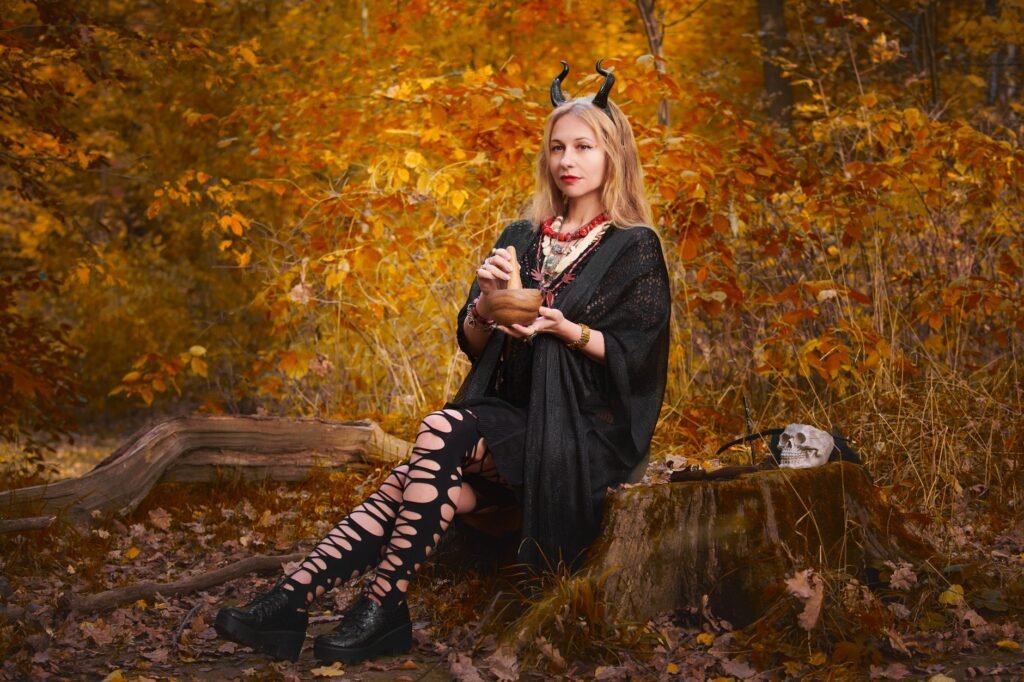
Morrigan
Introduction
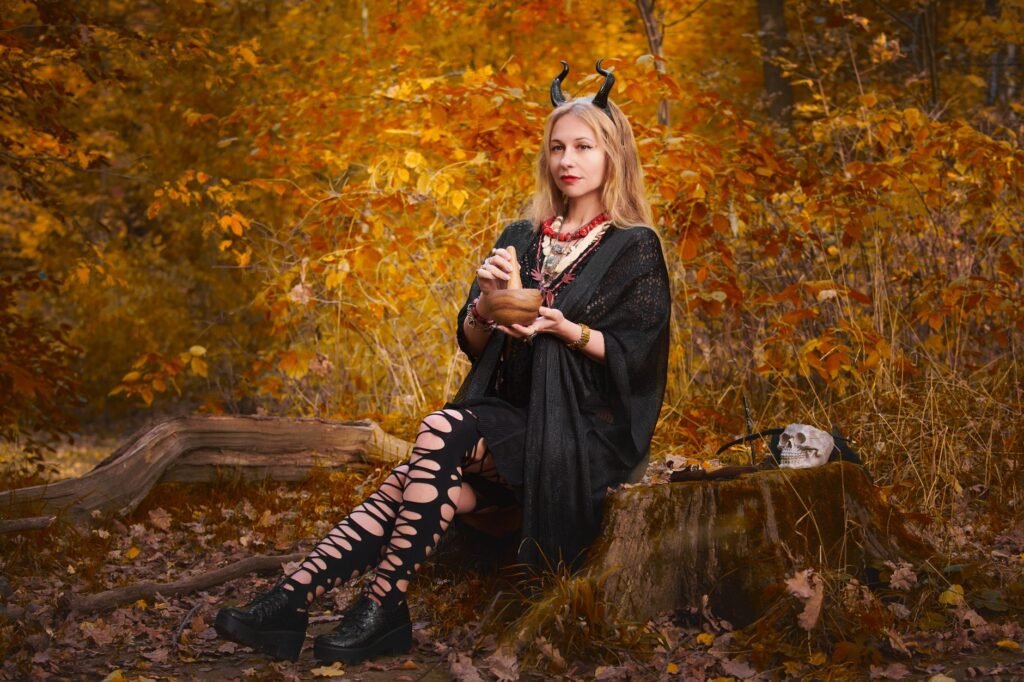
Morrigan is one of the most complex and intriguing figures in the mythological traditions of early Ireland. She appears in Old and Middle Irish literature as a powerful supernatural woman associated with war, sovereignty, fate, prophecy, and the shape of battle itself. Although often described as a goddess in modern scholarship and popular culture, the surviving medieval Irish sources do not present a single, fixed portrait of her. Instead, Morrigan appears in multiple forms and contexts, sometimes as a solitary divine figure and sometimes as one of a group of war-related beings.
Her importance lies in the way she reflects key themes of Celtic mythology: the connection between kingship and land, the role of supernatural women in heroic narratives, and the belief that war was accompanied by prophecy and magical intervention. Morrigan has become one of the best-known figures from Irish myth, influencing literature, neopagan spirituality, fantasy fiction, and popular media.
Origin and Meaning
The name Morrigan is usually understood as deriving from Old Irish elements that have been variously interpreted by scholars. The most common explanation connects it with mór meaning “great” and rígan meaning “queen,” giving the sense of “great queen.” This interpretation remains popular, but the exact historical etymology is not entirely certain.
Other scholarly interpretations have proposed different meanings, including associations with death, terror, or the nightmare. One reason for the uncertainty is that medieval texts use forms such as Morrígan, Mórrígan, and related spellings, and the surviving literary record is shaped by Christian scribes recording older oral traditions. Because of this, the name’s original development cannot be established with complete confidence.
The name may also be related to broader Indo-European patterns in which female divine figures are linked to sovereignty, war, and the boundary between life and death. In Irish tradition, Morrigan is not simply a warrior goddess in the modern sense; she is also connected with prophetic speech, magical influence, and the symbolic legitimization of rulers.
Historical Context
Morrigan belongs to the mythological and heroic literature of medieval Ireland, much of which survives in manuscripts compiled by Christian monks between roughly the 11th and 15th centuries. These texts preserve older stories that likely circulated orally much earlier. As a result, Morrigan must be understood through a layered tradition: pre-Christian belief, oral storytelling, and later literary recording.
In the mythic world of early Irish literature, supernatural beings frequently interact with kings and warriors. Royal legitimacy was closely tied to the land, and the health of the ruler was often symbolically linked with the prosperity of the territory. Female supernatural figures could therefore represent both protection and danger: they could grant sovereignty, inspire battle, foretell death, or punish a failed ruler.
Morrigan appears in this cultural environment as a figure who participates in battle not merely as an observer but as an active force. She belongs to a mythological landscape in which war is not only human conflict but also a cosmic and ritual event. Her presence reflects the Irish imagination of the battlefield as a place where fate is disclosed and power is contested.
Main Characteristics
Morrigan is best known as a battle-associated supernatural woman whose presence is often linked to prophecy, intimidation, and death. She is commonly described as shape-shifting and is frequently connected with crows or ravens, birds that appear on battlefields and symbolize carnage.
Key traits associated with Morrigan
- War and battle
- Prophecy and foresight
- Sovereignty and legitimacy
- Shape-shifting
- Magical influence
- Fear and doom
- Sexual and political power in mythic narratives
In some stories she appears as a single figure; in others she is one of a trio of sisterly or closely related war figures. The most famous of these groupings includes Badb, Macha, and Morrigan, though the exact relationship between them varies by source. In some traditions, “the Morrígan” can function as a collective title rather than a strictly individual name.
Her character is often ambiguous. She may aid heroes, confront them, or prophesy their fates. This ambiguity is central to her mythological role: she is not a benevolent deity in a simple sense, nor merely an enemy. Rather, she embodies the unstable power that surrounds conflict, kingship, and death.
Family and Genealogy
The family relationships of Morrigan vary according to source, and there is no single universally accepted genealogy. Medieval texts sometimes present her as part of a divine or semi-divine kin group, but the details are inconsistent.
Relationships found in different traditions
| Figure | Relationship to Morrigan | Notes |
|---|---|---|
| Badb | Sometimes sister or aspect | Often closely associated, sometimes functionally overlapping |
| Macha | Sometimes sister or aspect | Another war and sovereignty figure in Irish myth |
| Anu / Danu | Occasionally linked in scholarship | Sometimes discussed in relation to fertility or mother-goddess themes, though evidence is indirect |
| The Dagda | Lover in a major myth | They are linked in The Second Battle of Mag Tuired |
| Cú Chulainn | Adversary and interlocutor | Central figure in her famous encounters in the Ulster Cycle |
Some modern interpretations present Morrigan as part of a larger divine family, but many of these reconstructions go beyond what can be firmly demonstrated from the texts. It is safer to say that she is associated with a network of related female figures whose identities overlap across different stories.
In the Second Battle of Mag Tuired, Morrigan is associated with the Dagda, one of the most important figures in Irish mythology. Their relationship is presented in mythic and symbolic terms rather than as a straightforward genealogical detail. In heroic narratives, Morrigan’s interactions with Cú Chulainn are especially prominent and reveal her role as both challenger and prophet.
Symbols
Morrigan is associated with several symbolic elements, though these are drawn from a range of stories rather than from a single standardized cult.
Common symbols
- Crows and ravens: Most strongly associated with battle, death, and battlefield prophecy.
- Washing or laundering: In some traditions she is linked with washing the clothes or armor of those fated to die.
- Weapons: Spears, armor, and battle gear reflect her martial domain.
- Shapeshifting forms: Especially animals such as birds and wolves in different stories.
- Water and river crossings: In some myths, riverbanks and washing scenes carry prophetic significance.
- Red and dark imagery: Modern symbolism often emphasizes red for blood and black for death, though ancient sources are less systematic.
Because Morrigan appears in literary rather than iconographic evidence, her symbols are often inferred from narrative motifs. The crow or raven is by far the most enduring emblem in modern representations, but this should not be treated as the only ancient symbol.
Sacred Animals
The animals most strongly linked with Morrigan are birds of prey and carrion birds, especially crows and ravens.
Crows and ravens
These birds appear on or after battlefields, feeding on the dead and visually marking the presence of death. In Irish myth, Morrigan may take the form of a crow or appear hovering over combat. This association makes the bird a natural emblem of her influence over war, prophecy, and mortality.
Other animal associations
Different tales and interpretations have connected Morrigan with other animals, especially:
- Wolves
- Cattle
- Horses
- Eels or fish in some broader transformation motifs
These connections are less consistent than the crow or raven association. They are best understood as part of her shapeshifting and liminal nature rather than as fixed sacred animals in a formal cultic sense.
Sacred Plants
There is no universally agreed sacred plant of Morrigan in the surviving sources. Unlike deities whose worship can be tied to a stable ritual flora, Morrigan is known primarily through narrative literature rather than temple cult or surviving liturgical practice.
That said, modern interpretations sometimes associate her with plants symbolically tied to war, protection, or sovereignty, such as:
- Hawthorn
- Yew
- Blackthorn
- Heather
These associations are speculative or derived from later folklore and contemporary pagan practice rather than directly from early medieval evidence. A careful reading requires distinguishing between historically attested material and modern devotional symbolism.
Sacred Places
Morrigan is not known from a fixed temple cult like those of some ancient Mediterranean deities. Her sacred geography is mythic and literary rather than architectural. She is associated with several important places in Irish myth.
Notable locations in the tradition
| Place | Significance |
|---|---|
| Mag Tuired | Scene of major supernatural battles, including The Second Battle of Mag Tuired |
| Ulster | Region central to the Cú Chulainn cycle |
| The ford at the battlefield | A liminal place where combat, prophecy, and transformation often occur |
| Rivers and boundary crossings | Symbolically important in many Irish myths involving sovereignty and fate |
In Irish myth, the ford is especially significant. It is neither fully land nor fully water, making it an ideal setting for confrontation and supernatural encounter. Morrigan’s appearances in such places reinforce her role as a figure of thresholds and transitions.
Powers and Attributes
Morrigan’s powers are not catalogued in a systematic theological text, but the literature consistently presents her as a being with substantial supernatural authority.
Main domains of influence
- War and battle
- Prophecy and foreknowledge
- Death and dying
- Sovereignty and kingship
- Magical transformation
- Inspirational or terrifying speech
- Liminality and thresholds
Her prophetic capacity is especially important. She often announces or foreshadows outcomes rather than directly causing them in a simplistic way. In many myths, she functions as the voice of inevitability: she names what is to come, often with a tone of challenge or menace.
Shape-shifting is another core attribute. She may appear as a woman, a bird, or another form depending on the story. This reflects a broader mythological principle in which supernatural beings are not confined to one bodily identity.
Morrigan is also linked with the fate of warriors. She does not merely accompany battle; she often appears to define it spiritually, symbolically, or prophetically.
Main Myths
Morrigan appears in several major narratives of Irish myth, especially those of the Mythological Cycle and Ulster Cycle.
The Second Battle of Mag Tuired
In The Second Battle of Mag Tuired, Morrigan is one of the key supernatural figures associated with the Tuatha Dé Danann. She is linked to the Dagda in a notable encounter and later appears as an active force in the battle against the Fomorians.
In this text, her role combines sexuality, prophecy, and martial power. She inspires the battlefield through magical action and is described in ways that emphasize both her authority and her ambiguity. The story presents her as a powerful participant in the struggle for Ireland’s mythic order.
The Táin Bó Cúailnge
Morrigan’s most famous mythic interactions occur in the Táin Bó Cúailnge (“The Cattle Raid of Cooley”), the central epic of the Ulster Cycle. Here she encounters the hero Cú Chulainn in a series of confrontations.
In one episode, she appears to him in various forms, sometimes trying to seduce, distract, or test him. When he rejects her, she retaliates by interfering in battle. In another famous scene, Cú Chulainn wounds her in animal form, and later she appears to him as a woman washing armor or clothes—an image often interpreted as a death omen.
These episodes highlight her dual role as adversary and herald of fate. She is not merely defeated by the hero; rather, she remains a persistent force whose predictions and warnings are fulfilled.
Other mythic appearances
Morrigan or related figures appear in additional tales where war, royal legitimacy, or prophecy is central. Because medieval Irish manuscripts preserve overlapping traditions, it is sometimes difficult to distinguish whether a given reference concerns Morrigan as an individual or as part of a broader group of war goddesses or spirits.
Relationship with Other Mythological Figures
Morrigan’s interactions with other figures are essential to understanding her mythological identity.
The Dagda
The Dagda is one of the most prominent gods of Irish myth, associated with abundance, authority, and the protection of the Tuatha Dé Danann. His relationship with Morrigan in the Second Battle of Mag Tuired is symbolic and significant, suggesting a connection between sovereignty, fertility, and war.
Cú Chulainn
Morrigan’s relationship with Cú Chulainn is one of opposition, testing, and prophecy. He repeatedly resists or harms her in her various forms, yet he cannot escape the fate she announces. Their interaction is one of the most famous examples of the collision between heroic defiance and supernatural inevitability.
Badb and Macha
These figures are often discussed alongside Morrigan because they share warlike and prophetic qualities. In some sources or interpretations, they may be treated as sisters, allied beings, or different aspects of a single divine pattern. The evidence is not always clear enough to make rigid distinctions.
Kings and warriors
More broadly, Morrigan is tied to the fate of kings and warriors. She may bless, challenge, or doom them, depending on whether they are worthy, victorious, or aligned with the proper order. This connection reflects her role in the mythic politics of sovereignty.
Worship and Cult
Direct evidence for a formal cult of Morrigan is limited. Unlike deities documented in major temple traditions, Morrigan survives mainly in literary and mythological sources. There is no securely attested temple, priesthood, or standardized ritual calendar for her in the historical record.
Nevertheless, scholars infer that she belonged to a religious and mythic world in which supernatural female powers were significant in rituals of kingship, battle, and land fertility. Some motifs suggest that she may have been honored through:
- Battle invocations
- Oaths and prophecies
- Kingship-related rites
- Ritualized storytelling
- Offerings linked to sovereignty and protection
Modern neopagan and Celtic reconstructionist communities sometimes venerate Morrigan, but these practices are contemporary religious developments and should not be confused with securely attested ancient worship.
Ancient Sources
Morrigan is known chiefly from medieval Irish literature rather than from Greek or Roman-style classical texts. The most important sources include:
Principal sources
The Second Battle of Mag Tuired
A key mythological narrative featuring Morrigan among the Tuatha Dé Danann.Táin Bó Cúailnge
The central epic of the Ulster Cycle, containing her encounters with Cú Chulainn.Other Irish saga material
Various manuscripts preserve related references, sometimes under different spellings or overlapping identities.
Classical and later comparative sources
Ancient writers such as Homer, Hesiod, and Ovid do not mention Morrigan, since she belongs to Irish tradition rather than Greco-Roman mythology. However, comparative mythology sometimes places her alongside war and sovereignty figures from other Indo-European traditions. Such comparisons can be illuminating, but they should be treated cautiously and not as direct evidence.
Because the primary sources are medieval and often filtered through Christian scribal transmission, interpretation requires care. Different manuscripts and editions may preserve variant readings, and the identity of Morrigan may sometimes overlap with that of related beings.
Roman Equivalent
Morrigan does not have a perfect Roman equivalent. She combines features that in Roman religion would belong to different figures. Depending on the aspect emphasized, she has been compared with:
- Bellona, Roman goddess of war
- Minerva, for strategic intelligence and martial power
- The Furies, for fearsome supernatural presence and fate
- Muses or prophetic figures, in relation to inspired speech
- Matronae or sovereignty figures, in discussions of land and rulership
These comparisons are approximate only. Morrigan’s role is distinctively Irish and should not be reduced to a simple one-to-one correspondence with Roman deities.
Influence on Modern Culture
Morrigan has become a prominent figure in modern culture, especially in literature, fantasy media, games, and neopagan spirituality. Her image as a crow-associated war goddess or dark sovereign woman has had broad appeal.
Areas of modern influence
- Fantasy literature: Morrigan appears in novels inspired by Celtic mythology or in characters loosely modeled on her attributes.
- Video games: She is frequently referenced as a boss, goddess, or magical warrior figure.
- Tabletop role-playing games: Her name and traits are often adapted into game lore.
- Television and film: Writers use her as a symbol of war, death, or empowerment.
- Music and visual art: Artists draw on her association with birds, battlefields, and dark feminine power.
- Modern paganism: She is widely honored in contemporary devotional practice, especially by those drawn to Irish myth.
Modern portrayals often emphasize her as a fierce, independent female power. While this can be creative and meaningful, it sometimes simplifies the more nuanced mythological picture. In the sources, Morrigan is not only a warrior figure but also a prophecy-bringer, a sovereign force, and a being linked to the inevitability of death.
Curiosities
- Morrigan is often called a “goddess” today, but ancient sources do not always label her in that exact way.
- Her name may mean “great queen,” though this remains debated.
- She can appear as a single figure or as part of a group of related war beings.
- The crow or raven is her best-known symbol, but that association is strongest in literary tradition and modern reception.
- In some stories, she is both desired and feared, reflecting the old Irish link between sexuality, kingship, and power.
- She is among the most recognizable figures of Irish mythology outside Ireland.
- Her role is often less about random violence and more about the revelation of fate in the context of battle.
Frequently Asked Questions
1. Is Morrigan a goddess?
Many modern scholars and practitioners describe Morrigan as a goddess, but the medieval Irish sources present her in varied ways. She is best understood as a major supernatural figure associated with war, sovereignty, and prophecy.
2. What does the name Morrigan mean?
The most common explanation is “great queen,” from Old Irish elements often read as mór and rígan. However, the etymology is not fully certain.
3. What animals are associated with Morrigan?
Crows and ravens are the strongest animal associations. She may also be linked with other animals in shapeshifting episodes, but those connections are less stable across sources.
4. What is Morrigan’s role in the Táin Bó Cúailnge?
She challenges Cú Chulainn in several forms, attempts to influence him, and later appears as a prophetic figure linked with his fate. Her role is central to the epic’s supernatural dimension.
5. Is Morrigan the same as Badb or Macha?
Not exactly. In some traditions they are separate figures; in others they overlap or are presented as sisters or related aspects. The sources are not always consistent.
6. Did Morrigan have temples or formal worship?
There is no secure evidence for a formal temple cult. Her presence is known mainly through literature and mythological narratives rather than archaeological records of worship.
7. Why is Morrigan associated with crows?
Crows and ravens are birds commonly seen around battlefields and carrion. In mythic symbolism, they naturally fit her role as a war and death-related figure.
8. How is Morrigan viewed today?
Today Morrigan is widely seen as a symbol of feminine power, sovereignty, and battlefield wisdom. She is especially prominent in modern paganism, fantasy fiction, and Celtic-inspired art.
Conclusion
Morrigan is one of the most significant figures in Irish mythology because she brings together war, prophecy, sovereignty, and transformation. Her stories do not reduce her to a single role; instead, they present her as a powerful and ambiguous presence who reveals the spiritual meaning of conflict and kingship.
Although many details about her remain uncertain or vary across sources, this complexity is part of her historical importance. Morrigan endures because she embodies a distinctly Irish vision of supernatural power: fierce, prophetic, elusive, and inseparable from the fate of heroes and rulers alike.

Orin Vale has spent the better part of two decades tracing the threads that connect the world’s oldest stories — from the halls of Asgard to the banks of the Nile, from Olympus to the jungles of the Maya. What began as a childhood fascination with flood myths and trickster gods grew into years of independent study across comparative mythology and ancient religion, always chasing the same question: what did these stories mean to the people who first told them? Orin writes for readers who want more than trivia — the ones looking for the beliefs, fears, and truths that myths were built to carry.