Nemean Lion
Introduction
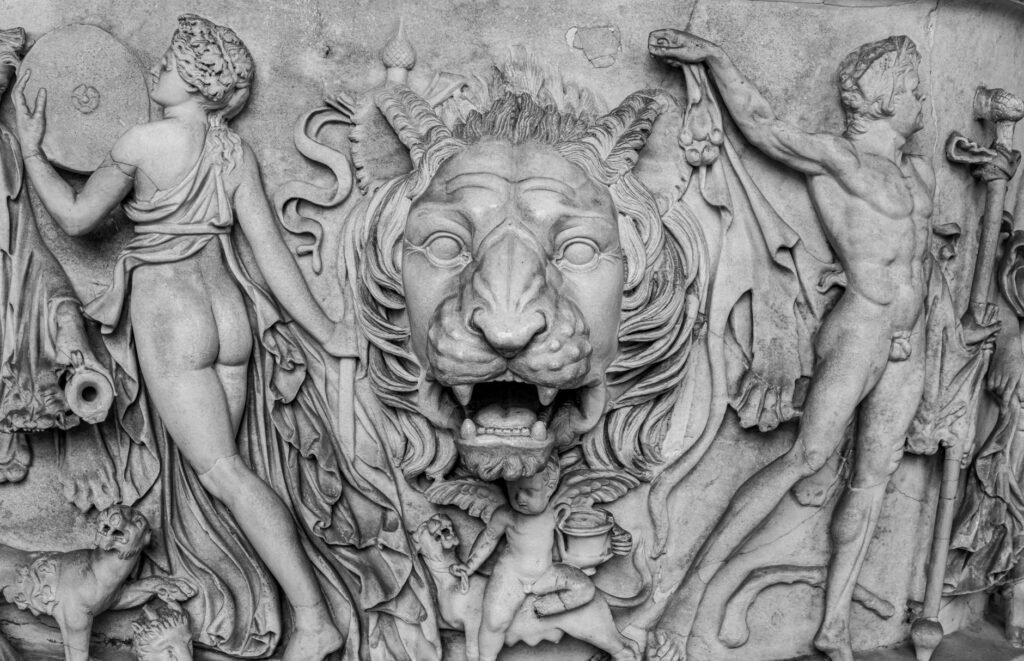
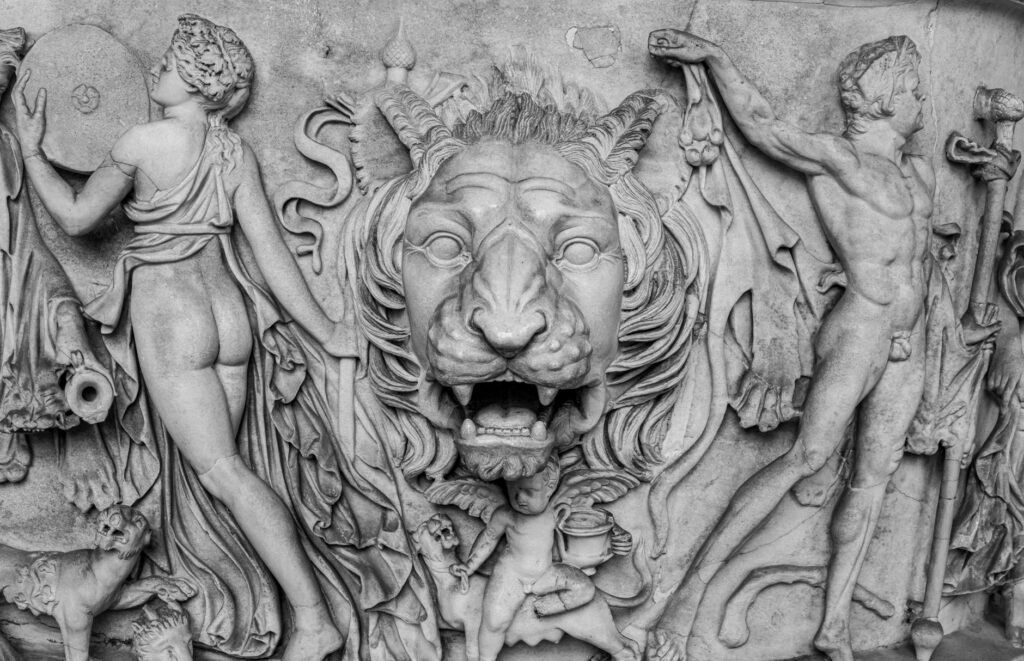
The Nemean Lion is one of the best-known monsters in Greek mythology, famous as the first labor of Heracles (Roman Hercules). In ancient tradition, it was an invulnerable lion that terrorized the region of Nemea in the northeastern Peloponnese until Heracles killed it with his bare hands and later wore its skin as armor. Because of this story, the Nemean Lion became a lasting symbol of heroic strength, perilous trials, and divine favor.
The myth is important not only because it appears in the cycle of Heracles’ labors, but also because it reflects broader Greek ideas about heroism, wilderness, and the triumph of human courage over destructive chaos. The Nemean Lion appears in literature, art, coinage, and ritual associations connected with Nemea and Heracles.
Origin and Meaning
The name Nemean Lion refers to the lion associated with Nemea, a region and sanctuary in ancient Greece. The Greek name is usually rendered as Nemeios leon (“Nemean lion”). The place-name Nemea is traditionally linked with the surrounding landscape of valleys and hills in the northeastern Peloponnese.
Ancient traditions do not give a single uniform origin for the beast itself. Different sources explain its parentage and background in different ways:
- Some ancient accounts describe it as the offspring of Typhon and Echidna, two famous monstrous beings.
- Others connect it with the giant Orthrus and the monster Chimaera, or with other monstrous lineages.
- In some traditions, the lion was sent or nurtured by divine powers as a punishment for the region.
Because Greek myth often varies by author, the lion’s origin should be understood as part of a broader mythic tradition rather than a fixed biography.
Historical Context
The myth of the Nemean Lion belongs to the wider cycle of the Labors of Heracles, which developed in archaic and classical Greece and was later standardized in literary and artistic tradition. These stories were not merely adventure tales; they helped define ideals of aretē (excellence), bravery, and perseverance.
Nemea itself was an important cultic landscape. It hosted the Nemean Games, one of the major Panhellenic athletic festivals of ancient Greece. The sanctuary of Zeus at Nemea became associated with athletic competition, ritual, and regional identity. The Heraclean myth and the festival landscape reinforced each other: Heracles embodied heroic struggle, while Nemea became a place where victory, athletic discipline, and divine recognition were celebrated.
The lion myth also reflects a common Greek symbolic opposition:
- Civilization vs. wilderness
- Human order vs. monstrous danger
- Heroic labor vs. passive fear
In that sense, the Nemean Lion is not just a monster in a story; it is a mythic representation of the threats that heroes must overcome to bring order to the world.
Main Characteristics
The Nemean Lion is usually described as an exceptionally large and ferocious lion with a crucial distinguishing feature: its hide could not be pierced by weapons. This invulnerability made it nearly impossible to kill through ordinary means.
Core features
| Feature | Description |
|---|---|
| Species | Lion |
| Habitat | The region of Nemea in Greek tradition |
| Key trait | Invulnerable skin or hide |
| Defining role | First labor of Heracles |
| Mythic function | Represents a dangerous, uncivilized force |
| Common artistic depiction | Huge lion confronted by Heracles, often with a club or wrestling grip |
Other recurring characteristics include:
- terrifying strength and aggression;
- a habit of preying on local people or livestock;
- association with caves or rugged terrain;
- eventual defeat by physical rather than weapon-based force.
The lion’s invulnerability is central to the myth. Since arrows and blades could not kill it, Heracles had to adapt, which emphasizes intelligence as well as strength.
Family and Genealogy
The genealogy of the Nemean Lion varies in ancient sources, and no single version is universally authoritative.
Reported parentage in different traditions
- Typhon and Echidna: A common mythic genealogy for many monsters.
- Orthrus and Chimaera: Another tradition found in some later accounts.
- Other variants: Some accounts treat the lion as a singular prodigy with no consistent parents.
Because mythographers differed, the lion’s family relations should be treated cautiously. Unlike gods and heroes, it does not have a stable extended genealogy in the surviving record.
Offspring or descendants
No widely accepted tradition gives the Nemean Lion children or descendants. It is generally known as a unique monstrous being rather than the founder of a lineage.
Spouses and relationships
No spouse is known in the usual mythological sources. Its most significant relationship is with Heracles, who destroys it, and with the region of Nemea, which it terrifies.
Symbols
The Nemean Lion is associated with several symbols, especially through the figure of Heracles.
Common symbolic meanings
- Invulnerable strength
- Raw natural power
- Trial and initiation
- Heroic achievement
- Mastery over danger
Related objects and motifs
| Symbol | Meaning |
|---|---|
| Lion skin | Triumph over the monster; protective power |
| Club | Heracles’ physical strength and improvised force |
| Cave | Wilderness, concealment, and the beast’s lair |
| Bow and arrows | Initially ineffective against invulnerability |
| Wrestling grip | Heroic skill and close combat |
The lion skin is especially important. After killing the beast, Heracles wore its pelt as a cloak or armor. In later art, the skin became one of his most recognizable attributes, functioning as a symbol of his identity and achievements.
Sacred Animals
Although the Nemean Lion is itself not a “sacred animal” in the usual religious sense, the lion as an animal carried significant symbolism in Greek culture.
Symbolic significance of lions in Greek culture
- Royal or noble power
- Strength and courage
- Dangerous wildness
- Protection and victory
- Association with heroes and rulers
Lions also appear widely in Greek art, architecture, and mythology beyond the Nemean episode. They were admired as emblems of majesty and feared as predators. The Nemean Lion combines these meanings but turns them into a hostile, chaotic force that must be overcome.
Sacred Plants
No plant is specifically and consistently sacred to the Nemean Lion itself in the ancient sources.
However, several plants are relevant to the broader mythic and ritual environment of Heracles and Nemea:
- Wild olive and oak appear in Greek symbolic landscapes of sanctity and endurance.
- Laurel and other ritual plants are more broadly connected with Greek religious practice.
- In later reception, the vegetation of rugged mountain regions helps evoke the lion’s wilderness habitat.
Because no ancient tradition clearly assigns a particular sacred plant to the Nemean Lion, any direct association should be treated as speculative. The myth is primarily animal- and hero-centered rather than plant-centered.
Sacred Places
The most important place connected with the Nemean Lion is Nemea itself, in the northeastern Peloponnese.
Key locations
| Place | Importance |
|---|---|
| Nemea | Home region of the lion and setting of the myth |
| Sanctuary of Zeus at Nemea | Major religious and athletic center |
| Cave or lair of the lion | Mythic place of confrontation |
| Heracleia / sites associated with Heracles | Wider cultic context of heroic worship |
Nemea
Nemea was not just the scene of a story. It became a culturally meaningful landscape where myth, athletics, and cult intersected. The area’s sanctuary of Zeus and the Nemean Games made it one of the major sacred centers of Greece.
The lion’s cave
Ancient accounts often place the beast in a cave or hidden den. This is a common mythic image: a dangerous creature emerges from a dark, liminal space, and the hero must enter that space to confront it.
Powers and Attributes
The Nemean Lion is not a deity, so it does not possess powers in the divine sense. Its “powers” are mythic attributes describing its dangerous nature.
Main attributes
- Invulnerability to weapons
- Extraordinary physical strength
- Ferocity
- Predatory menace
- Resistance to ordinary human means
Its greatest defining attribute is invulnerability. This feature separates it from a normal lion and makes it a uniquely mythic adversary.
Mythic function
The lion’s role is to create a problem that ordinary force cannot solve. Heracles succeeds because he confronts the beast directly and adapts to its strengths. The story therefore highlights:
- persistence;
- strategic thinking;
- bodily prowess;
- heroic determination.
Main Myths
The most famous myth involving the Nemean Lion is the First Labor of Heracles.
The First Labor of Heracles
According to the standard tradition, Heracles was required to perform a series of labors as penance or service, depending on the version of the myth. His first task was to kill the Nemean Lion.
Common sequence of events
- Heracles travels to Nemea.
- He searches for the lion and attacks it.
- His weapons fail because the hide cannot be pierced.
- He blocks one of the lion’s exits or forces it into close combat.
- He strangles or wrestles the lion to death.
- He skins the beast using its own claws or a divine aid in some versions.
- He wears the skin as armor or a trophy.
Variations in the story
Ancient sources disagree on details:
- Some say Heracles shot arrows first, realizing they were useless.
- Some say he trapped the lion in its cave.
- Some say he used a club before wrestling it.
- Some versions mention Athena instructing him to use the lion’s own claws for skinning.
Despite these variations, the essential story remains the same: the hero defeats a seemingly unbeatable creature through strength and ingenuity.
Related episodes
The lion’s skin becomes central to Heracles’ later image. In art, he is often shown with:
- the lion skin draped over his head or shoulders;
- the lion’s head functioning like a helmet;
- the skin serving as a symbol of victory.
This makes the Nemean Lion a foundational episode in the visual identity of Heracles.
Relationship with Other Mythological Figures
The Nemean Lion is most strongly connected to Heracles, but it also belongs to a broader network of mythic relationships.
Heracles
Heracles is the lion’s destroyer and the figure most closely associated with it. Their relationship is adversarial and defining: the lion establishes the hero’s credentials.
Zeus
Because the Nemean Games were held at a sanctuary of Zeus, the myth later became linked to the god’s sacred landscape. However, Zeus is not usually described as directly involved in the lion’s origin or death.
Athena
In some versions, Athena assists Heracles, especially in practical matters such as skinning the beast. Her role varies depending on the source.
Other monsters and heroes
The Nemean Lion stands alongside other Heraclean monsters such as:
- the Lernaean Hydra;
- the Erymanthian Boar;
- the Ceryneian Hind.
Like these beings, it marks a stage in Heracles’ confrontation with the dangerous edges of the world.
Worship and Cult
The Nemean Lion was not worshipped as a god, but it is connected indirectly to cult and ritual through Heracles and Nemea.
Heraclean cult
Heracles received hero cult in many parts of the Greek world. His defeat of the Nemean Lion enhanced his reputation as a protector and civilizing hero.
Nemean Games
The Nemean Games were among the major Panhellenic athletic festivals. They were associated with Zeus and may also have drawn meaning from the Heracles tradition, since Heracles was linked with athletic prowess and victory.
Ritual significance
The myth likely reinforced local and regional identity through:
- commemorations of heroic strength;
- competitive athletic display;
- religious reverence for Zeus;
- the cultural prestige of Nemea.
There is no strong evidence for direct worship of the lion itself. Rather, the creature belongs to the mythic background that gives sanctity and meaning to the region.
Ancient Sources
The Nemean Lion appears in numerous ancient texts, though not always in identical form.
Major ancient authors and sources
| Author | Contribution |
|---|---|
| Homer | No full Nemean Lion narrative, but provides early Greek heroic background |
| Hesiod | Helps shape mythic monster genealogies in the Greek tradition |
| Pindar | Important for Heracles, victory, and Nemean context |
| Apollodorus | Gives a systematic account of Heracles’ labors |
| Diodorus Siculus | Offers rationalizing and historical-style retellings |
| Pausanias | Describes Greek sites and local traditions, including Nemea |
| Ovid | Retells the labor in Roman literary form |
| Euripides | Uses Heraclean material in tragic contexts |
| Theocritus | References Heracles and heroic imagery |
Notes on source differences
- Apollodorus is often the most straightforward source for the labor narrative.
- Pausanias is especially valuable for local cult and geography.
- Ovid presents the story in Roman literary style and may reshape details for poetic effect.
- Earlier poets and fragments show that the myth circulated in multiple forms before later systematization.
Because no single ancient source preserves every detail, modern reconstructions rely on comparing versions carefully.
Roman Equivalent
There is no separate Roman deity corresponding to the Nemean Lion, since it is a monster rather than a god.
Its Roman adaptation appears mainly through:
- the figure of Hercules instead of Heracles;
- Latin literary retellings of the labor;
- Roman art and decorative imagery.
In Roman culture, the lion skin became especially important as an emblem of Hercules’ identity. The story thus entered Roman mythology not as an independent monster cult, but as part of the broader heroic cycle of Hercules.
Influence on Modern Culture
The Nemean Lion remains influential in modern literature, art, education, and popular media because it is one of the most recognizable episodes in the Heracles/Hercules cycle.
Modern cultural presence
- Literature: retellings of Greek myths for children, students, and general readers often begin with the Nemean Lion.
- Art: classical sculpture, vase painting, Renaissance art, and modern illustration frequently depict the struggle between Heracles and the lion.
- Cinema and television: adaptations of Greek myth often include the labor as a defining heroic challenge.
- Games: video games, role-playing games, and fantasy media use the Nemean Lion or inspired monsters as boss creatures or symbols of strength.
- Education: the myth is widely taught as an entry point into Greek mythology and ancient storytelling.
Why it remains popular
The story is visually dramatic and easy to recognize:
- a heroic figure;
- a giant lion;
- a seemingly impossible challenge;
- a decisive victory.
This combination makes the Nemean Lion enduringly attractive in both scholarly and popular contexts.
Curiosities
- The lion’s invulnerability is the feature that makes the myth memorable; without it, the story would be a simple hunting tale rather than a heroic trial.
- Heracles’ lion skin became one of the most persistent visual identifiers in classical and later art.
- The story helps explain why Heracles is often shown with both a club and a lion skin.
- In some versions, the lion’s skin was so thick that even the hero’s own tools had to be replaced by the beast’s claws for skinning.
- The myth may have helped connect local geography with Panhellenic prestige, linking Nemea to one of Greece’s most famous heroes.
- Unlike many myths, the Nemean Lion is not a complex character with dialogue or family drama; its importance lies in its role as a test of heroism.
- The lion’s defeat is sometimes interpreted as a symbolic conquest of wild nature by civilized strength.
Frequently Asked Questions
1. What is the Nemean Lion in Greek mythology?
The Nemean Lion is an invulnerable lion killed by Heracles as his first labor. It is one of the most famous monsters in Greek myth.
2. Why was the Nemean Lion invulnerable?
Ancient sources say its hide could not be pierced by weapons. The exact cause of this invulnerability varies or is not explained consistently across traditions.
3. How did Heracles kill the Nemean Lion?
He could not kill it with arrows or blades, so he eventually overpowered it in close combat, usually described as strangling or wrestling it to death.
4. Why did Heracles wear the lion skin?
He wore it as armor and as a trophy of victory. The lion skin became a symbol of his power and a standard part of his iconography.
5. Where did the Nemean Lion live?
It is usually placed in or around Nemea, in the northeastern Peloponnese, often in a cave or wild mountainous area.
6. Is the Nemean Lion worshipped as a god?
No. It is a mythological monster, not a deity. However, it is connected indirectly to the cultic landscape of Nemea and the worship of Zeus and Heracles.
7. Which ancient writers mention the Nemean Lion?
Important sources include Apollodorus, Pausanias, Diodorus Siculus, Ovid, and other Greek and Roman authors who retold the labors of Heracles.
Conclusion
The Nemean Lion occupies a central place in Greek mythology as the first and perhaps most iconic labor of Heracles. More than a simple beast, it represents the force of untamed nature, the difficulty of heroic achievement, and the transformation of danger into glory. Its invulnerable hide, its defeat by Heracles, and the enduring image of the lion skin all contributed to its lasting symbolic power.
Through literature, archaeology, art, and the cultural memory of Nemea, the Nemean Lion remains one of the clearest and most recognizable figures in the mythic world of ancient Greece.

Orin Vale has spent the better part of two decades tracing the threads that connect the world’s oldest stories — from the halls of Asgard to the banks of the Nile, from Olympus to the jungles of the Maya. What began as a childhood fascination with flood myths and trickster gods grew into years of independent study across comparative mythology and ancient religion, always chasing the same question: what did these stories mean to the people who first told them? Orin writes for readers who want more than trivia — the ones looking for the beliefs, fears, and truths that myths were built to carry.