Cerberus
Introduction
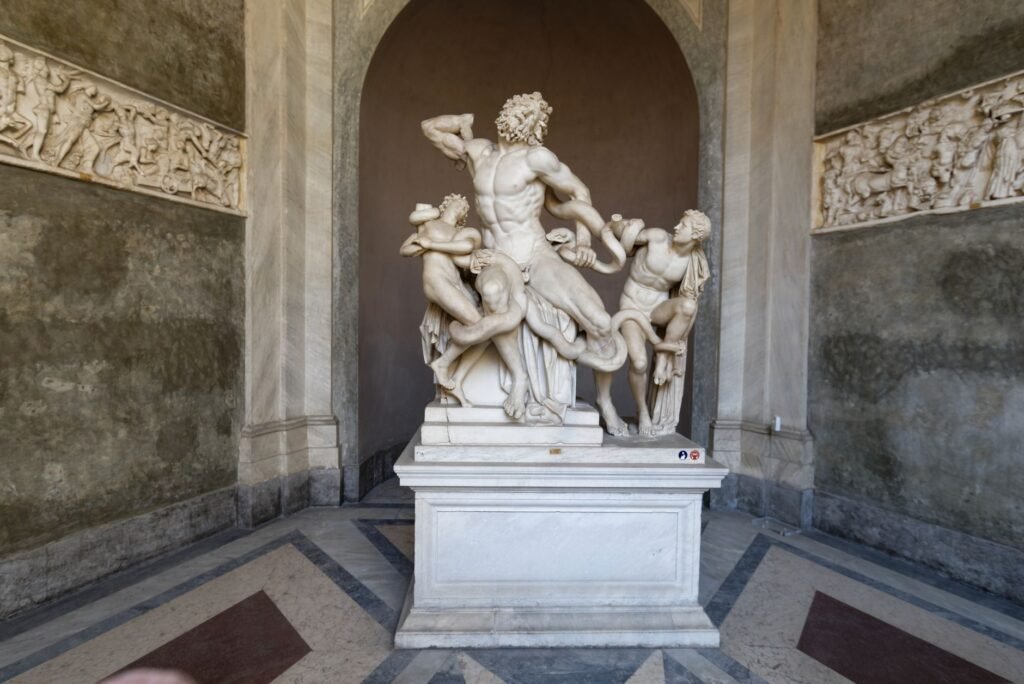
Cerberus is one of the best-known creatures in Greek mythology: the monstrous watchdog of the Underworld. Usually described as guarding the entrance to the realm of the dead, Cerberus prevented the souls of the deceased from leaving and barred the living from entering without permission. In later tradition, he became a symbol of death’s threshold, the fearsome boundary between the world of the living and the land of the dead.
Cerberus is important not only as a mythological monster but also as a cultural emblem. Ancient writers used him to dramatize heroic journeys into the Underworld, while later literature, art, and popular culture adopted him as a shorthand for danger, guardianship, and the uncanny. His image has endured for millennia because it combines several powerful ideas: protection, terror, liminality, and the finality of death.
Origin and Meaning
The name Cerberus is traditionally rendered from Ancient Greek as Κέρβερος (Kerberos). Its exact etymology is uncertain. Ancient and modern scholars have proposed different explanations, but none is universally accepted. The name may be pre-Greek in origin, which would mean it predates the Greek language itself and was later incorporated into Greek myth.
Because the etymology is uncertain, it is best to treat the name as an inherited mythic designation rather than a word with a clear, traceable Greek root. The uncertainty is common for many major figures in early Greek mythology, especially those associated with archaic religious traditions and very old oral narratives.
Historical Context
Cerberus belongs to the mythological and religious imagination of ancient Greece, particularly the beliefs surrounding death, burial, and the afterlife. In Greek thought, the Underworld was not a place of moral judgment in the later, Christian sense, but a shadowy realm where most souls existed after death. Cerberus stood at the entrance to this realm and represented the fact that the dead were normally not meant to return.
The monster appears in early Greek epic, later mythography, tragedy, vase painting, and Roman literature. His role became especially prominent in stories about Heracles (Hercules), whose final labor required him to bring Cerberus up from the Underworld. That episode helped establish Cerberus as one of the great “guardian monsters” of classical mythology.
Cerberus also fits a wider ancient pattern in which sacred or dangerous spaces are protected by monstrous beings. Similar guardians appear in myths across the ancient world, but Cerberus is distinctive for his close connection to the afterlife and for his persistence in both literary and visual tradition.
Main Characteristics
Cerberus is most often described as a multi-headed dog, though the number of heads varies according to source and artistic tradition.
Common features include:
- Guard dog of the Underworld
- Multiple heads, often three, but sometimes more
- A serpent’s tail in many later descriptions
- Serpents or snakes emerging from parts of the body in some accounts
- An enormous, terrifying appearance
- A voice or bark so fearsome that it deters intruders
The most familiar image is the three-headed dog, but this is not the only ancient version. Some sources emphasize two heads; others increase the number dramatically. In artistic and literary tradition, three heads became the standard representation, especially in later antiquity and modern culture.
Cerberus is generally not portrayed as evil in a moral sense. He is a monster, but he also fulfills a function: he guards a boundary that should not be crossed. In this respect, Cerberus is closer to a supernatural sentinel than a villain in the modern sense.
Family and Genealogy
Cerberus is usually placed within a remarkable family of monsters associated with the progeny of Typhon and Echidna, two of the most famous monstrous beings in Greek mythology.
Commonly accepted lineage
| Relation | Figure | Notes |
|---|---|---|
| Father | Typhon | A giant storm monster opposed to the Olympian gods |
| Mother | Echidna | A half-woman, half-serpent monster often called the “Mother of Monsters” |
| Siblings | Hydra, Chimera, Orthrus, Nemean Lion, and others in some traditions | Lists vary by source |
The most frequently cited genealogy makes Cerberus a sibling of several other monstrous figures encountered by heroes. However, ancient authors do not always agree on the exact family tree. Some traditions differ in which creatures are assigned to Typhon and Echidna, and some later writers expand or simplify the list.
Cerberus is not typically given a spouse or children in classical sources. His mythological role is functional rather than familial, centered on his duty as guardian of the dead.
Symbols
Cerberus is associated with symbols that express death, vigilance, and boundary-keeping.
Major symbolic elements
- The dog: loyalty, guardianship, and watchfulness
- The chain or restraint: control over dangerous forces
- The threshold or gate: passage between life and death
- The serpent: chthonic power, danger, and the underworld
- Multiple heads: heightened alertness and overwhelming menace
In later symbolism, Cerberus also came to represent the impossibility of escape from death. At the same time, because he guards rather than destroys, he can symbolize the necessary order of the underworld and the seriousness of sacred boundaries.
Sacred Animals
Cerberus himself is not a sacred animal in the way certain gods have sacred creatures, but he is closely linked to animals with strong symbolic significance.
Associated animals
| Animal | Symbolic meaning |
|---|---|
| Dog | Loyalty, guardianship, protection, danger at the boundary |
| Serpent | Chthonic power, underworld associations, ancient wisdom and danger |
| Hound | Hunting, pursuit, and relentless vigilance |
The dog is central because dogs were familiar animals in the ancient world, often associated with alertness and the ability to detect hidden danger. At the same time, dogs could be linked to death and burial in some Greek and Roman contexts. Cerberus turns these associations into a mythic figure.
Sacred Plants
There is no universally recognized sacred plant specifically tied to Cerberus in the major ancient sources. Unlike deities such as Demeter or Dionysus, Cerberus is not known for a strong plant cult or botanical symbolism.
That said, later artistic and literary traditions sometimes place Cerberus in a wider Underworld landscape that includes plants associated with death or the dead, such as:
- Cypress, often linked with mourning
- Asphodel, associated with the meadows of the dead in Greek imagination
- Poppies, sometimes connected with sleep and oblivion
These associations are contextual rather than explicit. They reflect the broader symbolic world of the Underworld, not a formal cult of Cerberus.
Sacred Places
Cerberus is associated above all with the entrance to the Underworld, not with a single earthly shrine.
Mythic locations connected to Cerberus
| Place | Significance |
|---|---|
| The Underworld / Hades | Cerberus’s primary domain |
| The gates of Hades | The boundary he guards |
| Tainaron (Cape Matapan) | In some traditions, an entrance to the Underworld used in heroic descent myths |
| Eleusinian and other chthonic cult settings | Broader religious context of death and descent, though not uniquely Cerberic |
Classical literature often places entrances to the Underworld in remote, liminal, or dangerous locations. Cerberus himself is most strongly associated with the gates rather than with a terrestrial temple. He is a mythic guardian of a sacred boundary, not the object of a mainstream city cult.
Powers and Attributes
Cerberus has no “powers” in the modern superhero sense, but he possesses attributes that make him formidable in myth.
Main functions and abilities
- Guards the entrance to the Underworld
- Prevents the dead from leaving
- Prevents the living from entering without sanction
- Instills terror through appearance and bark
- Serves the order of the underworld realm
Cerberus’s defining attribute is not destructiveness alone, but liminal control. He stands at a border that must not be crossed casually. In myth, this makes him a test for heroes and a symbol of the difficulty of crossing into forbidden spaces.
He is often portrayed as hard to appease or distract, though some stories describe him being overcome by music, narcotics, force, or divine assistance. These variations reflect different mythological storytelling needs rather than a single standardized account.
Main Myths
Cerberus appears in several well-known mythic episodes, though the most famous is his encounter with Heracles.
Heracles and the Twelfth Labor
The best-known myth about Cerberus is the twelfth and final labor of Heracles. As part of his punishment and service, Heracles was required to descend into the Underworld and bring Cerberus to the upper world alive.
Different versions describe the feat differently. In some accounts, Heracles received assistance or permission from the gods of the Underworld. He then subdued Cerberus using physical strength, sometimes with the help of protective gear or divine guidance. The hero brought Cerberus briefly to the world above, thereby completing his task. In many tellings, he later returned the creature to Hades.
This myth matters because it presents a mortal hero crossing the ultimate boundary and returning alive. Cerberus is the obstacle that marks the seriousness of the feat.
Orpheus and the Underworld
Cerberus is also connected indirectly to the myth of Orpheus, who descends into the Underworld to retrieve Eurydice. In some traditions, Orpheus passes the guardian through the power of music rather than force. The exact treatment of Cerberus varies, but the episode reinforces his role as the threshold guardian of Hades.
Aeneas and the descent to the dead
In Roman literature, especially Virgil’s Aeneid, Cerberus appears as part of the hazards encountered in descent to the underworld. The hero’s passage through the realm of the dead echoes earlier Greek traditions and reinforces Cerberus’s role as a gatekeeper.
Psyche in later tradition
In later literary retellings, especially those influenced by Hellenistic and Roman storytelling, Cerberus may appear in episodes involving divine or heroic journeys to the underworld or to underworld-like spaces. The details vary, and not all such stories are equally ancient or canonical.
Relationship with Other Mythological Figures
Cerberus interacts with a wide range of figures from Greek and Roman myth, especially those associated with death, heroism, and the underworld.
Key relationships
- Hades: Cerberus serves the ruler of the Underworld.
- Persephone: As queen of the Underworld, she is part of the realm Cerberus guards.
- Hermes: As psychopomp, Hermes guides souls, a role that contrasts with Cerberus’s role of detention.
- Heracles: Cerberus’s most famous opponent and captor.
- Orpheus: A figure whose music can soften or bypass the monster’s ferocity in later tradition.
- Thanatos and other death-related figures: Cerberus belongs to the wider mythic environment of death and passage.
Cerberus is not usually depicted as interacting socially with other gods or monsters in a narrative sense. Instead, his relationships are structural: he belongs to the realm of Hades and opposes anyone who tries to cross its boundary unlawfully.
Worship and Cult
There is no major evidence for a broad, independent cult of Cerberus comparable to the cults of Olympian gods. He appears primarily in myth, art, and literary description rather than in formal worship.
Religious context
Cerberus belongs to the chthonic side of Greek religion, which includes beliefs and practices related to the dead, underworld powers, burial, and passage after death. In that sense, he is part of the religious imagination surrounding the afterlife, even if not an object of widespread direct worship.
What is known
- No major pan-Hellenic temple dedicated solely to Cerberus is known.
- Cerberus appears in funerary and underworld-related imagery.
- He is invoked indirectly through stories of descent, death, and boundary crossing.
Because the evidence is limited, any discussion of “worship” must be cautious. Cerberus was a mythological being more than a cult deity.
Ancient Sources
Cerberus is mentioned in a wide range of ancient texts. Different authors describe him differently, especially regarding appearance and genealogy.
Major ancient sources
| Author | Work | Relevance |
|---|---|---|
| Homer | Iliad, Odyssey | Early references to the underworld and monstrous guardians in the broader mythic landscape |
| Hesiod | Theogony | Genealogical context for monsters such as Typhon and Echidna |
| Apollodorus | Bibliotheca | Important mythographic summary of Cerberus’s family and the labors of Heracles |
| Pausanias | Description of Greece | Valuable for local traditions and mythic variants |
| Virgil | Aeneid | Roman literary depiction of the underworld and Cerberus |
| Ovid | Metamorphoses | Important later narrative treatment of mythic transformation and underworld themes |
| Seneca | Tragedies | Literary use of Cerberus in dramatic and philosophical contexts |
Notes on source variation
Ancient accounts are not fully consistent. For example:
- The number of heads varies.
- The appearance of Cerberus changes from source to source.
- The means by which Heracles subdues him differ.
- The genealogical details are not always identical.
For an encyclopedia-style understanding, it is important to treat Cerberus as a mythic figure with a stable core role but flexible literary form.
Roman Equivalent
Cerberus was adopted into Roman mythology with little change in name or function. The Romans generally retained the Greek figure and incorporated him into their own literature and religious imagination.
Roman adaptation
- The name remains Cerberus
- He is strongly associated with Pluto and Proserpina, the Roman equivalents of Hades and Persephone
- He appears in Roman epic and poetry as the guardian of the underworld
- His image becomes especially influential in Latin literature and later European art
Rather than a separate Roman deity, Cerberus is best understood as a Greek mythological figure fully integrated into Roman mythic and literary culture.
Influence on Modern Culture
Cerberus has had an extensive impact on modern culture, where he is often used as a symbol of guarding, danger, and the underworld.
Modern literary and artistic influence
- Appears in retellings of Greek myth for children and adults
- Often used in fantasy literature as a standard “guardian monster”
- Featured in visual art, sculpture, and illustration
- Used symbolically in political, psychological, and philosophical writing
Film, television, and games
Cerberus is frequently adapted in:
- Fantasy films
- Animated works
- Television series based on mythology
- Role-playing games and video games
- Board games and collectible card games
In these media, Cerberus is often simplified into a three-headed dog, even when the ancient sources are more varied. This version has become the dominant modern image.
Broader cultural meaning
Cerberus has also entered everyday language as a metaphor for:
- a fierce guardian
- a strict gatekeeper
- an obstacle at a threshold
- a frightening watchdog
The figure remains powerful because the image is immediately understandable across cultures: a creature standing between ordinary life and a forbidden realm.
Curiosities
- The now-common image of Cerberus as a three-headed dog is traditional, but not exclusive; ancient sources are more varied.
- Cerberus is one of the few mythological monsters whose job is as important as his menace.
- In some art, Cerberus is shown with snakes or even as more serpent-like than canine.
- The twelfth labor of Heracles is one of the few hero myths in which the hero must bring back a creature from the Underworld rather than simply defeat it.
- Cerberus’s name has survived almost unchanged from antiquity into modern languages.
- The creature’s role as a guardian makes him a symbol of order at the edge of chaos, not merely terror.
- Some later philosophical and allegorical writers used Cerberus as a figure for fear, appetite, or inescapable fate.
Frequently Asked Questions
What is Cerberus in Greek mythology?
Cerberus is the monstrous dog that guards the entrance to the Underworld in Greek mythology. He prevents the dead from leaving and the living from entering without permission.
How many heads did Cerberus have?
The number varies by source. The most familiar tradition gives him three heads, but ancient texts and artworks sometimes describe different numbers.
Who were Cerberus’s parents?
Cerberus is usually said to be the child of Typhon and Echidna, two major monsters in Greek mythology. However, ancient traditions are not always fully consistent.
Why did Heracles need to capture Cerberus?
As the final of his twelve labors, Heracles was required to bring Cerberus up from the Underworld alive. The task demonstrated extraordinary strength and divine favor.
Is Cerberus evil?
Not exactly in the modern moral sense. Cerberus is frightening and dangerous, but he functions as a guardian of the Underworld rather than as a villain with independent malice.
Is Cerberus worshipped as a god?
There is no strong evidence for a major cult dedicated solely to Cerberus. He is mainly a mythological guardian figure rather than an object of widespread worship.
What does Cerberus symbolize?
Cerberus symbolizes death, the boundary between life and death, guardianship, vigilance, and the danger of crossing forbidden thresholds.
Where does Cerberus appear in ancient literature?
Cerberus appears in various ancient sources, including mythographic summaries, epic poetry, tragedy, and Roman literature such as the Aeneid and Metamorphoses.
Conclusion
Cerberus is one of the most enduring figures in classical mythology because he combines fearsome imagery with profound symbolic meaning. As the guardian of the Underworld, he represents the final boundary that separates the living from the dead. Ancient sources present him in different ways, but they consistently emphasize his role as a threshold guardian and a challenge to heroes who seek to cross into the realm of death.
From Greek epic and mythography to Roman literature and modern fantasy, Cerberus has remained a powerful cultural symbol. His image continues to resonate because it expresses a universal human idea: some boundaries are sacred, dangerous, and not meant to be crossed lightly.

Orin Vale has spent the better part of two decades tracing the threads that connect the world’s oldest stories — from the halls of Asgard to the banks of the Nile, from Olympus to the jungles of the Maya. What began as a childhood fascination with flood myths and trickster gods grew into years of independent study across comparative mythology and ancient religion, always chasing the same question: what did these stories mean to the people who first told them? Orin writes for readers who want more than trivia — the ones looking for the beliefs, fears, and truths that myths were built to carry.