Sacred Horse
Introduction
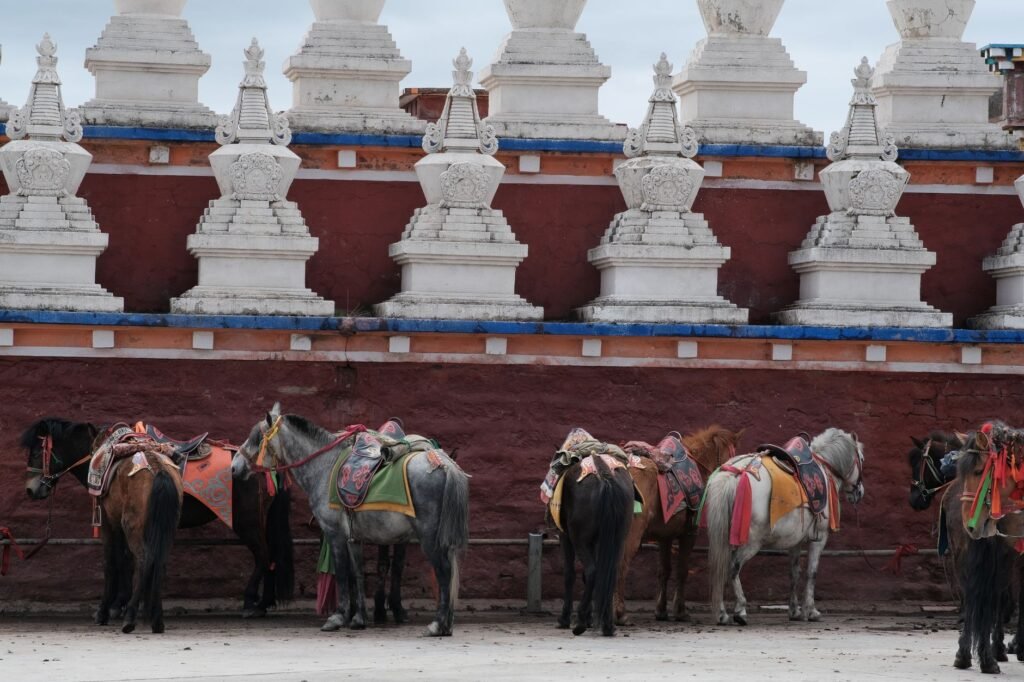
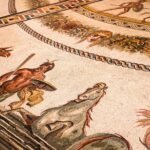
The phrase sacred horse does not refer to a single universally defined deity or creature. Instead, it describes the horse in its ritual, mythological, and symbolic role across many cultures. In religious traditions from the ancient Mediterranean to Central Asia, South Asia, and Northern Europe, horses were often linked with royalty, war, fertility, solar power, prophecy, and the journey between worlds. Their status as sacred animals arose from their speed, strength, beauty, and importance in transport and warfare.
Because horses were expensive and technologically significant in the ancient world, they were also associated with elite power and divine favor. In some traditions, sacred horses were dedicated to a god, used in oracular practices, or even sacrificed in major rites. In others, they served as mythic companions of gods and heroes or as visible signs of divine presence. The concept therefore occupies an important place in the comparative study of mythology, religious history, and animal symbolism.
Origin and Meaning
The term sacred horse is a descriptive English phrase rather than the name of a single ancient cult figure. Its meaning depends on context:
- a horse considered holy or ritually pure,
- a horse dedicated to a deity,
- a horse used in sacrifice or divination,
- or a mythical horse with supernatural associations.
The word horse comes from Old English hors, from Proto-Germanic hursa- or horsa-. The idea of “sacred” derives from Latin sacer, meaning consecrated, set apart, or belonging to the gods.
In many ancient languages, horses were not described with a single equivalent term for “sacred horse,” but their role in ritual can be reconstructed from texts and archaeology. The horse was domesticated on the Eurasian steppe and spread widely through migration, trade, and conquest. As horsemanship became central to social and military power, horses gained symbolic prestige and religious significance.
Historical Context
Horses in the ancient world
Horses transformed warfare, mobility, trade, and prestige. Chariotry in the second millennium BCE, and later cavalry, made horses central to state power. Because of this, they were commonly reserved for rulers, warriors, and sacrificial rites.
Their religious importance can be understood in several historical settings:
- Royal ideology: horses were associated with kingship and aristocracy.
- Solar symbolism: rapid movement across the sky invited comparison with the sun.
- Funerary belief: horses often appear in graves, burial mounds, and memorial art.
- Divination and omen-reading: sacred horses were used to interpret divine will.
- Sacrifice: horses were offered in especially solemn or high-status rituals.
Cross-cultural importance
Different traditions emphasized different aspects of the horse:
| Tradition | Common role of the horse | Typical sacred meaning |
|---|---|---|
| Vedic India | Sacrifice and royal legitimacy | Sovereignty, cosmic order |
| Ancient Greece | Divine mounts, heroism, prophecy | Power, speed, immortality |
| Rome | War, ceremony, purification | State religion, military success |
| Celtic Europe | Lunar and sovereignty imagery | Kingship, fertility |
| Germanic and Slavic traditions | Oracles and ritual animals | Divine communication, protection |
| Steppe traditions | Mounted warrior culture | Mobility, prestige, spiritual mediation |
Because the evidence varies widely, no single “sacred horse” belief system can be applied universally.
Main Characteristics
The sacred horse is typically identified through the following traits:
- Exceptional status: separated from ordinary animals by ritual, ownership, or myth.
- Connection to divinity: associated with gods, ancestors, or sacred kings.
- Speed and motion: seen as a mediator between worlds or a bearer of divine force.
- Liminality: often linked to thresholds, journeys, transitions, and prophecy.
- Purity or consecration: in some rituals, the horse had to meet specific physical or ceremonial conditions.
- Color symbolism: white horses are especially prominent in many traditions, though not exclusively.
- Sacrificial role: in some cultures, the horse was not merely symbolic but ritually killed in major state ceremonies.
In myth, sacred horses are often intelligent, speech-capable, immortal, or capable of flight. In ritual, they may be led in processions, used for divination, or tied to royal inauguration.
Family and Genealogy
A “sacred horse” is not a single genealogical being with one fixed family tree. However, many mythic horses have parentage and kinship relations in their stories.
Examples from mythic traditions
Greek mythology:
- Pegasus was born from Medusa and associated with Poseidon in some accounts.
- Xanthos and Balios, the immortal horses of Achilles, were said in Homeric tradition to have divine origins.
- Arion, a marvelous horse, appears in different genealogical traditions.
Hindu tradition:
- The cosmic horse connected with Aśvins or with royal sacrifice is not a single character but a sacred species and symbol.
- Uchchaihshravas, the celestial horse, is described in later texts as a horse born during the churning of the ocean.
Norse tradition:
- Sleipnir, Odin’s eight-legged horse, has a mythic birth from the trickster Loki and the stallion Svaðilfari in one well-known account.
Slavic and Baltic traditions:
- Sacred horses may be attached to temples, shrines, or oracular institutions rather than to family lineages.
Table: Mythic horses and their associations
| Horse | Tradition | Associated figure |
|---|---|---|
| Pegasus | Greek | Zeus, Bellerophon |
| Sleipnir | Norse | Odin |
| Uchchaihshravas | Hindu | Indra, cosmic symbolism |
| Arion | Greek | Divine origin, heroic lore |
| Divine temple horses | Baltic/Slavic | Priests, gods, sanctuaries |
Symbols
The sacred horse is associated with a range of symbols that vary by culture.
Common symbols
- White color: purity, solar light, divine favor, victory.
- Chariot: royal power, cosmological order, military might.
- Bridle and reins: control of power, discipline, and sacred direction.
- Hooves: movement, travel, and the crossing of boundaries.
- Wings: in myth, transcendence and divine speed.
- Eight legs: in some traditions, supernormal mobility and cosmic completeness.
Symbolic meanings
The horse can symbolize:
- Sovereignty
- Fertility
- War
- Sunlight
- Storm power
- Journey of the soul
- Prophecy
- Cultural prestige
In many cultures, the horse is not only an animal but a visible form of organized power and a mediator between the human and the divine.
Sacred Animals
The sacred horse is itself the primary sacred animal of this topic. However, its religious meaning is often linked to other animals.
Associated animals
- Cattle: in Indo-European sacrificial systems, cattle and horses may both appear in ritual contexts.
- Hounds: often paired with horses in hunting, warfare, and psychopompic imagery.
- Birds: especially eagles, swans, or ravens in mythic transport and divine symbolism.
- Serpents: in some traditions, horse and serpent imagery are linked in fertility or chthonic symbolism.
- Goats and sheep: frequent sacrificial comparisons in ritual literature.
Symbolic significance
The horse’s special status often reflects the larger sacred ecology of a tradition. In some cases, the horse is a mount of gods; in others, it is a sacrificial offering that marks royal legitimacy or cosmic renewal.
Sacred Plants
There is no single plant universally tied to the sacred horse, but several traditions connect horses with ritual vegetation.
Examples
- Oak: in European traditions, sacred groves and horse divination sometimes occur in oak landscapes.
- Ash: in Norse mythology, cosmic trees and horses are part of a larger sacred world of movement and destiny.
- Sacred grasses: in Vedic ritual, grasses and altar materials are essential to sacrificial acts involving the horse.
- Laurel and olive: in Greek ceremonial contexts, horses may appear in games and processions linked to sacred festivals.
Importance of plants
Plants in horse-related ritual usually function as:
- offerings,
- purification media,
- altar materials,
- or symbolic signs of sacred space.
The evidence is often indirect, so the specific plant associations should be treated cautiously.
Sacred Places
Sacred horses are connected to a number of important places, though these vary by tradition.
Notable locations
- Vedic sacrificial grounds: the Aśvamedha horse sacrifice was performed in a specially prepared ritual setting connected to royal authority.
- Delphi and other Greek sanctuaries: horses appear in mythic and cultic contexts near oracular centers.
- Olympia and Panhellenic festival sites: horses were central to chariot and riding competitions tied to prestige and religious celebration.
- Odin’s sacred landscapes in Norse tradition: horses serve as companions through mythic realms, though not always attached to a single shrine.
- Baltic and Slavic temple sites: temple horses are reported in medieval sources, sometimes used for divination.
Ritual geography
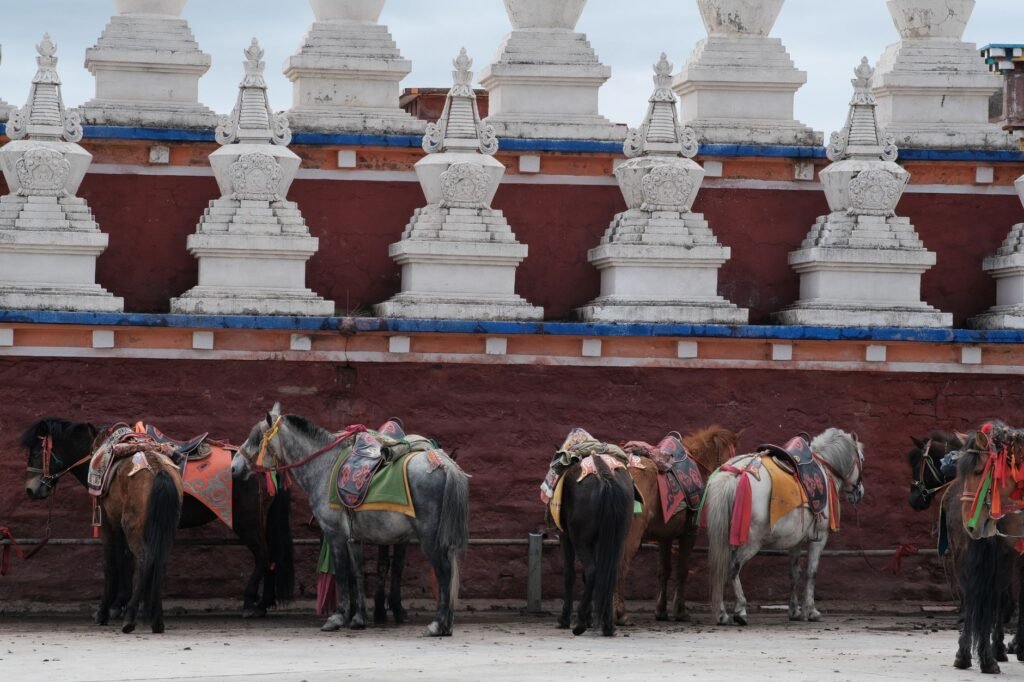
Sacred horses often define a threshold landscape: temple courtyards, tracks for processions, burial sites, royal enclosures, or divination grounds. Their movement through space can itself be sacred.
Powers and Attributes
Sacred horses are commonly credited with symbolic or supernatural powers.
Core attributes
- Speed: the ability to traverse great distances quickly.
- Strength: physical power suitable for war and chariotry.
- Nobility: association with elites and divine beings.
- Prophetic function: ability to reveal divine will.
- Psychopompic role: guide between life and death or between worlds.
- Cosmic mobility: in myth, horses may pull the sun, transport gods, or cross the sky.
- Purificatory force: in sacrificial systems, horses may renew royal or cosmic order.
Domains of influence
Depending on tradition, the sacred horse may govern:
- kingship,
- warfare,
- fertility,
- the sun,
- travel,
- victory,
- legitimacy,
- and mediation with the divine.
Main Myths
The Aśvamedha in India
One of the most important horse-related rituals in ancient literature is the Aśvamedha, or horse sacrifice. It is found in Vedic and later Indian tradition as a royal rite associated with sovereignty. The horse was released to roam, then ritually brought back and sacrificed under strict ceremonial conditions. The ritual symbolized the ruler’s dominion and cosmic legitimacy.
The exact historical practice and chronology of the Aśvamedha are complex and debated. It is best understood as a high-status royal rite described in ancient Indian textual sources rather than as a uniform or continuous practice in all periods.
Pegasus in Greek mythology
Pegasus is one of the best-known sacred horses in world mythology. Born from Medusa after her death in some accounts, Pegasus became associated with Bellerophon and later with Zeus. He is linked with inspiration, heroic ascent, and the spring of the Muses at Helicon. Pegasus is not merely a mount but a symbolic creature of divine imagination.
The horses of Achilles
In Homer’s Iliad, the horses Xanthos and Balios are immortal and divine in origin. One of them speaks briefly to Achilles, a rare and striking moment that underscores the horses’ proximity to prophecy and fate. Their presence elevates the hero’s status and foreshadows the tragic limits of mortal life.
Sleipnir in Norse myth
Sleipnir, Odin’s eight-legged horse, is the fastest and most extraordinary horse in Norse mythology. He travels through the worlds and is associated with Odin’s role as a god of wisdom, death, and magical journeying. His unusual birth and appearance emphasize the supernatural nature of divine transport.
Temple horses and divination
In some northern and eastern European traditions, sacred horses were used in oracle rites. Medieval sources describe horses housed near temples or shrines, where priests interpreted the animals’ movements or behavior. These accounts are important but must be read critically, since many were written by outsiders and may reflect polemical or secondhand observation.
Relationship with Other Mythological Figures
Sacred horses are often defined by their relationships with gods, heroes, and rulers.
Major associations
- Poseidon: in Greek tradition, Poseidon is closely connected to horses and often called the “Horse-God” in certain epithets.
- Odin: in Norse myth, Odin rides Sleipnir and uses the horse for travel between worlds.
- Indra: in Indian tradition, horses are linked with royal power and celestial splendor.
- Apollo: horses can be associated with solar and prophetic imagery.
- Heroes and kings: Achilles, Bellerophon, and other figures gain prestige through divine horses.
Relationship patterns
| Figure type | Relationship to sacred horse |
|---|---|
| God | Mount, symbolic animal, source of divine power |
| Hero | Gift, companion, or sign of favor |
| King | Ritual instrument of legitimacy |
| Priest | Keeper, interpreter, or sacrificer |
| Ancestor | Symbol of lineage and memory |
The sacred horse often mediates the relationship between human authority and divine sanction.
Worship and Cult
Ritual functions
Worship involving sacred horses may include:
- sacrifice,
- processions,
- temple maintenance,
- horse racing and games,
- omen reading,
- purification rites,
- royal inauguration.
Sacrifice
Horse sacrifice is especially notable in Vedic India, where it was one of the most solemn royal rituals. In parts of ancient Europe, horse sacrifice is also attested archaeologically and in textual sources, though the meaning and frequency varied.
Offerings and festivals
Horses could be honored through:
- grain offerings,
- garlands,
- libations,
- public feasts,
- ceremonial riding,
- and dedication to a deity.
In ancient Greek and Roman festivals, horses appear in games, processions, and chariot competitions connected to civic religion.
Religious care
A sacred horse might be housed in a special stable, fed carefully, adorned for ceremonies, or kept apart from ordinary labor. In some traditions, the animal’s purity mattered as much as its physical condition.
Ancient Sources
The sacred horse appears in many ancient and classical sources, though the evidence is uneven and often culturally specific.
Key sources
- Homer, Iliad: immortal horses of Achilles; heroic horse symbolism.
- Hesiod: mythic genealogy and divine world-building, relevant to horses in broader myth.
- Apollodorus: later mythographic summaries of Pegasus and other horse-related myths.
- Pausanias: descriptions of sanctuaries, cult practices, and local traditions.
- Ovid: Roman-era mythological transformations, especially in stories involving Pegasus and horse imagery.
- Vedic texts such as the Rigveda, Yajurveda, and later ritual literature: crucial for the Aśvamedha and horse sacrifice.
- Norse texts, including the Poetic Edda and Prose Edda: especially for Sleipnir.
- Medieval chronicles: preserve accounts of temple horses and divination, though often through Christian or external perspectives.
Source criticism
Different authors often disagree, and many surviving accounts are shaped by local custom, literary style, or religious bias. A careful reading is essential, especially where ritual practice is reported by outsiders.
Roman Equivalent
There is no perfect Roman equivalent to the broader concept of a sacred horse, but several Roman traditions are relevant.
Roman horse-related religion
- Equus October: an annual horse sacrifice performed in October in Rome, associated with Mars and the agricultural-military cycle.
- Augustan and imperial symbolism: horses appear in triumphs, processions, and imperial iconography.
- Neptune: although more often linked with the sea, Neptune was also connected with horses in Roman religion, reflecting Greek Poseidon’s influence.
The Roman world adapted Greek and Italic horse symbolism into state ritual and public spectacle. Horses were important in both religion and political theater.
Influence on Modern Culture
The sacred horse continues to appear in modern imagination, often reinterpreted through mythology, fantasy, and heritage traditions.
Literature and art
- Pegasus remains one of the most recognizable mythological horses in Western art.
- Sacred horses appear in modern poetry, fantasy fiction, and historical novels as symbols of freedom, divinity, or heroic power.
- Visual art frequently uses the horse to evoke movement, nobility, and transcendence.
Cinema and television
Mythic horses are common in film and television adaptations of Greek, Norse, and fantasy material. They often symbolize:
- divine favor,
- magical transport,
- or the untamed force of destiny.
Games and popular culture
In video games and role-playing settings, sacred or divine horses frequently appear as:
- mounts of gods or champions,
- legendary steeds,
- or unlockable creatures with special abilities.
Modern symbolism
Beyond entertainment, the sacred horse remains a powerful emblem in:
- national heraldry,
- equestrian sports,
- spiritual symbolism,
- and environmental or animal-conscious cultural discourse.
Curiosities
- In several traditions, white horses are considered especially auspicious, but this symbolism is not universal.
- Horses can function as oracles, not just mounts or sacrifices.
- Some myths give horses speech, immortality, or even the ability to fly.
- The horse is one of the few animals that appears regularly in both royal ideology and funerary ritual.
- In Indo-European studies, horses are often examined as part of a wider pattern of sovereignty and solar symbolism, though details differ by culture.
- The sacred horse is sometimes linked with the otherworld more than with everyday pastoral life.
- Ancient sources about horse cults can be difficult to interpret because many are fragmentary, late, or biased.
Frequently Asked Questions
1. What is a sacred horse?
A sacred horse is a horse that is ritually honored, mythologically significant, or dedicated to a deity. The term can refer to animals in ritual, mythic horses, or horses used in religious ceremonies.
2. Which cultures had sacred horses?
Sacred horses appear in many cultures, including ancient India, Greece, Rome, Norse societies, Celtic Europe, and parts of Slavic and Baltic tradition.
3. Was the horse always sacrificed in sacred rituals?
No. In some traditions the horse was sacrificed, but in others it served as a mount, symbol, or oracle animal. The role varied greatly by culture and period.
4. Why are white horses often considered sacred?
White horses are frequently associated with purity, the sun, victory, or divine presence. However, this symbolism is cultural, not universal.
5. Is Pegasus a sacred horse?
Pegasus is a mythological horse with strong divine associations, especially in Greek tradition. He is often treated as a sacred or extraordinary horse, though not a cult animal in the same way as some ritual horses.
6. What is the most famous horse sacrifice in history?
The best-known horse sacrifice is the Aśvamedha of ancient India, a royal rite described in Vedic and later Indian texts.
7. Did the Romans have sacred horses?
Yes. Roman religion included horse-related rituals, especially the Equus October, and horses played major roles in military and ceremonial life.
8. Are reports of temple horses always reliable?
Not always. Some accounts come from later writers or outsiders and may mix accurate observation with misunderstanding or polemic.
Conclusion
The idea of the sacred horse captures one of the most enduring and widespread relationships between humans and animals in religious history. Across cultures, horses have stood for power, movement, nobility, divine communication, and the crossing of boundaries. They appear in sacrifice, myth, royal ritual, and artistic imagination, often as beings that connect the human world with the gods.
Although traditions differ widely, the sacred horse consistently reflects the importance of horses in ancient societies and their deep symbolic role in myth and worship. Whether as Pegasus, Sleipnir, the horses of Achilles, or the royal horse of Vedic sacrifice, the sacred horse remains a powerful emblem of transcendence, legitimacy, and sacred force.

Orin Vale has spent the better part of two decades tracing the threads that connect the world’s oldest stories — from the halls of Asgard to the banks of the Nile, from Olympus to the jungles of the Maya. What began as a childhood fascination with flood myths and trickster gods grew into years of independent study across comparative mythology and ancient religion, always chasing the same question: what did these stories mean to the people who first told them? Orin writes for readers who want more than trivia — the ones looking for the beliefs, fears, and truths that myths were built to carry.