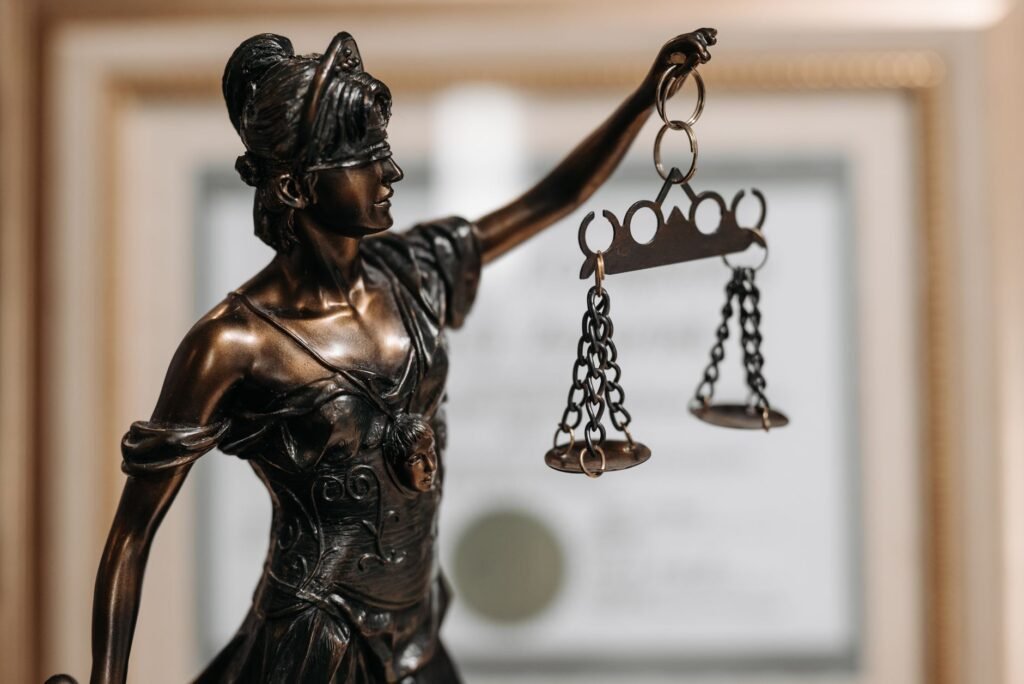
Scales of Themis
Introduction
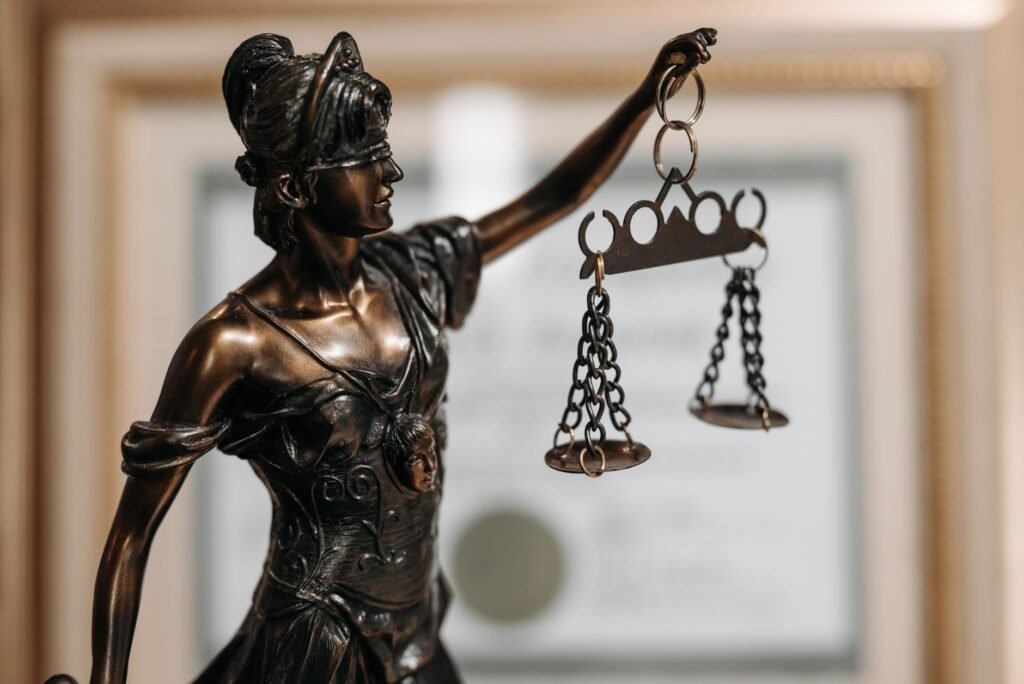
The Scales of Themis are a modern symbolic association built from two powerful ideas in Greek tradition: Themis, the Titaness of divine law, order, and custom, and scales, the enduring emblem of balance and impartial judgment. Although ancient Greek sources do not consistently describe Themis herself as holding scales in the way later artistic tradition does, the pairing has become a widely recognized cultural shorthand for justice, fairness, and moral equilibrium.
The subject matters because it sits at the intersection of mythology, legal symbolism, and modern visual culture. In Greek religion, Themis represents cosmic order and the rightful arrangement of human society. In later iconography, especially through Roman and post-classical traditions, scales became one of the central attributes of Justice. As a result, the “Scales of Themis” often refers to the symbolic extension of Themis’s authority into the familiar image of balanced judgment.
Origin and Meaning
The name Themis comes from the Greek Θέμις (Thémis), a word associated with law, custom, ordinance, and what is established or proper by divine sanction. In archaic Greek thought, themis is not merely law in the modern legislative sense. It refers to the right order of things, especially the customs and judgments that are understood to be sanctioned by the gods.
The term scales refers to the weighing instrument used to measure equality between two sides. In symbolic terms, scales represent:
- balance
- fairness
- impartial judgment
- proportion
- the weighing of claims, actions, or souls
The connection between Themis and scales developed gradually in later iconography and interpretive tradition. In the ancient Greek world, Themis was more commonly associated with justice itself, law, and divine counsel rather than a fixed set of visual attributes. Over time, however, the scales became an almost universal emblem of justice, making them a natural complement to Themis’s role.
Historical Context
Themis in Greek Religion and Thought
Themis belongs to the Titan generation in Greek mythology. She is not a marginal figure. In archaic and classical literature, she appears as an embodiment of cosmic and social order, closely tied to Zeus and to the proper functioning of divine and human institutions.
In early Greek culture, justice was not simply a legal abstraction. It was part of a broader moral and cosmic framework in which:
- kings were expected to judge fairly,
- communities relied on customary law,
- the gods were believed to reward order and punish excess,
- and balance was understood as a principle of the universe itself.
Themis stands for this system of right arrangement. Her symbolic association with scales reflects the later, more visual language used to represent such abstract ideas.
Development of Justice Imagery
In the ancient Mediterranean, several related figures came to represent justice, order, and law. These include:
- Themis, the divine ordinance and right order
- Dike, the personification of justice in human society
- Astraea, a later mythic figure associated with innocence and justice
- Justitia or Iustitia in Roman culture
The familiar image of a blindfolded woman holding scales and sometimes a sword is largely a later development, especially prominent in Roman and modern European legal symbolism. In this context, Themis became one of the principal mythological names linked to the image of the scales.
Main Characteristics
The Scales of Themis are not a separate deity or object in ancient mythology, but a symbolic combination of attributes. Their main features are commonly understood as follows:
| Feature | Symbolic Meaning |
|---|---|
| Two balanced pans | Equality and impartiality |
| Central beam | Stability and neutrality |
| Measuring function | Judgment, assessment, discernment |
| Symmetry | Order and cosmic balance |
| Equilibrium | Fairness and moral restraint |
Key Qualities Associated with Themis
Themis is typically characterized by:
- authority without arbitrary force
- divine legitimacy
- custom and rightful order
- wisdom in judgment
- peaceful governance
- respect for boundaries and norms
The scales visually reinforce these qualities by suggesting that actions and claims can be weighed according to truth and justice rather than personal preference.
Family and Genealogy
Themis is a prominent figure in Greek genealogy, especially in Hesiod’s Theogony.
Parents
The standard tradition identifies Themis as a daughter of Uranus (Sky) and Gaia (Earth), placing her among the Titans.
Spouse
Themis is most famously the consort of Zeus. Their union is significant because it joins divine sovereignty with lawful order.
Children
Different ancient traditions attribute several children to Themis and Zeus, including:
- the Horae: goddesses of the seasons and orderly administration
- the Moirai: the Fates, in some accounts
- sometimes other divine personifications connected with law and order
The exact list varies according to source. Ancient authors do not always agree on the genealogy of these figures.
Relationships
Themis’s family connections emphasize her role as a foundational cosmic principle rather than a narrowly defined goddess. Her descendants often embody the structured rhythms of nature, time, fate, and civic life.
Symbols
The Scales of Themis belong to a wider symbolic cluster associated with justice and divine order.
Common Symbols Associated with Themis
- Scales: balance, fairness, measured judgment
- Seated or standing posture: composed authority
- Throne: legitimacy and rule
- Scepter: sovereign power
- Cornucopia in some later artistic traditions: abundance resulting from order and lawful prosperity
- Blindfold in later justice imagery: impartiality, though this is more strongly associated with Roman and modern personifications than with Themis in early Greek tradition
Meaning of the Scales
The scales symbolize the idea that judgment should be:
- objective rather than emotional
- proportionate rather than extreme
- measured rather than impulsive
- consistent rather than arbitrary
In this sense, the Scales of Themis express a moral universe in which balance is essential.
Sacred Animals
Ancient Greek tradition does not assign a single universally fixed sacred animal to Themis in the way that some gods are linked to specific creatures. However, later artistic and symbolic traditions have connected justice figures, including Themis, with animals that suggest vigilance or authority.
Animals Sometimes Associated with Justice Imagery
- Eagle: sovereignty, clarity, divine oversight
- Snake: wisdom, careful judgment, underworld or chthonic associations in some contexts
- Lion: authority, strength, majesty
These associations are not always specifically Themis’s own in ancient myth. They belong more broadly to the iconography of divine rule and justice.
Sacred Plants
There is no universally established sacred plant for Themis in the ancient sources. Nevertheless, plants linked to order, peace, and lawful prosperity sometimes appear in symbolic contexts involving justice.
Plants Commonly Associated with Peace and Order
- Olive tree: peace, civic harmony, endurance
- Laurel: honor, divine favor, accomplishment
- Wheat and grain: abundance, social stability, seasonal order
These are not exclusive emblems of Themis, but they fit the broader meaning of lawful and balanced society.
Sacred Places
Themis is not strongly associated with one single major cult center in the way some gods and goddesses are. Still, several places and settings are relevant to her worship and symbolic presence.
Oracle Sites and Divine Counsel
Themis is connected in mythic tradition with oracle and counsel, reflecting her role in divine order. In some accounts, she is linked to the transmission of early sacred knowledge and to the governance of proper speech and decision-making.
Panhellenic and Civic Contexts
Her presence is felt more in the realms of:
- courts and assemblies
- royal halls
- sanctuaries where divine order is consulted
- cities that value lawful governance
Because Themis is a principle as much as a localized deity, her “sacred place” is often the structured civic or cosmic order itself.
Powers and Attributes
Themis’s powers are best understood as juridical, moral, and cosmic rather than magical in the narrow sense.
Domains of Influence
- divine law
- custom and social order
- proper counsel
- assembly and kingship
- justice and judgment
- hospitality and ritual propriety
- harmony between gods and humans
Attributes
The Scales of Themis express these powers through a visual metaphor:
- one side alone does not determine truth
- balance requires comparison
- judgment demands restraint
- order depends on proportion
Themis is thus a figure of measured authority, not violent enforcement. Her significance lies in the belief that justice must be aligned with the structure of the cosmos.
Main Myths
Themis appears in several important mythic contexts, though she is often more a presence of authority than the central protagonist of a narrative.
The Marriage of Themis and Zeus
One of the best-known traditions is the union of Themis and Zeus. This marriage symbolically joins:
- sovereign power
- lawful order
- divine legitimacy
- the governance of both gods and mortals
From this relationship come the Horae and, in some traditions, the Moirai. These offspring reinforce Themis’s role as a mother of ordered time and destiny.
The Oracle at Delphi
Some traditions suggest that Themis had a role in early oracular authority connected with Delphi. Ancient sources vary, but in some mythic sequences the oracle’s custody passes through several divine hands, with Themis among those associated with its transmission.
This is important because it shows Themis not only as a lawgiver, but also as a guardian of divine counsel and correct speech.
Themis as Counselor
In epic and mythic literature, Themis is often imagined as one who advises gods and mortals in assemblies. She functions as a figure who:
- calls assemblies to order
- offers wise counsel
- recognizes what is fitting
- helps maintain cosmic and social structure
The Scales of Themis are therefore a later emblem for this old mythic role.
Relationship with Other Mythological Figures
Zeus
The closest and most important relationship is with Zeus, king of the gods. Their association highlights lawful sovereignty. Zeus provides power; Themis provides order and legitimacy.
Dike
Dike is often regarded as a personification of human justice. In some interpretive traditions, Themis is broader and more primordial, while Dike is more directly concerned with moral justice among people.
Nemesis
Nemesis embodies retribution and the correction of excess. She differs from Themis, who is more concerned with lawful order and rightful judgment rather than punishment alone.
Moirai
The Fates are sometimes described as children of Themis and Zeus. Their connection reinforces the idea that law, destiny, and the limits of human life are part of a single ordered system.
Horae
The Horae, goddesses of seasons and order, are also linked with Themis. Their presence reflects the regulation of natural time, civic stability, and social rhythm.
Roman Justitia
In later reception, Themis becomes closely connected with Justitia, the Roman personification of justice. This relationship is one of cultural adaptation rather than direct mythic equivalence.
Worship and Cult
Themis was honored in ancient Greece, though she was not among the most widely temple-centered deities compared with Zeus, Athena, or Apollo.
Forms of Reverence
Worship and acknowledgment of Themis may have taken forms such as:
- invocation in prayers for lawful order
- association with assemblies and judicial decisions
- inclusion in hymnic or ritual language about proper conduct
- symbolic presence in sanctuaries and oracular contexts
Nature of Cult
Her cult was often abstract and functional. That is, Themis was revered less as a local miracle-working figure and more as a divine principle underlying:
- law
- custom
- social coherence
- legitimate rule
This makes her similar to other personifications in Greek religion whose influence is felt in ritual and thought rather than in highly localized popular cult.
Ancient Sources
Several classical authors mention Themis or provide material relevant to the traditions later associated with the Scales of Themis.
Important Sources
- Hesiod, Theogony: Themis’s genealogy and marriage to Zeus
- Homer, Iliad and Odyssey: references to Themis as divine order or assembly-caller
- Pindar: poetic treatment of order, justice, and divine legitimacy
- Apollodorus, Bibliotheca: genealogical traditions
- Pausanias, Description of Greece: useful for local religious and artistic contexts
- Callimachus and other Hellenistic poets: later literary treatments of divine order
- Ovid, especially in Roman reception: helps trace the transformation of justice imagery
Important Caution
Ancient sources do not present a single, fully standardized iconography of Themis holding scales. That visual association is strongest in later art and symbolic tradition.
Roman Equivalent
The closest Roman counterpart is Iustitia or Justitia, the personification of justice.
Differences Between Themis and Justitia
| Aspect | Themis | Justitia |
|---|---|---|
| Cultural origin | Greek | Roman |
| Core idea | Divine law, custom, order | Justice, equity, legal fairness |
| Iconography | Not fixed in early Greek art; later associated with scales | Commonly shown with scales, sword, and sometimes blindfold |
| Emphasis | Cosmic and social order | Legal and civic justice |
The Roman figure became especially influential in later European art and political symbolism. As a result, many people today think of the Scales of Themis in the same visual category as the scales of Justice.
Influence on Modern Culture
The symbolic force of the Scales of Themis remains strong in modern culture, especially in legal and civic contexts.
In Law and Public Symbolism
The image of a woman holding scales is widely used to represent:
- courts
- legal profession
- fair trial
- due process
- moral neutrality
Although this image is often linked to Justice or Justitia, Themis is frequently named in modern references, especially in European and international contexts.
In Literature and Education
Themis appears in:
- classical studies
- comparative mythology
- law school imagery
- historical writing on justice and governance
In Art and Sculpture
Modern sculpture and architecture often use Themis-like imagery on:
- courthouse facades
- legal seals
- institutional emblems
- academic illustrations of law and ethics
In Popular Culture
Themis and the scales sometimes appear in:
- fantasy literature
- video games inspired by mythology
- television dramas involving law or divine judgment
- graphic novels and modern retellings of Greek myths
In many of these cases, the figure is simplified into a universal symbol of justice rather than a historically precise Greek deity.
Curiosities
- The Greek word themis originally referred more to custom and right order than to a personified goddess in the modern sense.
- The association between Themis and scales is more iconic in later tradition than in the earliest Greek texts.
- In ancient Greek thought, justice was often understood as part of cosmic balance, not just courtroom procedure.
- Themis is sometimes described as an early counselor of gods and mortals, highlighting her role in assembly and governance.
- Her children in some traditions include the Horae and Moirai, making her a symbolic mother of time and fate.
- The modern image of blind justice is more strongly Roman and post-Roman than strictly Greek.
- Themis is part of a larger mythological family of personifications that includes Dike, Nemesis, and Eirene.
Frequently Asked Questions
What are the Scales of Themis?
The Scales of Themis are a symbolic representation of justice, balance, and divine order associated with Themis, the Greek goddess of law and custom.
Did ancient Greeks always show Themis with scales?
No. Early Greek sources do not consistently depict Themis with scales. The association became much stronger in later artistic and symbolic tradition.
What do the scales symbolize?
They symbolize fairness, impartial judgment, balance, proportion, and the weighing of truth or claims.
Is Themis the same as Justice?
Not exactly. Themis is a Greek Titaness connected with divine law and order, while Justice, especially Roman Justitia, is a later personification of legal fairness. They are closely related in symbolism.
Who were Themis’s children?
In most traditions, Themis and Zeus are said to have had the Horae and, in some accounts, the Moirai. Ancient sources vary.
Where is Themis mentioned in ancient literature?
Themis appears in Hesiod, Homer, and later authors such as Apollodorus and Pausanias, among others.
Why is Themis important today?
She remains important because she is one of the oldest mythic figures linked to the idea that justice should be balanced, orderly, and lawful.
Conclusion
The Scales of Themis combine one of Greek mythology’s oldest embodiments of law and order with one of the world’s most enduring symbols of justice. Themis herself represents more than courtroom fairness: she stands for the proper structure of the cosmos, rightful conduct, and the stability that comes from measured judgment. While the scales are more prominently associated with later visual tradition than with early Greek iconography, the pairing has become deeply influential.
As a cultural symbol, the Scales of Themis continue to express a powerful ideal: that justice should be balanced, impartial, and grounded in order rather than impulse. For this reason, Themis remains one of the most enduring figures in the mythological history of law, ethics, and public authority.

Orin Vale has spent the better part of two decades tracing the threads that connect the world’s oldest stories — from the halls of Asgard to the banks of the Nile, from Olympus to the jungles of the Maya. What began as a childhood fascination with flood myths and trickster gods grew into years of independent study across comparative mythology and ancient religion, always chasing the same question: what did these stories mean to the people who first told them? Orin writes for readers who want more than trivia — the ones looking for the beliefs, fears, and truths that myths were built to carry.