Introduction
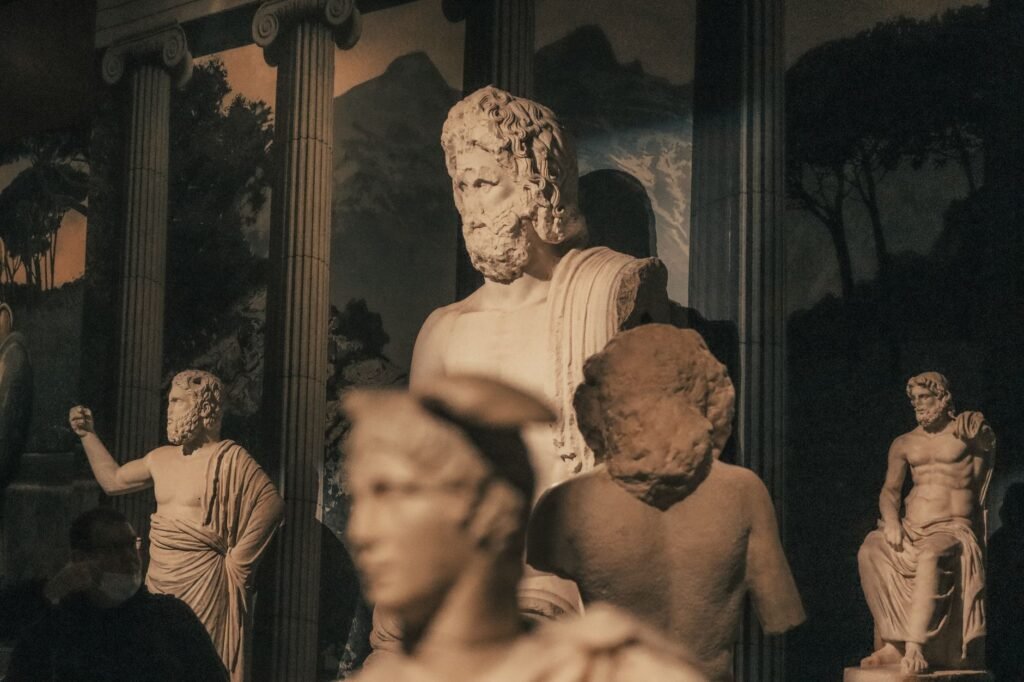
In Greek antiquity, a herm was a stone or marble boundary marker, originally associated with the god Hermes. The form became one of the most recognizable small-scale monuments in the ancient Greek world and later in Roman culture. A herm was typically a squared pillar topped by a carved head—most often that of Hermes—and often marked with a phallic feature on the front. These objects stood at crossroads, along roads, in gymnasia, before houses, and near sanctuaries.
Herms were important not only as practical markers but also as religious and symbolic objects. They combined ideas of travel, protection, fertility, boundaries, and divine presence. Because Hermes was the god of roads, messengers, transitions, and thresholds, the herm became an image of safe passage and a sacred marker of space. Over time, the term also came to refer more generally to similar pillar statues, including those representing other deities, rulers, or philosophers.
Origin and Meaning
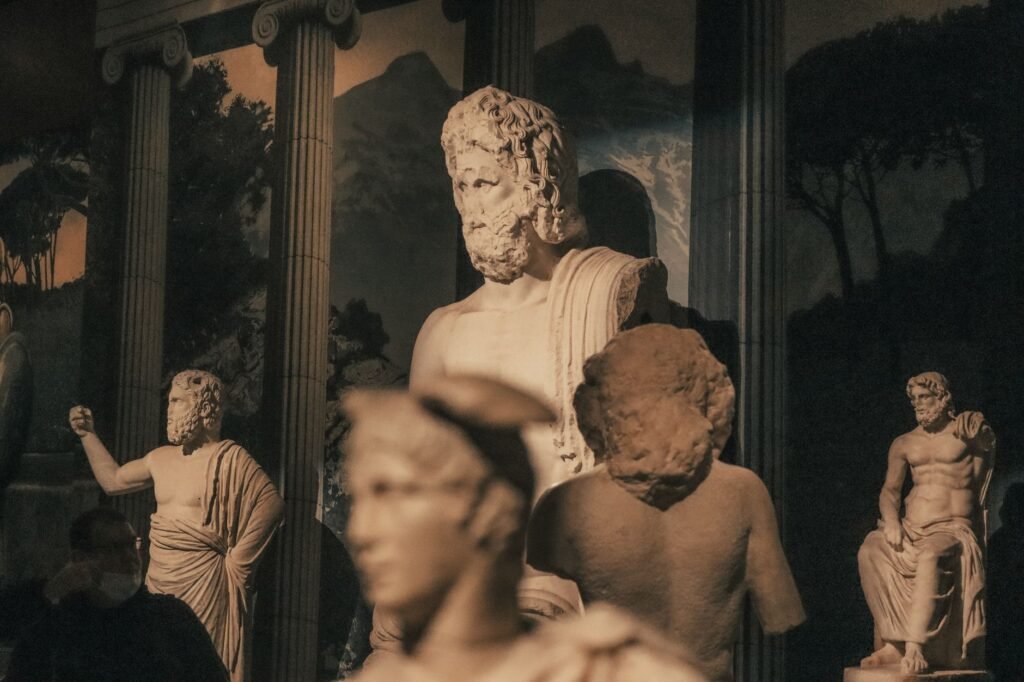
The word herm comes from Greek herma (plural hermai), meaning a stone heap, boundary marker, or pillar. The etymology is linked with the ancient function of marking roads and borders. The name is associated with Hermes, whose own role as a god of boundaries, movement, and communication shaped the object’s religious significance.
The connection between the object and the god is ancient and central. In early Greek practice, a herma may have been a simple heap of stones or an unworked marker placed to indicate a route or divide land. As cult and artistic convention developed, the form became a squared pillar with the head of Hermes. This transformation reflects a common pattern in Greek religion: utilitarian boundary objects were sacralized and linked to a deity whose powers suited their function.
Historical Context
Herms belonged to the civic and religious landscape of ancient Greece, especially from the archaic and classical periods. They were especially common in Athens, where they marked streets, gate entrances, public buildings, and private properties. Their presence at boundaries made them useful in both practical and ritual contexts.
The Greek world placed great importance on boundaries and transitional spaces. Crossroads, doorways, road junctions, and city gates were not merely functional places; they were zones where divine protection was needed. Hermes, as a god of movement and liminality, was naturally associated with these spaces. Herms therefore embodied the relationship between order and movement, safe travel and uncertain passage, public and private space.
In Athens, herms had a strong civic role. They were placed before houses, in marketplaces, and in gymnasia, where they served both as protective markers and as reminders of the divine order surrounding the city. Their importance is also evident from one of the most famous crises in Athenian history: the mutilation of the herms in 415 BCE, on the eve of the Sicilian Expedition. This act caused panic because it was interpreted as a religious offense and a threat to the city’s stability.
Main Characteristics
A traditional herm has several identifying features:
- A rectangular or squared pillar shape
- A head or bust at the top, usually of Hermes
- A prominent phallic element, often carved on the front
- A simple, frontal, and static pose
- Occasionally, additional attributes such as a beard, drapery, or inscriptions
Unlike freestanding statues that show the full body in motion, herms are deliberately compact and stationary. Their pillar-like shape emphasizes support, border-marking, and permanence. The frontal placement of the head reinforces direct presence and watchfulness.
The phallic element, while sometimes misunderstood by modern readers, was not merely decorative. In Greek religious thought it could signify vitality, generative power, and apotropaic protection against evil. In this context, the phallus helped transform the herm into a guardian figure associated with fertility and divine safeguarding.
Typical Features of a Herm
| Feature | Description | Possible Meaning |
|---|---|---|
| Pillar body | Squared, upright stone shaft | Stability, boundary marking |
| Head or bust | Usually Hermes, sometimes another figure | Divine presence |
| Phallic symbol | Carved male genital feature | Fertility, protection, vitality |
| Inscription | Sometimes present | Dedication, ownership, or identification |
| Placement | Crossroads, doors, public spaces | Threshold protection |
Family and Genealogy
The herm itself is not a mythological person and therefore has no genealogy in the ordinary sense. However, its identity is inseparable from Hermes, the deity after whom it is named and with whom it is symbolically linked.
Hermes in Greek mythology is generally the son of Zeus and the nymph Maia, one of the Pleiades. His children vary by source, but he is often presented as the father of figures associated with travel, music, or pastoral life. Because herms are an extension of Hermes’ cult and symbolism, their “family” can be understood as the broader network of objects and rituals related to his worship.
In some cases, herms were also associated with other deities or honored individuals. In later Greek and Roman art, pillar statues with the herm format could represent Dionysus, Athena, Heracles, philosophers, athletes, or civic leaders. These forms did not imply family relationships but show the adaptability of the herm as an artistic and cultic type.
Symbols
Herms combine several symbolic elements that reflect Greek religious ideas about borders, movement, and protection.
Main symbolic meanings
- Boundary and transition: The herm marks the line between spaces and protects crossings.
- Protection: It serves an apotropaic role, warding off harm.
- Fertility and vitality: The phallic feature links the herm to generative power.
- Presence of Hermes: The object signifies the god’s watchful and mobile nature.
- Order in space: Herms make roads, estates, and civic areas legible and sacred.
The shape itself is symbolic. A pillar conveys firmness and immobility, while Hermes is the most mobile of gods. The combination creates a meaningful paradox: the god of movement is represented by a stationary marker. This tension reflects Hermes’ role as the divine mediator between spaces, people, and realms.
Sacred Animals
Herms are not strongly defined by a single sacred animal in the way some deities are. However, because they are associated with Hermes, several animals belong to the wider symbolic world around them.
Animals linked to Hermes and herms
- Tortoise: Associated with Hermes in the myth of the lyre’s invention.
- Ram: Connected with pastoral wealth and Hermes’ role as protector of flocks.
- Dog: Sometimes linked to guardianship and thresholds.
- Rooster: Associated with vigilance and the morning, both fitting Hermes’ liminal character.
These animals are not exclusive “sacred animals” of the herm itself, but they belong to the god’s broader cultic and mythological profile. In domestic or civic settings, the guardian quality of the herm aligned well with animals that represented alertness, protection, or fertility.
Sacred Plants
No plant is uniquely and universally tied to herms in the same way as olive branches to Athena or laurel to Apollo. Still, certain plants appear within the religious environment associated with Hermes and related rites.
Plants in the herm’s cultural sphere
- Olive: Common in Greek civic and religious life; used in many sanctuaries and public spaces where herms stood.
- Laurel: A general sacred plant in Greek ritual, relevant to boundaries and purification.
- Vines and ivy: Indirectly associated through Dionysian imagery, especially where herm-like pillar forms were adapted for Dionysus.
- Herbs and garlands: Used in offerings and decoration of cult images and roadside markers.
Because herms often stood outdoors, they could be adorned with garlands, wreaths, or floral offerings. Such decorations were part of broader Greek practices of honoring divine images and sacred places rather than evidence of a single exclusive plant cult.
Sacred Places
Herms were closely tied to places of transition and public visibility. They were especially important in:
- Crossroads
- City gates
- Roads and pathways
- Doorways and house entrances
- Gymnasia and palaestrae
- Marketplaces and public squares
- Sanctuaries and temple precincts
Athens
Athens is the best-known city for herms. They were common in public and private settings and formed part of the visual identity of the city. Their placement at thresholds reflected both religious practice and social organization.
Road junctions and boundaries
Because Hermes was a god of travel, herms often marked routes and land divisions. Their presence at crossroads indicates the ancient Greek concern that such places required divine oversight.
Gymnasia
Herms were frequently placed in gymnasia, where young men trained physically and socially. In this context, they could function as protectors of athletic space and as symbols of masculine maturity, discipline, and civic formation.
Sanctuaries
Herms also appeared in or near sacred precincts. Their role was consistent with the broader Greek habit of using images, markers, and dedications to structure sacred space.
Powers and Attributes
As objects tied to Hermes, herms were believed to participate symbolically in the god’s powers and responsibilities.
Core attributes
- Protection of boundaries
- Safe passage for travelers
- Guarding doors and thresholds
- Fertility and generative potency
- Communication between spaces
- Good fortune and divine favor
- Deterrence of evil or disorder
Herms were especially associated with the concept of liminality: the state of being in between. Roads, thresholds, and crossroads are in-between places, and Hermes governs such transitions. The herm, therefore, is not merely a marker but a sacred expression of controlled movement.
In practical terms, herms may also have served as communal signs of ownership, city identity, and roadway orientation. Their religious meaning and their public utility reinforced one another.
Main Myths
Herms are objects rather than mythological actors, so they are not central figures in narrative myth. Still, several stories are closely connected to them through Hermes’ mythology and through historical events.
The invention of the lyre
One of Hermes’ best-known myths is his invention of the lyre from a tortoise shell. This story appears in the Homeric Hymn to Hermes and helps define Hermes as inventive, clever, and associated with cultural transformation. While not directly about herms, it contributes to the god’s complex character.
The mutilation of the herms
The most famous historical event involving herms occurred in 415 BCE in Athens. On the eve of the expedition to Sicily during the Peloponnesian War, many of the city’s herms were mutilated. This was treated as a serious religious and political crime. Ancient sources report widespread fear, suspicion, and accusations of impiety and conspiracy.
This episode matters because it reveals how deeply herms were woven into civic religion. Damaging them was not merely vandalism; it was an assault on sacred protection and public order.
Mythic role of Hermes as boundary god
In mythic and religious imagination, Hermes repeatedly crosses borders: between Olympus and earth, gods and mortals, life and death. The herm symbolizes this role in material form. It may not generate independent myths, but it visually condenses Hermes’ function in the cosmos.
Relationship with Other Mythological Figures
Herms are most directly connected to Hermes, but they also interact conceptually with several other deities and figures.
Hermes
The essential relationship is with Hermes himself. The herm is the god’s visible marker in the world. It evokes his movement, guardianship, and mediation.
Apollo
Hermes and Apollo are linked in myth, especially in the story of Hermes stealing Apollo’s cattle and later reconciling with him through gift exchange. Since both gods are associated with order in different ways, herms sometimes stand within spaces where divine order is publicly displayed.
Dionysus
In some periods and places, pillar forms similar to herms were adapted for Dionysus. These forms reflect the flexibility of the herm type in Greek art and ritual.
Heracles
Heracles is another figure sometimes represented in herm-like form, especially in later artistic traditions. This association highlights the broader use of the pillar statue as a format for heroic and divine representation.
Citizens and travelers
Herms were also in a sense related to ordinary people: householders, travelers, athletes, and civic officials. Their function made them part of daily life rather than elite mythology alone.
Worship and Cult
The cult of herms was closely tied to practical religion. People honored them because they stood at vulnerable places and symbolized divine safeguarding.
Common forms of worship
- Garlanding or adorning herms
- Offering libations
- Placing them at doorways or road junctions
- Honoring them at festivals or public events
- Maintaining and cleaning them as sacred objects
In some contexts, herms may have received offerings similar to those made to Hermes. Their cult was not always separate from Hermes’ broader worship.
Ritual functions
Herms participated in rituals of passage, including travel, departure, arrival, and boundary crossing. They were also connected to civic identity, especially in Athens, where their public visibility made them part of collective religious life.
Domestic and civic use
Herms could be found both in private houses and public spaces. At home, they helped mark thresholds and protect the household. In public, they reinforced the sacred character of roads, plazas, and institutions.
Ancient Sources
Several ancient authors help reconstruct the history and meaning of herms. Because the subject is both religious and historical, the evidence comes from poetry, historiography, travel writing, and art-historical remains.
Key ancient sources
- Homeric Hymn to Hermes: Essential for Hermes’ divine character, though not focused exclusively on herms.
- Herodotus: Provides historical context for Greek religion and civic practice.
- Thucydides: Describes the mutilation of the herms in 415 BCE and its political impact.
- Pausanias: Offers valuable observations on monuments, sanctuaries, and local cults.
- Plutarch: Discusses religious customs and Athenian events related to sacred images.
- Apollodorus: Useful for mythological genealogy and stories involving Hermes.
- Ovid: Preserves Roman-era literary adaptations of Greek divine themes, including Hermes/Mercury.
- Archaeological evidence: Surviving herms, inscriptions, and vase paintings are crucial for understanding their form and use.
Ancient sources do not always agree on details such as origin, exact cult practice, or interpretation of the phallic feature. Modern scholarship therefore treats some aspects as likely but not universally attested.
Roman Equivalent
The Roman counterpart of Hermes was Mercury. Roman culture adopted and adapted many Greek religious ideas, and herm-like forms were often associated with Mercury in the Roman world.
In Roman art, pillar statues and boundary markers could still appear in a herm format, though the style sometimes changed. Mercury inherited Hermes’ roles as messenger, guide, protector of travelers, and god of commerce. The Roman adaptation preserved much of the symbolic logic of the herm, especially its association with boundaries and passage.
Influence on Modern Culture
Herms continue to appear in modern culture, especially in art history, archaeology, and classical studies. They also influence design and public sculpture.
Areas of modern influence
- Museum collections: Herms are important display objects in classical archaeology.
- Public sculpture: The herm shape has inspired busts on pillars and commemorative monuments.
- Literature and history: The mutilation of the herms remains a famous episode in studies of ancient Athens.
- Art history: Herms are discussed as a distinct sculptural type in Greek and Roman art.
- Games and fantasy media: Classical motifs, including herms and Hermes-like figures, appear in myth-inspired worlds.
- Academic language: Terms such as herm and hermeneutics share a distant linguistic relation to Hermes, though the latter is conceptually distinct and not derived from the object itself.
Modern audiences often encounter herms without recognizing the object’s original religious role. In scholarship, however, they remain an important source for understanding ancient Greek ideas about space, protection, and civic order.
Curiosities
- The herm is one of the few ancient religious objects that was simultaneously practical, symbolic, and protective.
- The phallic feature was meant to be apotropaic and life-affirming, not simply erotic.
- The mutilation of the herms in 415 BCE is one of the best-known acts of religious vandalism in classical history.
- Herms could be public monuments or private household markers, showing their wide social reach.
- In art, the herm format was used not only for gods but also for philosophers, poets, and statesmen.
- The object’s design reflects a striking contrast: a god of movement represented by a fixed stone pillar.
- Herms helped define sacred geography, turning roads and boundaries into protected spaces.
Frequently Asked Questions
What is a herm in Greek religion?
A herm is a stone pillar or boundary marker associated with Hermes, usually topped by a head and sometimes bearing a phallic symbol. It functioned as both a practical marker and a sacred protective object.
Why did herms have a phallic feature?
The phallic element likely symbolized fertility, vitality, and protective power. In Greek religion it had apotropaic value, meaning it could help ward off danger or misfortune.
Where were herms usually placed?
Herms were commonly placed at crossroads, roads, city gates, house entrances, sanctuaries, gymnasia, and other boundary spaces. Their location reflects their role as guardians of thresholds.
What happened in the mutilation of the herms?
In 415 BCE, many herms in Athens were damaged overnight. The event caused intense political and religious alarm because it was seen as sacrilegious and possibly linked to conspiracy before the Sicilian Expedition.
Are herms and Hermes the same thing?
No. Hermes is the god in Greek mythology; a herm is the object associated with him. The herm is a sculptural and religious marker inspired by Hermes’ role as a god of boundaries and travel.
Did only Hermes appear on herms?
No. While Hermes is the original and most common figure, other deities, heroes, philosophers, and rulers could also be represented in herm-like form, especially in later Greek and Roman art.
What was the Roman version of a herm?
The Roman equivalent was generally associated with Mercury. Roman herms continued the Greek tradition while adapting it to Roman religious and artistic contexts.
Conclusion
The herm is one of the most distinctive forms of ancient Greek religious sculpture. More than a simple marker, it embodied ideas of boundary, protection, fertility, and divine presence. Through its association with Hermes, the god of roads and transitions, the herm became a powerful symbol of safe passage and civic order.
Its importance is visible in both daily life and historical memory. Herms stood at crossroads and doorways, watched over homes and public institutions, and became the center of one of Athens’ most dramatic religious crises. Their legacy survives in archaeology, classical scholarship, and the enduring fascination of modern readers with the visual culture of the ancient world.

Orin Vale has spent the better part of two decades tracing the threads that connect the world’s oldest stories — from the halls of Asgard to the banks of the Nile, from Olympus to the jungles of the Maya. What began as a childhood fascination with flood myths and trickster gods grew into years of independent study across comparative mythology and ancient religion, always chasing the same question: what did these stories mean to the people who first told them? Orin writes for readers who want more than trivia — the ones looking for the beliefs, fears, and truths that myths were built to carry.