Tengu
Introduction

Tengu are among the best-known figures in Japanese mythology and folklore. They are supernatural beings associated with mountains, forests, martial skill, ascetic practices, and at times mischief, pride, or dangerous spiritual power. Over many centuries, the image of the tengu changed from a feared celestial omen or disruptive demon-like being into the familiar red-faced, long-nosed mountain creature widely recognized in modern Japanese culture.
Tengu occupy an important place in Japanese religious history because they sit at the intersection of Shinto, Buddhism, folk belief, and mountain ascetic traditions such as yamabushi practices. They appear in legends, temple traditions, theatrical arts, literature, and modern popular culture. Their enduring significance lies partly in their ambiguity: tengu can punish arrogance, protect sacred places, test ascetics, or serve as symbols of untamed nature and spiritual discipline.
Origin and Meaning
The word tengu is written 天狗 in Japanese. Historically, these characters are read as tengu in Japanese, but the term originally came from Chinese. In Chinese sources, tiāngǒu (天狗) means “heavenly dog,” a mythical creature or celestial omen associated in some traditions with a meteor, eclipse, or destructive force.
When the term entered Japan, its meaning changed significantly. Early Japanese uses connected tengu with a kind of demonic or disruptive presence, sometimes associated with strange sounds in the sky or ominous events. Over time, Japanese belief and literature transformed tengu into a broader class of beings with multiple forms and personalities.
The etymology is therefore important because it shows that Japanese tengu are not a direct copy of a single Chinese creature. Instead, the Japanese concept evolved through local religious and folkloric development. Different historical periods preserved different meanings:
- Early usage: an ominous celestial or demonic being
- Medieval usage: a dangerous, prideful spirit linked to mountain ascetics and corrupt monks
- Later folkloric usage: a mountain goblin or guardian-like supernatural being, often portrayed with a red face and long nose
Historical Context
Tengu emerged within a complex religious landscape shaped by Buddhist cosmology, Shinto beliefs, Chinese influence, and indigenous mountain cults. Their development is tied to medieval Japan, especially the Heian and Kamakura periods, when the relationship between religion, political power, and mountain spirituality became especially visible.
Buddhist influence
In Buddhist-influenced texts, tengu were often interpreted as beings connected to spiritual delusion, pride, and false enlightenment. Some traditions described them as the transformed spirits of arrogant priests, monks, or ascetics who became attached to worldly ambition. In this sense, tengu served as moral warnings against vanity and religious corruption.
Mountain religion and asceticism
Japan’s mountains were not merely physical landscapes; they were sacred spaces of power, danger, and transformation. Ascetics known as yamabushi practiced severe discipline in the mountains, seeking spiritual strength and enlightenment. Tengu became linked to these mountain practices, sometimes appearing as masters of supernatural arts, martial ability, or secret teachings. This association contributed to the image of tengu as both dangerous and spiritually potent.
Medieval social imagination
In medieval Japanese narratives, tengu were often used to explain unexplained events, test character, or dramatize the consequences of arrogance. They became a flexible figure through which writers and storytellers could explore:
- religious authority and corruption
- the dangers of pride
- the wilderness and its hidden powers
- the boundary between human and nonhuman realms
Main Characteristics
Tengu are not uniform beings. Different traditions describe them in different ways. However, several features recur frequently.
Common traits
- Supernatural mountain dwellers
- Closely tied to forests, peaks, and remote places
- Associated with martial ability and aerial movement
- Capable of deception, illusion, or shape-shifting in some stories
- Linked to pride, arrogance, and punishment of the arrogant
- Sometimes depicted as protectors or guardians of sacred sites
Visual forms
Two major iconographic forms are widely recognized:
| Type | Description | Notes |
|---|---|---|
| Karasu tengu (“crow tengu”) | Bird-like tengu with a beak or avian features | Often considered an older or more bestial form |
| Daitengu (“great tengu”) | Human-like face, red skin, and a very long nose | The most famous modern image |
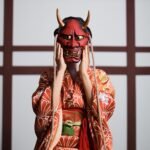
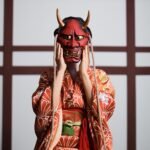
The long nose is one of the most iconic features of the daitengu. In earlier Japanese art and literature, tengu were sometimes shown with bird features rather than the exaggerated human nose familiar today. Over time, the visual tradition became more anthropomorphic.
Behavioral traits
Tengu are often described as:
- proud and easily offended
- secretive
- highly skilled in combat or swordsmanship
- capable of flying or moving rapidly
- masters of mountain survival
- able to mislead, abduct, or test humans
At the same time, some traditions emphasize that tengu can also be protective. They may defend sacred mountains, frighten the arrogant, or assist worthy ascetics.
Family and Genealogy
Unlike many deities or mythic beings, tengu do not have a single fixed family genealogy. They are better understood as a class of beings rather than one god with a stable family tree.
Origins in tradition
Different sources propose different origins:
- Fallen or transformed spirits of arrogant monks, priests, or ascetics
- Native mountain spirits later reinterpreted through Buddhist cosmology
- Demonic beings influenced by continental ideas of omens and misfortune
Relationships in folklore
Tengu sometimes interact with humans as teachers, rivals, kidnappers, or tricksters. In some tales they:
- train warriors or monks
- abduct children or priests
- punish human arrogance
- engage in contests of skill or knowledge
Because tengu are not a single deity, they do not have universally accepted parents, spouses, or descendants. Instead, later folklore occasionally depicts tengu as organized groups or communities with leaders, especially among daitengu associated with specific mountains.
Symbols
Tengu are associated with a set of symbolic objects and visual markers. These symbols vary by region and period.
Common symbols
- Fan or feather fan: used to create wind, symbolize supernatural movement, or express control over air and force
- Staff or ritual wand: associated with mountain ascetics and authority
- Sword: linked to martial power and the warrior dimension of tengu lore
- Red face: associated with their modern form and forceful presence
- Long nose: symbol of pride, exaggerated status, and supernatural identity
- Feathers or wings: in bird-like depictions, symbolizing mobility and liminality
Symbolic meanings
The symbols of tengu often point to a combination of:
- air and wind
- mountain power
- religious discipline
- dangerous pride
- otherworldly knowledge
In some Japanese cultural contexts, the phrase “becoming a tengu” can imply becoming conceited or overly self-important, reflecting this symbolic association.
Sacred Animals
Tengu are not tied to a single sacred animal in the way some deities are, but their imagery strongly involves birds, especially crows and other mountain birds.
Bird associations
The crow-like form, karasu tengu, reflects several symbolic ideas:
- birds as messengers between worlds
- birds as creatures of high places
- birds as ominous or liminal beings
- birds as symbols of vision and vigilance
Because tengu are often linked to mountain environments, their avian features also suggest speed, height, and freedom from ordinary human limitations.
Other animal associations
In some local traditions and art, tengu may also be linked to:
- hawks or eagles, due to their mountain and predatory symbolism
- monkeys or animal trickster motifs in certain regional stories
- dogs only indirectly through the Chinese etymology of the word, not as a stable Japanese sacred animal
Sacred Plants
There is no single universal sacred plant for tengu across all Japanese traditions. However, several plants appear in mountain ascetic and folkloric contexts associated with them.
Associated vegetation
- Cedar and cypress forests: common in sacred mountains and temple landscapes
- Bamboo: often present in Japanese sacred and folkloric settings
- Pine: associated with endurance and longevity in East Asian symbolism
- Mountain herbs: linked to healing, ascetic practice, and hidden knowledge
These plants matter less as formal “tengu plants” and more as part of the mountain environment in which tengu are believed to dwell. Sacred trees and dense woodland mark the boundary between ordinary space and spiritually charged terrain.
Sacred Places
Tengu are strongly associated with mountains, forests, and remote sacred sites. Their habitation is usually not a single fixed place but a range of elevated, secluded environments.
Common sacred or associated places
- Mountains: especially steep, secluded peaks
- Forest shrines and temple precincts
- Remote valleys and passes
- Ascetic training grounds
- Temple mountains connected to legends of tengu
Well-known mountain associations
Some mountains and religious sites in Japan are especially famous in tengu lore. These associations are often local and legendary rather than universally canonical. Examples include:
- Mount Kurama in Kyoto, often linked with supernatural training and legendary martial narratives
- Mt. Takao near Tokyo, associated in popular imagination with tengu imagery
- Various temple mountains where tengu are said to guard or test practitioners
These locations show how tengu are tied to the spiritual geography of Japan, especially places regarded as thresholds between human society and sacred wilderness.
Powers and Attributes
Tengu are famous for a broad range of supernatural abilities. Their exact powers vary by story and regional tradition.
Frequently attributed powers
- Flight or rapid aerial movement
- Shapeshifting or disguise
- Illusions and misdirection
- Superhuman martial skill
- Control over wind in some traditions
- Exceptional mountain knowledge
- Ability to abduct, frighten, or test humans
- Teaching or transmitting secret knowledge
Moral and spiritual role
Tengu often function as agents of correction. They may punish arrogance, expose hypocrisy, or challenge those who claim spiritual or martial superiority without true discipline. Yet they are not always purely evil. In some narratives, they can be:
- guardians of sacred places
- instructors of ascetics
- defenders of proper ritual conduct
- embodiments of the mountain’s untamed power
This dual nature is central to tengu mythology.
Main Myths
Tengu appear in a wide range of legends rather than in one single canonical myth cycle.
The punishment of arrogance
One of the most common themes is that tengu punish individuals who are overly proud, especially monks, priests, or skilled persons who become conceited. In these stories, a tengu may:
- deceive a person into believing they have great spiritual power
- humiliate a boastful religious figure
- expose moral corruption
- transform the arrogant into a form associated with tengu
This theme reinforces Buddhist and moral lessons about humility.
Abduction and testing
Tengu are also known for abducting people, especially children, monks, or travelers. These narratives often function as warnings about dangerous mountain travel or the consequences of entering sacred spaces unprepared. In some cases, the abduction leads to hidden instruction or a test of courage.
Martial instruction
A particularly important set of legends links tengu to swordsmanship and martial training. Some famous warriors in later folklore are said to have learned techniques from tengu or from mountain spirits identified as tengu. These stories underscore tengu’s association with skill, discipline, and the transmission of secret arts.
The transformation of the dead
Some medieval beliefs suggest that the spirits of the dead, especially those who died with resentment, pride, or spiritual confusion, could become tengu. This is not a universal doctrine, but it appears in certain Buddhist-influenced interpretations and later folklore.
Relationship with Other Mythological Figures
Tengu interact with many other beings in Japanese religious imagination.
Buddhist figures
Tengu are often contrasted with Buddhas, bodhisattvas, monks, and enlightened practitioners. They represent distortion, spiritual pride, or the wild margins of religious life. However, in some stories, they are subordinated to higher Buddhist authority or influenced by Buddhist cosmology.
Yamabushi and ascetics
The strongest human association is with yamabushi, mountain ascetics. Tengu may resemble them in dress or behavior, and some stories blur the line between tengu and ascetic masters. This connection reflects the historical role of mountain religion in shaping the tengu image.
Oni and other demons
Tengu are sometimes compared with oni, another major category of Japanese supernatural beings. Yet they are not identical. Oni are often portrayed as more overtly monstrous, while tengu are more closely linked to mountains, pride, and martial or religious skill. In folklore, however, the categories can overlap.
Kami and local spirits
In some regional traditions, tengu may coexist with kami, local spirits, or shrine guardians. Their status can be ambiguous: they may be demonized in one context and revered or respected in another.
Worship and Cult
Tengu are not typically worshiped in the same formal way as major Shinto kami or Buddhist figures. However, they do appear in local cults, temple traditions, and ritual folklore.
Forms of reverence or appeasement
Historical practices associated with tengu often include:
- offerings at mountain temples or shrines
- prayers for protection in the mountains
- rituals to avoid angering local spirits
- legends used to reinforce temple authority
- ascetic discipline intended to master dangerous spiritual forces
Festival and local tradition
In some regions, tengu appear in local festivals, masks, processions, and folk performances. These events may portray tengu as comic, protective, or fearsome figures. The ritual meaning differs by locale, but they often express a desire to engage with the untamed power of mountains and spirits.
Religious interpretation
Because tengu can symbolize both spiritual danger and spiritual power, they were sometimes used in religious teaching to warn against:
- pride
- misuse of sacred authority
- shallow ritual performance
- the dangers of ascetic ambition without humility
Ancient Sources
Tengu appear in a variety of Japanese and Chinese-influenced sources. Their depiction changes over time.
Important source traditions
- Early Chinese texts: the term tiāngǒu or “heavenly dog” appears as a celestial or omen-related being
- Japanese medieval Buddhist texts: often interpret tengu as troublesome spirits or as the transformed spirits of arrogant religious figures
- Heian and Kamakura period literature: contains stories linking tengu to mountains, ascetics, and supernatural disruption
- Temple chronicles and setsuwa collections: short anecdotal tales often describe tengu encounters
Notable classical Japanese sources
Depending on the edition and interpretation, tengu-related material appears in or is discussed through works such as:
- Konjaku Monogatari Shū (Tales of Times Now Past)
- Nihon Ryōiki
- Taiheiki
- various Buddhist tales and temple records
- later ethnographic and folklore compilations
Because tengu are a folkloric-religious category rather than a single deity, references are spread across many texts rather than concentrated in one authoritative canonical source.
Roman Equivalent
There is no exact Roman equivalent to the tengu.
If a rough comparison is necessary, tengu share partial similarities with certain figures from Greco-Roman tradition:
- fauns or satyrs in their connection to wild places
- daimones or spirits in their ambiguous moral status
- genius loci in their association with particular places
However, these comparisons are only approximate. Tengu are best understood within the Japanese religious and folkloric context, where they combine mountain asceticism, Buddhist moral teaching, and supernatural folklore in a distinctive way.
Influence on Modern Culture
Tengu remain highly visible in modern Japanese and global popular culture.
Modern representations
They appear in:
- manga
- anime
- video games
- fantasy novels
- films
- stage and visual art
- folk crafts and festival masks
Common modern image
The familiar modern tengu is often a red-faced, long-nosed, sometimes winged mountain spirit wearing garments reminiscent of ascetics or martial figures. This image is now one of the most recognized symbols of Japanese folklore.
Cultural themes
Modern works often reinterpret tengu in different ways:
- as comic tricksters
- as wise guardians
- as martial masters
- as villains
- as mysterious ancient spirits
Their flexibility makes them especially useful in fantasy storytelling. They also appear in tourism and regional branding, especially in places that emphasize mountain legends or traditional culture.
Curiosities
- The modern long-nosed tengu image is not the only historical form; earlier depictions were often more bird-like.
- In Japanese speech, calling someone a tengu can imply arrogance or self-importance.
- Tengu are sometimes portrayed as having exceptional swordsmanship, and several warrior legends connect them to martial instruction.
- Some temple and mountain traditions treat tengu less as enemies than as dangerous beings that should be respected.
- The tengu image developed over time through interaction between Chinese omen lore, Buddhist teaching, and Japanese mountain religion.
- Tengu are one of the clearest examples of how a folklore figure can shift from a feared demon-like presence to a familiar cultural icon.
- Different regions of Japan preserve local tengu legends with distinct names, appearances, and personalities.
Frequently Asked Questions
What is a tengu?
A tengu is a supernatural being from Japanese mythology and folklore, usually associated with mountains, forests, ascetic practice, and martial skill. Tengu are often portrayed as proud, powerful, and sometimes mischievous or dangerous.
Are tengu evil?
Not always. In some traditions tengu are harmful or deceptive, but in others they act as guardians, teachers, or protectors of sacred places. Their moral role depends on the story and historical context.
Why do tengu have long noses?
The long nose is a later and iconic visual feature of the daitengu. It became associated with pride, supernatural status, and the familiar modern image of tengu. Earlier depictions were often more bird-like.
What is the difference between karasu tengu and daitengu?
Karasu tengu are bird-like or crow-like tengu, while daitengu are more human-like and are commonly shown with red faces and long noses. These categories reflect different artistic and folkloric traditions.
Do tengu appear in Buddhism?
Yes. Tengu are strongly associated with Buddhist-influenced folklore, especially as beings connected to pride, delusion, and the transformation of arrogant religious figures. They also appear in narratives about monks and mountain asceticism.
Are tengu gods?
Generally, no. Tengu are better described as supernatural beings, spirits, or folkloric entities rather than major gods. However, local traditions may treat them with a degree of reverence or ritual caution.
Where are tengu said to live?
Tengu are usually said to dwell in mountains, forests, and remote sacred places. They are especially associated with secluded peaks, temple mountains, and ascetic training grounds.
Why are tengu important in Japanese culture?
Tengu are important because they reflect major themes in Japanese religious history: the power of mountains, the dangers of pride, the role of ascetic practice, and the blending of Buddhism, Shinto, and folklore.
Conclusion
Tengu are among the most distinctive and enduring figures in Japanese mythology. Their history reveals how a supernatural image can evolve across centuries, absorbing influences from Chinese omen lore, Buddhist moral teaching, mountain asceticism, and local folklore. From feared celestial spirits to mountain guardians and modern cultural icons, tengu embody the tension between danger and protection, arrogance and discipline, wilderness and sacred power.
Their lasting appeal comes from this complexity. Tengu are not a single fixed mythic figure but a living tradition of images, stories, and meanings that continue to shape Japanese cultural imagination.

Orin Vale has spent the better part of two decades tracing the threads that connect the world’s oldest stories — from the halls of Asgard to the banks of the Nile, from Olympus to the jungles of the Maya. What began as a childhood fascination with flood myths and trickster gods grew into years of independent study across comparative mythology and ancient religion, always chasing the same question: what did these stories mean to the people who first told them? Orin writes for readers who want more than trivia — the ones looking for the beliefs, fears, and truths that myths were built to carry.