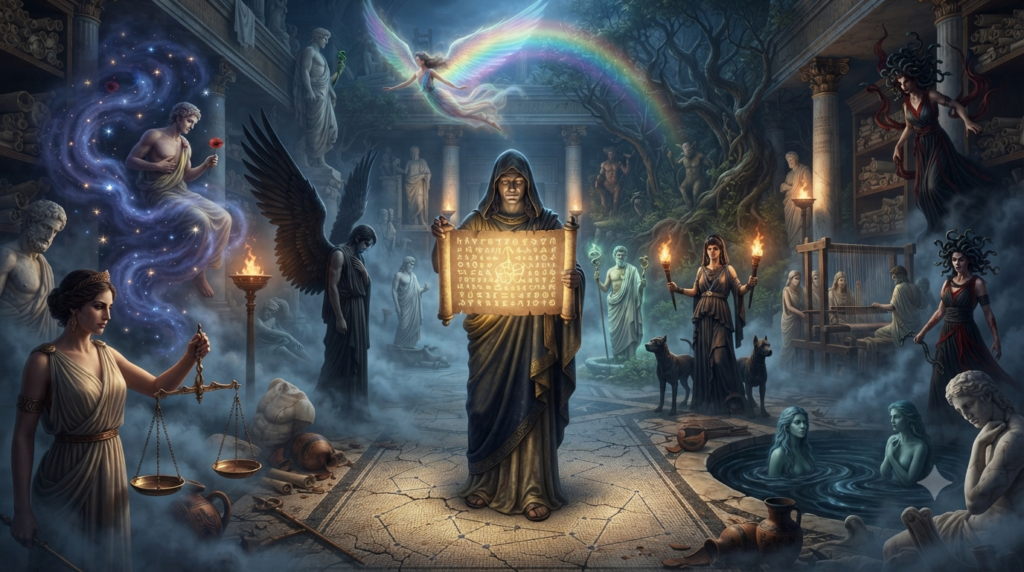
The question of who are the lesser-known deities of Greek mythology? invites us to look beyond the familiar thrones of Olympus and explore a vast, often overlooked divine population that shaped the ancient Greek worldview. While Zeus, Athena, and Apollo dominate the popular imagination, the Greek pantheon was a teeming metropolis of gods, spirits, and personifications, numbering in the thousands . These lesser-known figures were not merely minor characters; they were the engines of daily life, the personifications of human emotions, the guardians of natural phenomena, and the forces that governed the unseen workings of the cosmos. From the persuasive whispers of Peitho to the inevitable doom of Moros, these deities embodied the complexities of existence that the major gods often overlooked . This article will serve as a definitive guide to these forgotten powers, categorizing them by their domains and revealing the rich, intricate tapestry of belief that lay beneath the surface of ancient Greek religion.
The Personifications: Daimones of Human Experience
A significant portion of the lesser-known deities were the daimones, personified spirits who represented abstract concepts, emotions, and moral states . They were not gods in the traditional sense but were divine forces that could influence human behavior and fate.
The Forces of Emotion and Morality
Among the most important of these were the deities who governed the moral and emotional landscape of humanity. Peitho, the goddess of persuasion and seduction, represented the power of gentle, consent-based influence, a counterpoint to the force of violence . Her opposite in many ways was Bia, the personification of brute force and compulsion, a relentless enforcer of divine will who was often depicted alongside her siblings Kratos (Strength), Nike (Victory), and Zelus (Rivalry) . The concept of shame and self-respect was embodied by Aidos, a goddess whose presence heightened the joy of love and enforced social boundaries . On the darker end of the spectrum, Atë personified folly, ruin, and reckless impulsiveness, a spirit of delusion that led mortals to their doom .
The cycle of life, from its beginning to its inevitable end, was also governed by these spirits. Hypnos, the god of sleep, and his twin brother Thanatos, the god of death, were the sons of Nyx, the goddess of night . Hypnos was a gentle figure who could lull even Zeus into a slumber, while Thanatos was the bringer of peaceful, or sometimes violent, ends . Life, however, was also marked by toil, represented by Ponos, the god of hard labor .
The Instruments of Divine Justice
The ancient Greeks believed that the cosmos was governed by a strict moral order, and a host of deities were dedicated to its enforcement. Nemesis, the goddess of retribution and vengeance, was the divine arbiter who punished hubris and ensured that no one escaped the consequences of their actions . She was the guardian of cosmic balance, a figure of fear and respect. Similarly, Themis, the goddess of right order and divine law, represented the rules, limits, and boundaries that kept society from descending into chaos . Her daughters, the Horae (Seasons), represented the natural cycles of order, including Eunomia (Good Order), Dike (Justice), and Eirene (Peace) .
For more personal grievances, one might invoke Dike, the goddess of mortal justice and fair judgment . In the underworld, the Erinyes (Furies) were the relentless spirits of vengeance who pursued those who had committed grave sins, particularly familial ones, such as matricide or the breaking of sacred oaths .
The Celestial and Nature Deities
Beyond the human realm, countless gods and goddesses were the personifications of the natural world, governing the sky, the sea, and the earth.
The Sky and the Heavens
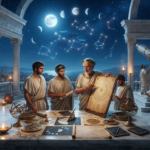
Before the Olympians, the sky was ruled by the Titans, and some of these ancient powers remained prominent in the Greek imagination. Helios was the original sun god, a radiant figure who drove his chariot of fire across the sky each day . His sister, Selene, was the goddess of the moon, a beautiful woman who drove her own chariot through the night sky . Their sister, Eos, was the goddess of the dawn, the rosy-fingered herald of the new day . The rainbow was the domain of Iris, a swift messenger goddess who served as a divine herald, often delivering messages from the gods to mortals . The god of the wild, Pan, was a rustic deity who haunted the wilderness and was the patron of shepherds and their flocks .
The Sea and the Underworld
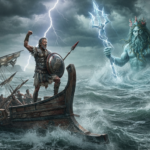
The sea, a source of both life and terror, was inhabited by a host of lesser divinities. Triton, the son of Poseidon and Amphitrite, was a merman who acted as the herald of his father . Ceto was an early sea goddess who personified the dangers of the deep and was the mother of many monsters, including the Gorgons and the Graeae . Phorcys was her husband and counterpart, a god of the hidden dangers of the sea . In the underworld, Thanatos and Hypnos were joined by Moros, the god of doom, and Geras, the god of old age . Hecate, a more well-known figure, was a complex goddess of witchcraft, the moon, and the crossroads, who was also a guide for souls to the underworld .
The Divine Craftsmen and Healers
The Greeks also worshipped deities who specialized in specific crafts and arts.
The Gods of Medicine
The cult of healing was dominated by the family of Asclepius. Asclepius was the god of medicine, a son of Apollo who was taught by the centaur Chiron and later struck down by Zeus for raising the dead . His staff, with a serpent coiled around it, remains a symbol of modern medicine . His children were the Asclepiades, the divine healers: Hygieia (health and cleanliness), Panacea (universal remedy), Iaso (recuperation), Aceso (the healing process), and Aegle (radiance and good health) . His wife was Epione, the goddess of the soothing of pain .
The Rustic and Other Specialists
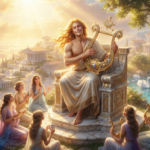
Many other gods and goddesses presided over specific domains of life and nature. Aristaeus was a minor god of rustic arts, including beekeeping, cheesemaking, and olive growing . The goddess of poverty was Penia, while Plutus was the god of wealth . Momus was the spirit of mockery, satire, and blame, a critic of the gods . The Muses were nine sister-goddesses who inspired literature, science, and the arts, while the Charites (Graces) were the goddesses of charm, beauty, and abundance .
The Mysterious and Cultic Deities
Some of the most intriguing lesser-known deities were those worshipped in local cults and mystery religions, their origins often shrouded in antiquity. The Cabeiri were a group of enigmatic chthonic deities, worshipped in a mystery cult on the islands of Lemnos and Samothrace . They were associated with Hephaestus and were divine craftsmen. Their names were often kept secret, and their cult was known to offer protection to sailors . Their identities varied, but they were often depicted as a pair of male and female gods, or as twin youths . The mystery surrounding the Cabeiri reflects the deep, ancient strata of pre-Greek religious belief that persisted alongside the more familiar Olympian pantheon.
Frequently Asked Questions About Who are the lesser-known deities of Greek mythology?
What is the difference between a god and a daimon in Greek mythology?
In Greek mythology, a daimon (spirit) was a lesser divine being or personification of an abstract concept, emotion, or condition, rather than a fully-realized god with a personal narrative . They were divine forces that could influence human life.
Who is the least known Greek god?
This is subjective, but some of the most obscure include Comus (god of anarchy and parties), Homados (god of battle noise), and Alke (goddess of battle-strength) . Many are known only by a single mention in a text or inscription.
Why are there so many lesser-known Greek gods?
The ancient Greeks personified every aspect of life, from major concepts like justice and victory to everyday experiences like poverty, hard work, and even the sound of a battle cry . This created a vast and detailed pantheon to explain the world around them.
What is the most powerful lesser-known god?
Nyx, the goddess of night, was considered so powerful that even Zeus feared her . Nemesis was also a formidable force, as she enforced cosmic justice and retribution . The Cabeiri, worshipped in mystery cults, were also believed to hold immense power over the fate of sailors and initiates .
Who were the Muses and the Graces?
The Muses were the nine goddesses of inspiration, presiding over literature, science, and the arts . The Charites (Graces) were goddesses of charm, beauty, and abundance, who brought joy and goodwill . They represent the higher pursuits of humanity.
What were the names of the Fates and the Furies?
The Fates (Moirai) were Clotho (the Spinner), Lachesis (the Allotter), and Atropos (the Inevitable) . The Furies (Erinyes) were Alecto, Megaera, and Tisiphone; they were the relentless spirits of vengeance .
Are there any lesser-known gods associated with specific places?
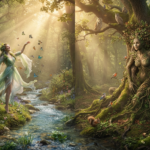
Yes, many were local deities. The Cabeiri were associated with Lemnos and Samothrace . Gods like the river gods (Potamoi) were tied to specific rivers . The rustic god Pan was particularly associated with Arcadia .
What is the Rod of Asclepius, and what does it symbolize?
The Rod of Asclepius is a staff with a single serpent coiled around it. It was the symbol of Asclepius, the god of medicine, and has become a universal symbol of the medical profession. The serpent represents healing and rejuvenation .
Conclusion
The lesser-known deities of Greek mythology form the rich, intricate backdrop against which the more famous Olympians performed their grand dramas. They were the personifications of the everyday forces that shaped human existence: the persuasive word, the brute force, the concept of shame, the inevitability of sleep and death, the justice of vengeance, the guidance of the rainbow, and the mysteries of the underworld. While figures like Zeus and Athena commanded the heavens and the state, it was these minor gods and spirits who populated the homes, fields, and hearts of the ancient Greeks. Their enduring legacy is a testament to the human need to find divine meaning in every aspect of life, from the highest ideals to the most mundane struggles. They remind us that the pantheon was not just a collection of stories about a few powerful beings, but a comprehensive worldview that encompassed the entire spectrum of human experience.

Orin Vale has spent the better part of two decades tracing the threads that connect the world’s oldest stories — from the halls of Asgard to the banks of the Nile, from Olympus to the jungles of the Maya. What began as a childhood fascination with flood myths and trickster gods grew into years of independent study across comparative mythology and ancient religion, always chasing the same question: what did these stories mean to the people who first told them? Orin writes for readers who want more than trivia — the ones looking for the beliefs, fears, and truths that myths were built to carry.