In the rich and complex world of Greek mythology, the Seileni represent a distinct class of rustic spirits intimately connected with the god Dionysus. Who are the Seileni in Greek mythology? They are the elderly, nature-dwelling daimones who formed the original core of the Dionysian retinue, serving as the wise but intoxicated companions of the wine god . Often conflated with their younger counterparts, the Satyrs, the Seileni held a unique identity as older, wiser, and more profoundly drunken beings who were the fathers and progenitors of the wild, youthful spirits that populated the Greek countryside . Their role was not merely one of comic relief but one of deep mythological significance, embodying the primal forces of nature and the intoxicating power of wine.
Origins and Family
The genealogical traditions surrounding the Seileni place them at the very heart of the Dionysian mythos. The primary figure among them, the elder Seilenos (Silenus), was the foster-father and tutor of the god Dionysus, entrusted with his care by Hermes after the god’s birth from the thigh of Zeus . This ancient Seilenos was described as the son of various deities, including Hermes, Pan, or even Gaea (Earth) herself, cementing his connection to both the divine and the natural world .
From this original Seilenos, the broader race of the Seileni was born. They are described as the fathers of the tribes of Satyrs and the Oreiades (mountain nymphs), making them a foundational element in the genealogy of Greek nature spirits . Their name itself is derived from the Greek words seiô, “to move to and fro,” and lênos, “the wine-trough,” a direct reference to the treading dance performed during wine-making . This etymology firmly grounds them in the very process of creating wine, which was central to their being.
Appearance and Characteristics
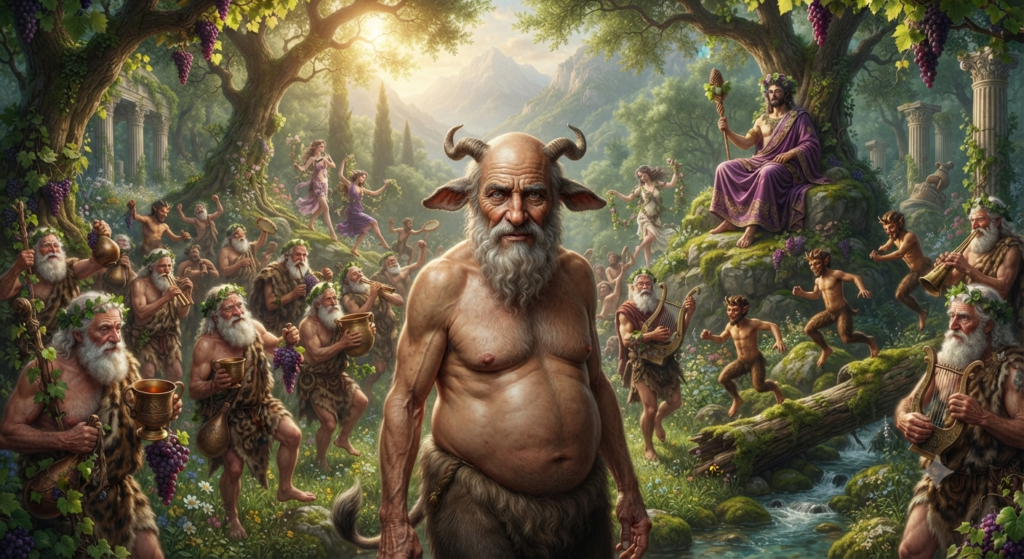
The Seileni were depicted with a distinctive and often comical appearance that distinguished them from other figures in the Dionysian thiasos. They were portrayed as elderly, fat, and balding men, with snub noses, thick lips, and the ears and tail of an ass . Their bodies were sometimes described as covered in fluffy white hair, occasionally sporting a pair of ox horns, which added to their rustic, bestial nature .
Unlike the younger Satyrs, who were often depicted as energetic and mischievous, the Seileni were characterized by their profound state of intoxication . They were the archetypal drunks, always shown with a wineskin or a kantharos (drinking cup), and their natural state was one of jovial, staggering inebriation . This constant drunkenness was not a sign of weakness but a mark of their devotion to Dionysus and their immersion in the god’s domain of wine and ecstatic pleasure.
The Elder Seilenos and the Wise Fool
The most prominent individual among the Seileni was the elder Seilenos himself, who embodies the intriguing paradox of the “wise fool.” As the tutor of Dionysus, he was revered as the oldest and wisest of the god’s followers . Despite his ridiculous, drunken appearance, Seilenos was believed to possess profound prophetic knowledge and the secrets of the universe .
This wisdom was famously sought by King Midas, who captured the old Seilenos to learn from him . The story goes that Midas laced a fountain with wine from which Seilenos often drank, and when the old man fell asleep, his servants captured him. In return for his hospitality, Midas was granted a wish by Dionysus, which led to his infamous golden touch. This tale highlights the Seileni’s dual nature: they were the comedic figures of the Dionysian procession but also the repositories of ancient, hidden knowledge, accessible only through cunning or divine intervention.
The Seileni in Art and Culture
The Seileni were a popular subject in ancient Greek art, often appearing in scenes of revelry and divine processions. They are frequently depicted on Attic red-figure vases alongside Dionysus, Maenads, and other Satyrs, contributing to the chaotic and joyful atmosphere of the Dionysian thiasos . In these artistic representations, they are often shown playing flutes, dancing, or carrying wineskins, their grotesque features emphasizing their connection to the untamed and irrational forces of nature .
Their influence extended beyond visual art into literature and performance. In classical Athens, the Seileni were closely associated with the “satyr play,” a genre of comic drama that parodied tragedy and featured a chorus of these bawdy, mischievous creatures . A significant portion of Sophocles’ satyr play Ichneutae (The Trackers) has survived, in which the chorus of Satyrs, perhaps led by an elder Seilenos, searches for Apollo’s stolen cattle. This demonstrates the Seileni’s central role in Greek cultural life, where they served as a vehicle for both humour and profound commentary on human nature.
Frequently Asked Questions About Who are the Seileni in Greek mythology?
What is the difference between a Seilenos and a Satyr?
While often conflated, the Seileni were the elder, wiser, and more drunken precursors of the Satyrs. The Seileni were considered the fathers of the Satyr tribe, and they were typically depicted as older, balding, and fat, while the Satyrs were younger, more energetic, and known for their mischievous and licentious behaviour .
Who was the most famous Seilenos?
The most famous Seilenos was the elder Silenus, who served as the foster-father and tutor of the god Dionysus . He was renowned for his prophetic wisdom, which he would reveal when intoxicated, and he is best known for his involvement in the myth of King Midas .
What did the Seileni look like?
The Seileni were typically depicted as elderly, fat, and balding men, with snub noses, thick lips, and the ears and tail of an ass . They were often shown as intoxicated, wearing wreaths of ivy, and sometimes sported ox horns or were covered in fluffy white hair .
What was the role of the Seileni in Greek mythology?
The Seileni were the constant companions of Dionysus, the god of wine. They were the spirits of wine-making and drunkenness, and they embodied the wild, untamed, and ecstatic forces of nature that were central to the Dionysian mysteries .
Are the Seileni related to King Midas?
Yes, the elder Seilenos was captured by King Midas . Midas treated him hospitably and, as a reward, Dionysus granted Midas a wish. This wish was for the power to turn everything he touched into gold, which ultimately led to his downfall .
Conclusion
The Seileni of Greek mythology represent a profound and often misunderstood aspect of the ancient world’s religious and cultural imagination. Who are the Seileni in Greek mythology? They are the elder, drunken sages and rustic spirits whose entire existence was dedicated to the service of Dionysus, the god of wine and ecstasy. They stood as the patriarchs of the wilder satyrs, embodying the primordial, untamed forces of nature from which civilization sprang. Their paradoxical nature—at once wise and foolish, prophetic and perpetually intoxicated—reflects the ancient Greek understanding of the divine and the fundamental role of ecstasy and revelation in human life .
The legacy of the Seileni is a testament to the enduring power of mythology to capture complex human truths. Their stories, from the capture of Silenus by Midas to their portrayal in ancient plays and art, continue to fascinate and inform, reminding us of the ancient world’s deep connection to nature, its reverence for the transformative power of wine, and its understanding that wisdom can often be found in the most unexpected and ridiculous of places. The Seileni ultimately stand as a powerful symbol of the Dionysian spirit, celebrating the chaotic, irrational, and joyful aspects of existence that are essential to the human experience.

Orin Vale has spent the better part of two decades tracing the threads that connect the world’s oldest stories — from the halls of Asgard to the banks of the Nile, from Olympus to the jungles of the Maya. What began as a childhood fascination with flood myths and trickster gods grew into years of independent study across comparative mythology and ancient religion, always chasing the same question: what did these stories mean to the people who first told them? Orin writes for readers who want more than trivia — the ones looking for the beliefs, fears, and truths that myths were built to carry.