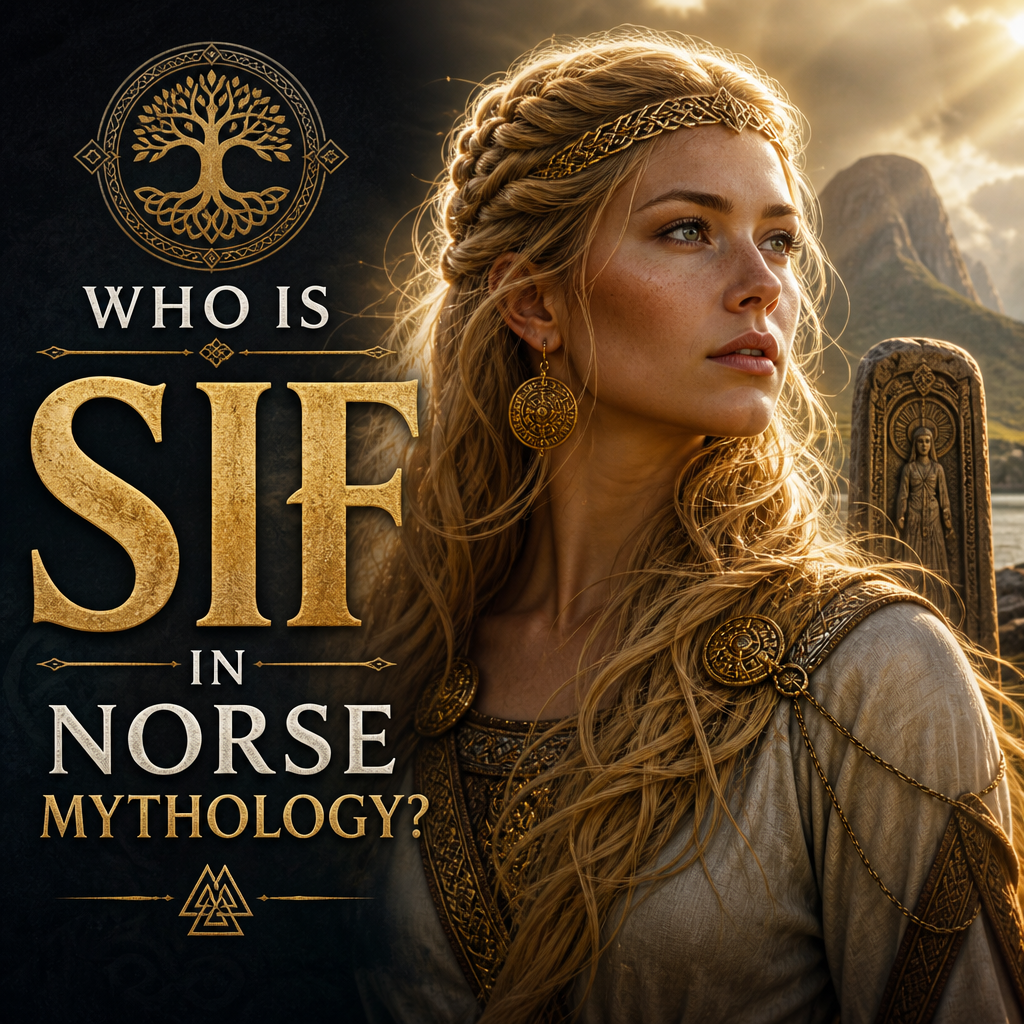
Who Is Sif in Norse Mythology?
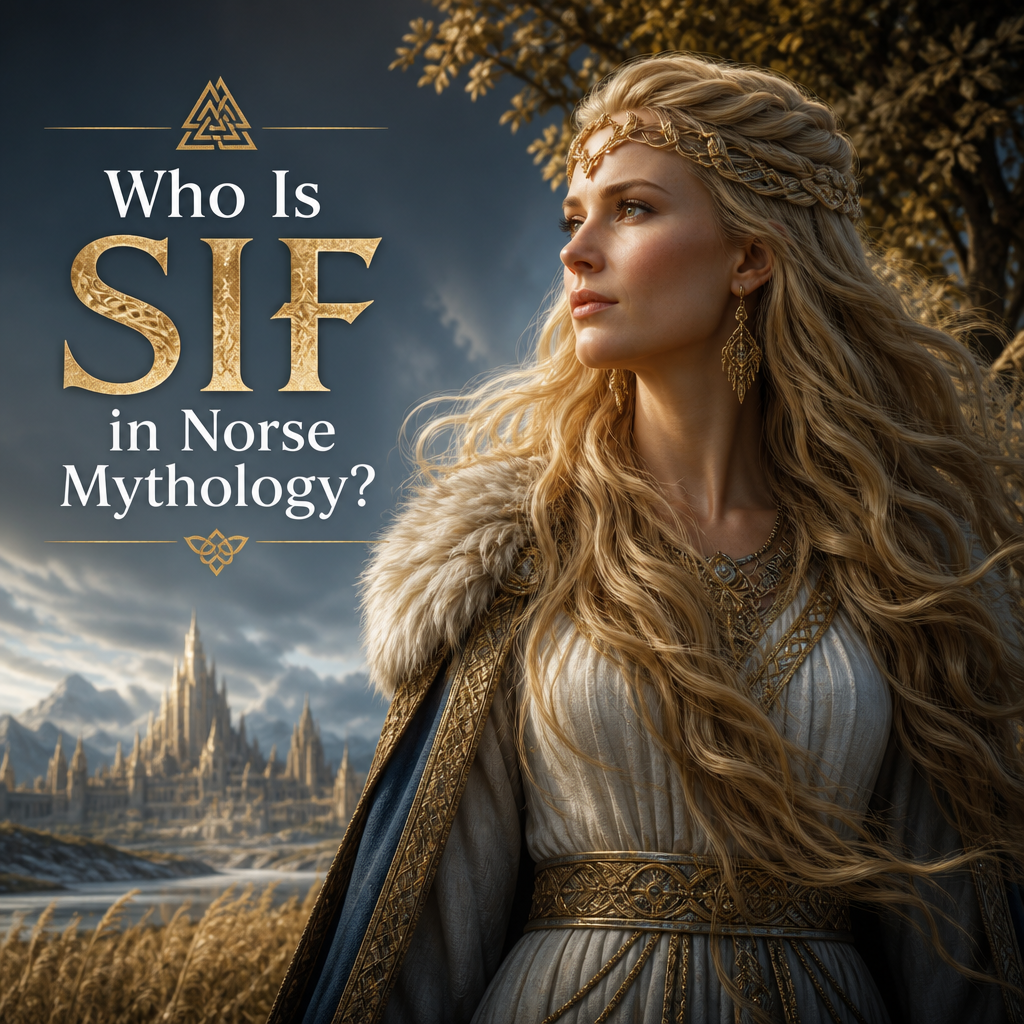
Sif is one of the most recognizable goddesses in Norse mythology, best known for her extraordinary golden hair and her marriage to Thor, the thunder god. Although she does not appear as often in surviving myths as figures like Odin, Loki, or Freyja, Sif remains an important divine figure connected with fertility, family, beauty, and the earth’s abundance.
Her stories are brief but memorable. The most famous tale involving Sif explains how her golden hair became one of the treasures of the gods and how Loki’s mischief led to the creation of some of the most powerful objects in Norse mythology.
Sif as the Wife of Thor
Sif is most commonly introduced as the wife of Thor, the powerful god of thunder, storms, and protection. Together, they are part of the divine community of the Æsir, the principal tribe of gods in Norse myth.
Thor and Sif’s household includes several children. Sif is the mother of Thrud, whose name means “strength” or “power.” She is also the mother of Ullr, a god associated with skiing, archery, and winter, though Ullr is usually described as Thor’s stepson rather than his biological son. Thor himself is also the father of Modi and Magni, though their mothers vary depending on the source.
Sif’s connection to Thor places her within one of the most prominent divine families. While Thor represents force, defense, and the dramatic power of storms, Sif is often interpreted as a calmer symbol of domestic prosperity, fertility, and the cultivated earth.
The Meaning of Sif’s Golden Hair
Sif’s most famous attribute is her long, beautiful golden hair. In Norse poetry and later interpretation, this hair is often associated with fields of ripe grain, sunlight, and abundance. Because of this, many scholars and readers see Sif as a goddess linked to fertility and harvest.
The image is easy to understand: golden hair flowing like wheat in a field. While the original myths do not directly state that Sif is a grain goddess, the symbolism is strong. Her hair may represent the wealth of the land, the prosperity of the household, and the seasonal gifts that sustain life.
In this way, Sif can be seen as a figure who complements Thor. Thor’s storms bring rain and protect the world from giants and chaos. Sif’s golden beauty may reflect the fertility and growth that follow.
Loki Cuts Off Sif’s Hair
The best-known myth about Sif begins with Loki, the trickster god. One day, Loki secretly cuts off all of Sif’s hair. The surviving sources do not give a detailed motive, but the act is clearly humiliating and cruel. Hair was often associated with beauty, honor, and identity, so cutting Sif’s hair was a serious insult.
When Thor discovers what Loki has done, he becomes furious. He threatens Loki with violence unless the trickster finds a way to replace Sif’s hair. Loki, fearing Thor’s wrath, promises to fix the damage.
This moment shows Sif as the victim of Loki’s mischief, but it also sets in motion one of the most important episodes in Norse mythology: the creation of legendary treasures by the dwarves.
The Dwarves Create Sif’s New Hair
To make amends, Loki travels to the dwarves, the master craftsmen of Norse myth. He asks them to create new hair for Sif, hair made of pure gold that will grow on her head like real hair.
The dwarves succeed. They craft magical golden hair that restores Sif’s beauty and honor. But Loki does not stop there. Through further boasting and trickery, he provokes a contest between groups of dwarven smiths. This contest results in the creation of several divine treasures.
Among these treasures are:
- Mjölnir, Thor’s famous hammer
- Gungnir, Odin’s spear
- Draupnir, Odin’s magical ring
- Skidbladnir, Freyr’s incredible ship
- Gullinbursti, Freyr’s golden-bristled boar
- Sif’s golden hair, made to replace what Loki destroyed
This story explains the origins of some of the gods’ greatest possessions. Ironically, Loki’s harmful prank leads to gifts that strengthen the gods and shape many later myths.
What Does Sif Represent?
Sif’s role in Norse mythology is not as fully developed as some other goddesses, but she carries meaningful symbolism. She is often connected with:
Fertility and Harvest
Because of her golden hair, Sif is frequently interpreted as a symbol of grain, agriculture, and earth’s abundance. Her beauty may represent the richness of the harvest and the life-giving power of the land.
Marriage and Household
As Thor’s wife, Sif represents a stable divine household. She is associated with family bonds, continuity, and domestic honor.
Beauty and Honor
The myth of Loki cutting her hair shows how deeply hair was tied to dignity and social identity. Sif’s restoration reflects the importance of repairing dishonor and restoring balance.
Renewal
Sif’s magical replacement hair can also be seen as a symbol of renewal after loss. What is destroyed returns in a transformed and even more wondrous form.
Sif in the Norse Sources
Sif appears mainly in the Poetic Edda and the Prose Edda, two of the most important sources for Norse mythology. These texts were written down in medieval Iceland, preserving stories that had circulated orally for generations.
In the Prose Edda, written by Snorri Sturluson, Sif is described as Thor’s wife and is praised for her beauty and golden hair. Her hair-cutting myth is also found there, especially in connection with the dwarves and their divine creations.
Because the surviving sources are limited, much about Sif remains mysterious. We do not have a large collection of myths centered on her, nor do we know exactly how she may have been worshiped in pre-Christian Scandinavia. Even so, her image remains powerful.
Why Sif Still Matters
Sif may not be the loudest or most active figure in Norse mythology, but she is unforgettable. Her golden hair, her connection to Thor, and her role in the myth of the dwarven treasures make her an essential part of the Norse mythic world.
To ask “who is Sif in Norse mythology” is to discover a goddess of beauty, fertility, dignity, and renewal. She stands at the meeting point of household and harvest, earth and gold, loss and restoration. Though only a few stories about her survive, Sif’s symbolism continues to shine brightly, much like the golden hair for which she is remembered.

Orin Vale has spent the better part of two decades tracing the threads that connect the world’s oldest stories — from the halls of Asgard to the banks of the Nile, from Olympus to the jungles of the Maya. What began as a childhood fascination with flood myths and trickster gods grew into years of independent study across comparative mythology and ancient religion, always chasing the same question: what did these stories mean to the people who first told them? Orin writes for readers who want more than trivia — the ones looking for the beliefs, fears, and truths that myths were built to carry.