Yuki-onna
Introduction

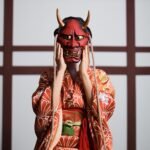
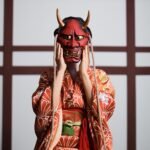
Yuki-onna (雪女), often translated as “snow woman” or “snow lady,” is one of the best-known figures in Japanese folklore. She appears in stories from the Japanese archipelago as a beautiful, ghostly woman associated with snowstorms, winter landscapes, and death by cold. In many accounts, she is both alluring and dangerous: she may be compassionate, indifferent, or deadly, depending on the region and the version of the tale.
Yuki-onna is important not because she belongs to a single fixed mythology, but because she reflects the richness of Japanese folk belief. Her stories combine elements of local oral tradition, Buddhist ideas about impermanence, and wider Japanese ghost lore. She has remained a prominent cultural figure in literature, film, manga, anime, and modern horror, making her one of the most internationally recognized yōkai.
Origin and Meaning
The name yuki-onna is composed of two Japanese words:
- yuki (雪) = snow
- onna (女) = woman
So the literal meaning is “snow woman.”
The figure is a type of yōkai, a broad term for supernatural beings, spirits, and monsters in Japanese tradition. Unlike some mythological figures with a clearly defined origin, Yuki-onna exists in multiple regional variants. The character is not traced to one single ancient source. Instead, she emerged through folklore, oral storytelling, and later literary collections.
The earliest widely cited written account is often associated with Sōgi’s medieval-era travel literature, but the best-known standardized description comes from Lafcadio Hearn’s late 19th-century retelling of Japanese legends. Hearn’s version helped introduce Yuki-onna to a global audience, though it is important to note that he was recording and adapting existing folk materials rather than inventing the legend.
Historical Context
Yuki-onna belongs to the broader world of Japanese winter spirits and ghost stories. Her legend developed in a society where winter was harsh, travel could be dangerous, and snowstorms posed genuine threats to survival. In rural communities, unexplained deaths in the snow, missing travelers, and the dread of cold isolation were natural settings for supernatural interpretation.
Cultural and religious background
Several elements of Japanese belief help explain Yuki-onna’s place in folklore:
- Animistic traditions in which natural places and phenomena could be inhabited by spirits.
- Buddhist views of impermanence, death, and attachment.
- Folkloric cautionary tales warning against danger, temptation, and wandering alone at night.
- Local ghost traditions, especially stories of spirits tied to place, weather, or tragic death.
Yuki-onna is often discussed alongside onryō—vengeful spirits of the dead—but she is not always treated as a human ghost. In some traditions, she is a supernatural being of the snow itself. This ambiguity is one reason she has remained compelling across centuries.
Main Characteristics
Yuki-onna’s appearance and behavior vary by region and story, but several traits recur frequently.
Common features
- Female form: She appears as a woman, often described as young and exceptionally beautiful.
- White or pale appearance: Her skin may be snow-white, giving her an uncanny, almost translucent look.
- Long black hair: Many accounts emphasize long dark hair, which contrasts with the snow.
- Silent movement: She may glide across the snow without leaving footprints, or move with unnatural stillness.
- Association with cold: Her presence brings freezing temperatures, frost, snowstorms, or a sense of deadly chill.
- Ambiguous morality: She may spare a person, seduce them, test them, or kill them.
Typical behavioral patterns
In folk stories, Yuki-onna may:
- appear to travelers caught in a blizzard,
- carry or appear with a child,
- freeze people to death by breathing on them,
- enter homes during snowstorms,
- take the form of a beautiful woman seeking shelter,
- disappear at dawn or when sunlight arrives.
Some traditions portray her as speaking in a calm, soft voice. Others emphasize her lack of warmth or emotion. The contrast between beauty and danger is central to her identity.
Family and Genealogy
Yuki-onna does not have a universally accepted genealogy. Unlike deities with stable family trees, she is a folkloric being whose relationships differ by region and source.
Common patterns in different traditions
- No fixed parents: Most versions do not give her parents.
- No standard spouse: In some stories she marries a human man and lives as his wife for years, but this marriage is usually temporary or fragile.
- Children: Some legends include children, often as a tragic or revealing part of the narrative.
- No consistent descendants: Folklore does not define a single line of descent.
Notable narrative pattern: human marriage
One of the best-known story types tells of Yuki-onna appearing to a man, later marrying him under a human identity, and bearing children. The relationship may end when her supernatural nature is revealed. In some versions, she vanishes after breaking a condition of secrecy; in others, she leaves after emotional conflict. This motif highlights the tension between the human world and the supernatural.
Symbols
Yuki-onna is strongly connected to symbols of winter, transience, and isolation. Her iconography is not standardized like that of a formal religious deity, but recurring symbols are common in art and literature.
| Symbol | Meaning |
|---|---|
| Snow | Purity, coldness, silence, danger, impermanence |
| White clothing | Spirit-like presence, winter, funerary associations |
| Frost | Death, stillness, the freezing of life |
| Wind and blizzard | Unpredictable supernatural force |
| Nighttime mountains | Isolation, liminal space, peril |
| Footprints absent in snow | Otherworldly nature, ghostliness |
Color symbolism
- White: Often associated with snow, death, purity, and the supernatural in Japanese visual culture.
- Black hair: Creates a striking contrast and may symbolize beauty, mystery, or human resemblance.
- Pale blue or silver tones: Common in later artistic depictions to suggest cold and moonlight.
Sacred Animals
Yuki-onna is not typically linked to a single sacred animal in the way some deities are. However, folklore and modern artistic depictions sometimes associate her with animals that symbolize winter, solitude, or spiritual ambiguity.
Common associations in interpretation
- Foxes: Not a direct Yuki-onna attribute, but often linked in Japanese folklore to shape-shifting and deceptive supernatural beings.
- Ravens or crows: Sometimes used in art to symbolize death, winter, and foreboding.
- Hares or wolves: Occasionally appear in regional storytelling or modern adaptation as creatures of the snow.
Because these connections are not universal, they should be understood as symbolic rather than canonical.
Sacred Plants
There is no fixed set of sacred plants associated with Yuki-onna in traditional worship, since she is not usually the subject of formal cult practice. Still, winter-related plants sometimes appear in artistic or symbolic contexts.
Plants occasionally linked by theme
- Pine: A common winter symbol in East Asian art, suggesting endurance and longevity.
- Plum blossom: Often blooms in cold weather and can represent resilience.
- Bamboo: Associated with flexibility and survival through snow and wind.
- Camellia: Sometimes present in seasonal imagery, though not specifically tied to Yuki-onna.
These plants are best understood as seasonal companions to winter imagery rather than direct sacred emblems.
Sacred Places
Yuki-onna is not connected to a single shrine or temple in a universally accepted way. She belongs to landscape folklore, especially mountainous and snowy regions. Her “places” are often liminal spaces rather than fixed sacred institutions.
Common settings in the tradition
- Snowy mountain passes
- Remote villages
- Forested roads in winter
- Cabins or travelers’ shelters
- Riverside or valley areas during snowstorms
Regional landscape significance
Many Yuki-onna tales are set in places where winter travel was dangerous. In folklore, such locations become thresholds between life and death. Because of this, she is often described as emerging in areas where human control over the environment is weakest.
Powers and Attributes
Yuki-onna’s powers vary from story to story, but she is consistently tied to the deadly force of winter.
Main powers
- Control or embodiment of snow and cold
- Freezing touch or breath
- Ability to appear and disappear suddenly
- Possible shapeshifting or illusion
- Supernatural endurance in winter conditions
- Influence over travelers and isolated humans
Common attributes in folklore
| Attribute | Description |
|---|---|
| Beauty | Often mesmerizing and otherworldly |
| Silence | She may speak little or not at all |
| Detachment | Frequently emotionally distant |
| Fatal attraction | Draws humans into danger |
| Seasonal presence | Especially active in winter |
| Liminal identity | Neither fully human nor fully deity |
Some stories portray her as malicious, but others suggest she is simply a force of nature. In those versions, her behavior is less moralized and more elemental.
Main Myths
Yuki-onna appears in a range of local stories. No single myth defines her completely, but several narrative types are especially important.
1. The snowstorm encounter
A traveler becomes lost in a blizzard and encounters a beautiful woman dressed in white. She may:
- ask for warmth,
- invite the traveler to follow her,
- test the traveler’s endurance,
- or simply appear and then vanish.
In some versions, the traveler survives by showing calm, restraint, or cleverness. In others, he dies of cold or fear.
2. The sleeping child or carried child
One widespread motif involves Yuki-onna carrying a child, or a child appearing in the snow and becoming increasingly heavy. This motif is related to other Japanese supernatural tales, especially those warning against picking up strange children or wandering alone. The child may symbolize burden, deception, or the weight of the supernatural.
3. The hidden identity as a wife
One of the most famous Yuki-onna stories tells of a snow woman who spares a young man in a storm on the condition that he never reveal what he saw. She later marries him, and they have children. When he eventually breaks his promise, she reveals her true nature and leaves, often after expressing sorrow rather than rage.
This story is notable because it gives Yuki-onna a complex emotional profile. She is not merely a killer; she can also be a spouse and mother, though her supernatural identity prevents ordinary domestic life.
4. Variants of mercy or fatality
In some traditions, Yuki-onna kills people by freezing them. In others, she simply frightens them or tests their moral character. The same figure can thus function as:
- a predator,
- a ghostly helper,
- a tempter,
- a tragic bride,
- or an impersonal force of winter.
Relationship with Other Mythological Figures
Yuki-onna is part of a larger network of Japanese supernatural beings.
Related figures and comparisons
- Onryō: Vengeful ghosts of the dead. Yuki-onna sometimes resembles an onryō in appearance and emotional tone, but is not always a human spirit.
- Yama-uba: A mountain witch or mountain crone. Both figures appear in isolated landscapes, but Yuki-onna is generally younger and associated more directly with snow.
- Tsurara-onna: A related ice or icicle woman in some later traditions, sometimes treated as similar or even interchangeable.
- Kitsune: Fox spirits known for shapeshifting and deception. They are not directly related, but comparisons arise because both figures can appear beautiful and misleading.
- Other yōkai: Yuki-onna belongs to a broad supernatural ecosystem of Japanese folklore, where beings often overlap in function and symbolism.
Narrative role
Her relationships are usually adversarial or ambiguous. She may appear as a threatening outsider to human communities, yet in domestic tales she forms temporary bonds with mortals. This duality is central to her legend.
Worship and Cult
Yuki-onna is not usually the subject of organized worship in the way gods or Buddhist figures are. There is no widespread historical cult centered on her, nor a major standardized ritual tradition devoted to her.
Folkloric rather than devotional
Her significance lies in storytelling, seasonal fear, and local oral tradition rather than formal religious practice. However, folklore can still shape behavior:
- people avoided dangerous winter travel,
- stories warned against sleeping in the snow,
- parents used ghost tales to discipline or caution children,
- communities interpreted strange deaths through supernatural narratives.
Modern folkloric interest
Today, Yuki-onna may appear in festivals, exhibitions, themed attractions, and popular media, but these are cultural reinterpretations rather than ancient worship.
Ancient Sources
Yuki-onna is not documented in the same way as the gods and heroes of Greek or Roman mythology. There are no classical authors such as Homer or Hesiod for this figure. Instead, her tradition is preserved through Japanese folklore, later compilations, and literary retellings.
Important sources and collections
Lafcadio Hearn, Kwaidan (1904)
Hearn’s retellings are among the most internationally influential versions of Yuki-onna. His version of the snow woman story is especially famous.Japanese folkloric collections and regional oral traditions
Different local tellings preserve alternative forms of the tale. Because these were oral, many were recorded later and vary considerably.Folklorists and collectors of yōkai traditions
Scholars of Japanese folklore, especially in the modern period, helped classify Yuki-onna as a major yōkai figure.
Important caution
Because the tradition is decentralized, “the” Yuki-onna story does not exist in one authoritative ancient text. Any encyclopedia account should therefore recognize multiple versions and avoid treating one retelling as definitive.
Roman Equivalent
There is no exact Roman equivalent to Yuki-onna. Roman mythology does not contain a directly comparable snow woman figure.
Closest functional parallels
Some Roman or Greco-Roman beings share partial similarities:
- Nymphs: Female nature spirits, though generally not dangerous in the same way.
- Lamia: A female monster or child-eating being in later Greek and Roman tradition, associated with seduction and danger.
- Spirits of place: Various local numina connected to landscapes, though without Yuki-onna’s winter identity.
These comparisons are only approximate. Yuki-onna is distinctively Japanese in both symbolism and narrative function.
Influence on Modern Culture
Yuki-onna has had a major impact on contemporary Japanese and international popular culture.
Literature
She appears in modern retellings, folklore studies, ghost story collections, and literary fiction. Writers often use her to explore themes such as:
- loneliness,
- forbidden love,
- memory,
- the boundary between human and supernatural,
- the beauty and danger of nature.
Film and television
Yuki-onna has appeared in Japanese horror, fantasy, and drama. Visual media often emphasizes:
- her elegant appearance,
- her pale costume,
- her silent presence in snow,
- the contrast between tenderness and menace.
Manga and anime
She is a recurring figure in manga and anime, sometimes faithful to folklore and sometimes reimagined in humorous, romantic, or action-oriented ways. Popular series often use Yuki-onna as a template for a cool, reserved supernatural woman.
Games
Video games frequently adapt Yuki-onna as:
- a boss character,
- a summon or spirit ally,
- a frost-themed enemy,
- or a playable supernatural figure.
Her visual identity makes her especially adaptable to fantasy design.
Visual art and merchandising
Artists often depict Yuki-onna in flowing white robes, with long dark hair and a cold, distant expression. She has become an enduring image in:
- prints,
- illustrations,
- statues,
- themed souvenirs,
- and seasonal marketing associated with winter.
Curiosities
- She is not always evil. Some stories depict her as compassionate or capable of mercy.
- Her human marriage stories are among her most famous. These tales make her more emotionally complex than many ghost figures.
- She may have no footprints. This detail is often used to signal that she is supernatural.
- Her image changed over time. Modern depictions often standardize what older oral tales left flexible.
- She is both a ghost and a winter spirit in interpretation. Different sources emphasize different aspects.
- Her stories are highly regional. Local versions may differ in name, behavior, and ending.
- She became globally famous through translation. Lafcadio Hearn played a major role in introducing her to non-Japanese readers.
Frequently Asked Questions
Is Yuki-onna a ghost or a demon?
She is best understood as a yōkai, a broad category that includes ghosts, spirits, and supernatural beings. Some versions of her story make her resemble a ghost, while others treat her more like a winter spirit.
Does Yuki-onna always kill people?
No. In some stories she kills travelers by freezing them, but in other versions she shows mercy, leaves quietly, or even lives as a human wife for a time.
Why is Yuki-onna associated with snow?
Snow is central to her identity because her name literally means “snow woman.” Snow also symbolizes cold, isolation, silence, and the danger of winter travel.
Is Yuki-onna based on a real historical person?
There is no evidence that Yuki-onna originated from a single real person. She is a folkloric figure shaped by many local stories and traditions.
What does Yuki-onna symbolize?
She often symbolizes the beauty and danger of nature, the fragility of human life, the unpredictability of winter, and the boundary between human and supernatural worlds.
Where did the Yuki-onna legend come from?
The legend developed in Japanese oral tradition, especially in snowy regions. Later literary and folkloric collections helped preserve and popularize it.
Is there a shrine dedicated to Yuki-onna?
There is no universally recognized major shrine dedicated specifically to Yuki-onna. She is more a figure of folklore than formal worship.
Why is Yuki-onna popular in modern media?
Her striking appearance, emotional ambiguity, and winter imagery make her ideal for literature, film, anime, and games. She combines beauty, mystery, and danger in a memorable way.
Conclusion
Yuki-onna is one of the most enduring figures in Japanese folklore. As the “snow woman,” she embodies the stark beauty and deadly force of winter while also reflecting themes of mystery, impermanence, and human vulnerability. Her stories vary widely, ranging from terrifying winter encounters to tragic tales of love and hidden identity.
Because her legend comes from multiple oral and literary traditions, Yuki-onna cannot be reduced to a single fixed form. That flexibility has helped her survive across centuries and adapt to new cultural contexts. Today she remains both a powerful folk figure and a global symbol of Japanese supernatural tradition.

Orin Vale has spent the better part of two decades tracing the threads that connect the world’s oldest stories — from the halls of Asgard to the banks of the Nile, from Olympus to the jungles of the Maya. What began as a childhood fascination with flood myths and trickster gods grew into years of independent study across comparative mythology and ancient religion, always chasing the same question: what did these stories mean to the people who first told them? Orin writes for readers who want more than trivia — the ones looking for the beliefs, fears, and truths that myths were built to carry.