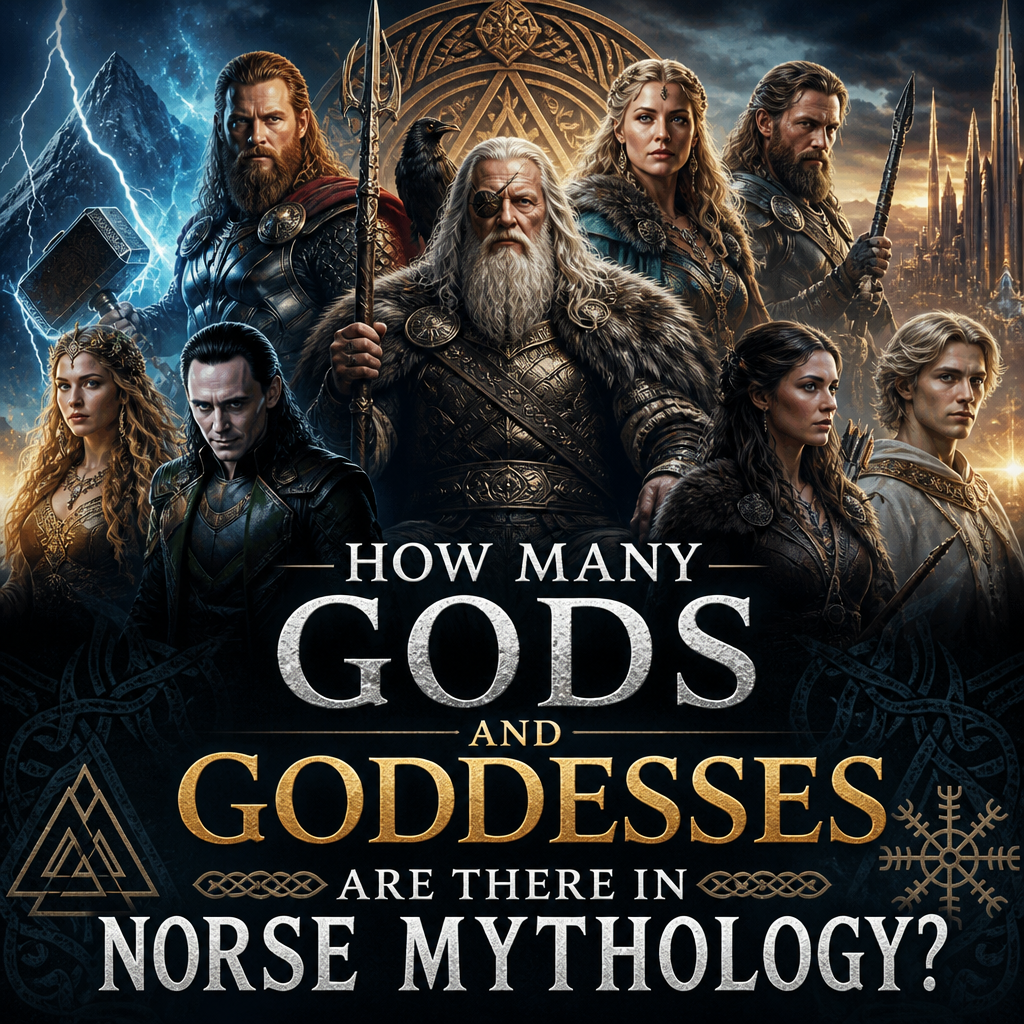
How Many Gods and Goddesses Are There in Norse Mythology?
If you have ever wondered how many gods and goddesses are there in Norse mythology, the answer is not as simple as giving one exact number. Norse mythology includes dozens of divine beings, supernatural figures, giants, spirits, and legendary ancestors. Some are major gods with well-known stories, while others are mentioned only briefly in surviving poems and sagas.
In general, scholars usually identify around 50 to 60 named gods and goddesses in Norse mythology. However, the number can vary depending on how you define a “god,” whether you include minor deities, and whether figures such as giants, elves, valkyries, and spirits are counted.
Why Is It Hard to Count Norse Gods?
Unlike some religious traditions with a fixed list of deities, Norse mythology comes from a mix of oral traditions, poems, sagas, and later medieval writings. Much of what we know was written down after the Viking Age, especially in texts such as the Poetic Edda and the Prose Edda.
Because of this, the list of gods is not perfectly organized. Some divine names appear in only one source. Others may be alternate names, poetic titles, or regional variations of the same figure.
There are a few reasons the total number is uncertain:
- Some gods and goddesses are only briefly mentioned.
- Certain names may be titles rather than separate deities.
- Some beings are part god and part giant.
- Norse mythology includes several categories of supernatural beings.
- Many oral traditions may have been lost before they were written down.
So, when asking how many gods and goddesses are there in Norse mythology, it is best to think in terms of a flexible range rather than a fixed total.
The Two Main Groups of Norse Gods
Norse gods are usually divided into two major families: the Aesir and the Vanir. These groups were once at war but later made peace and exchanged members as hostages.
The Aesir
The Aesir are the best-known group of Norse gods. They are associated with power, war, wisdom, kingship, and cosmic order. Their home is Asgard, one of the Nine Worlds.
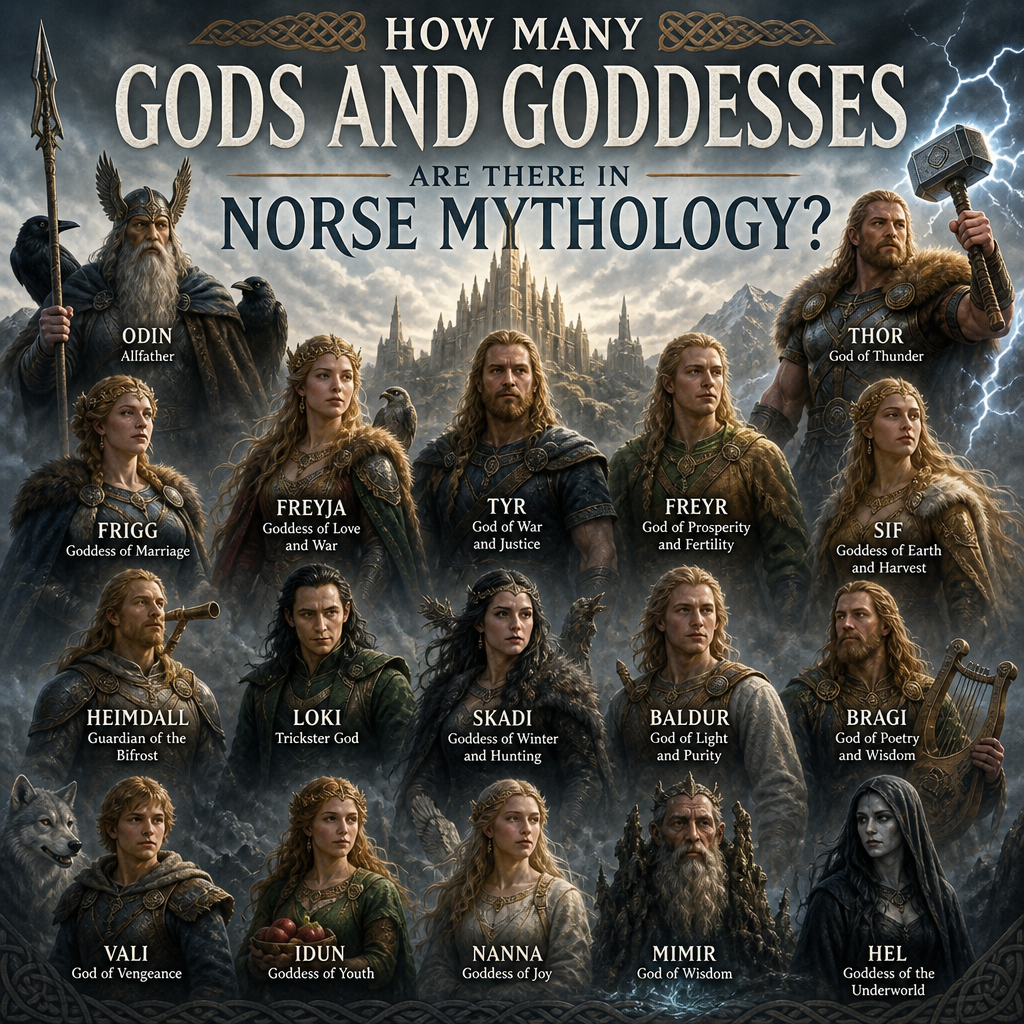
Important Aesir gods and goddesses include:
- Odin – god of wisdom, war, poetry, magic, and death
- Frigg – goddess of marriage, motherhood, and prophecy
- Thor – god of thunder, protection, and strength
- Baldr – god of beauty, light, and purity
- Tyr – god of law, courage, and heroic sacrifice
- Heimdall – guardian of the rainbow bridge, Bifrost
- Loki – trickster figure, often counted among the Aesir though born of giants
- Sif – goddess associated with golden hair and fertility
- Idunn – keeper of the apples of youth
The Aesir include many of the most famous figures from Norse myth, especially Odin, Thor, Loki, and Frigg.
The Vanir
The Vanir are another family of gods, usually connected with fertility, prosperity, nature, magic, and abundance. They are less numerous in surviving myths but still very important.
Major Vanir deities include:
- Njord – god of the sea, wealth, ships, and fishing
- Freyja – goddess of love, beauty, fertility, magic, and war
- Freyr – god of fertility, peace, prosperity, and good harvests
Freyja and Freyr are among the most important gods in Norse mythology. Freyja, in particular, is one of the most powerful goddesses and is associated with both love and battle.
Major Norse Gods and Goddesses
While there may be 50 or more named divine figures, only a smaller group appears frequently in the best-known myths. These major gods and goddesses shaped the central stories of the Norse cosmos.
Odin
Odin is the chief of the gods and ruler of Asgard. He seeks wisdom above all else, even sacrificing one of his eyes to drink from the Well of Mimir. He is also associated with runes, poetry, battle, and the dead.
Thor
Thor is the thunder god and protector of gods and humans. Armed with his hammer, Mjolnir, he battles giants and monsters. He was one of the most widely worshiped gods in the Viking Age.
Freyja
Freyja is a goddess of love, beauty, fertility, magic, and war. She receives half of those slain in battle in her hall, Folkvangr, while Odin receives the other half in Valhalla.
Loki
Loki is a complicated figure. He is a trickster, shape-shifter, and troublemaker, but he also helps the gods in several myths. His actions eventually contribute to Ragnarok, the end of the world.
Frigg
Frigg is Odin’s wife and queen of Asgard. She is linked to motherhood, household order, and foreknowledge. Although she knows the future, she rarely speaks of it.
Are Giants Counted as Gods?
One reason the number of Norse deities is confusing is that many gods are closely related to giants, also called Jotnar. Giants are not always huge monsters; many are ancient, wise, beautiful, or magical beings. Some marry gods, and some gods have giant ancestry.
For example:
- Loki is the child of giants but lives among the gods.
- Skadi is a giantess who becomes associated with the gods after marrying Njord.
- Gerdr is a giantess who marries Freyr.
Because of these connections, the boundary between gods and giants is often blurry. If giants and giantesses with divine roles are included, the number of important supernatural figures becomes much larger.
Minor Gods and Lesser-Known Deities
Norse mythology also includes many lesser-known gods and goddesses. Some appear only in lists of names or short references. These include figures such as:
- Forseti – god of justice and reconciliation
- Fulla – attendant of Frigg
- Gefjon – goddess connected with agriculture and land
- Eir – associated with healing
- Var – linked to vows and agreements
- Syn – connected with refusal and legal defense
- Ullr – associated with archery, skiing, and winter
These minor figures show that Norse mythology had a rich and complex divine world beyond the most famous gods.
So, What Is the Best Estimate?
The best answer is that there are about 50 to 60 named gods and goddesses in Norse mythology, depending on the sources and definitions used. If only the major Aesir and Vanir are counted, the number is much smaller, perhaps around 15 to 25. If minor deities, semi-divine figures, giantesses, elves, valkyries, and spirits are included, the number grows significantly.
A practical way to think about it is:
- Major gods and goddesses: around 15–25
- Named Aesir and Vanir overall: around 40–60
- Wider supernatural beings: many dozens more
Final Thoughts
So, how many gods and goddesses are there in Norse mythology? There is no single official number, but a reasonable estimate is around 50 to 60 named deities. The exact count depends on whether you include only the Aesir and Vanir or also count minor gods, giant-born figures, and other supernatural beings.
What makes Norse mythology fascinating is not just the number of gods, but the complexity of their relationships. Gods, giants, elves, humans, and monsters all belong to a world filled with shifting alliances, ancient prophecies, and powerful stories that continue to capture the imagination today.

Orin Vale has spent the better part of two decades tracing the threads that connect the world’s oldest stories — from the halls of Asgard to the banks of the Nile, from Olympus to the jungles of the Maya. What began as a childhood fascination with flood myths and trickster gods grew into years of independent study across comparative mythology and ancient religion, always chasing the same question: what did these stories mean to the people who first told them? Orin writes for readers who want more than trivia — the ones looking for the beliefs, fears, and truths that myths were built to carry.