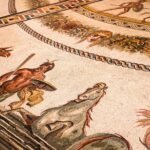
Zeus and Ganymede
Introduction

Zeus and Ganymede are central figures in Greek mythology, united in one of the best-known divine abduction stories of antiquity. Zeus, king of the Olympian gods, is said to have taken Ganymede, a handsome Trojan youth, to Olympus as cupbearer to the gods. The myth became important in ancient art, literature, religion, and later cultural interpretation because it combines themes of beauty, divine favor, immortality, and power.
The story of Zeus and Ganymede is also notable for the different ways ancient sources present it. In some traditions, Zeus abducts Ganymede in the form of an eagle. In others, the myth is linked with royal favor, compensation to Ganymede’s family, and the youth’s transformation into an immortal attendant of the gods. The tale influenced Greek ideas about male beauty, aristocratic education, divine companionship, and the symbolic language of elevation from mortal life to divine status.
Origin and Meaning
The name Ganymede is ancient Greek: Ganymēdēs or Ganymēdēs in Latinized form. Ancient writers and later scholars offered explanations for the name, but no single etymology is universally accepted.
The most common ancient interpretation connected the name with joy or delight, often explained as meaning something like “gladdening” or “rejoicing.” Modern linguistic explanations remain cautious, since the exact origin is uncertain. As with many early Greek mythic names, the historical development of the word is difficult to reconstruct with certainty.
The figure of Zeus and Ganymede likely has deep roots in early Greek oral tradition. By the time of Homer and later classical authors, Ganymede was already an established mythological character, associated especially with Troy and with the god’s preference for exceptional human beauty.
Historical Context
The myth belongs to the religious and cultural world of ancient Greece, where gods were imagined as active participants in human affairs. Divine abduction myths were not unusual. They often explained the transition of a mortal into a privileged or sacred role, and they sometimes reflected broader social values about youth, beauty, power, and patronage.
Ganymede is a Trojan prince in most traditions, and this royal status matters. In Greek myth, Troy was a powerful and symbolically important city, often portrayed as both admired and destined for tragedy. Ganymede’s connection to Troy gave the story political and genealogical significance.
The myth also intersected with Greek concepts of paiderastia, the social and educational customs surrounding relations between adult men and adolescent boys in certain Greek city-states. It is important, however, not to impose modern categories without caution. Ancient representations varied widely, and the story of Zeus and Ganymede functioned differently across literary, artistic, and social contexts.
In religious terms, Ganymede’s role as cupbearer on Olympus made him an intermediary figure. He served the gods at their meals, symbolizing service, honor, and participation in divine life. His elevation from mortal youth to immortal attendant distinguished him from ordinary humans while preserving his identity as a beautiful young man from the mortal world.
Main Characteristics
Ganymede is typically portrayed as:
- extraordinarily beautiful
- youthful, often beardless
- noble or royal in status
- connected with Troy and Mount Ida
- chosen by Zeus for divine service
Zeus, in this myth, appears in one of his most characteristic roles: as a god whose desire and authority can alter a mortal life forever. Unlike many myths in which Zeus fathers heroic children through unions with mortal women, here he is linked to a male beloved or favored youth.
The key traits of the story include:
| Figure | Main Characteristics | Mythic Function |
|---|---|---|
| Zeus | Supreme Olympian god, ruler, abductor or patron, often associated with eagles | Enacts divine selection and elevation |
| Ganymede | Beautiful Trojan youth, prince, cupbearer of the gods | Represents idealized youth and mortal ascent |
| Eagle | Divine messenger or transformed form of Zeus | Symbol of divine power and transport |
Ancient art often emphasizes the moment of abduction or ascent. Ganymede may be shown being carried upward by an eagle or reaching toward Zeus. The image communicates speed, divine force, and the crossing of a boundary between human and divine worlds.
Family and Genealogy
The family background of Ganymede varies slightly across sources.
Most traditions identify him as a son of Tros, the eponymous ancestor of the Trojans, and Callirhoe or another local figure in the Trojan genealogy. In some accounts, he is the son of Laomedon, which places him a generation later in the Trojan royal line. These differences reflect the flexibility of mythic genealogy.
Ganymede’s siblings or close relatives in various traditions may include:
- Ilus
- Assaracus
- Cleopatra
- other members of the Trojan royal house
Because the myth centers on Ganymede’s removal to Olympus, he is not usually associated with a spouse or children in the mainstream tradition. His role is primarily that of chosen youth and divine servant. In some later interpretive traditions, this absence of domestic ties reinforced his symbolic position as a figure of transition rather than lineage.
Zeus’s own family is extensive, but in this myth the central relationship is not marital or paternal in the usual sense. Rather, it is a relationship of desire, favor, and divine elevation.
Symbols
The Zeus and Ganymede myth is associated with several important symbols:
- The eagle: the most prominent symbol; linked to Zeus, sovereignty, and divine power
- The goblet or wine cup: associated with Ganymede’s role as cupbearer
- Mount Olympus: symbol of divine residence and immortality
- Youth and beauty: represented as qualities worthy of divine attention
- The staff or service implement in some artistic depictions: indicates ceremonial duty
The eagle became especially important in later iconography. It appears as Zeus’s bird and as the form or agent by which Ganymede is taken. The bird’s ability to soar high above the earth made it an apt symbol for ascent from mortal life to divine status.
Colors are not consistently standardized in the literary tradition, but artistic representations often emphasize:
- white or light skin for divine or idealized youth
- gold or bright tones for divinity
- dark wings for the eagle in some vase paintings and sculptures
Sacred Animals
The principal sacred animal in this myth is the eagle. In Greek religion, the eagle was closely associated with Zeus and his kingship. It symbolized:
- authority
- speed
- elevated vision
- forceful intervention
- divine command
Other animals are less central. Some artistic representations include horses or pastoral surroundings around Mount Ida, but these are not generally sacred in the myth itself. The eagle remains the defining animal image of Zeus and Ganymede.
Sacred Plants
There is no universally recognized sacred plant specifically linked to Zeus and Ganymede in the way that olive is linked to Athena or laurel to Apollo. However, the myth is often associated with the landscape of Mount Ida and the pastures of Troy, which evoke wild, fertile terrain rather than a particular cult plant.
In literary and artistic settings, the natural world around Ganymede is important as the space of his mortal life before abduction. Trees, hills, and open air may appear in visual depictions, but they do not carry a standardized symbolic role.
Sacred Places
Several locations are important in the myth:
Troy
Ganymede is generally a Trojan prince, so the city of Troy is central to his identity. Troy’s significance in Greek myth is immense, and Ganymede belongs to its pre-war royal past.
Mount Ida
Many versions place Ganymede on Mount Ida when Zeus takes him. Mount Ida is a pastoral and mythically charged landscape associated with shepherds, divine encounters, and Trojan legend. Its remote slopes provide the setting for the famous abduction.
Olympus
Mount Olympus is the destination of Ganymede’s ascent. It represents divine immortality, privilege, and separation from ordinary human life. His place there is unique: he is not a god by birth, but he is admitted into the divine household.
The Heavens
In later visual and literary tradition, the sky itself becomes a symbolic place in the myth. Ganymede’s elevation is literal and metaphorical, marking his removal from the mortal earth to the celestial realm.
Powers and Attributes
The myth does not present Ganymede as a god with independent magical powers in the same way as Zeus, Apollo, or Hermes. Instead, his special attributes lie in what he represents and what role he is granted.
Ganymede’s attributes
- extraordinary beauty
- divine favor
- immortality or near-immortality in many traditions
- ceremonial service as cupbearer
- association with youth and ideal male beauty
Zeus’s attributes in this myth
- supreme authority
- desire and selection
- transformation or abduction
- power to confer immortality
- royal elevation and cosmic order
As cupbearer, Ganymede’s function is to serve nectar or wine to the gods. This role places him within the intimate sphere of the Olympian household. It symbolizes trust and access, and it is one reason the myth remained influential in elite and courtly imagery in later periods.
Main Myths
The Zeus and Ganymede myth survives in several versions, with some variation in detail.
The abduction
The most famous version tells how Zeus saw Ganymede while the youth was tending flocks on Mount Ida. Struck by his beauty, Zeus desired him and either sent an eagle or transformed himself into an eagle to carry the boy away to Olympus.
Ancient sources differ on the exact mechanism:
- Zeus may have sent an eagle to seize Ganymede
- Zeus may have transformed into an eagle himself
- the eagle may function as a divine instrument without transformation
Compensation to the family
Some traditions say Zeus compensated Ganymede’s father, often identified as Tros, by giving him divine horses or other gifts. This detail emphasizes royal exchange rather than pure loss, though the kidnapping motif remains central.
Ganymede as cupbearer
Once on Olympus, Ganymede becomes the cupbearer of the gods, replacing Hebe in some later traditions. This detail is especially prominent in literary and artistic sources. The role involves pouring nectar or wine at divine banquets.
Immortality and honor
One tradition states that Zeus granted Ganymede immortality. Another suggests that his service itself is the form of immortality, since he is permanently welcomed among the gods. The essence of the myth is elevation: a mortal boy is taken into the divine sphere and preserved there.
Astral transformation
Later mythography connected Ganymede with the constellation Aquarius in some traditions, though the association varies. The heavens thus preserve his memory in stellar form.
Relationship with Other Mythological Figures
The myth connects Zeus and Ganymede to a wider network of divine and heroic figures.
Hebe
Hebe, daughter of Zeus and Hera, is often linked with Ganymede because he sometimes replaces her as cupbearer. This replacement may reflect shifting ideas about divine service and youthful beauty.
Hera
Hera is not always central in the narrative, but her presence matters because Zeus’s desire for Ganymede can be understood against the broader backdrop of his complicated marital life. Some later writers and artists allude to the tension such myths created within Olympus.
Tros and the Trojan royal house
Ganymede’s father, usually Tros, is important because Zeus’s gift to him may help explain the myth’s place in Trojan genealogy. The connection reinforces the prestige of the Trojan kings.
Athena, Apollo, and Hermes
These gods do not dominate the myth, but they belong to the same divine court and are often present in artistic or literary scenes involving Olympus. Ganymede’s role as cupbearer places him among the attendants of the gods, a position adjacent to the whole Olympian order.
Eros and desire figures
In later artistic and poetic traditions, the myth has sometimes been interpreted through the language of erotic desire and beauty, making Ganymede a companion to other figures associated with attraction and longing.
Worship and Cult
There is no major pan-Hellenic cult devoted specifically to Zeus and Ganymede as a paired divine subject. Zeus was, of course, one of the most widely worshipped gods in the Greek world, but Ganymede’s role is primarily mythological and symbolic rather than the focus of widespread public cult.
That said, the myth had a religious dimension because it expressed divine selection and immortalization. In Greek thought, myths often carried sacred meaning without requiring a formal cult.
Possible forms of cultural reception included:
- invocation in literary symposium culture
- use in vase painting and sculpture
- elite discussions of beauty and patronage
- commemorative astronomical associations
The story’s strongest “cultic” afterlife may be found not in temples but in art, intellectual tradition, and symbolic representation.
Ancient Sources
The myth is attested across a range of ancient sources. Different authors emphasize different elements.
Homer
Homer refers to Ganymede in the Iliad, where he is described as the most beautiful of mortal men and taken by the gods to serve as cupbearer. This is one of the earliest literary references.
Hesiod
Hesiodic material also preserves the tradition, though surviving references are fragmentary and mediated through later authors.
Apollodorus
The Bibliotheca attributed to Apollodorus gives genealogical context and recounts aspects of the abduction and Ganymede’s Trojan background.
Ovid
Ovid, especially in the Metamorphoses, contributes to the Roman literary reception of the myth. His treatment often highlights transformation, beauty, and divine desire.
Lucian and later authors
Later Greek and Roman writers discuss Ganymede with philosophical, rhetorical, or satirical intent. Their accounts help show how the myth was interpreted in changing cultural environments.
Pausanias
Pausanias provides valuable testimony for local traditions, art, and cultic or monumental references, although his treatment of the story is not always narrative in the same sense as epic poetry.
Summary of source emphasis
| Source | Main Contribution |
|---|---|
| Homer | Early canonical mention of Ganymede’s beauty and service |
| Apollodorus | Genealogy and mythographic summary |
| Ovid | Roman literary transformation and poetic elaboration |
| Pausanias | Local traditions and artistic testimony |
| Later authors | Philosophical, rhetorical, and satirical readings |
Roman Equivalent
There is no exact Roman equivalent to Zeus and Ganymede as a separate pair, since the myth was adopted rather than replaced. In Roman tradition, Jupiter corresponds to Zeus, and Ganymede remains Ganymede.
Roman authors, especially Ovid, helped popularize the myth in Latin literature. Roman art also portrayed the abduction, often with Jupiter in the form of an eagle or with the eagle acting on his behalf.
The Roman reception tended to preserve the Greek name Ganymede, though the figure was fully integrated into Roman mythological imagination through literary and artistic adaptation.
Influence on Modern Culture
Zeus and Ganymede have had a long afterlife in modern art, literature, and scholarship.
Visual art
The abduction of Ganymede became a favorite subject for:
- Renaissance painters
- Baroque artists
- Neoclassical sculptors
- later academic art
Artists were drawn to the dramatic ascent, the contrast between youth and power, and the possibility of depicting a beautiful male figure in motion.
Literature
Writers have used Ganymede as:
- a symbol of ideal beauty
- an emblem of divine favor
- a figure in discussions of sexuality and classical reception
- a literary metaphor for elevation or adoption by power
Astronomy
The name Ganymede is used for the largest moon of Jupiter. This naming continues the classical tradition of associating Jupiter/Zeus with the mythic youth.
Film, television, and games
The myth appears in modern media less often than some other Greek stories, but it is frequently referenced in:
- fantasy narratives
- historical fiction
- classical-themed games
- animated retellings
- symbolic or allegorical naming
Modern interpretation
Modern scholars and audiences often examine the myth in relation to:
- power imbalance
- consent
- ancient representations of male beauty
- homoerotic themes in classical culture
- the politics of divine selection
These interpretations differ, but they show the myth’s continuing relevance and complexity.
Curiosities
- Ganymede is commonly described as the most beautiful mortal in Greek mythic tradition.
- In some artworks, Zeus is not visibly transformed but appears through the eagle alone.
- The myth was especially popular in vase painting and later in European art.
- Ganymede’s role as cupbearer gives him a place at the divine banquet, one of the highest symbolic honors available to a mortal.
- The association with Aquarius is later and not uniform across all ancient traditions.
- Some ancient readers treated the myth as a story of honor and elevation; others focused on erotic desire or abduction.
- The story may have been especially resonant because it combines Trojan royal genealogy with Olympian privilege.
Frequently Asked Questions
Who was Ganymede in Greek mythology?
Ganymede was a Trojan youth, often described as a prince, who was taken by Zeus to Olympus and made cupbearer to the gods.
Why did Zeus take Ganymede?
Ancient sources say Zeus was struck by Ganymede’s extraordinary beauty. The myth presents the god’s desire, along with Ganymede’s elevation to a divine role.
Did Zeus abduct Ganymede or transform into an eagle?
Different sources vary. Some say Zeus sent an eagle; others suggest Zeus himself became an eagle. The tradition is not completely uniform.
Was Ganymede considered immortal?
In many versions, yes. He was granted immortal status or permanent life among the gods after being brought to Olympus.
What was Ganymede’s role on Olympus?
He served as the cupbearer of the gods, pouring nectar or wine during divine banquets.
Is Ganymede connected to a constellation?
Yes, some later traditions associate him with Aquarius, though this connection is not equally emphasized in all ancient sources.
What is the Roman version of Zeus and Ganymede?
The Roman counterpart of Zeus is Jupiter. The myth itself remained largely the same in Roman literature, especially in Ovid.
Why is the myth important today?
It remains important because it shaped ancient ideas about beauty, power, divine favor, and the relationship between gods and mortals. It also continues to influence art, literature, and scholarly debate.
Conclusion
The myth of Zeus and Ganymede is one of the most enduring stories in Greek mythology because it brings together beauty, power, transformation, and immortality in a single narrative. Ganymede’s abduction or elevation to Olympus symbolized the passage from mortal life into divine favor, while Zeus’s role underscored both kingship and desire. Ancient authors, artists, and later interpreters repeatedly returned to the story because it could be read as a tale of honor, loss, erotic attraction, social status, or celestial ascent.
Its legacy is visible in classical literature, ancient art, astronomical naming, and modern cultural interpretation. As a result, Zeus and Ganymede remain not only a mythological pair but also a lasting symbol of the ancient imagination’s ability to turn human beauty into divine story.

Orin Vale has spent the better part of two decades tracing the threads that connect the world’s oldest stories — from the halls of Asgard to the banks of the Nile, from Olympus to the jungles of the Maya. What began as a childhood fascination with flood myths and trickster gods grew into years of independent study across comparative mythology and ancient religion, always chasing the same question: what did these stories mean to the people who first told them? Orin writes for readers who want more than trivia — the ones looking for the beliefs, fears, and truths that myths were built to carry.