Adonis and Aphrodite
Introduction
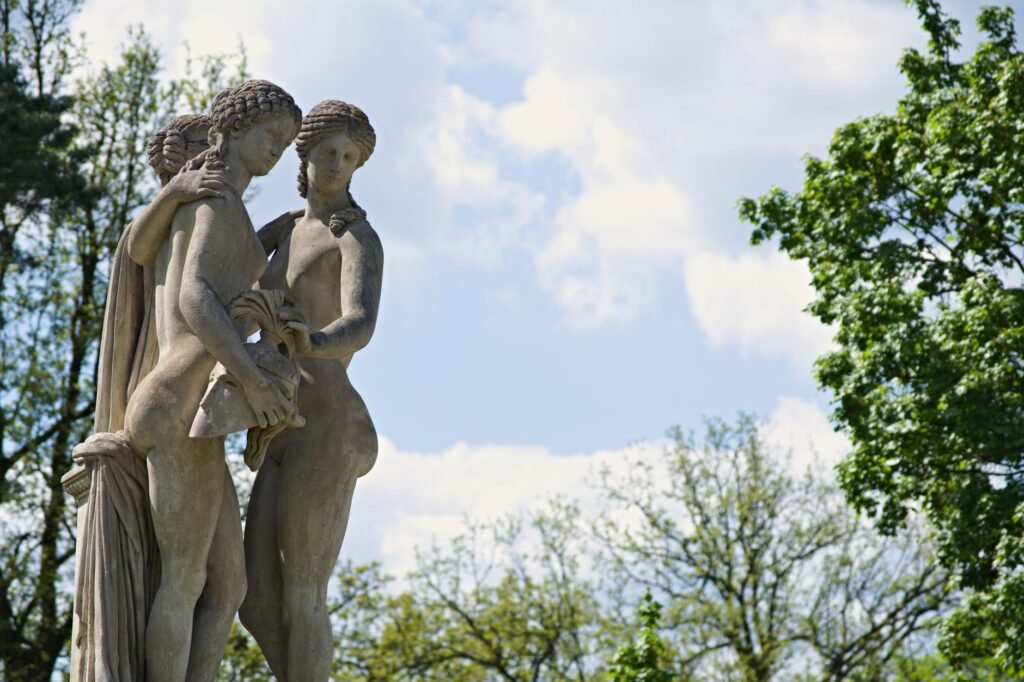
Adonis and Aphrodite are among the best-known figures in Greco-Roman mythology, representing a powerful story of beauty, desire, youth, death, and seasonal renewal. Their myth became especially important in ancient Mediterranean religion and later in art, poetry, and modern popular culture. Aphrodite, the Greek goddess of love and beauty, is linked with Adonis, a strikingly handsome mortal youth whose short life and tragic death became central to stories of mourning and rebirth.
The myth of Adonis and Aphrodite is important not only because of its emotional force, but also because it reflects ancient ideas about fertility, vegetation, the cycle of the seasons, and the fragility of human life. It also shows how Greek myth absorbed and transformed older Near Eastern traditions.
Origin and Meaning
The name Adonis is generally understood to come from a Semitic title meaning “lord”. This explanation connects him with older Near Eastern fertility gods, especially Tammuz in Mesopotamian tradition and related figures in the Levant. Greek writers themselves often treated Adonis as a foreign figure adopted into Greek myth.
The name Aphrodite is of Greek origin, though its ultimate etymology remains debated. In mythology, she is the goddess most closely associated with sexual desire, beauty, attraction, and generative power. Her relationship with Adonis became one of the most famous expressions of love between a goddess and a mortal.
Historical Context
The myth of Adonis and Aphrodite developed in the broader cultural world of the eastern Mediterranean, where myths of dying and returning vegetation gods were widespread. Ancient Greeks encountered and adapted these traditions through contact with Phoenician, Syrian, and other Near Eastern cultures.
Cultural background
Several ancient features shaped the story:
- Vegetation cycles: Adonis was associated with plants that grow quickly and fade quickly, symbolizing brief beauty and short-lived life.
- Female mourning rites: The myth was closely linked to laments by women, especially in rituals associated with Aphrodite.
- Cross-cultural exchange: Greek authors acknowledged that Adonis was not originally a fully Greek figure.
- Seasonal explanation: Later readers often interpreted the myth as an explanation for the rise and fall of fertility in nature.
The story was especially popular in Hellenistic and Roman periods, when Greek religion and literature interacted strongly with Near Eastern motifs and local cults.
Main Characteristics
Adonis
Adonis is usually described as:
- extraordinarily beautiful
- youthful
- mortal
- associated with plants, gardens, and fertility
- doomed to an early death
He is not a god in the strict Olympian sense in most Greek accounts, though he has divine or semi-divine associations. His defining feature is his beauty, which attracts Aphrodite and later leads to competition and tragedy.
Aphrodite
Aphrodite is typically described as:
- goddess of love, desire, and beauty
- powerful in both romantic and sexual attraction
- connected with fertility and generative force
- both life-giving and disruptive
In the Adonis myth, she is not merely a passive lover. She mourns, protects, desires, and grieves. Her attachment to Adonis gives the myth its emotional center.
Family and Genealogy
Adonis is connected to several different genealogies in ancient sources, and the details vary.
Parentage of Adonis
Different traditions name different parents:
| Tradition | Parentage |
|---|---|
| Common Greek literary version | Son of Myrrha and Cinyras |
| Alternative traditions | Sometimes linked to Theias or other local kings |
| Near Eastern background | Connected more broadly to fertility divinities, not a fixed Greek family line |
In the best-known Greek version, Adonis is born from Myrrha after she is transformed into a myrrh tree. His birth is therefore already tied to transformation, fragrance, and botanical imagery.
Aphrodite’s relationships
Aphrodite’s divine spouse is often Hephaestus in Greek tradition, though she has many lovers in myth. Her relationship with Adonis is usually presented as an affair or intimate bond rather than a formal marriage.
Children and descendants
The myth of Adonis and Aphrodite is not primarily about lineage, and there is no single universally accepted tradition of children between them. Some later traditions connect Aphrodite with sons such as Aeneas from other unions, but Adonis is not usually central to genealogical descent.
Symbols
The iconography of Adonis and Aphrodite is rich and varied.
Common symbols of Adonis
- Anemone: said in some versions to have sprung from Adonis’s blood
- Myrrh tree: associated with his mother, Myrrha
- Young hunter: often shown with hunting gear
- Short-lived plants: especially those that sprout quickly and die quickly
Common symbols of Aphrodite
- Dove
- Swan
- Mirror
- Girdle or belt
- Shell
- Rose
- Apple
In the myth of Adonis, Aphrodite’s symbols often appear in scenes of love, lamentation, and divine beauty.
Sacred Animals
No single animal is uniquely reserved for Adonis in the way some animals are linked to major gods, but several are connected by myth and symbolism.
Associated animals
- Boar: the most important animal in the myth, since Adonis is killed by a boar in many versions
- Birds: sometimes linked with mourning or divine lament
- Doves: more strongly associated with Aphrodite, but relevant to the shared mythic world
The boar is especially significant because it represents wild violence, danger, and the destruction of fragile beauty. In some traditions, the boar is not merely an animal but the instrument of fate.
Sacred Plants
Plants are central to the myth of Adonis and Aphrodite.
Major plant associations
- Anemone: often said to emerge from Adonis’s blood
- Myrrh: linked to Adonis’s mother, Myrrha, and to fragrant transformation
- Lettuce: in some ancient traditions, Adonis is associated with lettuce, a plant thought to promote fading or decline in symbolic contexts
- Gardens of Adonis: fast-growing plants cultivated in short-lived containers during ritual observances
Symbolic meaning
These plants emphasize:
- beauty that fades quickly
- death followed by renewal
- the fragility of life
- the intimacy between eros and mortality
The Gardens of Adonis are especially important because they were ritual plantings that grew quickly and withered quickly, mirroring the brief life of the god or hero.
Sacred Places
The cult and myth of Adonis and Aphrodite were connected to several locations across the Mediterranean.
Important places
| Place | Significance |
|---|---|
| Cyprus | Strongly associated with Aphrodite and later with Adonis cult |
| Byblos | A Phoenician center sometimes linked to mourning rituals for Adonis |
| Lebanon and Syria | Regions tied to the Near Eastern background of the myth |
| Argos and Athens | Greek cities where Adonis-related observances are mentioned |
| The Underworld | Central mythic location in stories of Adonis’s death and return |
Cultic space
Adonis was not primarily associated with one single great temple like some Olympian gods. Instead, his worship often took place in domestic, civic, or ritual settings, especially in temporary gardens, rooftops, and spaces marked by lamentation and planting.
Powers and Attributes
Adonis is not a major cosmic deity with broad powers. His mythic importance lies more in symbolism than in divine governance.
Adonis’s attributed domains
- beauty
- youth
- fertility
- vegetation
- seasonal death and return
- erotic attraction in connection with Aphrodite
Aphrodite’s role in the myth
Aphrodite’s powers in the Adonis cycle include:
- irresistible desire
- protection and lamentation
- fertility and growth
- transformation through love and grief
The combined myth of Adonis and Aphrodite expresses the tension between desire and mortality, a theme that is central to much ancient literature.
Main Myths
The Birth of Adonis
One of the most famous stories about Adonis is his extraordinary birth. In the well-known version preserved by later mythographers and poets, Myrrha is transformed into a myrrh tree after a tragic and often morally charged sequence involving her father Cinyras. From the tree, Adonis is born. This origin ties him to fragrance, transformation, and taboo.
Because the story survives in several forms, the details vary. Ancient sources do not always agree on the exact circumstances of Myrrha’s punishment or the role of the gods.
Aphrodite’s Love for Adonis
Aphrodite becomes deeply attached to Adonis because of his exceptional beauty. In some versions, she falls in love with him at his birth or after seeing him as a child or youth. She is often portrayed as caring for him, raising him, or guarding him.
The myth highlights a striking reversal: the goddess of love becomes emotionally vulnerable herself.
The Boar and Adonis’s Death
The most famous episode is Adonis’s death, usually caused by a boar during a hunt. Different versions explain the boar differently:
- as a wild animal encountered in hunting
- as a punishment sent by a god
- as an instrument of jealousy, often involving Ares or another rival figure
- as a fate-driven event with no fully explicit cause
After Adonis is wounded fatally, Aphrodite mourns him. Some versions say his blood produces the anemone flower. In others, the landscape itself is changed by his death.
Why the boar matters
The boar symbolizes:
- uncontrolled nature
- male violence
- the vulnerability of youth
- the collapse of beauty before death
Descent and Return
In some traditions, Adonis spends part of the year in the underworld and part with Aphrodite among the living. This pattern resembles other dying-and-returning figures from ancient myth, though the details vary and should not be oversimplified.
The recurring descent-return motif suggests:
- seasonal change
- fertility cycles
- the persistence of love after death
- the possibility of renewal after loss
The Gardens of Adonis
A famous ritual and symbolic practice associated with the myth involved “Gardens of Adonis”. These were small containers planted with quickly sprouting seeds, often placed on rooftops or in exposed places. They grew rapidly and died quickly, reflecting the brief life of Adonis.
This custom is known from ancient literary references and is usually interpreted as part of women’s ritual activity connected with mourning and fertility.
Relationship with Other Mythological Figures
Adonis and Aphrodite are connected to a wide web of divine and heroic figures.
Aphrodite
The central relationship is, of course, between Aphrodite and Adonis. Their bond unites erotic desire with grief and mortality.
Ares
In some traditions, Ares, Aphrodite’s lover, is jealous of Adonis. Ancient sources differ on whether Ares directly causes the boar attack or whether this is a later explanation.
Persephone
Aphrodite’s conflict with Persephone is important in one literary version, especially in the account associated with Theocritus and later sources. In that version, both goddesses desire Adonis, and a division of his time is established between them. This echoes underworld and seasonal themes.
Hermes, Dionysus, and other gods
Adonis’s story also resonates with broader divine patterns involving descent, return, love, and vegetation, though he is not usually integrated into the major Olympian hierarchy in a systematic way.
Worship and Cult
The worship of Adonis was distinctive because it often emphasized mourning, lamentation, and temporary ritual gardens rather than long-established temple cult in the classical Greek style.
Ritual practices
Ancient references describe practices that may have included:
- lamentations by women
- planting of fast-growing “gardens”
- offerings and displays of flowers
- songs or cries of mourning for Adonis
- ritual expressions of grief followed by symbolic renewal
Social and religious meaning
Adonis cult may have been associated especially with women’s ritual activity, although the evidence is fragmentary and varies by place and period. Scholars have often linked the cult to fertility and lament, but exact ancient meanings are not always fully recoverable.
Festivals
The Adonia is the best-known festival connected with Adonis. Ancient descriptions suggest it was observed in different ways in different cities, especially Athens and other Greek or Hellenized communities. The festival included mourning, planting, and short-lived offerings.
Ancient Sources
The myth of Adonis and Aphrodite appears in a wide range of ancient literature, though no single source tells the entire story in a fixed way.
Important authors and texts
- Homer: does not provide the full Adonis myth, but Aphrodite is central to his epic world
- Hesiod: contributes to the broader genealogy of gods and divine relations
- Apollodorus: preserves mythographic versions of Adonis’s parentage and story
- Theocritus: important for Adonis laments and cultic references
- Bion: wrote a famous lament for Adonis
- Ovid: in the Metamorphoses, presents the story of Adonis, Venus, and the transformation of grief into flowers
- Pausanias: provides valuable observations on cult and local religious practice
- Lucian: discusses Syrian and Near Eastern cultic contexts in ways relevant to Adonis
- Pseudo-Clementine and later writers: sometimes preserve references to the cult from a critical or interpretive angle
Value of the sources
These texts are not always consistent. Some are literary, others mythographic, and others descriptive or polemical. Together they show that Adonis and Aphrodite were understood differently in different regions and periods.
Roman Equivalent
The Roman equivalent of Aphrodite is Venus. In Roman literature, the myth of Venus and Adonis became highly influential, especially through Ovid and later artistic tradition.
Roman adaptation
Roman authors often emphasized:
- Venus’s love and mourning
- the beauty of Adonis
- the pathos of death and transformation
- the sensual and artistic possibilities of the myth
The Roman tradition helped make the story widely known in later European literature and art.
Influence on Modern Culture
The story of Adonis and Aphrodite has had a long afterlife in modern culture.
Literature
The myth appears in poetry, drama, and narrative works from the Renaissance onward. Writers have used Adonis as:
- a symbol of male beauty
- an image of youthful mortality
- an emblem of the beloved object of desire
- a figure in seasonal or allegorical writing
Visual art
The subject has been especially popular in painting and sculpture. Common artistic themes include:
- Aphrodite mourning Adonis
- the departure to the hunt
- the fatal boar attack
- lamentation beside the dying youth
- the transformation of blood into flowers
Music and performance
Opera, ballet, and stage adaptations have drawn on the myth’s emotional intensity and mythic symbolism.
Film, television, and games
Modern media occasionally reference Adonis as a type of perfect male beauty, while Aphrodite remains a frequent symbol of love and desire. The myth is often adapted indirectly rather than retold in full.
Language and symbolism
The name Adonis has entered modern English as a term for a strikingly handsome man, sometimes implying idealized or sculptural beauty.
Curiosities
- The myth of Adonis is one of the clearest examples of a dying-and-returning vegetation figure in Greco-Roman tradition, though scholars caution against reducing it to a single simple fertility formula.
- The Gardens of Adonis grew quickly and died quickly, making them one of antiquity’s most memorable symbolic rituals.
- Adonis was not always treated as a fully Greek god; many ancient authors recognized his foreign origins.
- In some ancient interpretations, the myth connected love, agriculture, and mourning in a single ritual pattern.
- The anemone flower’s association with Adonis is poetic and symbolic, but ancient accounts vary in detail.
- The story also gave later authors a powerful image of the beauty that cannot be preserved.
Frequently Asked Questions
Who were Adonis and Aphrodite?
Adonis was a beautiful mortal youth, or in some traditions a semi-divine figure, and Aphrodite was the Greek goddess of love and beauty. Their myth tells of love, loss, and transformation.
Why is Adonis important in mythology?
Adonis is important because he represents youth, beauty, fertility, and mortality. His story also connects Greek mythology with older Near Eastern traditions.
How did Adonis die?
In the best-known versions, Adonis died after being attacked by a boar while hunting. Some sources offer different explanations, including divine jealousy or fate.
What is the connection between Aphrodite and Adonis?
Aphrodite loved Adonis and mourned him after his death. Their relationship is one of the most famous divine-mortal love stories in ancient mythology.
What are the Gardens of Adonis?
The Gardens of Adonis were short-lived ritual plantings that grew quickly and withered quickly. They symbolized the brief life of Adonis and the fragility of fertility.
What flower is associated with Adonis?
The anemone is the flower most often associated with Adonis, usually said to have grown from his blood in poetic versions of the myth.
Is Adonis a Greek god?
Not exactly in the usual Olympian sense. Ancient sources often present him as a foreign-derived figure or a mortal youth with divine associations rather than a major Greek god.
Who wrote about Adonis and Aphrodite?
Important ancient writers include Apollodorus, Theocritus, Bion, Ovid, Pausanias, and Lucian, among others.
Conclusion
The myth of Adonis and Aphrodite endures because it combines some of the oldest and most powerful themes in world mythology: love, beauty, death, mourning, and renewal. Adonis embodies the vulnerability of youth and the shortness of life, while Aphrodite reveals that even divine love is touched by grief.
Across ancient literature, ritual, and art, the story linked erotic desire with seasonal change and botanical symbolism. Its influence on later culture has been immense, especially in poetry and visual art. As a result, Adonis and Aphrodite remain enduring symbols of beauty, loss, and the emotional force of myth.

Orin Vale has spent the better part of two decades tracing the threads that connect the world’s oldest stories — from the halls of Asgard to the banks of the Nile, from Olympus to the jungles of the Maya. What began as a childhood fascination with flood myths and trickster gods grew into years of independent study across comparative mythology and ancient religion, always chasing the same question: what did these stories mean to the people who first told them? Orin writes for readers who want more than trivia — the ones looking for the beliefs, fears, and truths that myths were built to carry.