Introduction
The Calydonian Boar Hunt is one of the most famous episodes in Greek mythology. It tells of a monstrous boar sent by the gods to ravage the land of Calydon and of the heroes who gathered to hunt it. The story stands at the intersection of heroic adventure, divine punishment, and tragic family conflict, and it became a major theme in ancient literature and later art.
Unlike a simple hunting tale, the Calydonian Boar Hunt brings together many of the best-known figures of Greek myth, including Meleager, Atalanta, Peleus, Theseus, and Plexippus and Toxeus in some traditions. It also reveals important Greek ideas about honor, divine anger, kinship, and the limits of heroic glory.
Origin and Meaning
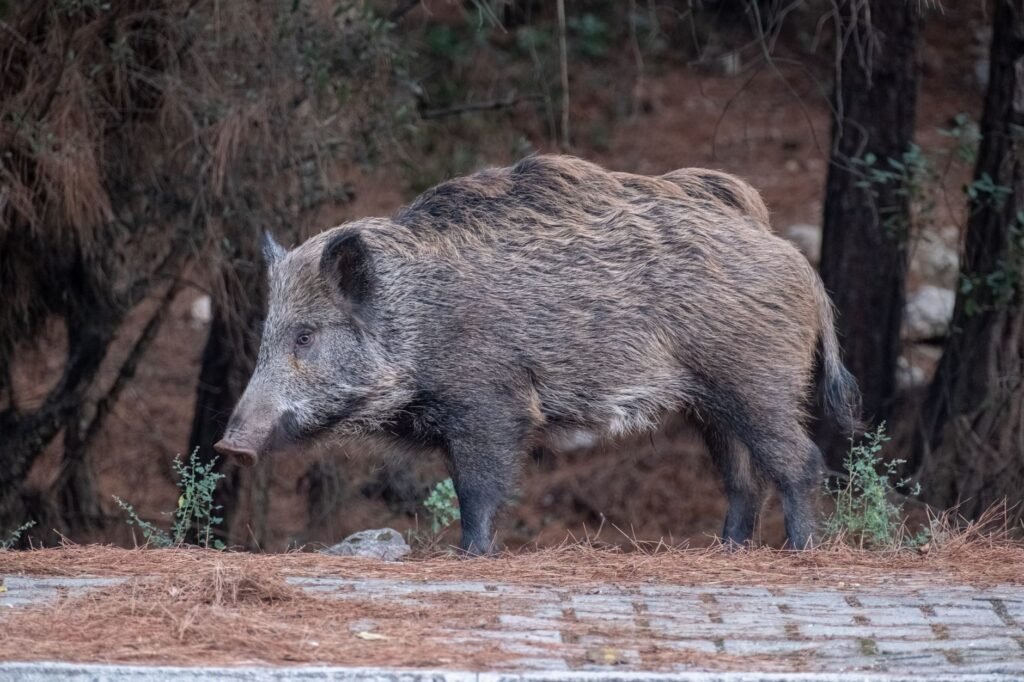
The name refers to Calydon, an ancient city in Aetolia in western Greece, and to the boar that devastated its countryside. The word boar identifies the animal itself, while Calydonian locates the myth geographically.
The historical origin of the story is uncertain. It is a mythological tradition, not a documented historical event. Ancient storytellers treated it as part of the heroic age, the legendary period before classical history. The tale probably grew out of older Greek ideas about sacred hunting, the dangers of wild nature, and the power of divine retribution.
The myth became widely known because it was associated with a large gathering of heroes, often described as one of the great pan-Hellenic mythic expeditions. In that sense, it resembles the Argonauts and the Trojan War cycle: a single event that brings together many major figures of heroic tradition.
Historical Context
The Calydonian Boar Hunt belongs to the mythological world of Greek heroic legend, not to verified history. Still, it reflects several important features of ancient Greek culture:
- Royal households and dynastic conflict
- The importance of hunting as an aristocratic activity
- The belief that gods punish human wrongdoing collectively
- The heroic ideal of gaining fame through dangerous action
- The tension between individual excellence and family loyalty
In Greek society, hunting was associated with elite males and with the education of the young. Mythical hunts often had a symbolic role, representing the taming of wilderness and the testing of courage. At the same time, the boar in Greek tradition could represent destructive nature, uncontrolled violence, and divine anger.
The Calydonian Boar Hunt also has a strong ritual and literary dimension. Ancient authors used it to explore themes of honor, inheritance, and catastrophe, especially through the tragic figure of Meleager.
Main Characteristics
The story has several defining features:
A divine cause
The boar was sent by Artemis in anger because the king of Calydon, Oeneus, either neglected to honor her in sacrifice or failed to include her in offerings. Different ancient sources explain the divine offense in slightly different ways.
A monstrous animal
The boar is not an ordinary wild animal but a supernatural force of destruction. It devastates crops, kills livestock, and threatens human life.
A gathering of heroes
A wide range of heroes from different regions join the hunt. This makes the episode important in the broader heroic cycle.
Atalanta’s role
In many traditions, Atalanta is the first to wound the boar, making her one of the most important female figures in Greek myth.
A fatal dispute
The hunt does not end cleanly. A quarrel over the boar’s hide and head leads to violence within the family of Meleager and, in some versions, to Meleager’s death.
A tragic moral
The story is not only about victory. It is also about the dangers of pride, anger, and the violation of kinship bonds.
Family and Genealogy
The genealogy attached to the myth is central to its meaning.
The royal house of Calydon
| Figure | Relationship | Notes |
|---|---|---|
| Oeneus | King of Calydon | In some accounts, he offended Artemis by omission in sacrifice |
| Althaea | Wife of Oeneus | Mother of Meleager |
| Meleager | Son of Oeneus and Althaea | Central hero of the hunt |
| Toxeus / Plexippus | Brothers or relatives of Althaea in some traditions | Killed in the dispute over the boar’s spoils |
| Deianira | Sister of Meleager in many traditions | Later associated with Heracles |
| Atalanta | Not a family member of the Calydonian house | A key participant and sometime cause of the later dispute |
Meleager’s genealogy in myth
Meleager is usually presented as the son of Oeneus and Althaea. Some traditions connect him with the Aetolian royal line and make him a prince of Calydon. He is also linked to the broader heroic world through his participation in the hunt and, in some accounts, through his marriage or affection for Atalanta.
Atalanta’s position
Atalanta is one of the best-known female hunters in Greek mythology. Traditions vary about her parentage and origin, but she is usually presented as a virgin huntress of extraordinary speed and skill. Her role in the Calydonian Boar Hunt is especially significant because many Greek heroic narratives are male-dominated.
Symbols
The Calydonian Boar Hunt is rich in symbolic meaning. Its principal symbols include:
- The boar: destructive nature, divine punishment, resistance to human control
- The spear: heroic action, masculine courage, the hunt as warfare
- The boar’s hide and head: honor, prize, legitimacy, and dispute
- Fire or anger of Artemis: divine wrath and the consequences of disrespect
- The hunt itself: the struggle between civilization and wilderness
In ancient Greek thought, the boar was a powerful and dangerous animal. It could symbolize aggression, fertility, and untamed force. In the myth, the boar is not simply a beast to be killed; it is a divine instrument of correction.
Sacred Animals
The boar
The boar is the central animal of the myth. In Greek culture, boars were feared for their strength and damage to crops. In mythology, they often appear as tests of heroism. The Calydonian Boar is among the most famous.
The dog
Hunting dogs sometimes appear in related traditions, though they are not always emphasized in every ancient version. Their presence underscores the aristocratic hunt and the organized pursuit of dangerous game.
The deer and other hunted animals
While not central to the main myth, deer and other game animals often belong to the symbolic world of Greek hunting. The contrast between ordinary game and the monstrous boar helps define the exceptional nature of this episode.
Sacred Plants
No plant is uniquely and consistently sacred to the Calydonian Boar Hunt in the surviving sources. However, several plants may appear in the broader ritual and symbolic environment of Greek hunting myths:
- Oak: often associated with strength and the wild landscape
- Laurel: connected more generally with Greek religious and heroic symbolism
- Wreaths and garlands: used in Greek sacrificial and victory contexts
Because ancient sources do not present a single established botanical cult for this myth, any plant associations should be treated as contextual rather than definitive.
Sacred Places
Calydon
Calydon, in Aetolia, is the central location of the myth. It was a real ancient city, though the boar hunt belongs to legend rather than history.
Aetolia
The wider region of Aetolia provides the geographic setting for the story. Its mountainous and rugged character fits the mythic landscape of hunting and danger.
The wild countryside
The boar devastates the fields and forests around Calydon. In myth, the boundary between cultivated land and wild nature is important. The boar’s attack symbolically breaches that boundary.
The hunting ground
The exact place of the boar’s defeat varies in different retellings. Ancient writers do not always agree on the precise topography, and the focus is usually on the event itself rather than on a fixed sacred site.
Powers and Attributes
The Calydonian Boar Hunt is not itself a deity or person with powers. However, the main figures and forces associated with it have characteristic domains:
Artemis
Artemis is the goddess most closely linked to the story. Her powers include:
- the hunt
- wild animals
- chastity and maidenhood
- sudden divine punishment
- the liminal space between civilization and wilderness
The boar
The boar’s “power” in myth is its ability to devastate the land and resist human control. It functions almost like a divine or semi-divine adversary.
Meleager
Meleager’s attributes are those of a heroic hunter:
- courage
- martial skill
- leadership
- tragic vulnerability to family conflict
Atalanta
Atalanta represents:
- speed
- skill in hunting
- independence
- exceptional female heroism in a male heroic world
Main Myths
The sending of the boar
The central myth begins with the anger of Artemis. King Oeneus of Calydon is said to have failed to honor the goddess properly in sacrifice. As punishment, Artemis sends a monstrous boar to ravage the land.
The boar destroys crops, kills livestock, and terrorizes the people. This divine punishment reflects a common Greek mythic pattern: human negligence or hubris brings suffering to an entire community.
The gathering of heroes
Oeneus or Meleager calls for help. Heroes from many regions answer the invitation. In different accounts, the list of participants varies, but it often includes some of the most famous names in Greek myth.
Among those commonly associated with the hunt are:
- Meleager
- Atalanta
- Peleus
- Theseus
- Castor and Pollux
- Iolaus
- Ancaeus
- Pheres or Plexippus, depending on the source
- Eurytion
- Jason, in some traditions
Ancient authors do not provide identical participant lists. This variation is a normal feature of mythic transmission.
The hunt and the first wound
The hunt becomes famous because Atalanta often receives special emphasis. In many versions, she is the first to wound the boar with an arrow or spear. Meleager then delivers the killing blow.
This detail matters because Atalanta’s achievement challenges conventional gender expectations in Greek myth. Some traditions celebrate her skill; others treat her success as socially disruptive.
The prize and the quarrel
After the boar is slain, Meleager awards the boar’s hide and head to Atalanta as a token of honor because she struck the first wound. This causes anger among some male relatives or fellow hunters, who resent the award to a woman.
In one of the most famous versions, Meleager’s maternal uncles—often named Plexippus and Toxeus—protest. Meleager kills them in the ensuing conflict. Other traditions vary in detail, but the central issue remains the same: the hunt ends in domestic violence.
Althaea’s revenge and Meleager’s death
The most tragic part of the myth concerns Althaea, Meleager’s mother. Earlier, at Meleager’s birth, the Moirai or Fates had supposedly foretold that his life would last only as long as a particular log or brand remained unburned. Althaea preserved it, but after her brothers are killed by Meleager, she burns the log, causing his death.
This motif of an external life-token appears in several myths and may reflect older narrative patterns about fate and life being bound to a physical object.
The result is one of the most tragic stories in Greek myth: a heroic victory turns into family destruction.
Relationship with Other Mythological Figures
Artemis
Artemis is the divine instigator of the boar’s appearance. Her relationship to the myth is central, even though she does not directly fight in it. She embodies the idea that disrespect toward the gods has consequences.
Meleager
Meleager is the main heroic figure. He is admired as a skilled hunter but also remembered for the disastrous consequences of his anger.
Atalanta
Atalanta is one of the most distinctive figures in the myth. Her role has been interpreted in different ways:
- as a demonstration of female heroism
- as a challenge to male honor culture
- as a symbolic outsider status within the hunting party
Oeneus and Althaea
The parents of Meleager represent the family dimension of the tragedy. Oeneus’s failure to honor Artemis initiates the crisis, while Althaea’s grief and rage bring it to its devastating end.
Other heroes
The participation of heroes such as Theseus, Peleus, and Castor and Pollux ties the Calydonian Boar Hunt to the wider network of Greek heroic legend. It functions almost like a mythic all-star event.
Worship and Cult
There is no single, standardized cult of the Calydonian Boar Hunt comparable to the worship of a major deity. However, the myth would have resonated within several religious and social settings:
- Sacrifice to Artemis
- Hero cult associated with Meleager in some local traditions
- Ritual hunting symbolism
- Festivals or local commemorations of heroic founders
Ancient Greek religion often blended myth and cult without requiring that every myth correspond to a fixed temple ritual. The story was important as a warning about proper divine honor, not necessarily as a basis for a universal cult practice.
Ancient Sources
The story appears in a range of ancient texts, with different emphases and variations.
Major classical sources
- Homer: The Iliad refers indirectly to Meleager’s story in the context of Phoinix’s speech, which presents Meleager as a tragic example of anger and delay in battle.
- Hesiod: Later traditions attributed parts of the story to the Hesiodic corpus, though surviving evidence is fragmentary.
- Apollodorus: The Bibliotheca offers a clear mythographic summary, including the hunt, Atalanta’s role, and the family dispute.
- Pausanias: The Description of Greece preserves local traditions and mythic references.
- Ovid: In the Metamorphoses, the Calydonian Boar Hunt receives a famous literary treatment, especially emphasizing Atalanta.
- Diodorus Siculus: Provides a mythological account in historical style.
- Statius: Later epic tradition also draws on heroic hunting motifs.
Key points of variation
Ancient sources differ on:
- who exactly participated
- whether Atalanta was present in all versions
- how the dispute over the spoils unfolded
- the precise relationship between the boar’s destruction and Artemis’s anger
These differences are important and show that the myth was fluid in antiquity.
Roman Equivalent
There is no exact Roman equivalent of the Calydonian Boar Hunt. However, the Romans adopted and retold the myth extensively through Greek literature, especially through Ovid.
In Roman culture, the story became part of the broader classical inheritance rather than a uniquely Roman legend. Roman authors often admired its dramatic structure, tragic family conflict, and opportunities for rhetorical description. The boar hunt also fit Roman literary tastes for scenes of heroic action and moral consequence.
Influence on Modern Culture
The Calydonian Boar Hunt has remained influential in later literature, painting, sculpture, and scholarly culture.
Literature
The myth appears in:
- retellings of Greek mythology
- references to heroic hunts in epic and poetry
- modern novels and plays that revisit Atalanta or Meleager
Visual art
Artists have long been attracted to the dramatic possibilities of:
- the charging boar
- the assembled heroes
- Atalanta’s presence
- the violent aftermath
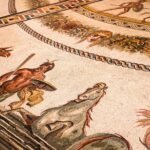
Renaissance, Baroque, and later neoclassical artists frequently depicted the scene.
Scholarship and education
The myth remains a standard subject in classical studies because it illustrates:
- mythic variation across sources
- the role of women in heroic tradition
- the relationship between divine punishment and human action
Popular culture
The broader image of a giant boar hunt appears in fantasy fiction, role-playing games, and adventure narratives, even when not explicitly named after Calydon. Atalanta’s popularity has also increased modern interest in the episode.
Curiosities
- The Calydonian Boar Hunt is one of the rare Greek myths in which a woman, Atalanta, plays a decisive heroic role.
- The story is often used as an example of how Greek myths combine action with moral consequence.
- Meleager’s death by a burning log is one of the most memorable fate motifs in ancient mythology.
- The myth is closely tied to the literary theme of anger and its destructive effects.
- Different ancient authors present the participant list differently, so no single “official” version exists.
- The story helped preserve Atalanta’s fame even though she appears in only a limited number of major myths.
- In art history, the Calydonian Boar Hunt became a favorite subject because it allows for movement, tension, and many heroic figures in one composition.
Frequently Asked Questions
What is the Calydonian Boar Hunt?
It is a Greek myth about a monstrous boar sent by Artemis to destroy the land of Calydon and the heroes who gathered to kill it.
Why did Artemis send the boar?
Ancient sources say she was offended because King Oeneus failed to honor her properly, though the details vary.
Who killed the boar?
In many versions, Atalanta wounded the boar first and Meleager delivered the fatal blow.
Why is Atalanta important in the myth?
Atalanta is significant because she is often the first to wound the boar and receives the prize, making her one of the most notable female heroes in Greek mythology.
What happened after the hunt?
A dispute over the boar’s hide and head led to violence, the killing of Meleager’s uncles, and eventually Meleager’s death in the most famous version.
Is the Calydonian Boar Hunt based on history?
No historical evidence confirms it as an actual event. It is a mythological story from the Greek heroic tradition.
Which ancient authors tell the story?
Important sources include Homer, Apollodorus, Pausanias, and Ovid, among others.
Why is the myth still important?
It remains important because it combines heroism, divine punishment, gender, family tragedy, and the cultural meaning of hunting in the ancient world.
Conclusion
The Calydonian Boar Hunt is one of the most enduring stories in Greek mythology because it brings together the major concerns of the heroic age: divine anger, athletic and martial excellence, competition for honor, and the fragility of family bonds. Its dramatic structure, memorable characters, and tragic ending made it a favorite of ancient authors and later artists alike.
As a myth, it is more than a hunting adventure. It is a story about the consequences of failing to respect the gods, the instability of human glory, and the way victory can turn into disaster. For these reasons, the Calydonian Boar Hunt remains a central and widely studied episode in the classical tradition.

Orin Vale has spent the better part of two decades tracing the threads that connect the world’s oldest stories — from the halls of Asgard to the banks of the Nile, from Olympus to the jungles of the Maya. What began as a childhood fascination with flood myths and trickster gods grew into years of independent study across comparative mythology and ancient religion, always chasing the same question: what did these stories mean to the people who first told them? Orin writes for readers who want more than trivia — the ones looking for the beliefs, fears, and truths that myths were built to carry.