Flora
Flora is the Roman goddess of flowers, blossoms, spring, and fertility. In Roman religion and later cultural memory, she represents the renewal of nature, the opening of buds, and the abundance that follows the end of winter. Although she was not among the most prominent deities of the Roman pantheon, Flora occupied an important place in ritual life and literary tradition, especially through the festival known as the Floralia. Her image has endured in art, literature, botany, and the modern English vocabulary, where flora also denotes the plant life of a region.
Origin and Meaning
The name Flora derives from the Latin word flos or floris, meaning “flower.” As a divine personification, Flora embodies flowering, bloom, and the generative force of spring. Her name is closely tied to fertility and growth, both in the literal sense of plants and in the broader symbolic sense of life’s renewal.
Unlike some major Roman gods, Flora has no clear and elaborate mythological genealogy in the surviving sources. She appears primarily as an old Italic or Roman agricultural and fertility divinity whose role became formalized in Roman religion. Some scholars have noted similarities between Flora and Greek floral or springtime figures, but Flora is best understood as a distinctly Roman goddess, even where later literature associates her with Greek-style mythological language.
Historical Context
Flora belonged to the religious landscape of ancient Italy, where agricultural deities played a central role in the seasonal cycle. In societies dependent on farming, the flowering of crops and trees was a critical sign of future abundance. A goddess associated with blossoms and plant fertility would naturally belong to a world in which successful harvests depended on favorable weather, ritual observance, and divine favor.
In Rome, Flora was not a universal household deity in the way of household spirits or major Olympian-style gods. Instead, her worship was linked to a specialized festival and to themes of seasonal transition. The Floralia, held in late April or early May depending on calendrical adjustments, celebrated the awakening of nature and the return of warm weather. It was marked by merrymaking, theatrical performances, and a mood notably more exuberant than many other Roman religious observances.
Flora’s cult also reflects a broader Roman pattern: deities connected with specific natural processes were honored through festivals timed to those processes. Her importance therefore lies not in a large mythic cycle, but in the ritual recognition of a crucial moment in the agricultural year.
Main Characteristics
Flora is typically characterized by the following traits:
- Goddess of flowers and blossoms
- Personification of springtime and plant fertility
- Associated with renewal, growth, and abundance
- Linked to youthful vitality and the flourishing of nature
- Celebrated in a festive, often playful cult environment
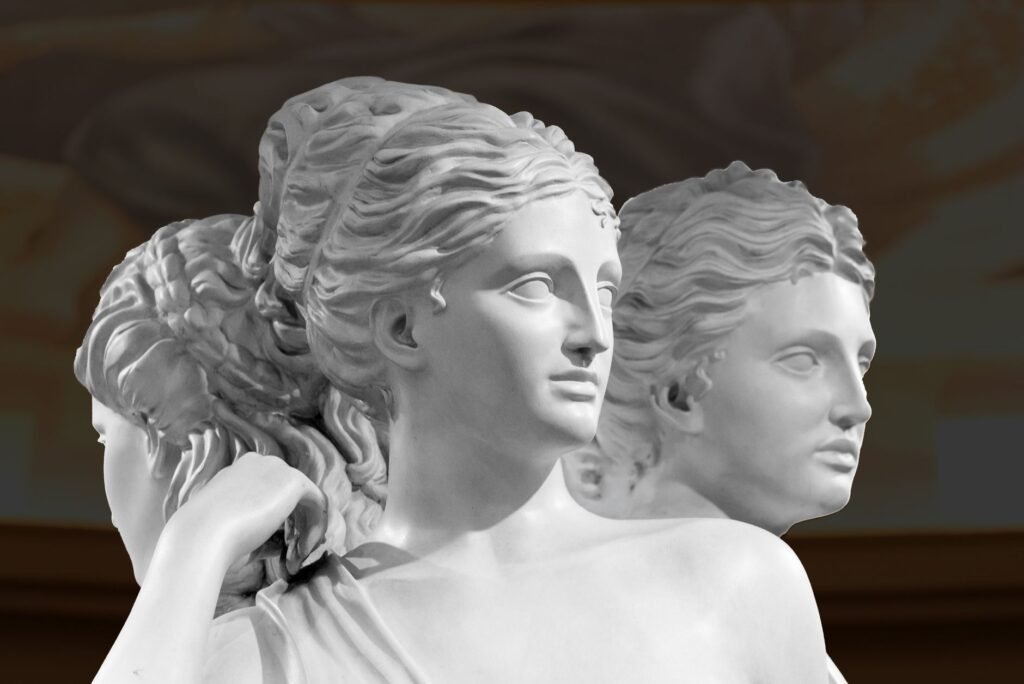
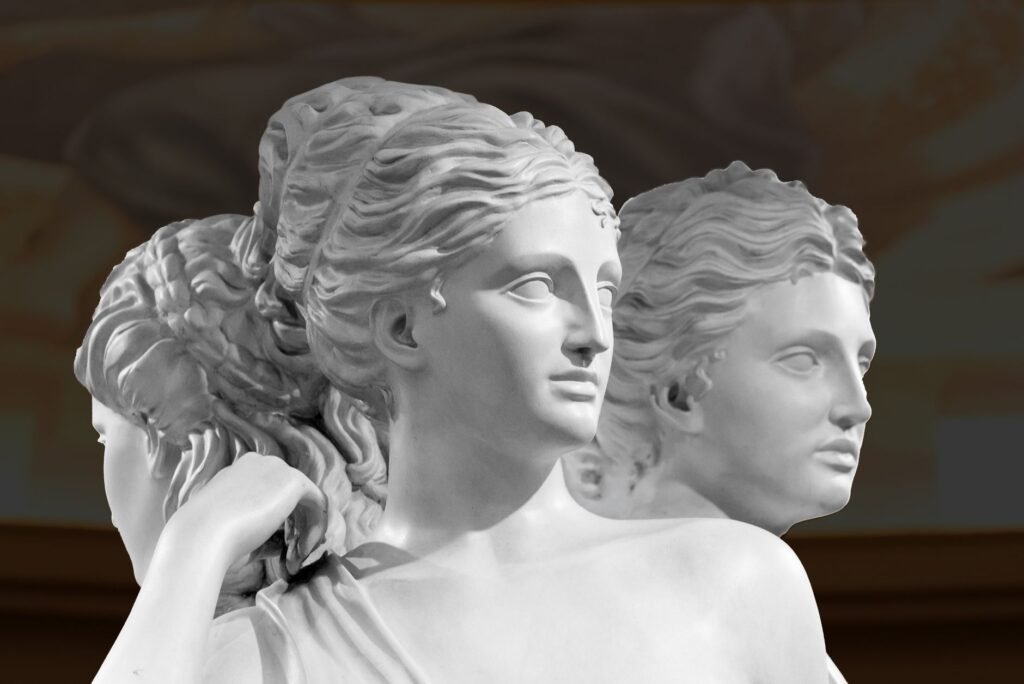
In artistic representation, Flora is often shown as a youthful woman adorned with flowers, garlands, or light drapery. Later artistic traditions, especially from the Renaissance onward, frequently transformed her into a graceful figure scattering blossoms or standing amid spring vegetation. These depictions are not always faithful to ancient Roman iconography, but they have strongly shaped her modern image.
Unlike deities of war, prophecy, or kingship, Flora’s identity is rooted in visible natural change. She is less a cosmic ruler than a divine embodiment of a seasonal event: the blooming of the earth.
Family and Genealogy
The surviving ancient sources do not provide a consistent or detailed genealogy for Flora. She does not occupy a major place in the standard epic family trees of Roman mythology.
Different traditions and scholarly reconstructions sometimes connect Flora with:
- An old Italic fertility tradition
- Local agricultural cults
- A Greek-style adaptation of spring or flower divinities
Some later literary sources, especially in mythological retellings, present her as a nymph or as a figure transformed into a goddess-like personification, but such accounts are not uniform and should not be treated as a single authoritative tradition. The evidence is fragmentary, and Flora’s mythic “family” is much less defined than that of major gods such as Jupiter, Venus, or Ceres.
Because of this, Flora is best described as a divine personification with limited genealogical development in the surviving record rather than as a fully narrated mythological character.
Symbols
Flora’s symbols are closely tied to spring and flowering plants. Common symbolic associations include:
| Symbol | Meaning |
|---|---|
| Flowers | Bloom, beauty, fertility, renewal |
| Garlands and wreaths | Celebration, abundance, festive honor |
| Blossoms | The opening of nature and seasonal change |
| Spring vegetation | Growth, life, and agricultural promise |
| Light drapery | Youthful grace and abundance |
Color symbolism is more a feature of later art than of ancient cult, but green, white, and multicolored floral hues are often associated with Flora in modern visual culture. These colors evoke freshness, purity, and the variety of blooming life.
Sacred Animals
Ancient sources do not strongly associate Flora with a single sacred animal in the way that some gods are linked to eagles, owls, or bulls. However, the broader imagery of spring and fertility sometimes includes animals that symbolize reproduction and seasonal vitality.
Animals symbolically connected with Flora in later interpretation include:
- Bees, for pollination, sweetness, and productive nature
- Butterflies, for transformation and fragile beauty
- Hares, in some modern symbolic contexts, for fertility and springtime
- Birds, especially songbirds, for the return of warmth and life
These associations are largely interpretive rather than strictly canonical. They reflect the goddess’s domain over blooming nature rather than a fixed ancient zoomorphic cult.
Sacred Plants
Flora’s sacred plants are, naturally, flowers and flowering plants. Ancient and later traditions do not limit her to a single species. Her domain includes the whole world of blossoms.
Frequently associated plants and plant forms include:
- Roses — beauty, fragrance, and seasonal abundance
- Lilies — purity, delicacy, and decorative bloom
- Violets — modest spring flowers and renewal
- Poppies — color and seasonal growth, though also linked to other deities
- Wreath flowers and garlands — ritual celebration and festive honor
- Fruit blossoms — the promise of future harvests
In Roman agricultural imagination, flowers were not mere decoration. They signaled the fertility of orchards, fields, and gardens. Flora therefore stood at the threshold between natural beauty and agricultural necessity.
Sacred Places
Flora was honored in Rome, particularly through her festival and temple associations. The ancient testimony places her cult within the city’s sacred topography, though details are not always abundant.
Important locations connected with Flora include:
- Rome itself, where the Floralia was celebrated
- The temple of Flora, traditionally associated with her public cult
- The Circus Maximus, a major venue for Floralia celebrations, especially theatrical performances and public games
The exact history of her temple and its earliest dedication is not always described in identical terms by ancient writers. As with many Roman cult places, later historical memory often preserves the existence of the shrine more clearly than its foundation story. What is certain is that Flora had a recognized cult center in Rome and that her festival became strongly identified with urban public celebration.
Powers and Attributes
Flora’s powers are concentrated in natural and seasonal processes rather than in dramatic supernatural interventions. Her domains include:
- Flowering and blossoming
- Springtime renewal
- Fertility of plants
- Growth of crops and gardens
- Abundance after winter
- Youthful vitality and natural beauty
In religious terms, a goddess like Flora was not necessarily believed to “control” nature in a mechanical sense. Rather, she embodied and mediated the favorable conditions that allowed nature to flourish. Her presence was a way of acknowledging that bloom and fertility were sacred, dependent on divine favor, and worthy of public celebration.
Main Myths
Flora is not associated with a large body of narrative myth in the surviving classical tradition. Instead, her significance comes mainly from cult, poetry, and personification. Still, several themes recur in sources and later retellings.
Flora and the Transformation of Nature
The most persistent “myth” of Flora is her identification with the blooming of the natural world. She represents the moment when winter ends and vegetation returns. This is less a story in the epic sense than a ritualized understanding of seasonal change.
Flora and Zephyrus in Later Tradition
Some later accounts and artistic traditions connect Flora with Zephyrus, the west wind. In these versions, Flora becomes a figure of spring fertility joined to the gentle winds that bring warmth and growth. This association is widely familiar in European art, but it is not equally prominent across all ancient sources. It should therefore be understood as a later mythological elaboration rather than a firmly uniform ancient doctrine.
Flora and the Floralia
A central “mythic” dimension of Flora is the festival itself. The Floralia dramatized her power through theatrical performance, games, and communal joy. The festival gave ritual form to the goddess’s identity and transformed her into a public symbol of abundance and fertility.
Relationship with Other Mythological Figures
Flora’s relationships with other divine figures are primarily functional and symbolic.
Connection with Venus
Flora is sometimes viewed alongside Venus, especially where beauty, sensuality, and fertility overlap. Yet Flora is more specifically linked to blooming nature, while Venus governs love, attraction, and generative power more broadly.
Connection with Ceres
Flora and Ceres both belong to the agricultural sphere. Ceres governs grain and the cultivated staple of Roman life, while Flora concerns flowering and the preliminary stage of fertility that precedes the harvest. Their roles are complementary rather than identical.
Connection with Zephyrus
As noted, later sources and art often associate Flora with Zephyrus, the west wind. This pairing expresses the arrival of mild air and the opening of flowers. The association is especially influential in later poetic and visual traditions.
Connection with Fauna and Rustic Divinities
Flora belongs to a wider Roman network of rural and fertility-related deities, including figures connected to fields, animals, and growth. In some contexts, she is conceptually close to rustic divinities such as Faunus, though the two are not equivalent and are not linked by a single canonical myth.
Worship and Cult
Flora was honored through one of the more lively Roman festivals, the Floralia. According to Roman tradition, the festival was instituted or restored in response to agricultural concerns, though details vary across sources. The point of the festival was to secure the goddess’s favor for the flowering of crops and the flourishing of the natural world.
Floralia
The Floralia was celebrated with:
- Theatrical performances
- Public games
- Spectacles
- Floral decorations
- A festive atmosphere
- Occasionally freer or more licentious behavior than in many other Roman religious festivals
The tone of the festival was notably exuberant. Ancient writers describe it as a time of color, humor, and lively public entertainment. The atmosphere suggests that Flora was not a severe or imposing deity but one associated with pleasure, seasonal release, and the vitality of life.
Offerings
Offerings to Flora likely included:
- Flowers and floral garlands
- Early fruits or agricultural produce
- Ritual games and performances
- Public displays of celebration
The precise ritual details likely varied over time and by locality. What remains clear is that her worship was communal and celebratory, not confined to private devotion.
Ancient Sources
Flora appears in a range of ancient literary and antiquarian sources, though not always in the same detail.
Notable classical sources include:
- Ovid, especially the Fasti, where Roman festivals and divinities are discussed in poetic form
- Varro, whose antiquarian interests help illuminate Roman religious categories
- Lactantius and other later writers, who preserve or criticize pagan traditions
- Pausanias, occasionally useful for comparing Greek and Roman cult patterns, though Flora is primarily Roman
- Apuleius and other Latin authors, where floral imagery and divine personifications appear in literary form
Because Flora is more a cultic and poetic figure than a mythic protagonist, the evidence is spread across festival descriptions, religious antiquarian writing, and literary personification. No single ancient text provides a complete biography.
Roman Equivalent
Flora is already a Roman goddess, so she does not have a Roman equivalent in the way that Greek gods often do. However, she can be compared to certain Greek figures or concepts.
Possible Greek parallels include:
- Chloris, a spring and flower-related figure in Greek tradition
- The Horae, especially those associated with seasonal order and growth
- Generic flower or spring personifications in Greek poetry
These comparisons are helpful but should not be treated as direct one-to-one identifications. Roman religion often adapted and reinterpreted foreign ideas while preserving local cult functions. Flora remains distinctly Roman in her festival, name, and agricultural significance.
Influence on Modern Culture
Flora has had a lasting influence on modern culture, especially in art, literature, and the natural sciences.
In literature and poetry
Flora appears in European poetry as a symbol of spring, beauty, and abundance. Writers often use her name as shorthand for blooming nature or floral imagery. Her symbolic value remains strong because it is immediately recognizable and aesthetically rich.
In art
Renaissance and later painters frequently depicted Flora as a graceful woman crowned with flowers or distributing blossoms. In these works, she became a classic emblem of spring and feminine fertility. Famous allegorical paintings often use Flora as a personification of seasonal renewal.
In language and science
The word flora entered modern scientific usage to mean the plant life of a region or habitat. This is one of the clearest signs of Flora’s enduring legacy. Terms like “local flora,” “marine flora,” and “flora and fauna” preserve her name in everyday scholarly and popular language.
In popular culture
Flora’s name is widely used in:
- Botanical and environmental contexts
- Brands and product names
- Fictional characters and fantasy settings
- Seasonal and decorative design
Her image remains associated with flowers, growth, and springtime elegance, even when audiences are not consciously aware of the Roman goddess behind the word.
Curiosities
- The modern scientific and ecological use of flora is one of the most enduring linguistic legacies of Roman mythology.
- Flora’s cult became especially visible through a festival that was unusually lively and theatrical by Roman religious standards.
- She is often more prominent in art than in narrative myth, which is unusual for a classical deity.
- Later European painters frequently merged Flora with idealized images of spring, creating a tradition that is partly classical and partly Renaissance.
- Flora is a good example of a Roman goddess whose importance lies in ritual and symbolism rather than in an extensive family saga.
- The association between Flora and Zephyrus is especially strong in later visual art, even though ancient evidence for a fixed mythic marriage or union is limited.
Frequently Asked Questions
Who was Flora in Roman mythology?
Flora was the Roman goddess of flowers, spring, and fertility. She represented blossoming nature and the renewal of life after winter.
What was Flora the goddess of?
Flora governed flowers, blooming plants, springtime growth, and the fertility of vegetation. Her influence extended symbolically to abundance and natural renewal.
What was the Floralia?
The Floralia was Flora’s festival in ancient Rome. It featured games, theatrical performances, and public celebrations honoring the blooming season.
Was Flora a major Roman goddess?
Flora was important in Roman religion, especially in relation to seasonal festivals, but she was not among the most politically or mythologically dominant deities in the Roman pantheon.
Did Flora have a Greek equivalent?
There is no exact Greek equivalent, though she is sometimes compared with spring or flower-related figures such as Chloris or the Horae.
What symbols are associated with Flora?
Flowers, garlands, blossoms, and spring vegetation are the main symbols of Flora. These represent growth, beauty, and fertility.
Why is Flora important today?
Flora remains important because her name survives in modern language, especially in biology and ecology, and because she continues to inspire art, literature, and symbolic representations of spring.
Conclusion
Flora is one of the clearest examples of how Roman religion translated the rhythms of nature into divine form. As goddess of flowers and spring, she stands for the visible moment when the earth renews itself and abundance becomes possible. Her cult, especially the Floralia, shows how Romans celebrated the agricultural year through ritual and festivity.
Although Flora does not have the extensive mythic narrative of some other classical deities, her legacy is exceptionally durable. She lives on in language, art, and environmental terminology, where her name still evokes bloom, fertility, and seasonal beauty. In that sense, Flora remains a powerful cultural symbol of life’s return and nature’s flourishing.

Orin Vale has spent the better part of two decades tracing the threads that connect the world’s oldest stories — from the halls of Asgard to the banks of the Nile, from Olympus to the jungles of the Maya. What began as a childhood fascination with flood myths and trickster gods grew into years of independent study across comparative mythology and ancient religion, always chasing the same question: what did these stories mean to the people who first told them? Orin writes for readers who want more than trivia — the ones looking for the beliefs, fears, and truths that myths were built to carry.