Wheel of Taranis
The Wheel of Taranis is one of the best-known visual symbols associated with Taranis, the Gaulish god of thunder, sky, and celestial power. Although no surviving ancient text fully explains the symbol, modern scholarship generally connects it with the wider religious world of Iron Age Celtic Europe, where wheels, solar imagery, storm divinities, and sacred metallurgy often overlapped. The Wheel of Taranis matters because it appears repeatedly in archaeology, iconography, and later reconstructions of Celtic religion, making it a key image for understanding how ancient communities represented divine power, movement, and cosmic order.
Unlike the gods of Greek and Roman mythology, Taranis is known primarily through inscriptions, Roman-era depictions, and archaeological material, rather than through long native narratives. As a result, many details remain uncertain. The wheel itself is therefore best understood not as a fixed dogma but as a religious emblem whose meaning likely varied by region and period.
Origin and Meaning
The name Taranis is generally linked to a Proto-Celtic root related to thunder. It is commonly compared with the name of the Welsh god Taran, also associated with thunder, though direct equivalence cannot be proven with certainty. Ancient authors identified Taranis as a Celtic divinity connected with storm and celestial forces.
The expression “Wheel of Taranis” is a modern descriptive term rather than a securely attested ancient phrase. It refers to wheel motifs found on monuments, reliefs, coins, amulets, and ritual objects associated with Celtic religious contexts. These wheels may have been:
- solar symbols
- emblems of divine movement
- signs of sovereignty or cosmic order
- representations of thunder or the storm sky
- offerings or cult objects in their own right
Because the ancient sources do not give a single explanation, the wheel’s meaning is debated. In some cases, scholars interpret it as a solar wheel. In others, it may reflect the chariot or thunder-wheel of a storm god. The symbol probably acquired layered meanings over time.
Historical Context
The Wheel of Taranis belongs to the religious landscape of Iron Age Gaul and neighboring Celtic regions, especially in areas later influenced by Roman rule. Celtic religion was not a single unified system; it consisted of many local traditions, divinities, and ritual practices. After Roman conquest, native gods were often interpreted through Roman categories, a process known as interpretatio Romana.
Roman writers described a Celtic thunder god named Taranis, which they sometimes compared to Jupiter. This comparison is important because Jupiter was not only the Roman sky god but also a ruler of storm, lightning, and sovereignty. In the Roman period, divine symbols such as the wheel, thunderbolt, and sometimes the thunder-spear could be combined in local iconography.
Archaeologically, wheel imagery appears across Celtic Europe in several forms:
- four-spoked and six-spoked wheels
- miniature bronze wheels
- wheel pendants
- carved reliefs on altars or statues
- iconographic motifs on weapons, jewelry, and coinage
These objects suggest that the wheel had ritual and symbolic importance beyond ordinary technology. In a society where the wheel was also associated with transport, battle, and metallurgy, its sacred meaning likely drew on practical and cosmic associations at once.
Main Characteristics
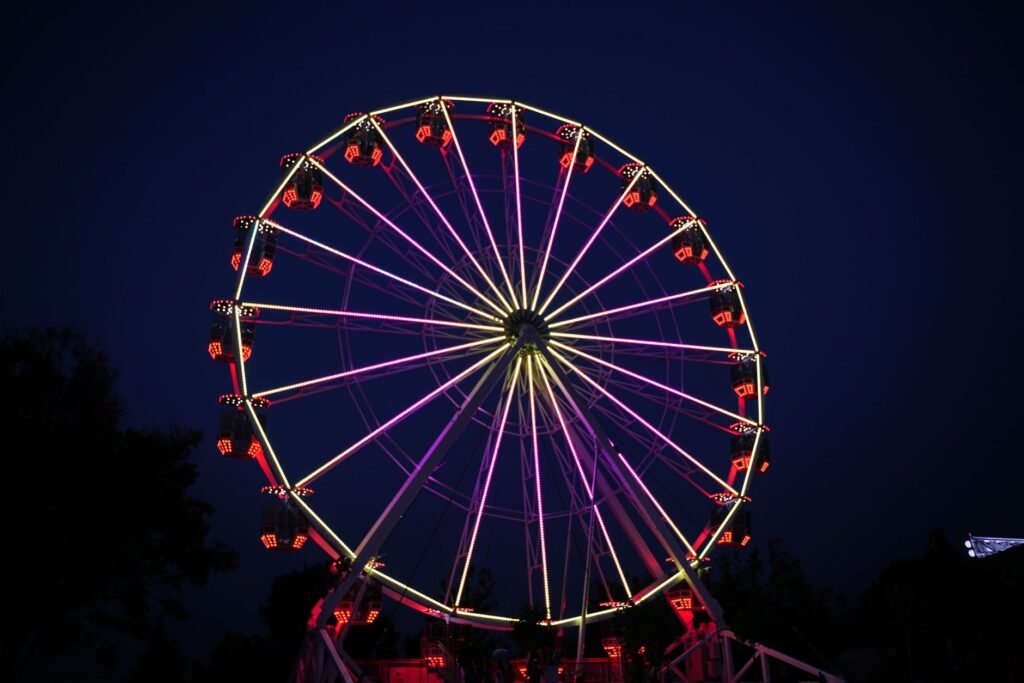
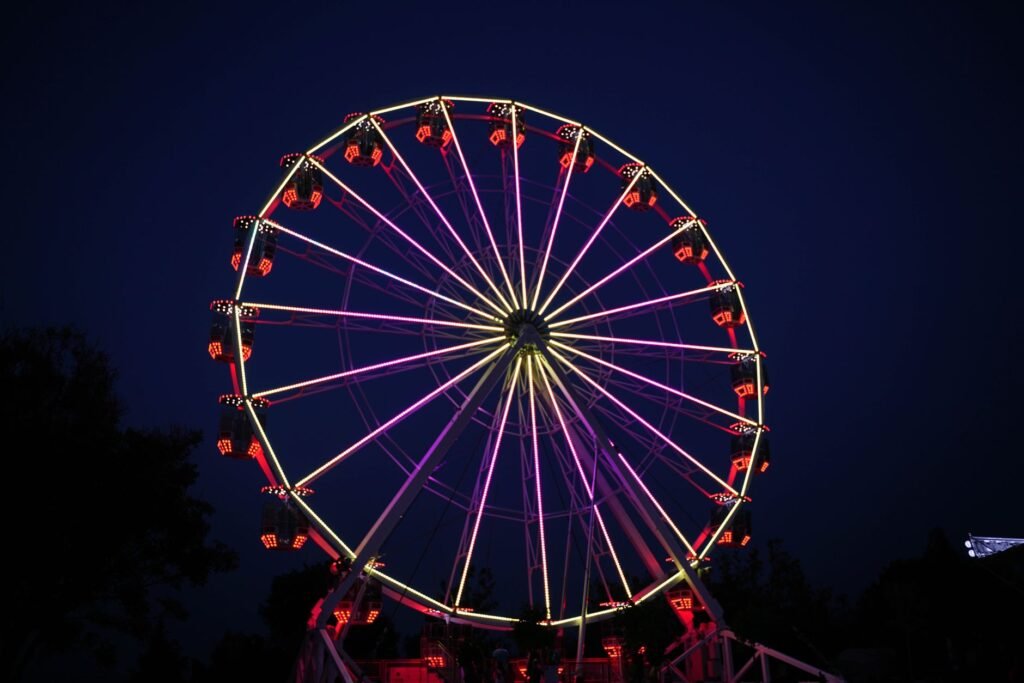
The Wheel of Taranis is usually recognized by its circular form and spokes, often four, six, or more. The design may be plain or elaborate, sometimes appearing as a ring with radiating lines or as a stylized solar disc.
Common identifying features
- Circular shape: evokes completeness, cyclical time, the heavens, or the sun.
- Spokes: may symbolize rays of light, movement, or the turning of the sky.
- Association with thunder and storm: through Taranis himself, the wheel may have been understood as a divine instrument or emblem.
- Metal construction in votive form: many surviving examples are bronze or other durable materials, suggesting ceremonial use.
- Placement in ritual or funerary contexts: wheel symbols appear in sanctuaries, graves, and offerings.
The Wheel of Taranis is not always identical in form. Some examples are carefully crafted ritual objects; others are ornamental motifs. The broad pattern, however, is consistent: the wheel signals a power that is dynamic, heavenly, and ordered, rather than merely mechanical.
Family and Genealogy
Unlike gods from Greek mythology, Taranis does not have a securely preserved genealogy. Ancient sources do not provide a reliable family tree, and later attempts to place him within Celtic divine family systems are speculative.
What is known
- Parents: not attested in surviving ancient sources.
- Spouse: not securely known.
- Children: not securely known.
- Descendants: not securely known.
Because Celtic religion was local and diverse, divine kinship may have been understood differently from one region to another. It is therefore misleading to impose a single mythological genealogy on Taranis. The Wheel of Taranis itself is not evidence of family relationships; it is better understood as a symbol of divine power.
Symbols
The wheel is the central symbol associated with Taranis, but it often appears alongside other motifs that help define its meaning.
Principal symbols associated with the Wheel of Taranis
| Symbol | Possible meaning | Notes |
|---|---|---|
| Wheel | Sun, cycle, cosmic order, divine motion | Main emblem associated with Taranis |
| Spokes | Rays of light, directional force, turning heavens | Usually four or more |
| Thunderbolt | Storm power, celestial force | More clearly Roman in visual style, but conceptually linked |
| Solar disc | Sun, sky, cyclical time | Often difficult to distinguish from wheel imagery |
| Chariot wheel | Mobility, sovereignty, martial force | May reflect elite and divine status |
| Swastika-like rotational motifs | Movement, rotation, cosmological symbolism | Interpretation varies by artifact and context |
Color symbolism
Ancient sources do not preserve a clear color scheme for Taranis or his wheel. Modern associations with gold, bronze, or bright sky colors are interpretive rather than directly attested.
Sacred Animals
No animal is definitively established as the exclusive sacred animal of Taranis in the surviving evidence. However, Celtic and Indo-European comparative studies often suggest that storm and sky gods could be linked with powerful or elevated animals.
Animals sometimes associated in broader Celtic religious contexts
- Horse: connected with mobility, nobility, and sacred sovereignty
- Bull: often linked to strength, fertility, and wealth
- Eagle or bird of prey: frequently associated with sky power in many traditions, though not securely tied to Taranis specifically
- Serpent or dragon-like creatures: occasionally appear in wider Celtic iconography, but not as a proven attribute of Taranis
It is important to distinguish between documented evidence and comparative interpretation. The wheel itself is much more securely associated with Taranis than any animal symbolism.
Sacred Plants
No plant can be confidently labeled as sacred to Taranis based on surviving ancient sources. Celtic religious practice certainly included reverence for groves, trees, and natural places, but the evidence does not support assigning a specific plant to the Wheel of Taranis.
Possible broader associations in Celtic religion
- Oak: often linked in later tradition with thunder gods because of its height and lightning vulnerability
- Mistletoe: prominent in some classical descriptions of Druids, though not specifically linked to Taranis
- Sacred groves: important ritual environments in many Celtic traditions
These associations should be treated cautiously. They reflect broader patterns in ancient religion, not a securely documented botanical cult of Taranis.
Sacred Places
Specific sanctuaries dedicated to Taranis are not always identifiable with confidence, but wheel symbolism appears in a number of Celtic and Gallo-Roman sacred settings.
Types of places connected with wheel cult imagery
- Temples and fanum sanctuaries in Roman Gaul
- Ritual deposits in rivers, wells, and wetlands
- Hilltop or elevated sacred places associated with sky deities
- Local shrines where votive offerings were left
- Burial or commemorative contexts where wheel motifs may have had symbolic meaning
Because many inscriptions and artifacts come from the Roman period, identifying a site as explicitly devoted to Taranis is not always possible. In some cases, the god may have been venerated under a Romanized name such as Jupiter Taranis or simply through iconography that conveyed his presence.
Powers and Attributes
Taranis is primarily a thunder god and sky deity, and the wheel reflects that role. Ancient descriptions and later interpretations suggest several overlapping powers.
Core domains
- Thunder and storms
- Sky and celestial order
- Lightning and atmospheric force
- Divine sovereignty
- Movement, rotation, and cycles
- Protection and judgment, by analogy with other thunder gods
The wheel may symbolize more than weather. In ancient thought, a turning wheel can suggest the movement of the heavens, the rhythm of the seasons, the cycle of life and death, and the authority of a god who governs change. In that sense, the Wheel of Taranis is both a meteorological and cosmic symbol.
Main Myths
No complete native myth about Taranis survives. This is one of the main difficulties in studying the Wheel of Taranis. Unlike Zeus, Jupiter, or Thor, Taranis is not preserved in a large body of narrative myth.
What can be said with confidence
Ancient Roman writers mention Taranis in lists of Celtic gods and sometimes connect him with harsh sacrificial rites, but these reports are brief and filtered through hostile Roman perspectives. As a result, they tell us more about Roman views of Celtic religion than about a fully preserved myth cycle.
Possible mythic themes
Based on the symbol and comparative evidence, scholars often infer themes such as:
- the god driving or embodying the movement of the sky
- the wheel as a sign of the sun’s course across the heavens
- the wheel as an instrument of thunder or divine punishment
- the god as a protector of order against chaos
These are plausible interpretations, not securely recorded myths. It is important to avoid presenting them as established ancient stories.
Relationship with Other Mythological Figures
Taranis is best understood within a network of Celtic and Roman divine comparisons rather than as an isolated figure.
Connections and comparisons
- Jupiter: Roman authors often compared Taranis with Jupiter because both were associated with sky and thunder.
- Esus and Teutates: Roman sources mention these names alongside Taranis, though their roles are not fully clear. They are sometimes treated as part of a group of important Gaulish gods.
- Celtic thunder gods in other regions: Taranis is sometimes compared with deities in Britain and Ireland, but direct identification is uncertain.
- Germanic and Nordic storm gods: modern comparative studies sometimes compare Taranis with Thor or other thunder deities, though these are analogies rather than evidence of direct relationship.
Rivalries and alliances
No ancient myth reliably records rivalries, alliances, or family conflicts involving Taranis. Such relationships belong more to comparative mythology than to documented source material.
Worship and Cult
The cult of Taranis is difficult to reconstruct in detail, but the available evidence suggests that worship likely involved offerings, local sanctuaries, and symbolic objects.
Forms of worship
- Votive deposits of miniature wheels or wheel-shaped objects
- Altars and inscriptions in Romanized Celtic areas
- Offerings in sacred waters, where many Celtic dedications were made
- Possible seasonal or agricultural rites, though not securely attested
- Public or community rituals associated with sky and weather deities
What offerings may have been used
The evidence does not allow a definitive list, but typical ancient offerings in Celtic and Gallo-Roman religion included:
- metal objects
- weapons
- jewelry
- coins
- food and drink
- animal offerings
Ancient authors, especially Roman ones, sometimes emphasized human sacrifice in their descriptions of Celtic religion. These reports are highly controversial, shaped by Roman political and cultural hostility, and should be read critically. They do not provide a balanced picture of Taranis worship specifically.
Ancient Sources
The Wheel of Taranis must be studied through a combination of literary sources and material evidence.
Important ancient authors
| Author | Relevance |
|---|---|
| Julius Caesar | Describes Gaulish religion broadly, though he does not provide detailed information on Taranis |
| Lucan | Mentions Celtic gods and ritual violence in a poetic context |
| Strabo | Provides ethnographic observations on Celtic peoples |
| Diodorus Siculus | Includes reports on Celtic customs from earlier sources |
| Mela | Offers Roman geographical and ethnographic references |
| Tacitus | Discusses Celtic and Germanic religious landscapes more broadly |
| Cassius Dio | Preserves later Roman perspectives on northern peoples |
Material and epigraphic evidence
- Inscriptions naming local divinities
- Reliefs and statues showing wheel-bearing gods or associated symbols
- Coinage with wheel imagery
- Bronze votive wheels from sanctuaries and burial contexts
Because the evidence is fragmentary, interpretation depends heavily on archaeology and comparative analysis. No single ancient source fully explains the wheel’s meaning.
Roman Equivalent
The most common Roman equivalent for Taranis is Jupiter. This does not mean the two gods were identical, but rather that Romans interpreted Taranis through the lens of their own chief sky deity.
Why Jupiter?
Jupiter was associated with:
- thunder and lightning
- sovereignty
- the sky
- protection of the community
- divine authority
These functions overlap strongly with what is inferred for Taranis. In some inscriptions and artistic contexts, the merging of local and Roman traditions produced syncretic forms, where a native god could be shown with Roman attributes while retaining local symbolism such as the wheel.
Influence on Modern Culture
The Wheel of Taranis has become a recurring image in modern reconstructions of Celtic religion, neopagan symbolism, fantasy art, and popular reference works on ancient mythology.
Areas of modern influence
- Books and encyclopedias on Celtic myth
- Neopagan and modern druidic symbolism
- Fantasy fiction and role-playing games
- Museum displays on Celtic archaeology
- Tattoo and decorative art
- Online mythology communities and academic summaries
The wheel is often used as a general emblem of Celtic spirituality. However, modern use sometimes oversimplifies the historical evidence. In scholarly contexts, it is better treated as a probable ritual symbol associated with Taranis and related traditions, not as a universally standardized ancient emblem.
Curiosities
- The Wheel of Taranis is one of the rare Celtic religious symbols that is both visually striking and archaeologically widespread.
- Wheel motifs appear in forms small enough to be worn or deposited as personal votives.
- The symbol is sometimes confused with purely solar imagery, but its association with thunder deity worship makes it more complex than a simple sun sign.
- Some scholars view the wheel as evidence of Indo-European symbolic patterns, while others stress local Celtic developments.
- Because ancient Celtic myths were not written down in a single canonical form, modern interpretations of Taranis often rely more on artifacts than on stories.
- The name Taranis survives more clearly in Roman sources than in later native literary traditions.
- In some modern contexts, the wheel is adopted as a general symbol of Celtic identity, even when its original meaning remains debated.
Frequently Asked Questions
1. What is the Wheel of Taranis?
The Wheel of Taranis is a symbolic wheel associated with Taranis, the Gaulish god of thunder, sky, and celestial power. It appears in Celtic archaeology and iconography.
2. Was the wheel really used in ancient worship?
Yes, wheel-shaped objects and wheel motifs are found in ancient Celtic contexts, including sanctuaries and votive deposits. Their precise ritual use is not always known.
3. Is the Wheel of Taranis a sun symbol?
It may have solar associations, but it is not simply a sun symbol. It is also linked to thunder, divine motion, and cosmic order.
4. Who was Taranis?
Taranis was a Celtic thunder god mentioned by Roman authors. He is usually compared with Jupiter because of his connection to storm and sky power.
5. Are there myths about Taranis?
No complete myths have survived. Ancient evidence is fragmentary, so modern reconstructions remain cautious and sometimes speculative.
6. What does the wheel symbolize?
The wheel may symbolize the sun, the heavens, cyclical time, sovereignty, movement, or the force of thunder.
7. Is there a Roman version of Taranis?
The closest Roman counterpart is Jupiter. Roman writers often interpreted Taranis through Jupiter’s role as sky and thunder god.
8. Where can Wheel of Taranis imagery be found?
It appears on archaeological objects, reliefs, inscriptions, coins, and votive offerings from Celtic and Gallo-Roman regions.
Conclusion
The Wheel of Taranis is an important symbol of ancient Celtic religion, especially in the study of Gaulish beliefs under Roman influence. Although Taranis himself is only sparsely documented, the wheel gives valuable insight into how Celtic peoples may have understood divine power, cosmic movement, and storm-based sovereignty. Its enduring appeal lies in its ambiguity: it is at once a religious object, a cosmic sign, and a cultural emblem that bridges archaeology, mythology, and historical interpretation.
As with much of Celtic religion, certainty is limited. Yet the surviving evidence clearly shows that the Wheel of Taranis held deep symbolic weight in the ancient world. Its study remains essential for understanding the religious imagination of Iron Age and Roman-era Europe.

Orin Vale has spent the better part of two decades tracing the threads that connect the world’s oldest stories — from the halls of Asgard to the banks of the Nile, from Olympus to the jungles of the Maya. What began as a childhood fascination with flood myths and trickster gods grew into years of independent study across comparative mythology and ancient religion, always chasing the same question: what did these stories mean to the people who first told them? Orin writes for readers who want more than trivia — the ones looking for the beliefs, fears, and truths that myths were built to carry.