Kelpie vs Each Uisge
Introduction
The comparison of kelpie vs each uisge concerns two of the best-known water spirits in Scottish folklore. Both are associated with dangerous bodies of water, shape-shifting, and the drowning of unwary humans, yet they are not always identical in the way they are described. In some traditions, kelpie is a broad term for a malevolent water-horse or lake spirit, while each uisge is a more specifically Highland creature, often regarded as even more dangerous because it is tied to inland lochs and can take human form. In practice, the two figures overlap in many stories, and different regions of Scotland have preserved different emphases.
These beings matter in mythology and cultural history because they express older beliefs about the hazards of water, travel, horses, and the boundary between the human and supernatural worlds. They also show how oral traditions change across districts, languages, and centuries. In modern popular culture, both creatures have become symbols of Scottish folklore more broadly.
Origin and Meaning
The word kelpie is usually linked to Scottish Gaelic cailpeach or related forms, though its precise etymology is debated. In English-language folklore writing, “kelpie” came to denote a water spirit, often imagined as a horse or horse-like being found in rivers, pools, and lochs. The term appears in later Scottish literary and antiquarian sources, and its meaning can vary between “water spirit,” “water-horse,” and a specific kind of deceptive supernatural beast.
Each uisge is a Gaelic phrase generally translated as “water horse.” It is usually derived from:
- each — “horse”
- uisge — “water”
The meaning is therefore transparent: the creature is literally a “water horse.” Some sources give the form each-uisge or each uisge. Unlike kelpie, which has become a more general folkloric label in English, each uisge is more strongly tied to Gaelic tradition and to Highland storytelling.
Key linguistic distinction
| Term | Language/Usage | Typical Meaning | Common Association |
|---|---|---|---|
| Kelpie | Scottish English / later folklore tradition | Water spirit or water-horse | Rivers, streams, lochs |
| Each uisge | Scottish Gaelic | Water horse | Highlands, lochs, dangerous shorelines |
The relationship between the two terms is not entirely fixed. Some writers treat them as distinct creatures; others treat them as regional or linguistic variants of a single class of water-horse beings.
Historical Context
Stories about water spirits belong to a wider European folklore pattern in which lakes, rivers, and coastal waters are inhabited by dangerous supernatural beings. In Scotland, such tales were shaped by the practical realities of rural life. Open water could be fatal, especially in peaty ground, fast rivers, deep lochs, and turbulent sea channels. Folklore provided memorable explanations for disappearances, drownings, and the fear of venturing near water at night.
The kelpie and each uisge also reflect the cultural world of Gaelic-speaking communities, where oral tradition preserved many local beings associated with landscape features. These stories were often told in contexts that combined entertainment, moral instruction, and cautionary warning. A listener was not only being entertained but also reminded to avoid dangerous places and to distrust attractive strangers, strange horses, or unexplained offers of transport.
Historically, the best-known descriptions appear in later antiquarian collections and folklore compilations rather than in medieval written sources. This matters because much of what is now “standard” about kelpies and each uisge comes from 18th- and 19th-century recording of older oral material. As a result, scholars are careful about drawing sharp lines between ancient tradition and later literary shaping.
Main Characteristics
Although details differ by region and source, the following features are common in stories about both creatures:
- They are supernatural water beings.
- They are often horse-shaped or capable of taking the shape of a horse.
- They are dangerous to humans, especially solitary travelers and children.
- They lure victims by appearing tame, beautiful, or useful.
- They are associated with drowning, disappearance, and sometimes devouring victims.
Kelpie
The kelpie is commonly portrayed as a water horse that haunts rivers, fords, and pools. In many accounts it appears as:
- a black horse
- a beautiful horse tempting riders
- a human or partly human figure
- a creature with wet hair or a dripping mane
A recurring motif is that a kelpie invites a person to mount it, then plunges into the water and drowns the rider. In some versions, the kelpie can transform into human form, often to seduce or trick victims.
Each uisge
The each uisge is often presented as a more explicitly loch-dwelling and flesh-eating creature. In some traditions it is even more perilous than the kelpie because it may:
- live in inland lochs rather than running water
- take the form of a handsome horse
- attract riders with extraordinary beauty
- devour victims after dragging them underwater
Some accounts say that only the each uisge’s mane remains dry when it emerges from the water, or that its skin has a distinctive aquatic quality. Other descriptions emphasize its ability to take human shape and enter domestic or social settings.
Common distinctions in folklore
Traditions differ, but a simplified comparison is often given as follows:
| Feature | Kelpie | Each uisge |
|---|---|---|
| Usual habitat | Rivers, pools, fords, lochs | Mostly lochs and inland waters |
| Main form | Water-horse, sometimes human-like | Water-horse, sometimes human-like |
| Danger to humans | Drowning, capture | Drowning, capture, sometimes cannibalistic devouring |
| Reputation | Dangerous and deceptive | Often considered especially deadly |
These distinctions should be treated as flexible rather than absolute, because local tales do not always follow a single standardized pattern.
Family and Genealogy
Unlike gods or epic heroes, the kelpie and each uisge are not usually described in genealogical terms. Folklore generally does not assign them parents, spouses, or fixed descendants in the way classical mythology often does. They are understood more as classes of supernatural being than as individuals within a divine family.
In some oral traditions, water spirits may be linked to a broader supernatural population that includes:
- loch spirits
- river spirits
- fairy beings
- shape-shifting monsters
However, such relationships are usually loose and variable. There is no single universally accepted family tree for either creature.
This lack of genealogy is itself significant. It indicates that these beings belong more to folk taxonomy than to formal mythic genealogy. Their identity depends on behavior, habitat, and appearance, rather than ancestry.
Symbols
The symbolism of the kelpie and each uisge is closely tied to water, horses, and deception.
Common symbolic meanings
- Water: danger, boundary, depth, the unknown
- Horse: power, mobility, temptation, status, speed
- Wet mane or dripping coat: connection to the unseen world
- Beautiful form: hidden danger beneath attractive appearances
- Riding: loss of control, surrender to supernatural force
In folklore interpretation, the horse is especially important. In many agrarian societies, horses represent labor, wealth, travel, and prestige. A supernatural horse that offers itself to a rider only to betray that trust is therefore a powerful inversion of everyday life.
Colors and visual cues
Many stories describe the creatures as:
- black
- white
- gray
- glossy or shining
- wet, slimy, or kelp-covered
Color symbolism is not fixed. In some tales, a black horse suggests darkness and death, while a white horse can mislead by appearing harmless or noble. The variation probably reflects local storytelling rather than a single canonical tradition.
Sacred Animals
Strictly speaking, the kelpie and each uisge are not objects of animal worship, but certain animals are central to their symbolism.
Horse
The horse is the defining animal associated with both creatures. Its significance includes:
- travel and mobility
- power and speed
- domestication and trust
- danger when uncontrolled
The horror in kelpie and each uisge tales often comes from the violation of a familiar animal bond. A horse is supposed to be a useful companion; in these stories, it becomes a trap.
Cattle and livestock
In some traditions, these beings may threaten or imitate farm animals, though horses remain the most important association. Livestock motifs in general reflect the rural setting of the stories and the constant vulnerability of animals near water.
Birds and other animals
In some wider Scottish and Celtic folklore contexts, birds, seals, or dogs may appear near water-spirit traditions, but they are not central identifiers of the kelpie or each uisge themselves. Any such connections are local and should not be generalized.
Sacred Plants
There are no universally agreed “sacred plants” of the kelpie or each uisge in the way there are plants associated with some deities or ritual cults. However, vegetation appears symbolically in certain traditions.
Kelp and aquatic growth
The kelpie is sometimes imagined as having a mane or body tangled with waterweed, reeds, or kelp-like growth. This reinforces the link to marshes, lochs, and dangerous shallows.
Reeds, rushes, and marsh plants
Because these creatures are associated with wet ground and shorelines, plants such as:
- reeds
- rushes
- sedges
- aquatic grasses
may appear in descriptive folklore as part of their habitat. Their significance is environmental rather than devotional: they mark the edge between safe land and threatening water.
Sacred Places
Neither creature is tied to a single temple or shrine, but they are strongly associated with specific landscapes.
Common locations
- Lochs
- Rivers
- Pools
- Fords
- Waterfalls
- Boggy shorelines
- Remote glens and coastal inlets
Kelpie sites
Kelpies are often placed near running water, especially dangerous crossings and river bends. They are associated with places where travelers might need to dismount, rest, or cross on foot.
Each uisge sites
The each uisge is more often linked to lochs, particularly remote Highland lochs. These settings enhance the sense of depth, isolation, and hidden danger.
Cultural geography
The stories are especially rooted in Scotland, including both the Lowlands and the Highlands, though descriptions vary according to local language and tradition. The landscape is not merely a backdrop; it is part of the creature’s identity. The water itself is the “home” of the being.
Powers and Attributes
The power of both creatures lies in deception, shape-shifting, and control over victims near water.
Common abilities
- transforming into a horse
- transforming into a human or human-like figure
- luring people to ride or follow them
- dragging victims into water
- drowning or killing victims
- sometimes assuming beauty or charm to deceive
Kelpie-specific emphasis
In many narratives, the kelpie’s ability is to tempt a rider. It may appear tame enough to be mounted, but once someone touches its back or bridle, the horse becomes impossible to control.
Each uisge-specific emphasis
The each uisge is often more overtly predatory. Some traditions emphasize that it can eat its victims, leaving only traces such as floating entrails. This makes it one of the more gruesome beings in Scottish folk narrative.
Moral and social function
The powers of these creatures often function symbolically as warnings against:
- approaching unfamiliar animals
- trusting appearances
- going near water alone
- ignoring communal wisdom
They are less about cosmic warfare than about local peril and social caution.
Main Myths
There is no single authoritative “standard myth” for either being. Instead, there are many related tales. The following motifs are among the most widespread.
The deceptive horse
A person finds a beautiful horse by the water. Thinking it can be ridden or captured, the person mounts it. The horse then rushes into the loch or river, drowning the rider.
This is one of the most common motifs associated with both kelpies and each uisge.
The trapped rider
In some stories, once a person has mounted the creature, the animal’s skin becomes adhesive or impossible to remove. The rider is carried beneath the water and lost.
The seductive human form
Sometimes the being appears as a handsome man or woman and lures victims into danger. This version highlights shape-shifting and erotic deception. It also links water spirits to broader European legends of dangerous supernatural seducers.
The devouring monster
Especially in each uisge tales, the creature may not merely drown its victim but consume the body. This adds a cannibalistic dimension that intensifies the horror.
The warning tale
Many stories are structured as cautionary episodes. A character survives by noticing a clue, such as a suspiciously wet appearance or an unnatural smell of the sea, and escapes before it is too late.
Relationship with Other Mythological Figures
The kelpie and each uisge belong to a wider family of mythic and folkloric beings with overlapping traits.
Connections with fairy lore
In some Scottish traditions, water spirits are discussed alongside fairies or “the fair folk.” They may not be identical, but they share qualities such as:
- invisibility or partial visibility
- shape-shifting
- moral ambiguity
- residence in liminal places
Similarities to other water beings
Comparable figures appear elsewhere in Celtic and European folklore, including:
- river spirits
- merfolk
- lake monsters
- nixes and nixies
- water bulls and horse spirits in regional traditions
These comparisons should not be assumed to prove direct borrowing in every case. They do, however, show that water is a universal folkloric danger zone.
Human and animal relationships
The creatures often interact with ordinary people, especially:
- horse riders
- herders
- travelers
- children
- fishermen
Their stories dramatize the fragile relationship between human control and natural force.
Worship and Cult
There is no evidence of a formal cult or structured worship of the kelpie or each uisge comparable to the worship of gods in ancient polytheistic religions. They are figures of folklore, not deities with temples, priests, or liturgical systems.
Folk belief and practice
What existed instead was:
- storytelling
- cautionary belief
- avoidance behavior
- local taboos about dangerous waters
In rural communities, a tale of a water-horse could function as a practical warning. Parents might use such stories to keep children away from lochs or riverbanks.
Ritual or apotropaic behavior
While no standardized ritual is associated with these beings, some stories imply the use of:
- prayer
- the sign of the cross
- iron or protective objects
- cleverness or quick escape
These elements belong to broader folk magic traditions rather than to a Kelpie or each uisge cult.
Ancient Sources
There are no classical Greek or Roman ancient sources for kelpies or each uisge, since they are creatures of Scottish and Gaelic folklore. The most important sources are later folkloric and antiquarian works that recorded oral traditions.
Important kinds of sources
- Scottish folklore collections
- Gaelic oral tradition
- Antiquarian accounts
- Local histories and ethnographic studies
What the sources show
Because the material was written down relatively late, sources often preserve:
- regional variation
- inconsistent terminology
- overlap between kelpie and each uisge
- shifts from oral to literary style
This means that scholars should treat any single account cautiously. The folklore is real and longstanding, but its written documentation is not ancient in the classical sense.
Roman Equivalent
There is no direct Roman equivalent for the kelpie or each uisge. Roman religion did include water deities and spirits, such as river gods and nymphs, but these are not the same figures.
A broad comparison can be made with:
- river nymphs
- local water spirits
- horse-associated divine or supernatural beings
However, any Roman parallel should be seen as a rough analogy only. The kelpie and each uisge belong to a distinct Scottish folklore tradition with their own cultural background.
Influence on Modern Culture
The kelpie and each uisge have had lasting influence on modern depictions of Scottish folklore and fantasy.
Literature
They appear in:
- folklore anthologies
- fantasy fiction
- children’s stories
- retellings of Scottish legends
Writers often use them to evoke a mood of eerie landscape, ancient danger, and mythic wilderness.
Visual art and sculpture
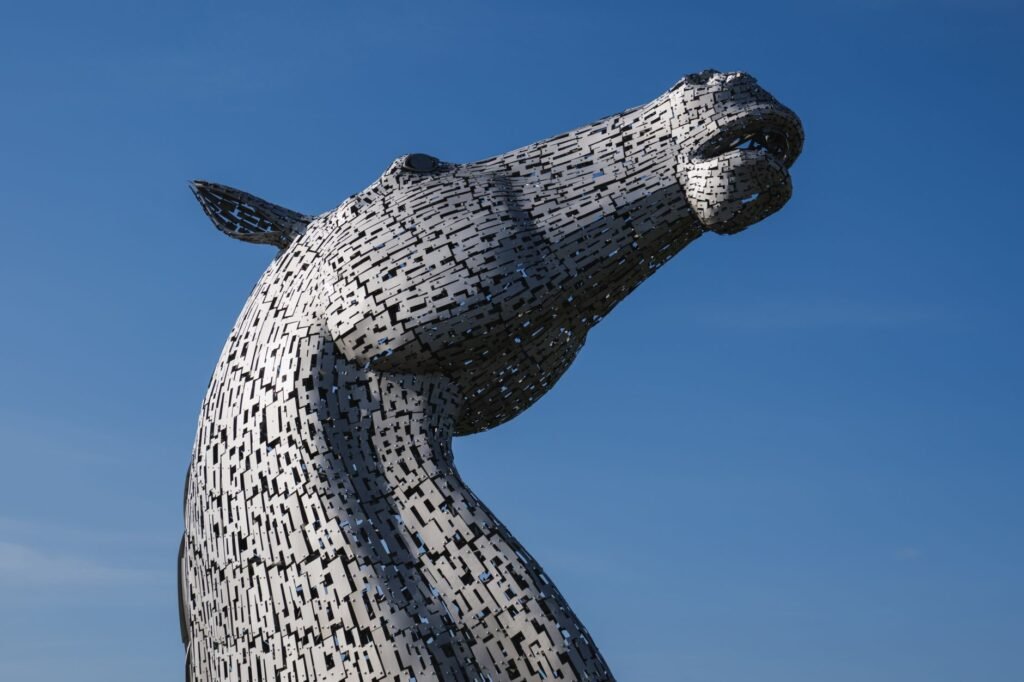
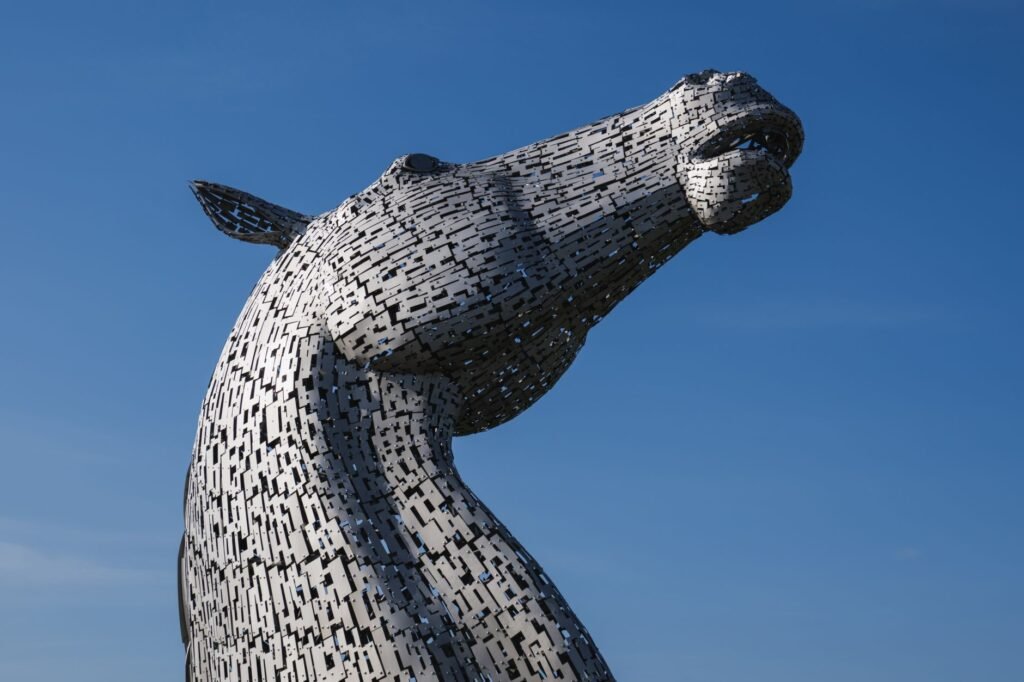
The kelpie has become especially visible in modern public art, where the horse form is attractive as a monumental symbol of Scottish identity and folklore. This artistic use often emphasizes the creature’s size, power, and ambiguity.
Film, television, and games
In screen media and games, kelpies and each uisge are often adapted into:
- monsters
- summonable creatures
- magical steeds
- antagonistic spirits
These portrayals may borrow from folklore but frequently simplify or merge the two beings.
Tourism and heritage
Because kelpies and each uisge are strongly associated with place, they have become part of regional heritage presentation, museum interpretation, and folklore tourism. They help connect modern audiences with older oral tradition.
Curiosities
- The kelpie is often more familiar in English-language culture, while each uisge remains more specifically Gaelic in flavor.
- In some tellings, the creature can be recognized by the wetness of its mane or by an unnatural, almost human-like intelligence.
- Both beings reflect a common folklore pattern in which a beautiful or useful animal is secretly deadly.
- The difference between the two is not always clear-cut; some scholars and collectors treat them as overlapping categories rather than separate species.
- The stories may have helped teach children and travelers to respect rivers, lochs, and marshes in regions where water dangers were real.
- The modern image of a kelpie is often influenced by literary retellings rather than by any single traditional account.
- The each uisge is sometimes described as one of the most frightening beasts in Scottish folklore because of its combination of attraction, strength, and predation.
Frequently Asked Questions
1. What is the difference between a kelpie and an each uisge?
A kelpie is generally a broader Scottish water spirit or water-horse, while an each uisge is a Gaelic “water horse” usually linked more specifically to lochs and often described as especially dangerous. Different traditions sometimes blur the distinction.
2. Are kelpies and each uisge the same creature?
Not always. Some sources treat them as distinct, while others use the names for similar or overlapping beings. Folklore varies by region and collector.
3. What do these creatures look like?
They are most often described as horses, sometimes black, white, or gray, and sometimes as human or human-like figures. Their appearance can shift depending on the story.
4. Do kelpies and each uisge kill people?
In many stories, yes. They are commonly said to drown victims, and each uisge is sometimes said to devour them as well. Their role is strongly linked to danger and death near water.
5. Where are these creatures found?
They are associated with Scottish waterways, especially rivers, pools, and lochs. The each uisge is particularly tied to lochs in Highland tradition.
6. Are these beings part of ancient Celtic religion?
There is no clear evidence that they were part of a formal ancient religion. They are best understood as figures of Scottish and Gaelic folklore recorded in later sources from oral tradition.
7. Why are horses so important in these stories?
Horses symbolize power, transport, and trust. A supernatural horse that deceives riders creates a powerful warning about appearances and control.
8. Are kelpies and each uisge still part of modern Scottish culture?
Yes. They remain important in folklore studies, tourism, literature, art, and fantasy media, and they continue to represent the dark and mysterious side of Scottish mythic tradition.
Conclusion
The comparison of kelpie vs each uisge reveals two closely related but not always identical figures in Scottish folklore. Both are water spirits associated with horses, deception, and deadly encounters near lochs and rivers. The kelpie is often the broader, more widely known term, while the each uisge is typically the more explicitly Gaelic and loch-centered water horse, sometimes portrayed as even more voracious.
Their enduring importance lies in what they represent: the hidden dangers of water, the instability of appearances, and the power of oral tradition to shape local understandings of landscape and risk. Although they are not gods and were not worshipped in a formal sense, they remain among the most compelling supernatural beings in Scottish myth, continuing to inspire scholarship, storytelling, and modern cultural imagination.

Orin Vale has spent the better part of two decades tracing the threads that connect the world’s oldest stories — from the halls of Asgard to the banks of the Nile, from Olympus to the jungles of the Maya. What began as a childhood fascination with flood myths and trickster gods grew into years of independent study across comparative mythology and ancient religion, always chasing the same question: what did these stories mean to the people who first told them? Orin writes for readers who want more than trivia — the ones looking for the beliefs, fears, and truths that myths were built to carry.