Atalanta’s Race
Introduction
Atalanta’s race is one of the most famous episodes in Greek mythology. It refers to the contest in which the swift maiden Atalanta challenged her suitors to outrun her, promising marriage to the victor and death to the losers. The story is best known from later Greek and Roman literary sources, especially Ovid, and has become a lasting symbol of speed, competition, female independence, and the tension between love and fate.
In mythology, Atalanta stands out as a rare heroine who refuses the conventional role expected of women in heroic society. Her race is not only a test of athletic ability but also a dramatic narrative about desire, divine intervention, and the consequences of underestimating a woman who is both a hunter and an athlete. Because different ancient traditions preserve different versions of her story, Atalanta’s race should be understood as part of a broader mythological cycle rather than a single fixed tale.
Origin and Meaning
The name Atalanta has uncertain etymology. Ancient and modern scholars have proposed different explanations, but no interpretation is universally accepted. Some have connected it with Greek roots suggesting “balanced” or “steady”, while others have treated it as a pre-Greek or non-Greek name adapted into Greek mythological tradition. Because the figure appears in several regional traditions, the name may reflect a heroized local heroine whose story was later absorbed into the pan-Hellenic mythic corpus.
The phrase “Atalanta’s race” usually refers to the contest with her suitors, though in broader mythic contexts Atalanta is also associated with hunting, the Calydonian Boar Hunt, and athletic prowess. The race itself became one of the most memorable motifs attached to her legend.
Historical Context
Atalanta belongs to the world of Greek heroic myth, where athletic competition, marriage, and social status were deeply interconnected. In the ancient Greek imagination, marriage was often treated as a major social transition, and heroic tales frequently dramatized the bride-price, courtship, or testing of a husband-to-be. Atalanta’s race transforms this social process into an agon, a contest of excellence.
The myth also reflects ancient Greek ambivalence toward women who step outside expected domestic roles. Atalanta is repeatedly portrayed as:
- a virgin devoted to Artemis
- a huntress associated with wild nature
- an athlete capable of matching or surpassing men
- a woman whose marriage must be achieved through extraordinary means
Her race belongs to the same cultural atmosphere as heroic footraces, funeral games, and mythic trials. Athletic contests were central to Greek identity, and footracing in particular was one of the oldest and most prestigious Olympic events. The myth therefore resonates with familiar social practices while also dramatizing exceptional circumstances.
The story circulated in various local and literary traditions, and details differ. Some versions place her in Arcadia, others in Boeotia or other Greek regions. As with many myths, the surviving evidence does not preserve a single authoritative account.
Main Characteristics
Atalanta’s race is defined by several recurring features:
- A condition of marriage: Atalanta declares that she will marry only the man who can defeat her in a race.
- Deadly stakes: Those who fail are killed, emphasizing the seriousness of the contest.
- Extraordinary speed: Atalanta is said to be so swift that ordinary men cannot surpass her.
- Divine assistance: In the most famous version, Aphrodite aids Hippomenes by giving him golden apples, which distract Atalanta.
- Mixed outcome: The race ends in marriage, but the marriage itself is later troubled or transformed by divine punishment in some traditions.
The story highlights the contradiction at the heart of the myth: Atalanta is a woman who controls her fate by demanding a competition, yet the narrative often shifts power toward divine intervention and male success. Her athletic identity is central. She is not merely beautiful or desirable; she is formidable, self-determined, and dangerous to those who challenge her unprepared.
Family and Genealogy
Atalanta’s genealogy is not completely consistent across ancient sources.
Commonly reported parents
Different traditions identify her parents as:
- Iasus/Iasion and Clymene or other maternal figures
- Schoeneus in some versions
- Menas or other local figures in regional traditions
These variations show that Atalanta was not part of a single universally fixed mythic family tree. Ancient authors often adapted her origins to fit local storytelling traditions.
Spouse
In the race myth, Atalanta marries Hippomenes (also called Melanion in some accounts). The two names appear in ancient sources, and the distinction is not always consistent. Some traditions identify Hippomenes as the suitor who wins the race with Aphrodite’s help; others use Melanion for the same character or a closely related variant.
Children
Atalanta is usually said to be the mother of Parthenopaeus, one of the Seven Against Thebes, though the father is sometimes identified as Meleager rather than Hippomenes. This ambiguity reflects the complexity of her mythic tradition. Because Atalanta’s stories circulated in multiple versions, her maternal lineage and offspring vary by source.
Symbols
Atalanta is associated with several symbolic objects and motifs.
| Symbol | Meaning |
|---|---|
| Footrace | Speed, competition, testing of worth, courtship by merit |
| Golden apples | Temptation, divine intervention, distraction, erotic power |
| Bow and arrows | Hunting skill, Artemis-like independence, virginity |
| Animal skin or hunter’s attire | Life in the wilderness, rejection of conventional female domesticity |
| Marriage contest | The negotiation between autonomy and social expectation |
The golden apples are particularly important in the best-known version of the race. They represent a clever form of divine persuasion rather than brute force. Their beauty and shininess create hesitation, turning victory into a matter not just of speed but of strategy and desire.
Atalanta herself often symbolizes the boundary between civilization and wilderness. She is a beautiful maiden, but also a hunter; a potential bride, but also a figure of untamed freedom.
Sacred Animals
Atalanta is especially associated with animals linked to hunting and the wild.
Deer
The deer is one of the most fitting animals for Atalanta’s mythic profile. As a swift and graceful creature, it evokes both speed and the hunt. The deer also aligns with the natural world of Artemis, the goddess to whom Atalanta is often compared.
Boars
Atalanta is prominently involved in the Calydonian Boar Hunt, in which she is among the heroes who hunt a monstrous boar sent as punishment by Artemis. The boar is not Atalanta’s personal sacred animal, but it is central to her heroic image and shows her participation in major mythic action traditionally associated with men.
Hounds
Though not always explicitly sacred, hunting dogs belong to Atalanta’s world. They reflect the pursuit, discipline, and wilderness that define her role as huntress.
Sacred Plants
No plant functions as a universally established sacred emblem of Atalanta in the way that the olive belongs to Athena or the laurel to Apollo. However, several plants are important in relation to her race.
Golden apples
The most famous plant-related element in the race is the golden apple, given by Aphrodite to Hippomenes. These apples are not ordinary fruit but divine objects of seduction and intervention. Their presence turns the race into a story about the power of beauty and persuasion.
General woodland flora
Because Atalanta is often linked with wilderness and hunting, she is associated more broadly with the plants of forests, mountains, and uncultivated landscapes rather than with a single sacred species. Her mythic environment is one of open terrain, not cultivated gardens.
Sacred Places
Atalanta is connected to several places in mythic geography, though specific cult centers are less clearly defined than for major Olympian gods.
Arcadia
Arcadia is one of the landscapes most often associated with Atalanta. In Greek imagination, Arcadia represented rugged highlands, pastoral simplicity, and closeness to the wild. This makes it a natural setting for a huntress and runner.
Boeotia
Some traditions place elements of Atalanta’s story in Boeotia, especially in relation to nearby mythic families and heroic legends. The regional diversity of the myth suggests that her story may have absorbed different local traditions over time.
Calydon
Although not the setting of the race itself, Calydon is important in Atalanta’s wider mythological profile because of the Calydonian Boar Hunt. This episode connects her to heroic company and to mythic landscapes of danger and honor.
Places of later artistic memory
Atalanta also belongs to the cultural geography of later literary and artistic tradition, where her race became a favored subject in vase painting, sculpture, Renaissance art, opera, and modern retellings.
Powers and Attributes
Atalanta is not a goddess, so she does not possess divine powers in the strict sense. Nevertheless, myth grants her extraordinary abilities.
Core attributes
- exceptional speed
- mastery of hunting
- physical strength and endurance
- resistance to conventional female social roles
- commitment to virginity in some traditions
- competitive intelligence
Areas of influence in myth
Atalanta’s race places her within several symbolic domains:
- athletic competition
- courtship and marriage negotiation
- female autonomy
- wilderness and hunting
- the danger of desire
Her greatest attribute is her speed, but her deeper significance lies in how that speed expresses her independence. She is not simply a fast runner; she is a woman who sets conditions on marriage and turns suitors into competitors.
Main Myths
The race with suitors
The central myth of Atalanta’s race is preserved in several ancient sources, especially later ones. According to the common version, Atalanta was so determined not to marry that she declared she would wed only the man who could outrun her. She then killed the men who failed.
Hippomenes, or Melanion, fell in love with her and sought help from Aphrodite. The goddess gave him three golden apples. During the race, Hippomenes dropped the apples one by one. Atalanta paused to admire and retrieve them, losing enough ground for Hippomenes to win.
This version combines athletic struggle with erotic strategy and divine manipulation. The suitor does not win by being stronger or faster, but by using beauty and distraction.
The punishment after the race
In some traditions, Hippomenes and Atalanta later offended a deity, often said to be Aphrodite or Zeus, by consummating their passion in a sacred place. As punishment, they were transformed into lions.
This part of the story is not equally emphasized by all ancient authors, but it is significant because it turns the race into a prelude to tragedy or metamorphosis. The contest does not simply end in marriage; it leads into a new mythic phase in which divine offense reshapes their identities.
Atalanta in the Calydonian Boar Hunt
Atalanta also appears in another famous myth. She joins the heroes who hunt the Calydonian boar and is often credited with drawing first blood. This episode confirms her status as a heroic figure rather than a mere romantic heroine. Some traditions suggest that her role in the hunt contributes to her fame and may explain why suitors later seek her hand.
Relationship with Other Mythological Figures
Hippomenes / Melanion
Hippomenes is the key figure in the race myth. He represents the successful suitor who wins through divine help rather than superior athletic talent. His relationship with Atalanta is both romantic and competitive.
Aphrodite
Aphrodite plays a crucial role by supplying the golden apples. Her intervention suggests that love, beauty, and desire cannot be separated from the contest. The goddess helps ensure the outcome, demonstrating that even the fastest mortal may be overcome by divine force.
Artemis
Atalanta is frequently linked with Artemis, goddess of the hunt, wilderness, and virginity. While not identical to Artemis, Atalanta is often portrayed as one of her human analogues. The association helps explain Atalanta’s chastity, hunting skill, and independence.
Meleager
In related mythic cycles, Atalanta is associated with Meleager, a hero of the Calydonian Hunt. Some traditions say they were lovers, and some identify him as the father of her child. Their relationship varies by source, but it strengthens her connection to heroic masculinity and tragic myth.
The suitors
The nameless or semi-named suitors in Atalanta’s race function as a collective contrast to her. They represent conventional male claims to marriage, while Atalanta turns them into opponents in an arena she controls.
Worship and Cult
There is no well-attested widespread cult of Atalanta comparable to the cults of major gods. She is primarily a mythic heroine, not a major object of worship across the Greek world.
Heroic veneration
It is possible that local hero cults or regional traditions honored Atalanta in some form, but the evidence is limited and not uniform. Ancient sources preserve stories about her more than ritual practices.
Ritual and symbolic resonance
Atalanta’s myth nevertheless reflects broader Greek ritual and social themes:
- athletic contests as public display
- marriage as a socially regulated transition
- the role of divine favor in success
- the symbolic value of virginity and bridehood
Because the race culminates in marriage, the story also resembles a ritualized courtship drama, though it is literary and mythic rather than a documented religious rite.
Ancient Sources
Atalanta appears across a range of ancient texts, though the details of her race are clearest in later literature.
Notable sources
- Apollodorus, Bibliotheca — preserves mythographic summaries of Atalanta’s traditions.
- Pausanias, Description of Greece — offers geographic and mythic references, especially concerning local traditions.
- Ovid, Metamorphoses — gives the most famous literary version of the race with golden apples and transformation.
- Hyginus, Fabulae — includes mythic summaries and variant traditions.
- Theocritus and other Hellenistic or later writers — contribute to the broader literary image of heroic and erotic competition.
Variants in the sources
Ancient evidence differs on several points:
- whether the husband is called Hippomenes or Melanion
- the exact number and role of the golden apples
- the parentage of Atalanta
- whether the post-marriage metamorphosis is central or secondary
This variation is typical of Greek myth, which was transmitted through poetry, local tradition, and later scholarly compilation rather than through a single canonical text.
Roman Equivalent
Atalanta has no exact Roman equivalent. She is a Greek heroine, though Roman authors adopted and reshaped her story. In Roman literature, especially in Ovid, she appears within the aesthetic and moral concerns of Latin poetry.
If one seeks a rough functional counterpart, Atalanta overlaps with Roman ideas of:
- the virtuous yet independent maiden
- the huntress associated with Diana
- the athletic woman of myth and legend
However, Diana is a goddess, not a mortal heroine, and no Roman figure fully matches Atalanta’s role in the race myth.
Influence on Modern Culture
Atalanta’s race has had a long afterlife in European and global culture.
Literature
The story has been retold in poetry, fiction, and drama across centuries. Writers have been drawn to its themes of:
- female autonomy
- competition and courtship
- divine interference
- the power of temptation
Visual art
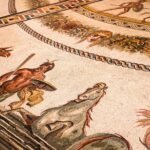
Atalanta and Hippomenes have been popular subjects in painting, especially in Renaissance and Baroque art. Artists often emphasize the moment when the apples are dropped, creating a dramatic pause in the action.
Music and opera
The myth appears in operatic and musical traditions, where it offers a vivid combination of athletic action and romantic tension.
Modern reinterpretations
In modern culture, Atalanta is sometimes reimagined as:
- a feminist icon
- an athlete or warrior figure
- a symbol of resistance to forced marriage
- a character in fantasy fiction, games, or historical retellings
The race remains compelling because it combines a simple narrative structure with layered symbolic meaning.
Curiosities
- Atalanta is one of the few major Greek mythic heroines known primarily for speed, not only beauty or lineage.
- The race is sometimes remembered as one of mythology’s earliest examples of a “marriage test”.
- In some versions, Atalanta’s success in hunting and racing makes her appear almost like a female counterpart to a heroic youth in training.
- The golden apples function as both weapons and gifts, which is unusual in mythic contests.
- Different ancient traditions do not always agree on whether Atalanta’s husband is Hippomenes or Melanion.
- Her story often reflects the idea that desire can win where strength fails.
- Atalanta is sometimes treated as a figure on the border between mythic heroine and local legendary woman, rather than a fully divine being.
Frequently Asked Questions
1. What is Atalanta’s race?
Atalanta’s race is the myth in which the swift heroine challenges suitors to outrun her in order to win her hand in marriage. Those who fail are put to death.
2. Who won Atalanta’s race?
In the best-known version, Hippomenes wins with help from Aphrodite, who gives him golden apples to distract Atalanta.
3. Why did Atalanta challenge her suitors to a race?
Different traditions explain this differently, but the basic idea is that Atalanta wanted to avoid marriage unless a man could equal her in speed and worthiness.
4. What do the golden apples mean?
The golden apples symbolize temptation, beauty, divine intervention, and the power of desire to interrupt even the most disciplined competition.
5. Is Atalanta a goddess?
No. Atalanta is a mortal heroine in Greek mythology, though she is often associated with the goddess Artemis because of her hunting life and virginity.
6. Did Atalanta have children?
Some ancient traditions say she had a son, Parthenopaeus, though the father is not always consistent in the sources.
7. Is there one definitive version of Atalanta’s race?
No. Ancient authors preserve different versions of the myth, including variations in names, parentage, and the aftermath of the race.
8. Why is Atalanta important in mythology?
Atalanta is important because she embodies speed, autonomy, and heroic excellence while challenging traditional ideas about gender and marriage in Greek myth.
Conclusion
Atalanta’s race is one of the most enduring myths of the ancient world because it combines athletic competition, divine intervention, and social meaning in a single memorable story. It presents Atalanta as a heroine who defines her own terms, even while the narrative ultimately brings her into the conventions of marriage and mythic destiny.
The story matters not only as an entertaining legend but also as a window into Greek ideas about gender, desire, excellence, and the relationship between human effort and divine power. Through its rich symbolism and varied ancient traditions, Atalanta’s race remains a vivid example of how myth can preserve both cultural values and moments of resistance to them.

Orin Vale has spent the better part of two decades tracing the threads that connect the world’s oldest stories — from the halls of Asgard to the banks of the Nile, from Olympus to the jungles of the Maya. What began as a childhood fascination with flood myths and trickster gods grew into years of independent study across comparative mythology and ancient religion, always chasing the same question: what did these stories mean to the people who first told them? Orin writes for readers who want more than trivia — the ones looking for the beliefs, fears, and truths that myths were built to carry.