Castration of Uranus by Cronus
Introduction
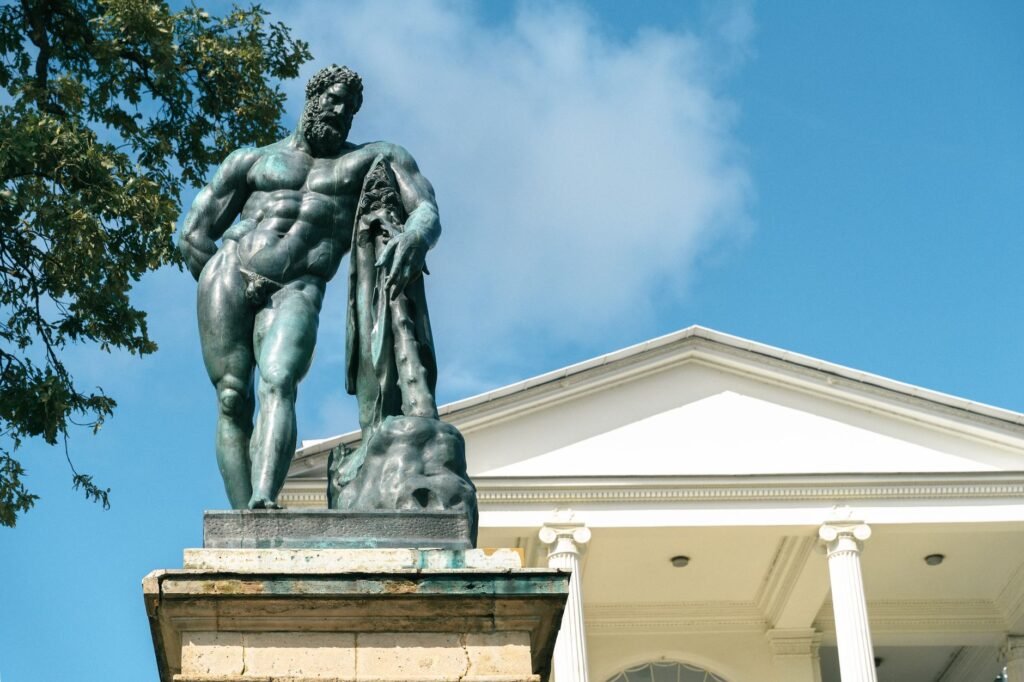
The castration of Uranus by Cronus is one of the most famous and consequential episodes in Greek mythology. It belongs to the divine genealogy that explains the succession of cosmic rulers: first Uranus, the personification of the sky; then Cronus, leader of the Titans; and finally Zeus, king of the Olympian gods. The myth is important not only as a dramatic story of violence and family conflict, but also as an origin narrative for the structure of the world, the emergence of divine generations, and the separation of heaven from earth.
In ancient Greek literature, the episode appears most prominently in Hesiod’s Theogony, where it serves as a turning point in the creation of the cosmos. Later authors adapted the story, each emphasizing different aspects: dynastic struggle, sexual violence, cosmic ordering, or moral warning. Because the myth is central to Greek cosmology and later cultural imagination, it remains one of the most studied narratives in classical mythology.
Origin and Meaning
The names Uranus and Cronus have distinct origins and meanings.
- Uranus comes from the Greek Ouranos (Οὐρανός), meaning “sky” or “heaven.”
- Cronus comes from Greek Kronos (Κρόνος), though his name is often confused in later tradition with Chronos (Χρόνος), the personification of time. In classical myth, however, Cronus and Chronos are separate figures.
The phrase “castration of Uranus by Cronus” refers to the specific myth in which Cronus attacks his father Uranus with a sickle or harpe, severing his genitals. This act ends Uranus’s immediate rule and initiates Cronus’s reign over the cosmos.
The historical origin of the story is difficult to trace precisely. It is preserved in Greek literary sources from the archaic period onward, but many scholars consider it part of a broader mythic pattern found in Near Eastern traditions, where younger gods overthrow older cosmic powers. While direct borrowing cannot always be proven, the Greek narrative clearly belongs to a wider ancient Mediterranean tradition of divine succession myths.
Historical Context
The myth must be understood within the religious and intellectual world of ancient Greece.
Cosmological Function
Greek mythology often explains the world through genealogies of gods. Rather than presenting creation as a single event, these stories describe cosmic order emerging through conflict, reproduction, and succession. Uranus represents the original sky, Gaia the earth, and their offspring include the Titans, Cyclopes, and Hecatoncheires.
Uranus’s oppressive behavior toward his children—he is said to keep them hidden within Gaia—creates the conditions for rebellion. Cronus’s attack is therefore not just an act of violence, but a mythic solution to cosmic blockage. The separation of heaven and earth makes the world habitable and allows generation to continue.
Religious and Cultural Background
In Greek thought, divine conflict was not necessarily paradoxical. The gods were powerful, but not static. Their relationships mirrored tensions in human society:
- fathers and sons
- rulers and successors
- authority and resistance
- fertility and sterility
The myth also reflects ancient concerns about patriarchy, succession, and legitimate power. Uranus’s domination and Cronus’s revolt dramatize the instability of rule when one generation suppresses the next.
Literary Context
The story is most fully preserved in Hesiod’s Theogony (8th–7th century BCE, traditionally dated), a poem that systematizes divine origins. Later writers, including Apollodorus and Ovid, retell the myth in different styles. Some philosophical and allegorical writers also used the story to comment on natural forces or human psychology.
Main Characteristics
The castration of Uranus by Cronus is defined by several key features.
Core Elements of the Myth
| Element | Description |
|---|---|
| Victim | Uranus, god/personification of the sky |
| Attacker | Cronus, one of the Titans |
| Weapon | A sickle or curved blade, often called a harpe |
| Motive | Cronus acts at the urging of Gaia to end Uranus’s oppression |
| Consequences | Separation of sky and earth; rise of Cronus; generation of new beings from Uranus’s blood and semen |
| Narrative role | Succession myth and cosmic transformation |
Defining Traits
- Violence as cosmic change: the act is not incidental but world-shaping.
- Intergenerational conflict: the myth centers on a son overthrowing a father.
- Fertility and mutilation: the severed genitals produce new life through blood and foam.
- Ambiguity of justice: the act is both revenge and a necessary correction in mythic logic.
Physical and Symbolic Imagery
The imagery is vivid and memorable. A curved blade, blood falling to earth, and foam emerging at sea all contribute to the myth’s symbolic power. These details help explain why the story has had such a lasting presence in art and literature.
Family and Genealogy
The myth is rooted in an extensive divine family tree.
Uranus
Uranus is usually described as the sonless or primordial sky, though in Hesiod he emerges in relation to Gaia as one of the earliest beings. He is the consort of Gaia (Earth), and together they generate many important divine beings.
Gaia
Gaia, the earth goddess, plays a crucial role in the story. In Hesiod, she is both mother and instigator. She becomes angry when Uranus suppresses their children and urges Cronus to act.
Cronus
Cronus is a Titan and one of the children of Uranus and Gaia. He becomes leader of the Titans after the castration and subsequent overthrow of Uranus.
Children of Uranus and Gaia
Ancient sources vary somewhat, but the offspring often include:
- The Titans
- The Cyclopes
- The Hecatoncheires (Hundred-Handers)
Children Born from the Castration Episode
The myth also explains the birth of several beings from the blood and foam resulting from Uranus’s mutilation.
| Origin | Offspring | Notes |
|---|---|---|
| Blood falling on Gaia | The Erinyes, Giants, and Meliae in Hesiod | Traditions vary |
| Sea foam formed from the severed genitals | Aphrodite | Especially in Hesiod |
Cronus’s Later Family
Cronus later mates with Rhea, producing the chief Olympian gods, including:
- Hestia
- Demeter
- Hera
- Hades
- Poseidon
- Zeus
Thus, the castration of Uranus indirectly leads to the next divine generation and to the eventual rise of Zeus.
Symbols
The myth is associated with several powerful symbols, though these are often literary and artistic rather than objects of formal worship.
Key Symbols
- Sickle or harpe: the weapon used by Cronus
- Sky and earth: Uranus and Gaia as cosmic opposites
- Blood: both violence and fertility
- Sea foam: linked to the birth of Aphrodite
- Separation: the division of heaven and earth as the beginning of ordered space
Symbolic Meanings
The sickle represents more than a weapon. It can suggest:
- harvesting
- cutting off tyranny
- generational transition
- the severing of an old order
The sea foam associated with Aphrodite symbolizes beauty emerging from violence, a striking example of Greek myth’s ability to combine horror and creation.
Sacred Animals
There is no single sacred animal universally tied to the castration of Uranus by Cronus in the way that some deities have specific cult animals. However, later symbolic associations appear in literature and art.
Commonly Associated Animals
- Sheep and rams: linked to Cronus in some later traditions through agricultural imagery and sacrificial symbolism
- Birds: associated more broadly with the sky and with Uranus as heavenly power
- Sea creatures: indirectly connected to Aphrodite’s emergence from the sea
Because the myth is primarily cosmological, animal associations are secondary and not central to ancient worship.
Sacred Plants
No plant is uniquely sacred to this myth in the strict sense. However, certain plants have symbolic resonance in Greek mythic culture.
Possible Symbolic Associations
- Grain and harvest plants: associated with the sickle and with agricultural imagery
- Olive: often linked generally to Greek divine culture, though not specifically to this myth
- Myrtle and rose: more closely related to Aphrodite, who emerges from the consequences of Uranus’s castration
Any connection to sacred plants should be treated cautiously, since ancient sources do not establish a formal plant cult for this episode.
Sacred Places
The myth does not center on a single sanctuary or temple, but it is associated with cosmological rather than local sacred geography.
Important Mythic Locations
- The sky: Uranus’s realm
- The earth: Gaia’s domain and the place where blood falls
- The sea: where Aphrodite is born from foam
- Cosmic space: the separation of heaven and earth as a foundational act
Cultic and Geographic Notes
The story appears in Greek literary tradition more than in localized worship settings. However, later Greek religious imagination could connect divine genealogies with major sacred landscapes such as mountains, coasts, and caves. Since the myth is pan-Hellenic in nature, it was not tied to one single sanctuary.
Powers and Attributes
The episode does not describe a god’s ordinary cult powers so much as a mythic act that transforms the cosmos.
Uranus’s Attributes
Uranus is the personified sky. His attributes include:
- heavenly expanse
- cosmic supremacy in the earliest mythic age
- generative role as father of the Titans and monstrous offspring
Cronus’s Attributes
Cronus, in this mythic phase, is associated with:
- rebellion against paternal authority
- kingship of the Titans
- the sickle as an emblem of decisive action
- temporary cosmic rule before Zeus’s overthrow
Broader Mythic Functions
The episode explains:
- the succession of divine generations
- the separation of primordial entities
- the emergence of fertility from conflict
- the transition from chaotic primordium to structured cosmos
Main Myths
The castration of Uranus appears within a larger myth cycle.
The Imprisonment of the Children
According to Hesiod, Uranus hated some of his children and kept them hidden within Gaia, preventing their full emergence. Gaia, suffering from this oppression, devised a plan of revenge.
Gaia’s Plan
Gaia created a sickle of adamant or a similar hard substance and asked her children to attack Uranus. Only Cronus agreed.
The Ambush
When Uranus came to Gaia, Cronus lay in wait and castrated him. This act ended Uranus’s direct rule and allowed Cronus to assume power.
The Consequences
The act produced a series of mythic consequences:
- Uranus was disabled and displaced.
- Cronus became ruler among the Titans.
- The blood of Uranus generated new beings.
- Aphrodite was born from the sea foam.
- The myth established the pattern for later succession, especially Zeus’s overthrow of Cronus.
The Cycle of Overthrow
The story is often read as part of a chain:
- Uranus is overthrown by Cronus
- Cronus is later overthrown by Zeus
This cyclical pattern is one of the most important structural features of Greek divine mythology.
Relationship with Other Mythological Figures
The myth involves dense relationships with several major figures.
Gaia
Gaia is central as both mother and strategist. She acts against Uranus because of his oppression and becomes the force that enables succession.
The Titans
Cronus’s Titan siblings are part of the same generation, though not all participate in the overthrow. Cronus emerges as their leader after the castration.
Aphrodite
Aphrodite’s birth from the sea foam is one of the most famous consequences of the act. Different traditions describe her origins differently, but Hesiod makes her birth directly dependent on Uranus’s mutilation.
The Erinyes and Giants
Hesiod links some beings born from the blood of Uranus to vengeance and conflict. These figures help populate the mythic world with powers of retribution and struggle.
Zeus
Zeus is not directly involved in the castration, but the episode is essential to his eventual rise. The myth sets the precedent for divine overthrow and succession that Zeus will repeat against Cronus.
Worship and Cult
There is no clear evidence of a formal cult specifically devoted to the castration of Uranus by Cronus. This is a mythic episode rather than a deity or ritual object.
Religious Significance
The story’s religious importance lies in its explanatory function:
- it accounts for divine succession
- it provides a myth of cosmic ordering
- it reinforces the idea that primordial violence underlies the present world
Ritual Resonance
Although not directly worshipped, the themes of the myth resonate with:
- sacrifice
- agricultural cutting tools
- generational transition
- rites marking change and renewal
Because ancient Greek religion was highly local and varied, any indirect ritual associations should be interpreted cautiously.
Ancient Sources
Several classical authors preserve or allude to the myth.
Hesiod
The most important source is Hesiod’s Theogony, which gives the fullest early account of the castration, Gaia’s role, and the birth of Aphrodite and other beings.
Apollodorus
The Bibliotheca of Apollodorus offers a later summary of Greek myth and retells the succession myth in a compact form.
Ovid
In the Metamorphoses and related works, Ovid adapts Greek material for Roman literary audiences, often emphasizing transformation and dramatic narrative.
Other Ancient Writers
- Pausanias preserves local traditions and mythic references in his travel account.
- Diodorus Siculus sometimes rationalizes or systematizes mythic history.
- Philosophical and allegorical authors occasionally interpret the story symbolically.
Source Variations
Ancient traditions do not always agree on every detail:
- the exact weapon may vary
- the fate of the severed parts differs by source
- the offspring born from the act are not listed identically in all traditions
- later authors sometimes soften or reinterpret the violence
Roman Equivalent
There is no perfect Roman equivalent to Uranus or Cronus in this episode, though Roman mythology and literature incorporated the Greek figures directly.
Uranus in Roman Tradition
Uranus is often identified with Caelus, the Roman personification of the sky.
Cronus in Roman Tradition
Cronus is typically identified with Saturn. However, Saturn is not an exact equivalent in origin or character; Roman tradition sometimes merged Greek and Italic features.
Roman Adaptation
Roman authors inherited the Greek succession myth and often retold it with Latin names. The symbolic role of Saturn in later Western culture owes much to this Greek narrative, even when Roman religion gave Saturn a distinct agricultural profile.
Influence on Modern Culture
The castration of Uranus by Cronus has had a deep impact on modern thought and culture.
Literature and Scholarship
The myth appears frequently in:
- classical scholarship
- comparative mythology
- psychoanalytic interpretation
- modern retellings of Greek myth
It is often discussed as a paradigmatic succession myth and as an example of the violent foundation of authority.
Art
Artists from antiquity to the modern era have represented:
- the ambush of Uranus
- the birth of Aphrodite from the sea
- the violent transition between cosmic generations
Psychology and Philosophy
The myth has been influential in:
- symbolic readings of father–son conflict
- studies of generational overthrow
- discussions of myth and power
Popular Culture
The story indirectly shapes modern fantasy, comics, games, and television through broader references to:
- Titans and Olympians
- divine succession
- primordial beings
- the theme of a younger generation replacing an older one
Because the myth is highly graphic, modern retellings often emphasize its dramatic and unsettling character.
Curiosities
- The myth explains the birth of Aphrodite in Hesiod, one of the most famous birth stories in all mythology.
- Cronus is often confused with Chronos, but the two are not the same figure in Greek religion.
- Uranus is both a god and a cosmic principle, making him less anthropomorphic than many later gods.
- The episode is one of the clearest examples of a succession myth in world literature.
- In some interpretations, the castration symbolizes the separation of sky and earth, a necessary condition for creation.
- The myth has been read both literally and allegorically by ancient and modern thinkers.
- Unlike many Greek myths, this one is cosmological rather than localized, so it is not strongly attached to one city’s cult.
- The violence of the story contrasts with the beauty of Aphrodite, showing a recurring Greek mythic pattern: beauty arising from disorder.
Frequently Asked Questions
What is the castration of Uranus by Cronus?
It is a Greek myth in which Cronus, urged by Gaia, attacks his father Uranus and cuts off his genitals with a sickle or curved blade.
Why did Cronus castrate Uranus?
According to Hesiod, Uranus oppressed his children by hiding them within Gaia. Gaia sought revenge and asked her children to help, but only Cronus agreed.
What happened after Uranus was castrated?
Uranus was overthrown, Cronus became ruler of the Titans, and mythic beings such as Aphrodite, the Erinyes, and possibly Giants emerged from the event’s consequences.
Is Cronus the same as Chronos?
No. In Greek myth, Cronus is a Titan, while Chronos is the personification of time. The two are often confused later, but they are distinct figures.
Why is this myth important?
It explains the succession of divine rulers and the origin of several gods and mythic beings. It is also a key example of Greek cosmic genealogy.
Did ancient Greeks worship this event?
No direct cult worship of the event is known. It functioned mainly as a foundational myth rather than a ritual object of devotion.
Which ancient source tells the story best?
Hesiod’s Theogony is the earliest and most important source for the myth.
Does every source agree on the details?
No. Ancient sources vary in details such as the weapon used, the offspring born from the act, and the interpretation of the story.
Conclusion
The castration of Uranus by Cronus is one of the foundational myths of Greek cosmology. It explains how an oppressive primordial order gives way to a new divine regime and how the sky and earth become distinct parts of an ordered universe. Through Hesiod and later classical authors, the story became a lasting symbol of generational conflict, cosmic transformation, and the violent origins of power.
Its influence extends far beyond ancient Greece. The myth has shaped literary interpretation, artistic representation, and modern reflections on authority, succession, and creation. As both a dramatic narrative and a cosmological explanation, it remains one of the most significant and enduring episodes in the Greek mythological tradition.

Orin Vale has spent the better part of two decades tracing the threads that connect the world’s oldest stories — from the halls of Asgard to the banks of the Nile, from Olympus to the jungles of the Maya. What began as a childhood fascination with flood myths and trickster gods grew into years of independent study across comparative mythology and ancient religion, always chasing the same question: what did these stories mean to the people who first told them? Orin writes for readers who want more than trivia — the ones looking for the beliefs, fears, and truths that myths were built to carry.