sky god

Castration of Uranus by Cronus: Greek Myth Explained
The castration of Uranus by Cronus is a pivotal Greek myth in which the Titan Cronus overthrows his father, the sky god Uranus, with a sickle or harpe, altering the divine order of the cosmos. Preserved most fully in Hesiod’s *Theogony*, the story illuminates themes of succession, violence, and cosmic separation, and its deeper meanings continue to invite close examination.

Birth of Zeus in the Cretan Cave: Greek Mythology
The birth of Zeus in the Cretan cave is a foundational Greek myth that explains how the future king of the gods was hidden on Crete to escape Cronus and grow in secret. Exploring its Cretan settings, ancient sources, and religious meanings reveals why this story remained central to ideas of divine power, succession, and sacred landscape.
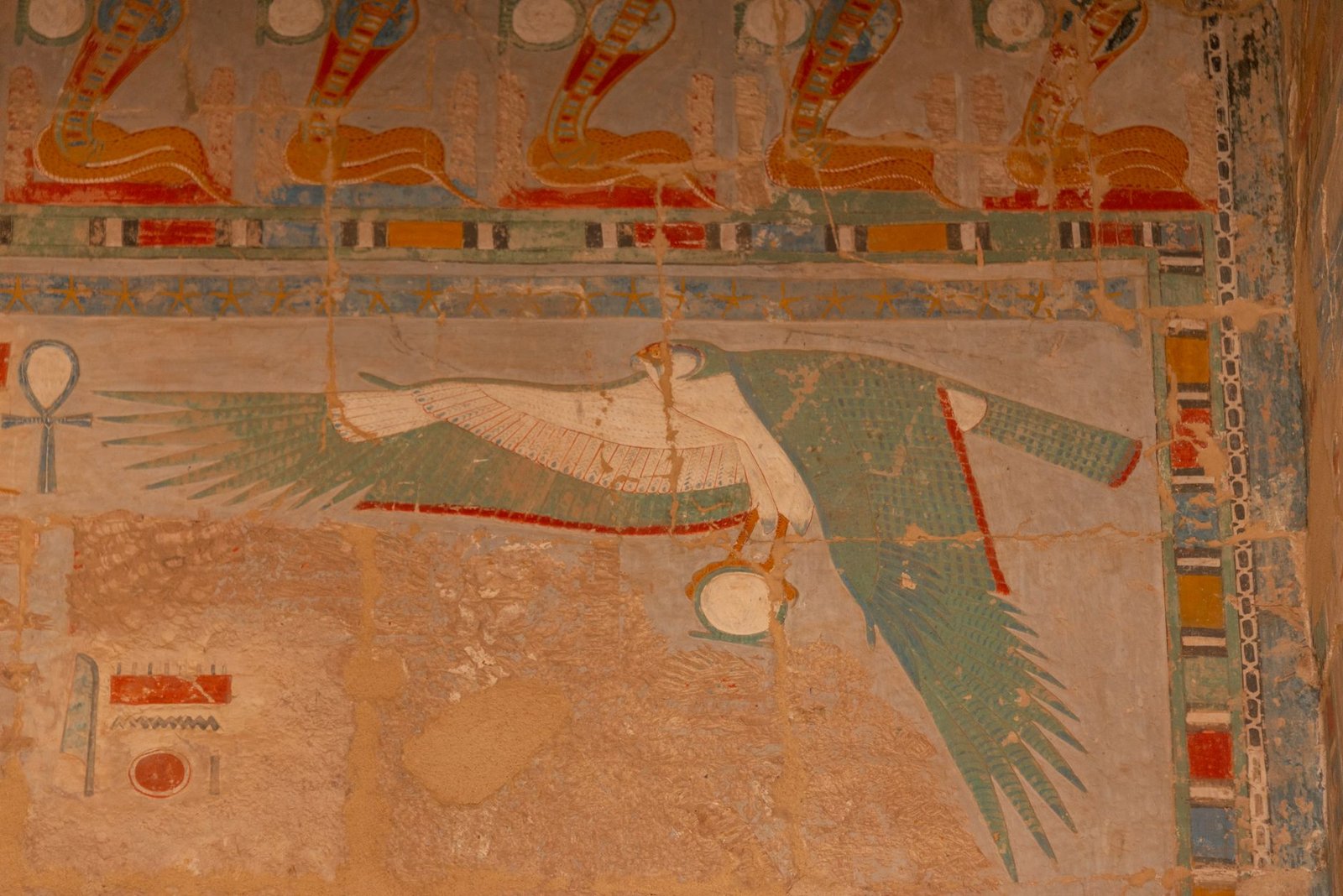
Who Is Anhur in Egyptian Mythology? God of War Explained
Anhur in Egyptian mythology is a warlike sky deity whose cult grew from Upper Egypt, where he was honored as a divine defender, royal patron, and symbol of order. His evolving role, later merging with other gods and acquiring new meanings, reveals how Egyptian religion adapted over centuries and why his identity remains intriguingly complex.