Glaistig
Introduction
The Glaistig is a figure from Scottish and wider Gaelic folklore, usually described as a supernatural female being associated with the household, livestock, and the threshold between the human world and the Otherworld. She appears in stories from the Highlands and islands of Scotland, and in some traditions she is linked to fairy lore, ghost traditions, and protective beings connected to cattle and domestic life.
Unlike a single fixed deity or monster, the Glaistig belongs to the rich and varied world of Gaelic oral tradition. In different accounts she may appear as a beautiful woman, an old hag, a half-human being with the lower body of a goat or deer, or a fairy-like presence that can be both helpful and dangerous. Her complexity makes her important for the study of Celtic mythology, because she reflects recurring themes in Gaelic belief: hospitality, taboo, danger, fertility, guardianship, and the ambiguous power of the supernatural female.
Origin and Meaning
The name Glaistig appears in Scottish Gaelic tradition in several forms, including glaistig, glashtyn, and related regional variants. The etymology is not entirely secure, and scholars have proposed different explanations. The name is often connected with the Gaelic word glas, meaning “green,” “grey,” or “pale,” which may reflect the being’s otherworldly appearance or association with the color of nature and the uncanny. However, exact derivations vary by source and region, and no single explanation is universally accepted.
In folklore studies, the Glaistig is usually treated as part of the broader Gaelic fairy tradition rather than as a figure from a formal pantheon. Her historical origin lies in oral storytelling, local belief, and perhaps older pre-Christian ideas later reshaped by Christian and post-Christian interpretation. Because she comes from oral tradition, her description changes from one district to another.
Historical Context
The Glaistig belongs to the cultural landscape of the Scottish Highlands and Islands, where Gaelic-speaking communities preserved a strong body of oral tales about fairies, spirits, and supernatural women. These traditions were closely tied to rural life, especially cattle keeping, domestic work, seasonal rhythms, and the dangers of isolated landscapes.
In many Highland communities, supernatural beings were not treated as distant fantasy. They formed part of an explanatory framework for strange sounds, missing livestock, unexpected luck, illness, or the social rules governing hospitality and behavior. The Glaistig was often imagined in relation to cattle sheds, byres, streams, and lonely places. This reflects the importance of livestock in traditional Gaelic economies.
The figure also illustrates the tension between Christian and pre-Christian worldviews. In later folklore, the Glaistig is sometimes described in terms familiar to Christian moral language: she may be punished, cursed, or transformed. At the same time, she retains older fairy-like qualities, especially her liminal position between protection and threat.
Main Characteristics
The Glaistig is not described uniformly, but several features recur across traditions.
Common Traits
- Female supernatural being
- Associated with cattle, domestic spaces, and rural places
- Ambivalent nature: can be protective or harmful
- Shape-shifting or variable appearance
- Connected to the Otherworld or fairy realm
Typical Appearances
Different traditions present her in different forms:
- Beautiful young woman: sometimes alluring and deceptive
- Old hag: frightening, aged, and rough in appearance
- Half-animal, half-human figure: often with a goat-like or deer-like lower body
- Grey or greenish being: linked to the color symbolism of Gaelic folklore
Some accounts emphasize that she is especially active at night or in remote places. She may haunt farm buildings, protect cattle, or mislead travelers. In some stories she is a solitary being; in others she is closely associated with fairy communities.
Behavioral Pattern
The Glaistig often behaves in ways that reflect liminality:
- She may guard cattle and protect them from harm.
- She may ask for milk or hospitality.
- She may punish disrespect or greed.
- She may lure, tease, or frighten men, especially in isolated settings.
- She is frequently linked to thresholds, such as doors, byres, and boundary places.
This duality is central to her identity. She is not simply “good” or “evil,” but a supernatural force whose response depends on human conduct.
Family and Genealogy
The Glaistig does not have a single fixed genealogy in surviving sources. Unlike figures from classical mythology, she is rarely given a consistent family tree. Folklore collections generally treat her as an individual fairy or spirit, not as a named offspring of specific parents.
Genealogical Patterns in Tradition
- In some tales, she is simply a fairy woman with no recorded ancestry.
- In others, she is connected to the fairy folk more broadly.
- A few traditions classify her among the host of the dead or as a haunted being rather than a fairy in the strict sense.
- Some later retellings merge her with other supernatural female types, such as hags, witches, or protective household spirits.
Because oral traditions differ so widely, any strict family structure would be misleading. The Glaistig should be understood primarily as a type of being, not as a character with a standardized genealogy.
Symbols
The Glaistig is associated with symbols that reflect her connection to nature, domestic life, and the uncanny.
| Symbol | Meaning |
|---|---|
| Green or grey coloring | Nature, twilight, otherworldliness, ambiguity |
| Cattle byre | Protection, livelihood, rural household life |
| Thresholds and doorways | Liminality, passage, access to the supernatural |
| Goat or deer features | Wildness, untamed nature, half-human identity |
| Milk | Sustenance, hospitality, exchange, fertility |
These symbols are not formal emblems in a ritual religion. Rather, they emerge from repeated motifs in folk narrative. The Glaistig’s symbolic world is one of borders: between wild and domestic, human and non-human, protection and danger.
Sacred Animals
No animal is universally sacred to the Glaistig in the way certain animals are sacred to deities in formal religions. Nevertheless, several animals are strongly associated with her in folklore.
Cattle
Cattle are the most important animals in stories about the Glaistig. In Highland life, cattle represented wealth, nourishment, and survival. The Glaistig is often imagined as a protector of cattle, especially when she dwells near a farm or byre. In some stories she combs cows, watches over them at night, or keeps them healthy.
Goats
In some traditions, she has a goat-like appearance, or goat features such as legs or hooves. This may reflect associations with rough terrain, wildness, and the uncanny. The goat is also a symbol of untamed nature and ambiguous morality.
Deer
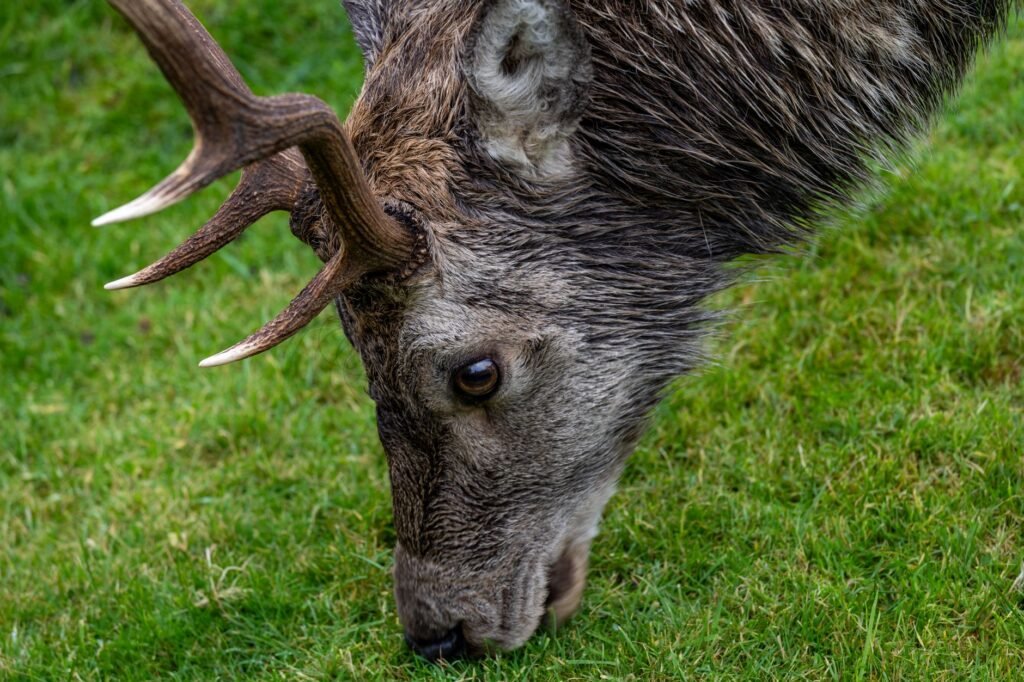
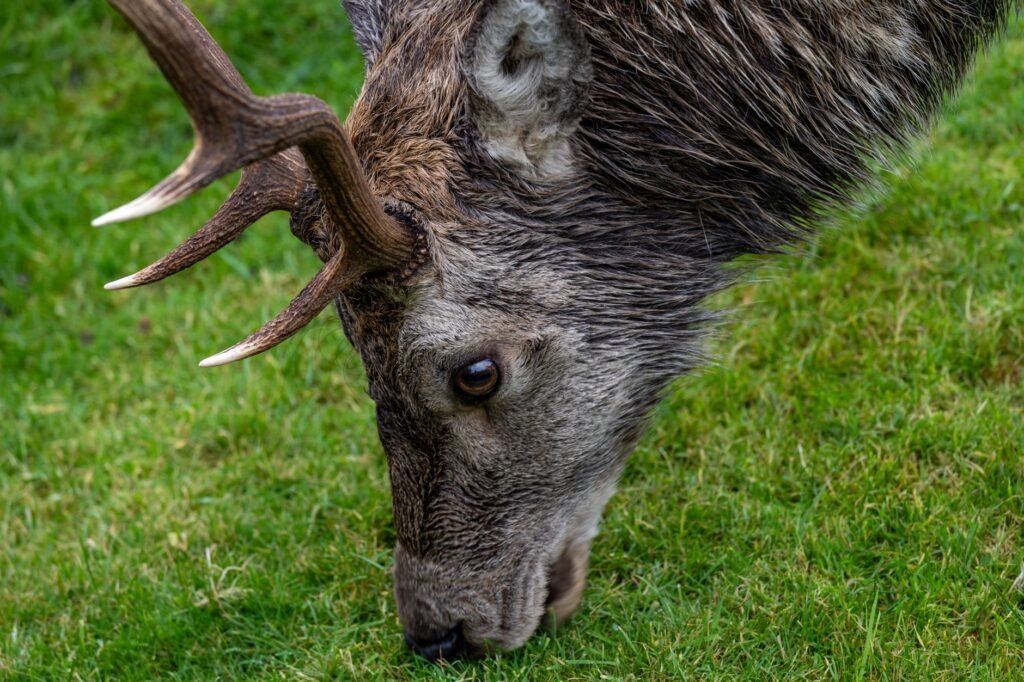
Some variants give the Glaistig deer-like traits or connect her with deer and the forest. This suits her role as a being who belongs to the border between cultivated land and the wild.
Dogs
Dogs are not central to her mythology, but in folk contexts they may react to her presence, since dogs often perceive supernatural beings before humans do.
Sacred Plants
There is no clearly established sacred plant specifically and uniquely linked to the Glaistig in surviving tradition. However, plants connected to her appear through the broader symbolic world of Gaelic folklore.
Grass and Pasture Plants
Because she is associated with cattle and grazing, she is symbolically tied to the grasslands, meadows, and pasture plants that sustain livestock. These landscapes are central to her identity.
Heather
Heather is often associated with Scottish folklore in general and may appear in tales of fairy beings. While not exclusive to the Glaistig, it fits her Highland setting and her connection to moorland and wilderness.
Rowan
The rowan tree is a well-known protective plant in Scottish and Gaelic tradition. It was used as a charm against harmful supernatural forces. While not specifically dedicated to the Glaistig, it belongs to the same belief environment in which she appears.
Because the evidence is limited, it is best to say that the Glaistig is associated with landscape plants rather than a formal sacred botany.
Sacred Places
The Glaistig is connected less with fixed temples and more with places significant in rural and liminal life.
Commonly Associated Locations
- Byres and cattle sheds
- Farmhouses and domestic thresholds
- Streams and wells
- Moorland and glens
- Remote hillsides
- Boundary places between settlement and wilderness
These locations reflect her role as a being who inhabits the edges of human space. In folklore, she often appears where people and animals are vulnerable, especially at night or during pastoral routines.
Regional Setting
The Glaistig is especially associated with the Scottish Highlands, but related traditions may be found in other Gaelic-speaking areas. Since folklore travels and changes, exact place associations vary. Some local stories attach her to specific estates, glens, or farmsteads, while others keep her more generalized.
Powers and Attributes
The Glaistig is best understood as a protector and trickster figure with practical influence over livestock and household fortune.
Main Powers
- Guarding cattle
- Warning or punishing disrespect
- Luring or frightening humans
- Haunting houses or byres
- Shapeshifting or appearing in altered forms
- Moving between the human and fairy worlds
Areas of Influence
Her influence is usually local rather than cosmic. She does not govern major natural forces like a storm god or sea deity would. Instead, she affects:
- the welfare of cattle,
- the safety of farm spaces,
- the behavior of people at night,
- the balance between hospitality and intrusion.
Moral Logic
Folklore often presents the Glaistig as responding to human behavior. Hospitality may earn her favor, while disrespect may provoke trouble. This fits a widespread folkloric principle: supernatural beings are not merely enemies but forces that reward correct conduct and punish excess, arrogance, or neglect.
Main Myths
Because the Glaistig comes from oral tradition rather than a single canonical myth cycle, there is no one “main myth.” Instead, there are several recurring story patterns.
The Cattle Guardian
One common motif presents the Glaistig as a guardian of cattle. She may remain near a farm, protecting the herd from harm, disease, or theft. In such stories she is sometimes rewarded with milk or a place by the fire.
The Haunting Woman
Another pattern portrays her as a haunting presence at a house or byre. She may be seen spinning, combing her hair, or watching from the shadows. This image emphasizes her domestic familiarity and her unsettling otherness.
The Deceptive Beauty
In some tales the Glaistig appears as a beautiful woman, especially to men traveling alone. Her beauty can be a lure leading toward danger, confusion, or the revelation that she is not human. This motif is common in fairy lore across Europe.
The Old Hag or Half-Beast
A contrasting story type shows her as aged, ugly, or animal-like. This can serve as a warning that appearances are deceptive and that the hidden supernatural world may be both ancient and wild.
Summary of Motifs
| Story Type | Function |
|---|---|
| Cattle guardian | Links her to prosperity and rural life |
| Haunting woman | Creates a sense of domestic uncanny presence |
| Deceptive beauty | Warns against desire and isolation |
| Old hag or half-beast | Emphasizes the wild, ancient, and liminal |
Relationship with Other Mythological Figures
The Glaistig stands within a wide network of Gaelic supernatural figures, but she is not always easy to distinguish from them. Folklore collections often overlap fairy types, ghost traditions, and witches.
Relation to Fairies
She is frequently treated as part of the fairy folk or sìth tradition. In this context, she shares traits with fairy women, household spirits, and other beings that interact with humans in exchange-based relationships.
Relation to the Cailleach
The Cailleach, the great hag figure of Gaelic tradition, is sometimes compared to the Glaistig because both can appear as old women, both are tied to landscape and seasonal power, and both express the dangerous side of female supernatural authority. They are not identical figures, but later folklore and modern interpretation often place them in related conceptual fields.
Relation to Witches and Ghosts
In Christianized folk interpretation, the Glaistig may be described in terms that resemble a witch or ghost. This does not necessarily mean she originated as either. It shows how local belief was reinterpreted through later cultural categories.
Relation to Household Spirits
Her protective role toward cattle can make her resemble a household guardian spirit. However, unlike a benevolent domestic helper in later literary fantasy, she remains morally ambivalent and may demand respect rather than offer unconditional aid.
Worship and Cult
There is no evidence of a formal worship system for the Glaistig comparable to a temple cult or organized religion. She belongs to folk belief, not to documented liturgy.
Traditional Practices
Folkloric accounts suggest that people might try to keep such beings favorable by:
- leaving milk or food,
- showing respect and caution,
- avoiding insults or mockery,
- maintaining cleanliness in cattle spaces,
- observing local taboos.
These practices are better understood as elements of reciprocal folk custom rather than formal worship.
Ritual Logic
The Glaistig fits a pattern common in European folk tradition: supernatural beings may be appeased, respected, or avoided. The emphasis is practical. People did not necessarily seek to worship her, but rather to live in a way that reduced risk and preserved good fortune.
Ancient Sources
The Glaistig is not a figure from Greek or Roman classical mythology, so she does not appear in Homer, Hesiod, or Ovid. Her study depends instead on Gaelic folklore collections, oral tradition, and later ethnographic recording.
Important Source Types
- Folklore collections from Scotland
- Gaelic oral traditions recorded in the 19th and 20th centuries
- Comparative studies of Celtic mythology and fairy lore
- Local histories and ethnographic accounts
Because she was transmitted orally, the most important “sources” are often variant regional narratives rather than a single ancient text. Scholars studying the Glaistig typically compare versions from different districts and periods.
Roman Equivalent
There is no direct Roman equivalent to the Glaistig. She is a specifically Gaelic figure whose traits do not map neatly onto a single Roman goddess, spirit, or nymph.
That said, comparative mythology sometimes notes partial parallels with:
- nymph-like figures associated with wild places,
- Lares and household spirits in their domestic function,
- female numinous beings who protect or punish based on human conduct.
These are only loose analogies. They should not be mistaken for true equivalences.
Influence on Modern Culture
The Glaistig remains a lesser-known but enduring figure in modern retellings of Celtic folklore. She appears most often in contexts that draw on Scottish myth, fairy lore, and supernatural fiction.
Areas of Modern Influence
- Folklore anthologies and academic studies
- Fantasy literature inspired by Celtic tradition
- Role-playing games and folklore-based worldbuilding
- Art and illustration focused on Highland myth
- Online discussions of Celtic fairies and shapeshifters
Modern writers often emphasize her eerie beauty, protective instincts, or animal features. In some interpretations, she becomes a symbol of the wild feminine, ecological guardianship, or the hidden intelligence of the landscape. These are modern readings rather than traditional beliefs, but they show her flexibility as a mythic figure.
Curiosities
- The Glaistig is sometimes described as both helpful and dangerous, which makes her more psychologically complex than many monsters in folklore.
- Her association with cattle reflects the importance of livestock in Highland society.
- Some versions present her as a lone supernatural woman, while others place her within the wider fairy world.
- She is a good example of how oral tradition preserves multiple contradictory forms of the same figure.
- The Glaistig is often discussed alongside the Cailleach, though the two are not the same being.
- Her stories show how Gaelic folklore blends household life, landscape, and otherworld belief.
Frequently Asked Questions
What is a Glaistig?
A Glaistig is a supernatural female figure from Scottish Gaelic folklore, usually associated with cattle, domestic spaces, and the fairy or Otherworld tradition.
Is the Glaistig a fairy, ghost, or goddess?
Different traditions describe her differently. She is most often treated as a fairy-like being, but some later interpretations give her ghostly or witch-like qualities. She is not usually presented as a goddess.
What does the name Glaistig mean?
The etymology is uncertain. It may be related to Gaelic terms for green, grey, or pale coloring, though scholars do not agree on a single explanation.
Is the Glaistig dangerous?
She can be. Folklore often presents her as ambivalent: she may protect cattle and household life, but she can also frighten, deceive, or punish people.
What animals is the Glaistig linked to?
She is most strongly associated with cattle. Some traditions also give her goat or deer features, linking her to wildness and the margins of settled life.
Does the Glaistig have a Roman counterpart?
No direct Roman equivalent exists. At most, she can be loosely compared to some Roman household or nature spirits, but the comparison is approximate.
Where did beliefs about the Glaistig come from?
Beliefs about the Glaistig come from Scottish Gaelic oral tradition, especially in the Highlands and Islands, where fairy beliefs remained strong in rural culture.
How is the Glaistig represented today?
Today she appears mainly in folklore studies, fantasy literature, illustrations, and modern retellings of Celtic mythology.
Conclusion
The Glaistig is a distinctive and revealing figure in Scottish Gaelic folklore. She embodies the uncertainty and richness of oral tradition: at once guardian and threat, woman and beast, household presence and wild spirit. Her stories reflect the practical concerns of rural life, especially cattle, hospitality, and the dangers of isolated places, while also expressing deeper cultural ideas about liminality and the supernatural.
Although she has no single canonical myth or formal cult, the Glaistig remains important because she shows how folklore preserves complex relationships between humans and the unseen world. Her legacy continues in scholarship, storytelling, and modern imaginative retellings, where she stands as one of the more intriguing and ambiguous beings in the Gaelic mythological tradition.

Orin Vale has spent the better part of two decades tracing the threads that connect the world’s oldest stories — from the halls of Asgard to the banks of the Nile, from Olympus to the jungles of the Maya. What began as a childhood fascination with flood myths and trickster gods grew into years of independent study across comparative mythology and ancient religion, always chasing the same question: what did these stories mean to the people who first told them? Orin writes for readers who want more than trivia — the ones looking for the beliefs, fears, and truths that myths were built to carry.