Table of Contents
Greek mythology preserves one of the largest and most detailed pantheons in the ancient world, built up over more than a thousand years of oral tradition, poetry, and regional cult worship across the Aegean, mainland Greece, and its Mediterranean colonies. The primary written sources that shaped the pantheon as it’s known today are Hesiod’s Theogony, which laid out the genealogy of the gods from Chaos to Zeus, and Homer’s Iliad and Odyssey, which brought the Olympians into vivid, personality-driven focus.
The pantheon is best understood in layers. First came the primordial deities, raw forces of existence like Chaos, Gaia, and Nyx. From them came the Titans, the second generation who ruled during the mythical Golden Age under Cronus. The Titans in turn were overthrown by their own children, the Olympians, led by Zeus, who established the order of gods most people recognize today. Beneath and alongside this main line runs a vast web of underworld deities, personifications of love, war, fate, and victory, sea and sky gods, and countless minor figures tied to specific places, crafts, or aspects of daily life.
This guide organizes every deity in the Greek pantheon into these layers, from the first primordial beings through the Twelve Olympians to the minor gods who filled in the texture of everyday worship.
Primordial Deities (Protogenoi)

Chaos
Chaos is the primordial void that existed before the ordered universe, the very first being of Greek cosmology from which everything else emerged. From Chaos came Gaia, Tartarus, Eros, Erebus, and Nyx, setting the entire genealogy of the gods into motion.
Gaia
Gaia is the primordial personification of Earth itself, mother and origin point of nearly every generation of gods that follows. She emerged from Chaos, gave birth to Uranus the Sky and Pontus the Sea, and later urged her son Cronus to overthrow his father.
Uranus
Uranus is the primordial god of the starry Sky, husband and son of Gaia, whose union with her produced the twelve Titans. His cruelty toward his monstrous children led Cronus to castrate and overthrow him, ending the first divine dynasty.
Tartarus
Tartarus is both a primordial god and the bottomless abyss far beneath the Underworld used to imprison the most dangerous beings in existence. The Titans were cast here after their defeat, and it later held Typhon, the final challenger to Zeus’s rule.
Nyx
Nyx is the primordial goddess of Night, one of the first beings born from Chaos and mother to a host of powerful personifications, including Thanatos and Hypnos. Even Zeus is said to have feared her, showing rare caution before her ancient power.
Erebus
Erebus is the primordial god of Darkness, born from Chaos alongside his sister-wife Nyx. Together they produced Aether and Hemera, the bright air and day that stand in eternal contrast to their parents’ shadow.
Pontus
Pontus is the primordial god of the Sea, born from Gaia without a father, representing the deep waters before Poseidon later took charge of them. His union with Gaia produced early sea deities such as Nereus, Thaumas, and Phorcys.
Aether
Aether is the primordial personification of the bright, pure upper air breathed only by the gods, distinct from the mist and haze of the mortal world below. Son of Erebus and Nyx, he represents the clear celestial atmosphere above the clouds.
Hemera
Hemera is the primordial goddess of Day, daughter of Erebus and Nyx, who alternates with her mother in ruling the sky. In Hesiod’s telling, she departs each time Nyx returns, so mother and daughter are never seen together.
Ananke
Ananke is the primordial goddess of Necessity and inevitability, whose power binds fate itself, sometimes described as coiled with her consort Chronos around the universe at the dawn of time. Even the gods are said to be subject to her unbending will.
Chronos (Protogenos of Time)
Chronos, the Protogenos of Time, is often confused with the Titan Cronus due to the similarity of their names, though the two are distinct figures in Greek cosmology. Orphic tradition credits him with generating Aether, Chaos, and the cosmic egg from which the first gods hatched.
Thalassa
Thalassa is the primordial goddess personifying the Sea’s waters, closely paired with Pontus as an early embodiment of the ocean before Poseidon’s Olympian rule. She is credited in some myths as the mother of the first fish and sea creatures.
The Titans and Titanesses
Cronus
Cronus is the youngest Titan and ruler of the cosmos during the mythical Golden Age, who overthrew his father Uranus at Gaia’s urging. Fearing a prophecy that his own children would depose him, he swallowed each one at birth until Zeus escaped and eventually led the Olympians to victory.
Rhea
Rhea is a Titaness and mother of the first generation of Olympian gods, wife and sister to Cronus. To save her youngest son Zeus from being swallowed, she tricked Cronus with a stone wrapped in swaddling cloth and hid the infant on Crete.
Oceanus
Oceanus is the Titan god of the great river believed to encircle the entire world, father of the three thousand Oceanid nymphs and most of the world’s rivers. Unlike most Titans, he remained neutral during the war against the Olympians.
Tethys
Tethys is a Titaness of the fresh waters, wife of Oceanus and mother of the Oceanids and the river gods. She was worshipped as a nurturing source of the rivers and streams that sustain the earth.
Hyperion
Hyperion is the Titan god of heavenly light, father of Helios, Selene, and Eos with his sister-wife Theia. His name means ‘the high one,’ reflecting his role as the source of the sun, moon, and dawn’s brilliance.
Theia
Theia is the Titaness of sight and the shining light of the sky, wife of Hyperion and mother of Helios, Selene, and Eos. Her name is linked to the Greek word for divine radiance and the gleam of gold and silver.
Coeus
Coeus is the Titan god associated with intellect and the axis around which the heavens rotate, father of Leto and Asteria with his sister-wife Phoebe. He is one of the lesser-detailed Titans, known mostly through his prophetic daughters.
Phoebe
Phoebe is a Titaness of bright, prophetic intellect, wife of Coeus and grandmother of Apollo and Artemis through her daughter Leto. She held the Oracle of Delphi before passing it to Apollo as a birthday gift.
Crius
Crius is a Titan god associated with the constellations and the stars of the southern sky, father of Astraeus, Pallas, and Perses. He plays a comparatively minor role in surviving myths compared to his siblings.
Iapetus
Iapetus is the Titan god associated with mortality and craftsmanship, father of Atlas, Prometheus, Epimetheus, and Menoetius. Through his sons, he is sometimes called the ancestor of the human race in Greek tradition.
Themis
Themis is the Titaness of divine law, order, and prophecy, later becoming Zeus’s second wife and mother of the Fates and the Horae. She embodies the natural, unwritten order of justice that even the gods must respect.
Mnemosyne
Mnemosyne is the Titaness of memory, whose nine nights with Zeus produced the nine Muses of art and inspiration. Her name is the root of the modern word ‘mnemonic,’ reflecting her enduring association with memory itself.
Metis
Metis is the Titaness of wisdom and cunning intelligence, first wife of Zeus and mother of Athena. Fearing a prophecy that her child would surpass him, Zeus swallowed Metis while she was pregnant, and Athena was later born fully armed from his head.
Styx
Styx is a Titaness and goddess of the river that separates the world of the living from the Underworld, whose waters the gods swear their most unbreakable oaths upon. She is also the mother of Nike, Kratos, Bia, and Zelos, who fought alongside Zeus in the war against the Titans.
Second-Generation Titan Children

Atlas
Atlas is a Titan condemned by Zeus to hold up the sky for eternity as punishment for fighting alongside Cronus in the Titanomachy. He later appears in the myth of Heracles’s labors, briefly relieved of his burden in exchange for retrieving the Golden Apples of the Hesperides.
Prometheus
Prometheus is a Titan celebrated as the champion and creator of humankind, famous for stealing fire from the gods to give to mortals. As punishment, Zeus chained him to a rock where an eagle ate his regenerating liver every day for centuries.
Epimetheus
Epimetheus, whose name means ‘afterthought,’ is a Titan best known as the husband of Pandora, the first mortal woman. Despite his brother Prometheus’s warnings, he accepted Pandora as a gift from Zeus, leading to the release of hardship and suffering into the world.
Helios
Helios is the Titan god of the Sun, who drives a blazing chariot across the sky each day from east to west. He sees everything that happens on earth, making him a key witness in several major myths, including revealing Aphrodite’s affair with Ares.
Selene
Selene is the Titaness goddess of the Moon, who crosses the night sky in a silver chariot drawn by pale horses or oxen. She is best known for her love of the mortal shepherd Endymion, whom she visited nightly as he slept in eternal youth.
Eos
Eos is the Titaness goddess of the Dawn, who opens the gates of heaven each morning to let Helios begin his journey. Cursed by Aphrodite with an insatiable desire for mortal lovers, she is associated with several tragic romances, including that of Tithonus.
Leto
Leto is a Titaness best known as the mother of Apollo and Artemis by Zeus, who endured Hera’s jealous persecution while pregnant. She finally gave birth on the floating island of Delos, the only place that would shelter her from Hera’s wrath.
Asteria
Asteria is a Titaness associated with falling stars and nocturnal oracles, sister of Leto, who threw herself into the sea to escape Zeus’s advances and transformed into a quail, then an island. That island became Delos, the eventual birthplace of her sister’s children, Apollo and Artemis.
Dione
Dione is a Titaness or Oceanid associated with the oracle of Dodona, named in some traditions, including Homer’s Iliad, as the mother of Aphrodite by Zeus. She represents an older, pre-Olympian layer of myth surrounding Aphrodite’s birth, alongside the more famous sea-foam origin story.
The Twelve Olympians
Zeus
Zeus is the king of the Olympian gods, ruler of the sky, thunder, and law, who led his siblings to victory over the Titans. Renowned for his many affairs and the vast number of children born from them, he presides over Mount Olympus as the ultimate authority among gods and mortals.
Hera
Hera is the queen of the Olympian gods, goddess of marriage, women, and family, and the wife and sister of Zeus. Famous for her jealousy toward Zeus’s lovers and their offspring, she is a powerful and frequently vengeful presence throughout Greek mythology.
Poseidon
Poseidon is the Olympian god of the sea, earthquakes, and horses, brother to Zeus and Hades, who received rule of the oceans after the defeat of the Titans. His moods are said to directly control the calm or fury of the sea, and his trident can shatter the earth itself.
Demeter
Demeter is the Olympian goddess of the harvest, agriculture, and fertile soil, whose grief over her daughter Persephone’s abduction created the cycle of the seasons. When Persephone returns from the Underworld each spring, the earth blooms again in celebration.
Athena
Athena is the Olympian goddess of wisdom, strategic warfare, and crafts, born fully grown and armored from the head of Zeus. She is the patron goddess of the city of Athens, having won it from Poseidon by gifting the first olive tree.
Apollo
Apollo is the Olympian god of the sun, prophecy, music, and healing, twin brother of Artemis and son of Zeus and Leto. He presides over the Oracle of Delphi and is one of the most widely worshipped gods in the entire Greek pantheon.
Artemis
Artemis is the Olympian goddess of the hunt, wilderness, and the moon, twin sister of Apollo and fierce protector of young women and animals. She famously demands strict chastity from her followers and punishes any mortal who disrespects her domain.
Ares
Ares is the Olympian god of war and violent bloodshed, son of Zeus and Hera, generally disliked among the other gods for his brutal love of conflict for its own sake. His affair with Aphrodite, wife of Hephaestus, is one of the most famous scandals of Olympus.
Aphrodite
Aphrodite is the Olympian goddess of love, beauty, and desire, born from sea foam near Cyprus according to Hesiod’s account. Her beauty and influence over both gods and mortals make her central to many of mythology’s greatest romances and rivalries, including the Trojan War.
Hephaestus
Hephaestus is the Olympian god of the forge, fire, and craftsmanship, son of Hera, who was cast out of Olympus at birth for his lameness. Despite his rejection, he became the gods’ master craftsman, forging Zeus’s thunderbolts and armor for the greatest heroes.
Hermes
Hermes is the Olympian messenger god of travel, trade, thievery, and boundaries, son of Zeus and the nymph Maia. Known for his cunning and speed, he guides souls to the Underworld and serves as the primary intermediary between gods and mortals.
Hestia
Hestia is the Olympian goddess of the hearth, home, and domestic life, eldest sibling of Zeus and one of the gentlest, most peaceful figures on Olympus. She gave up her Olympian throne to Dionysus to help prevent conflict among the gods, tending the sacred hearth fire instead.
Dionysus
Dionysus is the Olympian god of wine, festivity, and ecstatic religious ritual, son of Zeus and the mortal Semele. Born twice, once from his dying mother and again from Zeus’s thigh, he is closely tied to themes of rebirth, transformation, and liberation.
Underworld and Death Deities

Hades
Hades is the god who rules the Underworld and the realm of the dead, brother to Zeus and Poseidon, though not officially one of the Twelve Olympians. Feared but generally fair, he enforces the natural boundary between the world of the living and the dead.
Persephone
Persephone is the queen of the Underworld and goddess of spring’s return, daughter of Demeter, abducted by Hades to become his wife. Her annual journey between the Underworld and the surface world explains the changing of the seasons.
Thanatos
Thanatos is the god and personification of peaceful, non-violent death, twin brother of Hypnos, god of sleep. Unlike the more feared aspects of death, Thanatos is often depicted as gentle, simply guiding souls onward when their time has come.
Hypnos
Hypnos is the god and personification of sleep, twin brother of Thanatos, who lives in a dim cave in the Underworld where the sun never shines. He has the power to put even Zeus to sleep, as shown in a famous episode from the Trojan War.
Hecate
Hecate is the goddess of magic, crossroads, and witchcraft, closely associated with the night and the boundary between worlds. She played a key role in helping Demeter search for the abducted Persephone, later becoming Persephone’s close companion in the Underworld.
Melinoe
Melinoe is the goddess of ghosts and nightmares, daughter of Persephone and Zeus disguised as Hades, born with a dual nature reflecting both the Underworld and the world above. She is invoked in ancient hymns to send frightening apparitions to those who wrong the dead.
Macaria
Macaria is the goddess of blessed death, daughter of Hades, representing a peaceful, welcomed passing rather than a violent or feared one. Her name means ‘blessed,’ distinguishing her role from more ominous underworld figures.
Gods of Love and Beauty

Eros
Eros is the primal god of love and desire, later reimagined as the son of Aphrodite, whose golden arrows can make anyone fall instantly in love. His Roman counterpart, Cupid, remains one of the most recognizable figures from classical mythology today.
Himeros
Himeros is the god and personification of sexual longing and desire, often depicted alongside Eros and Aphrodite as part of her divine retinue. He represents the intense, immediate pull of desire rather than love’s more lasting forms.
Pothos
Pothos is the god and personification of yearning, especially longing for someone who is absent or far away. He frequently appears alongside Eros and Himeros as one of Aphrodite’s winged attendants.
Anteros
Anteros is the god of requited love and the avenger of unrequited love, born as a companion for Eros so that love would not grow weak alone. Myths describe him punishing those who spurn or mock the love of others.
Peitho
Peitho is the goddess and personification of persuasion and seductive charm, closely linked to Aphrodite as part of her entourage. She represents the subtle, verbal power used to win someone’s affection rather than force or magic.
Hymenaios
Hymenaios is the god of marriage ceremonies and wedding hymns, invoked at Greek weddings to bless the union with harmony and good fortune. His name gives us the modern word ‘hymn,’ reflecting his connection to ceremonial song.
Hebe
Hebe is the goddess of youth, daughter of Zeus and Hera, who served as cupbearer to the Olympian gods before Ganymede took her place. She later married the hero Heracles after his deification, becoming his immortal wife on Olympus.
The Graces (Charites)
The Graces, or Charites, are the three goddesses of charm, beauty, and creativity, usually named Aglaea, Euphrosyne, and Thalia. They are frequent companions of Aphrodite and Apollo, bringing joy and artistic inspiration wherever they appear.
Gods of War, Strife and Victory
Enyo
Enyo is a goddess of war and destruction, closely associated with, and sometimes identified as the mother or companion of, Ares. She personifies the horror and devastation of battle rather than strategic warfare.
Eris
Eris is the goddess and personification of strife and discord, infamous for throwing the golden apple of discord among the goddesses at a wedding feast, sparking the chain of events that led to the Trojan War. Homer describes her as delighting in the chaos of conflict.
Phobos
Phobos is the god and personification of fear, son of Ares and Aphrodite, who accompanies his father into battle to spread panic among enemy soldiers. His name is the root of the modern word ‘phobia.’
Deimos
Deimos is the god and personification of terror and dread, twin brother of Phobos, who likewise rides alongside Ares into war. Together, the two brothers embody the psychological horror that precedes actual bloodshed.
Nike
Nike is the goddess and personification of victory, daughter of the Titan Pallas and the river Styx, who fought loyally alongside Zeus in the Titanomachy. She is typically shown with great wings, symbolizing swift, decisive triumph in both war and competition.
Bia
Bia is the goddess and personification of force and raw physical power, sister of Nike, Kratos, and Zelos. She and her siblings serve as Zeus’s enforcers, embodying the strength that upholds his authority.
Kratos
Kratos is the god and personification of strength and sovereign power, brother of Nike, Bia, and Zelos, tasked alongside Bia with binding Prometheus as punishment from Zeus. His name became the root of the modern word ‘democracy’ (kratos, or ‘rule’).
Zelos
Zelos is the god and personification of zeal, rivalry, and eager emulation, one of the four siblings who stand as Zeus’s loyal attendants. He represents the competitive drive to match or exceed others’ achievements.
Sea and Sky Deities

Triton
Triton is a merman god of the sea, son of Poseidon and Amphitrite, known for his conch-shell trumpet that can calm or stir the waves. He serves as his father’s herald and messenger throughout the undersea kingdom.
Nereus
Nereus, known as the ‘Old Man of the Sea,’ is a shape-shifting, prophetic sea god and father of the fifty Nereid nymphs. Unlike many sea deities, he is generally depicted as wise, gentle, and truthful.
Proteus
Proteus is a shape-shifting, prophetic sea god who serves as Poseidon’s herdsman, tending seals and other sea creatures. He will only reveal the future to those who can hold onto him through his many transformations.
Amphitrite
Amphitrite is the queen of the sea, wife of Poseidon, and one of the fifty Nereid sea nymphs before her marriage elevated her to divine queenship. She rules the ocean depths alongside her husband, often depicted riding a chariot pulled by dolphins or sea creatures.
The Nereids
The Nereids are the fifty sea-nymph daughters of Nereus and the Oceanid Doris, each associated with different aspects and moods of the sea. Among their number is Thetis, mother of the hero Achilles.
The Oceanids
The Oceanids are the three thousand nymph daughters of the Titans Oceanus and Tethys, presiding over springs, streams, clouds, and rainfall across the earth. They represent the countless freshwater sources that sustain life on land.
Aeolus
Aeolus is the keeper and ruler of the winds, who lives on a floating island and keeps the four wind gods contained in a great bag. In the Odyssey, he gifts Odysseus this bag to ensure safe passage home, only for the crew’s curiosity to release the winds prematurely.
The Winds (Anemoi)
The Anemoi are the four directional wind gods, Boreas of the north, Notus of the south, Zephyrus of the west, and Eurus of the east, each bringing a different season or weather pattern. Zephyrus, the gentle west wind, is especially associated with the arrival of spring.
Iris
Iris is the goddess of the rainbow and a messenger of the gods, often serving Hera specifically, just as Hermes serves Zeus. She travels along the rainbow’s arc, connecting the heavens, the sea, and the Underworld.
Deities of Time, Fate and Fortune
The Fates (Moirai)
The Fates, or Moirai, are the three goddesses who control the destiny of every mortal and god: Clotho spins the thread of life, Lachesis measures its length, and Atropos cuts it at death. Even Zeus is said to respect the authority of their decisions.
The Seasons (Horae)
The Horae are the goddesses of the seasons and natural order, daughters of Zeus and Themis, who also guard the gates of Olympus. Their number and names vary by source, sometimes representing the seasons and other times representing justice and order more broadly.
Nemesis
Nemesis is the goddess of retribution and righteous vengeance, who punishes mortals guilty of hubris, or excessive pride against the gods. She ensures that good and bad fortune are ultimately distributed according to what each person deserves.
Tyche
Tyche is the goddess of fortune, chance, and prosperity, whose favor could raise a city or individual to great heights, or whose absence could bring sudden ruin. She became especially important in the Hellenistic period as cities sought her protection and blessing.
The Muses and the Arts
The Muses
The Muses are the nine goddesses of artistic and intellectual inspiration, daughters of Zeus and Mnemosyne, each overseeing a different discipline such as epic poetry, history, music, or astronomy. Ancient poets traditionally invoked them at the start of their works to ensure divine inspiration.
Gods of Health and Healing

Asclepius
Asclepius is the god of medicine and healing, son of Apollo, whose skill was so great he could reportedly bring the dead back to life. Hades complained to Zeus that this threatened the natural order, leading Zeus to strike Asclepius down before later placing him among the stars.
Hygieia
Hygieia is the goddess of health, cleanliness, and sanitation, daughter of Asclepius, whose name is the direct root of the modern word ‘hygiene.’ She represents preventive care and healthy living, as opposed to her father’s role in curing illness.
Panacea
Panacea is the goddess of universal healing and remedy, another daughter of Asclepius, whose name has become a common word for a cure-all solution to any problem. She embodies the ideal of a medicine capable of curing every ailment.
Minor and Household Deities

Pan
Pan is the god of the wild, shepherds, and rustic music, depicted with the legs and horns of a goat, closely associated with the region of Arcadia. His sudden, startling presence in the wilderness is the origin of the word ‘panic.’
Priapus
Priapus is a minor god of fertility, gardens, and livestock, son of Aphrodite, often venerated as a household protector of orchards and vineyards. Statues of him were commonly placed in gardens to ward off thieves and ensure a good harvest.
Adonis
Adonis is a strikingly beautiful mortal youth beloved by Aphrodite, later granted a form of minor divine status tied to seasonal death and rebirth. Killed by a wild boar, his blood is said to have given rise to the red anemone flower.
Cybele
Cybele is an Anatolian mother-goddess of nature and wild beasts who was absorbed into Greek religion and later into Roman worship as well. She is typically shown enthroned between two lions, reflecting her dominion over the untamed natural world.
Ganymede
Ganymede is a beautiful Trojan youth who was carried off by Zeus, in the form of an eagle, to serve as cupbearer to the gods on Olympus. In reward, Zeus granted him immortality and later placed him among the stars as the constellation Aquarius.
Hermaphroditus
Hermaphroditus is a deity of dual, androgynous nature, child of Hermes and Aphrodite, whose form merged permanently with the nymph Salmacis after she prayed never to be parted from him. The myth explains the origin of the concept that bears his name.
Silenus
Silenus is an elderly companion and tutor of the god Dionysus, often depicted drunk and riding a donkey in the god’s wine-fueled processions. Despite his comical appearance, he is said to possess deep, hidden wisdom that he reveals only when captured or coaxed.
Understanding the Greek Pantheon
Greek gods family tree
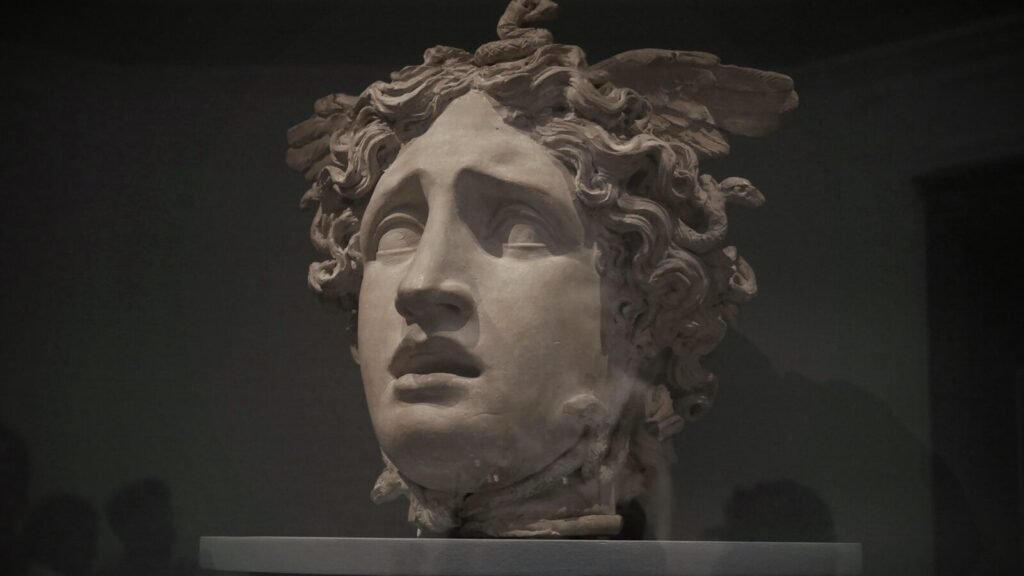
The Greek gods family tree traces the divine lineage from the primordial deity Chaos down through the Titans to the Olympians and their many children. Understanding these relationships helps clarify why certain gods share domains, rivalries, or alliances throughout mythology.
List of the Twelve Olympians
The Twelve Olympians are the principal deities who ruled from Mount Olympus after defeating the Titans, though the exact twelfth seat varies between Hestia and Dionysus depending on the source. Together, they represent the core pantheon most commonly referenced in Greek mythology.
How many Greek gods are there
The number of Greek gods depends heavily on definition, ranging from the twelve major Olympians to hundreds of minor deities, personifications, and nature spirits recorded across ancient sources. Ancient Greek religion was famously expansive, with local cults often venerating gods unique to their region.
Titans vs Olympians
The war between the Titans and the Olympians, known as the Titanomachy, was a ten-year cosmic struggle for control of the universe. The Olympians’ victory, aided by the Cyclopes and Hundred-Handed Ones, established the divine order that defines the rest of Greek mythology.
Primordial Greek gods explained
The primordial Greek gods, or Protogenoi, are the first beings to exist, emerging directly from Chaos at the very beginning of creation. They represent fundamental forces and elements of the universe, such as the earth, sky, sea, and night, rather than personalities with detailed myths.
Who is the king of the Greek gods
Zeus is the king of the Greek gods, having led his siblings to victory over their father Cronus and the Titans before dividing rule of the cosmos among the Olympian brothers. His authority over sky, thunder, and law makes him the central figure of the entire Greek pantheon.
Minor Greek gods and goddesses
Minor Greek gods and goddesses cover the vast number of deities beyond the Twelve Olympians, including personifications, nature spirits, and localized cult figures. Though less famous individually, they fill in much of the depth and texture of the broader mythological world.
Frequently Asked Questions
How many gods are there in Greek mythology?
There is no single fixed number. The core pantheon centers on the Twelve Olympians, but ancient sources record well over a hundred named deities, personifications, and nature spirits once primordial gods, Titans, and minor local figures are included.
Who are the Twelve Olympians?
The Twelve Olympians are usually listed as Zeus, Hera, Poseidon, Demeter, Athena, Apollo, Artemis, Ares, Aphrodite, Hephaestus, Hermes, and either Hestia or Dionysus, depending on the ancient source.
Who is the king of the Greek gods?
Zeus is the king of the Greek gods. He led the Olympians to victory over the Titans and rules over the sky, thunder, and divine law from Mount Olympus.
What is the difference between a Titan and an Olympian?
Titans are the second generation of gods, descended from the primordial deities Gaia and Uranus, who ruled during the Golden Age under Cronus. The Olympians are the Titans’ own children, led by Zeus, who overthrew them and became the ruling generation of gods.
What are primordial gods in Greek mythology?
Primordial gods, or Protogenoi, are the first beings to exist, emerging directly from Chaos before the Titans or Olympians. They personify fundamental elements of the universe, such as Earth (Gaia), Sky (Uranus), Night (Nyx), and Time (Chronos).
Is Hades one of the Twelve Olympians?
No. Although Hades is a brother of Zeus and Poseidon and one of the most powerful gods, he rules the Underworld and traditionally does not hold one of the Twelve Olympian seats on Mount Olympus.
Who is the most powerful Greek god?
Zeus is generally considered the most powerful Greek god, as ruler of the sky and king of Olympus, though Poseidon and Hades hold comparable authority over the sea and the Underworld within their own domains.
What is the difference between Chronos and Cronus?
Chronos is the primordial personification of Time itself, while Cronus is the Titan who ruled the cosmos before Zeus. The two names sound alike and are frequently confused, but they represent entirely different figures in Greek mythology.

Kaiqui Damasceno is a writer and mythology researcher dedicated to exploring the legends, beliefs, and traditions of ancient civilizations. Through engaging and well-researched content, he aims to make mythology accessible to modern readers while highlighting its lasting influence on history, literature, and culture.