Table of Contents
Before Zeus ever ruled from Olympus, before the Titans clashed with each other for control of the cosmos, there was nothing at all — and out of that nothing, the Greek primordial deities, known collectively as the Protogenoi, brought the universe into being. These aren’t gods with temples, festivals, and worshippers in the way Zeus or Athena had. They’re the raw components of existence itself, given form and a family tree: the sky, the earth, the night, the sea, the bottomless gap beneath everything. Hesiod’s Theogony, composed around 700 BCE, lays out their birth order as a chain of solitary creations and couplings that reads less like a myth in the modern sense and more like a blueprint for how the universe assembled itself.
The Protogenoi in Hesiod and the Orphic Tradition
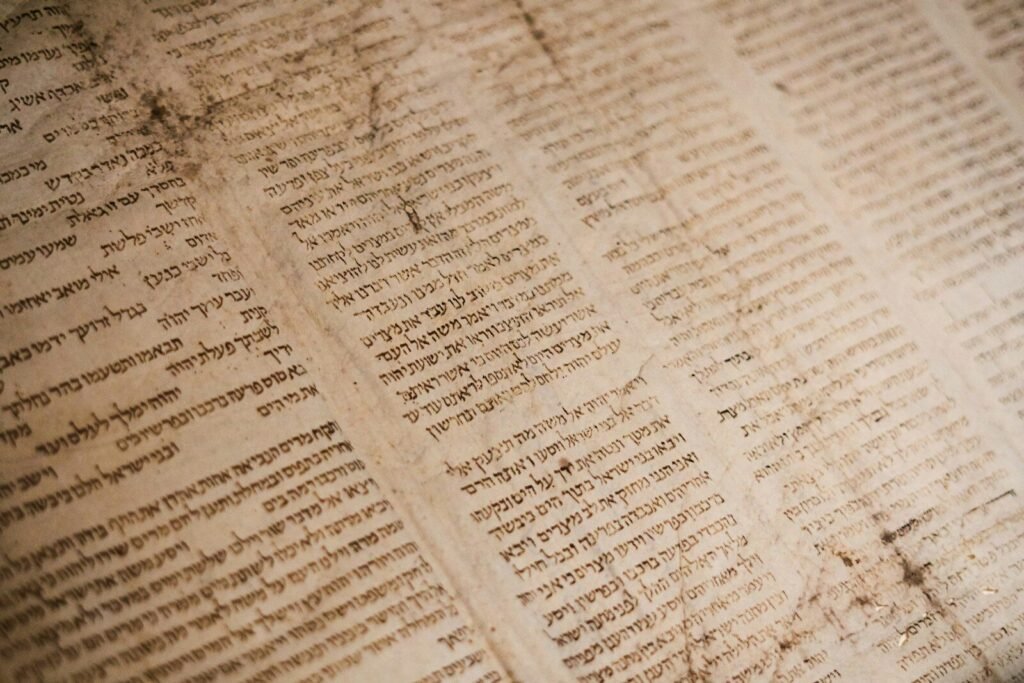
Almost everything most people know about the primordial gods comes from one source: Hesiod’s Theogony, the oldest surviving systematic account of the Greek gods’ origins. Hesiod opens with Chaos, then names Gaia (Earth) and Tartarus (the abyss) as among the first beings to exist alongside her, then describes Chaos producing Erebus (Darkness) and Nyx (Night) without any partner at all. From there, generations multiply fast: Erebus and Nyx unite to produce Aether and Hemera, while Gaia alone brings forth Uranus and Pontus before pairing with Uranus to start the line that leads to the Titans.
A second, separate tradition complicates this picture. The Orphic texts — a body of hymns and cosmological poems attributed to the mythical singer Orpheus, compiled and expanded mostly during the Hellenistic and Roman periods, though likely built on older oral material — describe a different creation entirely. In the Orphic version, Chronos (Time, not to be confused with the Titan Cronus) and Ananke (Necessity) exist as serpentine beings coiled around a cosmic egg, and their interaction produces Phanes, a radiant first-born god who brings light into the universe. This version never appears in Hesiod at all. Where the two traditions overlap or diverge matters for accuracy, and it’s flagged section by section below rather than blended together as if they were one consistent story — because they aren’t.
Chaos, the Absolute Beginning
Chaos
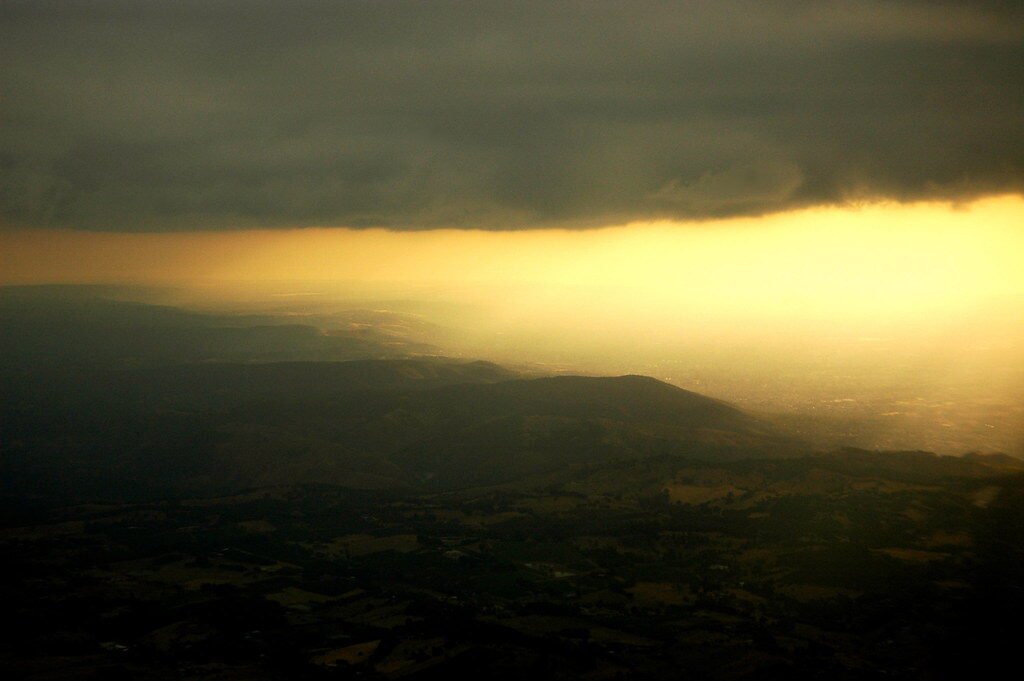
Chaos is usually mistranslated as “disorder” in casual retellings, but Hesiod’s Greek term, Χάος, means something closer to “yawning gap” or “chasm” — an emptiness that existed before the sky, the earth, or anything with shape had come into being. That’s a meaningfully different image than the swirling, disordered mass of mixed-up elements described later by the Roman poet Ovid in his Metamorphoses, where Chaos is a literal jumble of earth, sea, and air waiting to be separated and sorted. Most pop-culture depictions of Chaos actually draw on Ovid’s Roman reinterpretation rather than Hesiod’s original Greek concept of empty space.
Chaos has no parents in the Theogony — Hesiod simply states that Chaos came to be first, without explaining how or from what. Without any partner, Chaos then produced Erebus and Nyx, the first act of generation in the entire cosmology. Chaos doesn’t reappear as an active character anywhere in surviving Greek myth; the figure exists purely as a starting point, a genealogical anchor rather than a personality with motives or a story. Later Greek comedy played with the concept more freely — Aristophanes’ play Birds imagines Chaos, Night, Erebus, and Tartarus as the only things that existed before an early cosmic egg hatched the god Eros, a comic variation that borrows the primordial cast for its own purposes rather than following Hesiod strictly.
The Direct Children of Chaos
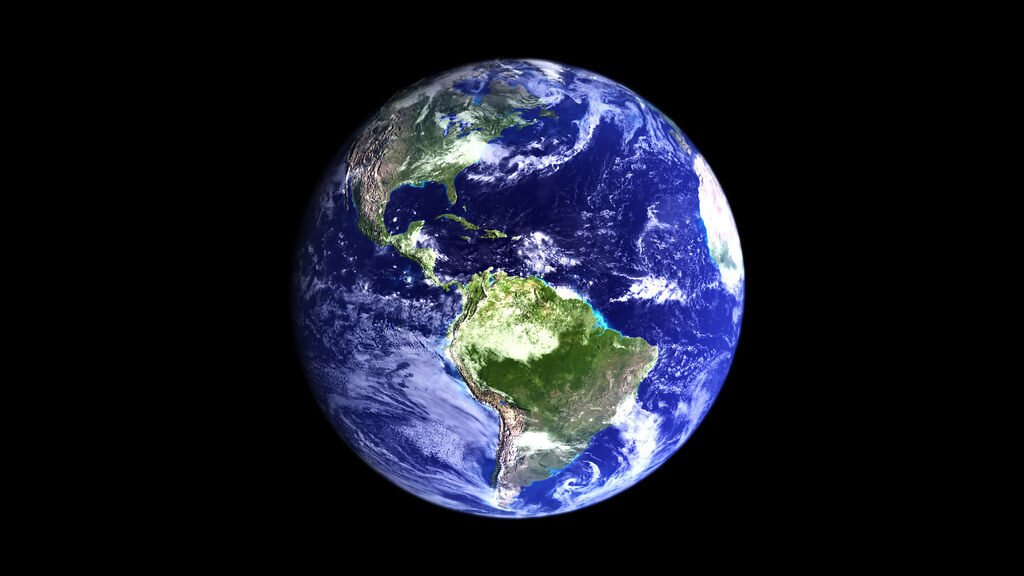
Gaia
Gaia, the personification of Earth, is one of the first beings to exist alongside Chaos and Tartarus, though Hesiod doesn’t specify her as literally born from Chaos the way Erebus and Nyx are. Acting alone, without a partner, Gaia produces Uranus (the Sky) “to cover her on every side,” then the Mountains, then Pontus (the Sea). Once Uranus exists, Gaia pairs with her own offspring to produce the twelve Titans, the three Cyclopes, and the three Hecatoncheires — the hundred-handed giants.
The pivotal moment in Gaia’s story comes when Uranus, disgusted by his monstrous children, forces them back inside Gaia’s body rather than letting them be born properly, causing her tremendous pain. Furious, Gaia forges an adamantine sickle and convinces her son Cronus to ambush and castrate his father, an act that permanently separates Sky from Earth and ends Uranus’s reign — the true starting point of the Titan age. Gaia doesn’t disappear after this. She later warns Cronus that he, too, will be overthrown by his own child, a prophecy that pushes him to swallow his children and sets up the entire Olympian succession myth. She also plays a role generations later, conspiring to produce the monster Typhon in a final attempt to unseat Zeus, and she’s connected to the oracle at Delphi, which many ancient sources describe as originally hers before it passed to Apollo.
Tartarus
Tartarus names both a god and a place, and the two uses get conflated constantly. As a place, Tartarus sits as far below Hades as the sky sits above the earth — a specific, deep region of the underworld reserved chiefly for punishing the defeated and the wicked, not a general synonym for “the underworld” as a whole, which is a common mix-up. Surrounded by bronze walls and gates, it later becomes the prison for the Titans after their defeat in the Titanomachy, guarded by the hundred-handed Hecatoncheires.
As a god, Tartarus is far less developed than Gaia or Uranus — Hesiod names him among the earliest beings but gives him almost no narrative role. His one notable mythological act comes later: in some versions of the story, Tartarus fathers the monster Typhon with Gaia, a last desperate attempt by the primordial generation to challenge Zeus’s rule. Outside that episode, Tartarus functions almost entirely as a location rather than a character with agency, distinguishing him from more active figures like Nyx or Gaia.
Erebus
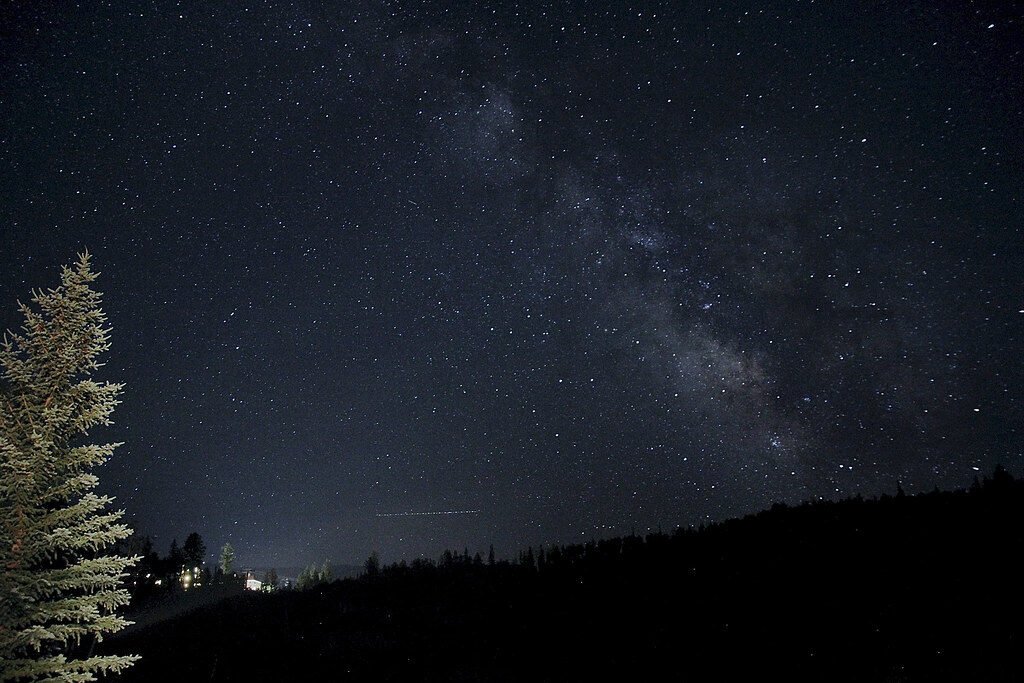
Erebus personifies primeval darkness, born from Chaos alone alongside his sister Nyx. The two then unite to produce Aether (the bright upper air) and Hemera (Day) — meaning darkness, genealogically speaking, is the parent of light in the Greek cosmological scheme, a detail that surprises people expecting a more straightforward good-versus-evil framing. Erebus himself barely functions as a character anywhere in surviving myth. He exists mainly as a genealogical placeholder, representing the darkness that fills the space between the earth’s surface and the underworld below it.
Later Greek usage sometimes uses “Erebus” more loosely as a name for a specific dark region of the underworld itself, similar to how “Hades” does double duty as both the god’s name and the name of his realm. That overlap between personal name and place name is a recurring pattern among the primordial deities — Tartarus shows the same behavior — and it’s worth keeping straight when researching either figure.
Nyx
Nyx, the personification of Night, ranks among the most feared and respected of the primordial deities, arguably more so than any other Protogenos aside from Gaia. Homer’s Iliad backs this up directly: in Book 14, Hypnos (Sleep) reminds Hera that even Zeus once backed off from a confrontation rather than risk angering Nyx, a detail that puts her authority above nearly every other figure in the pantheon, Olympian or primordial.
Nyx’s family alone makes her one of the most consequential figures in the entire cosmology. With Erebus, she produces Aether and Hemera. Acting alone, in various ancient sources, she’s credited as the mother of Moros (Doom), Thanatos (Death), Hypnos (Sleep), the Oneiroi (Dreams), Momus (Blame), Nemesis (Retribution), the Hesperides, the Moirai (the Fates, in some genealogies), Eris (Strife), and more. In practical terms, Nyx is the source of most of the dark, fate-adjacent, and death-related personifications that populate later Greek myth. She’s typically depicted riding a chariot pulled by dark horses across the sky, or wrapped in a cloak scattered with stars.
Light Born from Darkness

Aether
Aether personifies the bright, clear upper air breathed by the gods, distinct in Greek thought from aer, the thicker, mistier air near the ground that mortals breathe. The distinction mattered to the Greeks: the divine realm was imagined as occupying a purer, more luminous layer of atmosphere than the human world below it, and Aether’s name marks that layer specifically. Aether is the child of Erebus and Nyx, sibling to Hemera, born from the union of darkness and night rather than from any obviously “bright” parentage — one of several counterintuitive pairings in Hesiod’s system.
Modern searches for “aether” turn up a completely unrelated concept almost as often as the god: the luminiferous aether, a hypothetical medium 19th-century physicists proposed as the substance light waves traveled through, disproven by the Michelson-Morley experiment and abandoned before Einstein’s theory of relativity took hold. That scientific aether shares nothing with the Greek deity beyond a borrowed name and a loose sense of “something that fills the space between things” — worth knowing if a search for the god keeps surfacing physics history instead.
Hemera
Hemera personifies Day, daughter of Erebus and Nyx. Hesiod describes a striking image involving her mother: Hemera and Nyx never occupy the sky at the same time, meeting only briefly at the threshold of their shared house as one departs and the other arrives — Night stepping out as Day steps in, and back again every evening. It’s less a myth with a plot than a poetic explanation for the basic mechanics of a day-night cycle, rendered as a family relationship instead of an abstract natural process.
Hemera gets confused with Eos, the Titan-generation goddess of the dawn specifically, fairly often, and the two are genuinely different figures from different tiers of the family tree. Hemera, a Protogenos, personifies daylight as a cosmic principle — the entire span of daytime itself. Eos, daughter of the Titans Hyperion and Theia, personifies the specific moment of daybreak and has her own developed mythology involving a chariot, a rotating cast of mortal lovers, and the tragic story of Tithonus, none of which Hemera shares. If a piece of content is discussing sunrise imagery, it’s almost certainly describing Eos, not Hemera.
Gaia’s Solitary Offspring and the Primordial Sea

Uranus
Uranus, the Sky, is born from Gaia alone, without a father, and subsequently becomes her partner to produce the twelve Titans along with the Cyclopes and Hecatoncheires. His reign ends violently: repulsed by his monstrous children, Uranus forces them back into Gaia’s body rather than allowing them to be born, causing her lasting pain and fury. Gaia responds by forging an adamantine sickle and enlisting her son Cronus, who ambushes Uranus and castrates him — the act that permanently separates earth from sky and ends the primordial generation’s direct rule over the cosmos.
The aftermath produces one of Greek mythology’s more famous births. Where Uranus’s severed genitals land in the sea, the resulting foam gives rise to Aphrodite, according to Hesiod’s account — a detail that makes her, strictly by this version, older than Zeus and technically not his daughter at all. That contradicts Homer, who in the Iliad instead makes Aphrodite the daughter of Zeus and the goddess Dione, a completely different origin story existing side by side with Hesiod’s in ancient tradition without either version being treated as definitively “correct.”
Pontus
Pontus personifies the sea in its rawest, most elemental form, born from Gaia alone just as Uranus was. With Gaia, Pontus fathers a cluster of early sea deities: Nereus, known as the honest and prophetic “Old Man of the Sea”; Thaumas; Phorcys; Ceto; and Eurybia. Pontus himself barely functions as an active character anywhere in surviving myth, following the same pattern as Erebus and Tartarus — a genealogical anchor rather than a figure with his own stories. The sea gods who do carry real narrative weight in Greek myth, like Nereus, Proteus, and Triton, all descend from Pontus rather than acting as versions of him.
Thalassa
Thalassa represents a later, more specifically feminine personification of the sea’s saltwater, distinct from Pontus and first clearly attested centuries after Hesiod, in sources like the Roman-era Fabulae attributed to Pseudo-Hyginus, where she’s listed as a daughter of Aether and Hemera rather than a child of Gaia. Where Pontus embodies the sea as a primordial cosmic entity from the earliest generation, Thalassa reads more like a nature-spirit personification favored by later poets, sometimes cast as Pontus’s consort or a feminine counterpart to him, occasionally connected in later retellings to the origin of the first sea creatures. Because her textual tradition is thin compared to the core Hesiodic figures, Thalassa functions more as a literary and poetic presence in Greek and Roman writing than as a deity with an established, consistent mythology of her own.
Time and Necessity: The Orphic Protogenoi

Chronos (Protogenos of Time)
This Chronos — Χρόνος, meaning Time — has nothing to do with Cronus, the sickle-wielding Titan king who castrated Uranus and later swallowed his own children. The names are unrelated in Greek origin, and the confusion exists almost entirely because English transliteration renders both as nearly identical spellings. Chronos as a cosmic personification of Time doesn’t appear anywhere in Hesiod’s Theogony; he belongs exclusively to the Orphic tradition, where he’s depicted as a winged, serpentine figure — in some descriptions three-headed, combining a man, a bull, and a lion — who forms a great cosmic egg out of Aether, Chaos, and Erebus. From that egg hatches Phanes, the radiant first god of light and creation in Orphic cosmology, a figure who plays no role at all in the more familiar Hesiodic account most people learn first. Any content or discussion involving this Chronos should state the distinction from Cronus early, since the confusion is common enough to derail an otherwise accurate explanation before it starts.
Ananke
Ananke personifies Necessity — not fate as a personal thread spun and measured out individually, the way the Moirai handle it, but cosmic compulsion in the most absolute sense, the inevitability that binds even the gods. She belongs to the same Orphic tradition as Chronos and is frequently paired directly with him: several Orphic sources describe the two as intertwined serpents wound around the cosmic egg that eventually hatches Phanes, jointly representing Time and Necessity as the twin forces underlying the structure of the universe from its very foundation. Plato picks up the figure centuries later in the Republic’s Myth of Er, describing Ananke as the mother of the three Fates and the literal axis around which the celestial spheres physically rotate — a philosophical elaboration built on top of the older mythological figure rather than a retelling of any specific earlier myth about her.
Frequently Asked Questions
What does “Protogenoi” mean?
Protogenoi (Πρωτόγονοι) means “first-born” or “primeval ones” in Greek, and it’s the standard modern term for the deities who existed before the Titans and Olympians — figures like Chaos, Gaia, and Nyx who personify fundamental components of the universe rather than acting as characters with detailed personal myths.
Are the primordial gods the same as the Titans?
No. The Titans are the children and grandchildren of the primordial deities, chiefly of Gaia and Uranus. The Protogenoi represent raw cosmic forces — sky, earth, night, time — while the Titans, led by Cronus, are the generation that actively ruled the cosmos before Zeus and the Olympians overthrew them.
Who is older, Chaos or Gaia?
Chaos. Hesiod states plainly that Chaos came into being first, before anything else existed, with Gaia following shortly after as one of the first beings to appear — though the text doesn’t describe Gaia as literally born from Chaos the way some other early figures are.
Is Chronos the same as the Titan Cronus?
No, and this is one of the most common mix-ups in Greek mythology. Chronos, personifying Time, comes from the separate Orphic tradition, while Cronus is the Titan king, son of Gaia and Uranus, who overthrew his father and was later overthrown by his own son Zeus. The names are unrelated in origin despite their near-identical English spelling.
Did the primordial gods have temples or worship?
Rarely, and almost never in the way Zeus or Athena did. Most Protogenoi were literary and cosmological figures rather than deities mortals prayed to directly, with partial exceptions: Gaia received real cult worship in places like the oracle at Delphi before it passed to Apollo, and Nyx appears occasionally in ritual and cultic contexts tied to night and the underworld.
What is the difference between Erebus and Tartarus?
Erebus personifies darkness itself as a cosmic principle, while Tartarus personifies — and names — a specific place: the deep abyss below the earth and the underworld, later used as a prison for defeated gods and a site of punishment for the wicked dead. The two get confused because both describe deeply infernal, shadowy realms rather than because they represent the same thing.
Where does the Orphic version of creation come from?
The Orphic tradition is a body of mystical hymns and cosmological poems traditionally attributed to the mythical singer Orpheus, compiled and expanded mainly during the Hellenistic and Roman periods, though likely drawing on older oral material. It offers a creation account separate from Hesiod’s, introducing figures like Chronos, Ananke, and the cosmic egg that hatches Phanes — elements that never appear in the Theogony at all.
Why does Nyx seem so much more powerful than other primordial gods?
Because of both her family tree and how she’s portrayed in the texts. Nyx is the mother, alone or with Erebus, of an unusually large number of significant personified forces — Death, Sleep, Doom, the Fates, Nemesis, and more — and Homer’s Iliad specifically shows even Zeus reluctant to provoke her, giving her a reputation for authority that few other primordial deities carry in the surviving sources.

Kaiqui Damasceno is a writer and mythology researcher dedicated to exploring the legends, beliefs, and traditions of ancient civilizations. Through engaging and well-researched content, he aims to make mythology accessible to modern readers while highlighting its lasting influence on history, literature, and culture.