Kelpie
Introduction
A kelpie is a water spirit from Scottish and wider Gaelic folklore, most often described as a shape-shifting supernatural horse associated with rivers, lochs, and other bodies of water. In many traditions, the kelpie is dangerous, alluring, and difficult to distinguish from an ordinary horse until it is too late. Stories about kelpies reflect deep cultural anxieties about drowning, the unpredictability of water, and the possibility that attractive appearances can conceal harm.
Although the kelpie is primarily a figure of folklore rather than classical mythology, it has become one of the best-known beings in Scottish legendary tradition. Its image has influenced literature, visual art, tourism, and modern fantasy, where it is often reimagined as either a monstrous horse or a tragic, enchanted creature. Because the term is used differently across regions and periods, the kelpie is best understood as a cluster of related traditions rather than a single fixed character.
Origin and Meaning
The word kelpie is generally connected to Scottish Gaelic cailpeach or cailp, though the exact etymology is not entirely settled. Lexicographers and folklorists have proposed links to words associated with a colt, a horse, or a filly, reflecting the creature’s equine form. In Scottish usage, the term became associated specifically with a supernatural water horse.
Related names and variants appear across Gaelic and Scots-speaking regions, and folklore collectors recorded multiple spellings and local forms. In some areas, the kelpie overlaps with the each-uisge (“water horse”), another dangerous aquatic being in Scottish tradition. The precise boundary between these figures varies by source and locality.
Historical Context
Kelpie traditions belong to the broader folklore of the British Isles, especially the Gaelic cultural world of Scotland. They emerged in communities where rivers, burns, lochs, estuaries, and sea lochs were central to everyday life but also posed real danger. Before modern drainage, bridges, and water safety practices, drowning was a common hazard, and supernatural explanations helped give symbolic form to that danger.
Folklore about water spirits is common in many cultures. In Scotland, tales of the kelpie likely developed from a mixture of oral storytelling, local warning narratives, and older beliefs about spirit beings inhabiting natural places. Such figures often served practical moral functions:
- warning children not to wander near deep water,
- discouraging unsafe travel at night,
- explaining sudden accidents or disappearances,
- preserving respect for the perceived power of natural landscapes.
The kelpie also appears in a period when Christian and pre-Christian ideas coexisted in folk belief. In many recorded tales, supernatural beings are treated as real, but they may also be framed through Christian moral language, magical practice, or popular superstition. Folklore collectors of the 18th and 19th centuries preserved many of these stories, though the versions they wrote down were often shaped by the collectors’ own interests and assumptions.
Main Characteristics
The kelpie is usually described as a shape-shifting water horse, though some accounts allow it to appear as a handsome man, a woman, or another attractive animal. Its most common form is a horse standing near water, often damp, sleek, and inviting enough to tempt a passerby to mount it.
Typical features
- Aquatic habitat: rivers, lochs, pools, waterfalls, and marshes.
- Equine form: usually a horse, often black, wet, or unusually beautiful.
- Shape-shifting ability: sometimes human or partly human in appearance.
- Predatory nature: it lures victims, then drags them into the water.
- Supernatural strength: exceptionally difficult to restrain or defeat.
- Mischief and menace: beyond outright killing, it may frighten, deceive, or exhaust travelers.
Different traditions emphasize different aspects. In some stories, the kelpie is essentially a deadly predator. In others, it behaves more like a trickster spirit that can be outwitted. A recurring motif is that the kelpie may have a waterweed mane or soaked hide, a detail that marks it as belonging to an unnatural aquatic realm.
Common identifying clues
| Feature | Meaning in folklore |
|---|---|
| Wet coat or dripping mane | Sign of a water-dwelling spirit |
| Unusual beauty | A deceptive lure |
| Straps or bridle fused to the body | Evidence of supernatural nature |
| Great strength | Hard to control once mounted |
| Presence near remote water | Warning of danger |
Family and Genealogy
Unlike gods or epic heroes, the kelpie does not usually have a stable family genealogy. It is not part of a well-defined divine dynasty. Instead, it belongs to a loose category of spirits, monsters, and local supernatural beings.
That said, kelpies are often grouped with or compared to related beings:
- Each-uisge: a dangerous water horse in Scottish folklore.
- Nuckelavee: a monstrous Orcadian sea being, not a kelpie but similarly feared.
- Water spirits and fairy beings: broader folkloric categories with overlapping traits.
- Shape-shifting animals: creatures that move between human, animal, and spirit forms.
In some tellings, a kelpie may be enslaved or bound by magical means, and such stories sometimes mention a bridle, harness, or other control object. However, these details are not genealogical in the mythological sense; they belong more to narrative tradition than to family relationship.
Symbols
The kelpie is associated with symbols of concealment, danger, and the boundary between land and water. Because it often appears beautiful before turning hostile, it is also a symbol of deceptive appearances.
Common symbolic associations
- Water: life-giving but dangerous; the kelpie embodies its hidden threat.
- Horse: strength, speed, nobility, and untamed energy.
- Bridle or reins: control, mastery, and the attempt to harness the supernatural.
- Wetness and mist: ambiguity, liminality, and uncertainty.
- Black coloration: in some traditions, darkness, death, or the unknown.
The kelpie’s symbolism is often moral as well as environmental. It warns against rash trust, especially in wild places. At the same time, it reflects admiration for the power and mystery of nature.
Sacred Animals
The term “sacred animals” is more applicable to organized religions than to Scottish folklore, but the kelpie’s animal symbolism is important. The horse is central.
The horse
The horse represents:
- mobility and travel,
- strength and speed,
- social prestige,
- danger when uncontrolled,
- the possibility of being led astray.
In kelpie lore, the horse is often transformed into a trap. A person who mounts the kelpie may find they cannot dismount, or may be carried into deep water. This inversion of the horse’s usual role makes the creature especially unsettling.
Other animals in related traditions
Some local stories include variations in which the spirit may resemble a bull, foal, or other domestic animal. These are less common than the horse form and may overlap with broader water-spirit traditions rather than the kelpie proper.
Sacred Plants
There are no universally recognized sacred plants specifically associated with the kelpie. However, several plants appear in folklore connected to water, marshes, and protective magic. These are better understood as contextual folklore associations than as fixed kelpie symbols.
Plants sometimes linked by context
- Reeds and rushes: common at loch edges and riverbanks, often part of liminal, spirit-haunted settings.
- Water lilies and aquatic vegetation: associated with hidden depths and deceptive calm.
- Rowan: in Scottish folklore more broadly, rowan is a protective tree, sometimes used against harmful supernatural beings.
- Mosses and bog plants: linked to marshy terrain, where dangerous beings may lurk.
Because kelpie stories are highly local, any plant associations should be treated cautiously. They tend to arise from the ecological setting of the tale rather than from a formal religious symbolism.
Sacred Places
The kelpie is strongly associated with specific places, especially water features that were historically dangerous or remote. Unlike deities with shrines or temples, the kelpie’s “holy places” are more accurately its haunts.
Typical locations
- Lochs and lochans
- Rivers and burns
- Waterfalls
- Mire and bogland
- Deep pools and ford crossings
- Remote glens and moorland waters
In Scottish place-based storytelling, local water sites often acquired reputations through kelpie tales. Such legends may have helped explain why a location was feared or why people avoided it after dark.
The Kelpies sculpture
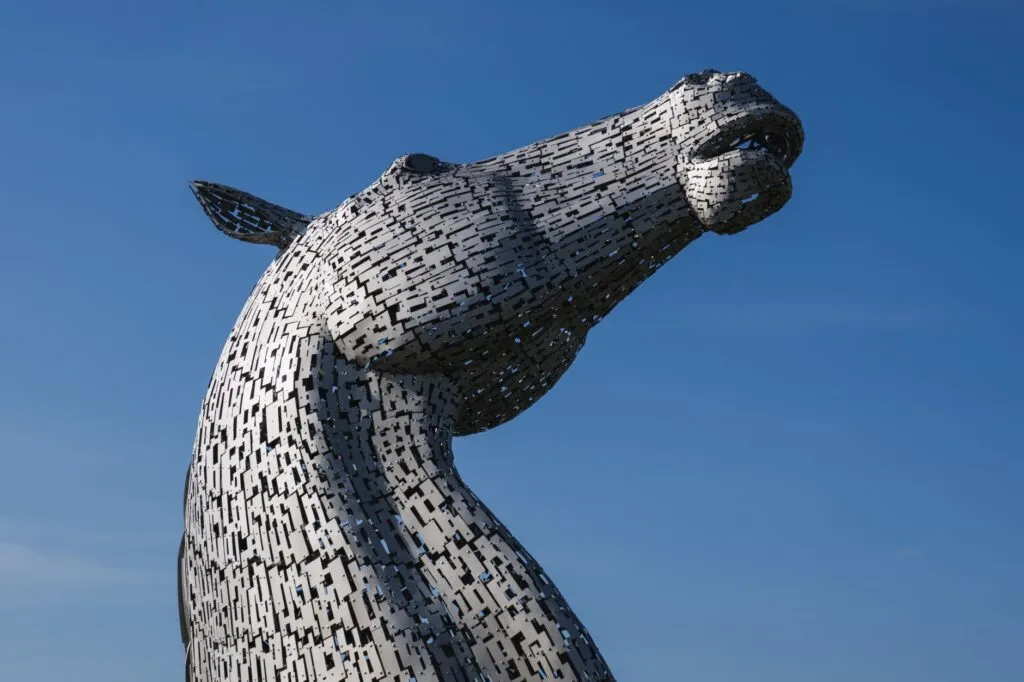
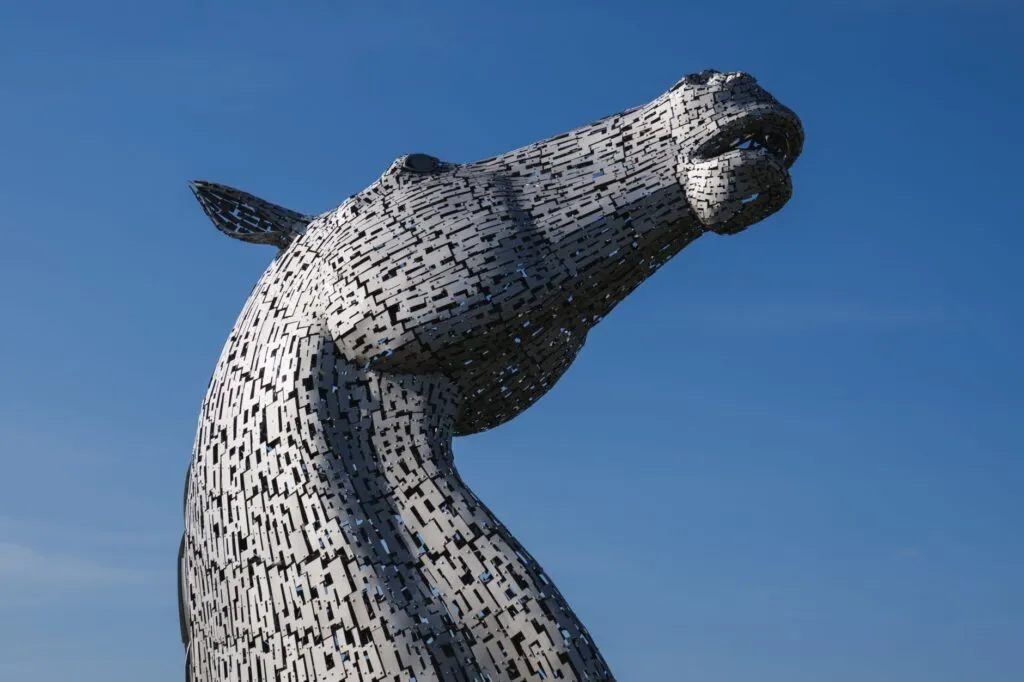
In modern Scotland, the name has also been famously adopted by The Kelpies, the large horse-head sculptures in Falkirk. These are not sacred places in a traditional sense, but they demonstrate the kelpie’s continuing symbolic power in contemporary culture and public art.
Powers and Attributes
The kelpie’s powers are primarily those of a supernatural predator and shape-shifter. Its abilities vary by source, but several recur consistently in folklore.
Main powers
- Shape-shifting: especially into a horse or human form.
- Entrapment: it lures victims onto its back or into water.
- Immense strength: often greater than that of ordinary horses.
- Environmental affinity: it dominates aquatic and liminal spaces.
- Deception: it disguises its true identity.
Typical roles
| Role | Description |
|---|---|
| Lurer | Attracts people with beauty or apparent harmlessness |
| Predator | Drowns or devours victims in some traditions |
| Boundary guardian | Marks dangerous crossings and wild places |
| Trickster | Can be outwitted with cleverness or magic |
The kelpie is sometimes said to leave a victim’s body behind, while in other stories it devours its prey entirely. Because sources differ, it is safest to say that the kelpie is broadly a deadly water spirit with predatory tendencies, not a creature governed by one universally agreed mythology.
Main Myths
Kelpie legends are not organized into a single epic cycle. Instead, they survive as many local and literary stories. Several themes recur across versions.
The horse on the shore
One common story tells of a traveler who sees a beautiful horse near the water and decides to ride it. Once mounted, the horse becomes impossible to control and plunges into the loch or river, often drowning the rider. This story emphasizes the danger of trusting appearances.
The deceptive companion
In some variants, the kelpie takes human form and appears as a charming stranger. The spirit may offer help, companionship, or transport, only to reveal its true nature later. This version broadens the creature’s symbolism from physical danger to social deception.
The bridle and restraint motif
Some folklore says a kelpie can be controlled by a magical bridle or harness. Stories involving capture often stress that the creature’s power can be used, but only at great risk. In a few accounts, possession of the bridle gives a person temporary authority over the kelpie, though such stories are not uniform and may belong to broader European enchantment motifs.
The warning tale
Many kelpie tales function as cautionary narratives. They end not with conquest but with survival, fear, or a lesson learned. The point is less to explain the creature’s nature than to reinforce safe behavior near water.
Relationship with Other Mythological Figures
The kelpie exists in a network of related supernatural beings, though its exact relationships differ by source.
Related figures in Scottish and Gaelic tradition
- Each-uisge: probably the closest analogue; often also a water horse, but sometimes more explicitly carnivorous.
- Bean-nighe: a washerwoman spirit associated with death; not similar in form, but similarly connected to water and forewarning.
- Fairies and spirits: kelpies are often treated as part of a wider supernatural ecology rather than as isolated monsters.
- Goblins and bogles: in Scots tradition, these may overlap in function as fearsome local beings.
Cultural comparisons
Comparable beings exist in many mythologies:
- Greek hippocamps are sea-horses but not dangerous water spirits in the kelpie sense.
- Slavic and other European traditions include water-dwelling beings that lure humans.
- The German Nix or Nixe shares the motif of deceptive water spirits.
Such comparisons show that the kelpie belongs to a broad cross-cultural pattern: beings tied to water, transformation, and human vulnerability.
Worship and Cult
There is no evidence of an organized cult or formal worship of the kelpie in the way one might find for ancient gods. The kelpie is a folklore being, not a deity with temples, priests, or regular sacrificial rituals.
Folk practices and beliefs
What did exist were informal practices shaped by belief in supernatural danger:
- avoiding certain waters at night,
- telling children cautionary tales,
- using protective charms in some communities,
- interpreting strange occurrences as spirit activity.
In folk tradition, naming and story-telling themselves can function as a kind of cultural management of fear. The kelpie’s “cult,” therefore, is best understood as narrative belief and local caution rather than worship.
Ancient Sources
Because the kelpie is part of Scottish and Gaelic folklore, not Greco-Roman antiquity, there are no ancient classical sources such as Homer or Hesiod that discuss it directly.
Important textual witnesses
The kelpie is known primarily from:
- folklore collections,
- antiquarian records,
- regional oral tradition,
- 18th- and 19th-century Scottish literary references.
Notable collectors and commentators
While details vary by edition and region, folklore scholarship has preserved kelpie material in the work of collectors and writers such as:
- Walter Scott, who drew on Scottish supernatural traditions in literary form,
- John Francis Campbell, who collected Gaelic tales,
- later folklorists and local historians who documented oral narratives.
Because many kelpie stories were recorded relatively late, scholars treat them as part of living oral tradition rather than as fixed texts from antiquity. This means the creature’s image is historically layered and often shaped by the agendas of recorders as well as storytellers.
Roman Equivalent
There is no direct Roman equivalent to the kelpie. Roman religion did include water deities, river gods, nymphs, and liminal spirits, but none match the kelpie exactly.
If a comparison is needed, the nearest analogues are not single Roman deities but broader categories of aquatic supernatural beings, such as:
- river gods personifying specific waters,
- nymphs associated with springs and streams,
- Lemures or other harmful spirits only in the sense of feared supernatural presence.
However, these comparisons are approximate and should not be treated as true equivalences. The kelpie belongs to a distinct Scottish folkloric tradition.
Influence on Modern Culture
The kelpie has had a strong afterlife in modern culture, especially in Scottish national imagery, fantasy literature, and public art.
Literature
Kelpies appear in folklore retellings, children’s books, fantasy novels, and poetry. Writers often use the creature either as:
- a symbol of untamed nature,
- a villainous monster,
- a melancholic enchanted being,
- a marker of Celtic or Scottish atmosphere.
Film, television, and games
In modern fantasy media, kelpies are frequently adapted as magical horses or dangerous lake creatures. Their shape-shifting qualities make them especially adaptable to:
- role-playing games,
- fantasy bestiaries,
- animated works,
- television series with folklore themes.
Public art and tourism
The most visible modern use of the name is The Kelpies in Falkirk, monumental steel horse heads that have become a major landmark. The sculptures draw on the creature’s equine identity while transforming it into a symbol of industrial heritage, engineering, and Scottish identity.
Popular reinterpretations
Modern portrayals often soften or complicate the traditional monster. Depending on the work, the kelpie may be:
- a villain,
- a misunderstood spirit,
- a romantic fantasy creature,
- a symbol of ecological mystery.
This flexibility has helped keep the kelpie relevant well beyond its original oral context.
Curiosities
- The kelpie is one of the most internationally recognizable creatures from Scottish folklore.
- In many stories, it is more dangerous because it looks harmless or beautiful.
- The creature is strongly linked to real environmental dangers, especially drowning.
- Some accounts blur the distinction between kelpie and each-uisge, showing how fluid folklore categories can be.
- The kelpie’s image has shifted from feared spirit to cultural emblem.
- Modern fantasy often treats kelpies as equine beings first, whereas older folklore can make them more ambiguous and threatening.
- The name survives in place names, art installations, and commercial branding, showing how folklore enters modern identity.
Frequently Asked Questions
What is a kelpie?
A kelpie is a Scottish water spirit, usually described as a shape-shifting horse that lives in rivers, lochs, and other bodies of water and is known for luring victims to their deaths.
Is a kelpie always a horse?
No. The horse form is the most common, but some traditions say the kelpie can appear as a human or take other forms. The details vary by region and source.
Is a kelpie the same as an each-uisge?
Not always. The two beings are closely related in Scottish folklore and may overlap, but some traditions treat them as distinct types of water spirits.
Are kelpies evil?
Folklore usually presents them as dangerous and predatory, though not necessarily “evil” in a theological sense. They function more as hazardous supernatural beings than moral agents.
Where do kelpies live?
Kelpies are commonly associated with lochs, rivers, pools, marshes, and other watery places, especially those considered remote or dangerous.
Do kelpies appear in ancient mythology?
No direct ancient classical source describes the kelpie. It is a creature of Scottish and Gaelic folklore recorded mainly in later oral and literary tradition.
Can a kelpie be controlled?
Some stories say a kelpie can be controlled by a magical bridle or harness, but such tales vary and should not be treated as a universal rule.
Conclusion
The kelpie is one of the most distinctive creatures in Scottish folklore: a shape-shifting water spirit whose horse form conceals danger, enchantment, and the power of untamed nature. Its stories combine practical warning, regional memory, and imaginative richness, making it both a local legend and a widely recognized mythic figure.
Although the kelpie has no formal cult or ancient classical canon, its cultural significance is substantial. It reflects the realities of life near dangerous waters, the enduring appeal of transformation myths, and the ability of folklore to evolve into modern art and identity. From oral tales around the fire to monumental sculpture in the 21st century, the kelpie continues to captivate audiences as a symbol of beauty, peril, and the mysteries hidden beneath the surface.

Orin Vale has spent the better part of two decades tracing the threads that connect the world’s oldest stories — from the halls of Asgard to the banks of the Nile, from Olympus to the jungles of the Maya. What began as a childhood fascination with flood myths and trickster gods grew into years of independent study across comparative mythology and ancient religion, always chasing the same question: what did these stories mean to the people who first told them? Orin writes for readers who want more than trivia — the ones looking for the beliefs, fears, and truths that myths were built to carry.