Konohanasakuya-hime
Introduction

Konohanasakuya-hime is one of the most important female deities in Japanese mythology and Shinto tradition. Often translated as the “Princess who makes the blossoms of the trees bloom”, she is associated with mount Fuji, volcanoes, cherry blossoms, fertility, childbirth, and the transience of life. Her presence in classical mythology links natural beauty with danger, seasonal renewal with impermanence, and divine ancestry with the origins of Japan’s imperial line.
In Japanese religious and cultural history, Konohanasakuya-hime occupies a distinctive place because she is both a mountain goddess and a flowering deity. She appears in the Kojiki and Nihon Shoki, the earliest extant chronicles of Japan, and she remains widely venerated in shrines across the country. Her image is especially associated with the beauty of sakura blossoms and the sacred landscape of Fuji.
Origin and Meaning
The name Konohanasakuya-hime is commonly written in Japanese as 木花咲耶姫 or in variant forms. Its meaning is usually understood as:
- ko / kono: “tree” or “this”
- hana: “flower”
- saku: “to bloom”
- ya: a phonetic or honorific element in classical usage
- hime: “princess” or “lady”
Taken together, the name is generally interpreted as “Princess Blossoming-Tree-Flower” or “Princess Who Makes Flowers Bloom.” The exact morphology can vary by interpretation and orthography, and classical Japanese names often preserve archaic sounds and spellings that are not straightforwardly segmented in modern terms.
Her name reflects her function as a deity of blooming life and flourishing nature. Because cherry blossoms are among the best-known seasonal symbols in Japan, Konohanasakuya-hime is frequently connected with sakura, although the classical texts emphasize flowers and mountain imagery more broadly rather than cherry blossoms alone.
Historical Context
Konohanasakuya-hime belongs to the mythic world recorded in Japan’s early state chronicles, especially the Kojiki (712) and Nihon Shoki (720). These works were compiled during the consolidation of the Japanese state under the early imperial court. They served not only as collections of myths but also as political and genealogical texts that linked the imperial lineage to the divine world.
Her importance must be understood in the context of Shinto, the indigenous religious traditions of Japan, which emphasize kami, sacred presence, and the spiritual vitality of natural places and phenomena. Mountains, waterfalls, rocks, trees, and seasonal cycles all became sites of divine association. In this setting, Konohanasakuya-hime came to represent:
- the fertility of nature,
- the beauty of blossoms,
- the dangers of volcanic fire,
- the miracle of safe childbirth,
- and the legitimacy of sacred descent.
Her mythology also intersects with the cult of Mount Fuji, one of Japan’s most iconic sacred mountains. Because Fuji is both majestic and volcanic, Konohanasakuya-hime embodies its dual character: beautiful and life-giving, yet potentially destructive.
Main Characteristics
Konohanasakuya-hime is usually described as a graceful, beautiful female deity associated with flowers and mountains. Her most important characteristics include:
- Blooming and fertility: She symbolizes the sudden flowering of vegetation and the generative force of life.
- Childbirth and maternity: She is widely honored as a protector of safe delivery and motherly well-being.
- Volcanic power: Through her link with Mount Fuji, she is associated with mountain fire and eruptions.
- Impermanence: As blossoms fade quickly, she also evokes the Buddhist-influenced awareness of life’s fragility and brevity.
- Sacred beauty: Her image is tied to the aesthetic ideal of delicate, fleeting beauty in Japanese culture.
Unlike some mythic deities whose roles are primarily martial or sovereign, Konohanasakuya-hime represents a quieter but deeply significant kind of power: the power of life to emerge, flourish, and pass away.
Family and Genealogy
Konohanasakuya-hime’s genealogy varies somewhat depending on the source and version of the myth.
Parents
In classical tradition, she is commonly identified as the daughter of Ōyamatsumi, a mountain deity. Ōyamatsumi is himself an important kami connected with mountains and natural abundance. In some accounts, she has a sister or sisters, and the presentation of the family differs between the Kojiki and Nihon Shoki.
Spouse
She becomes the wife of Ninigi-no-Mikoto, the heavenly grandson of the sun goddess Amaterasu. This marriage is central to the mythic foundation of Japan’s imperial genealogy.
Children
Her children are usually identified as:
- Hoderi
- Hosuseri
- Hoori
Among these, Hoori is especially important because he becomes the father of Ugayafukiaezu, who in turn fathers Jimmu, the legendary first emperor of Japan.
Genealogical significance
Her marriage into the heavenly-descended line creates an important symbolic bridge between:
- the celestial realm of the gods,
- the mountain and earthly realm of nature,
- and the imperial house of Japan.
This is one of the reasons her figure remains so central in Japanese mythic history.
Symbols
Konohanasakuya-hime is associated with several symbolic objects and visual motifs.
| Symbol | Meaning |
|---|---|
| Cherry blossoms / flowers | Beauty, fleeting life, seasonal renewal |
| Mount Fuji | Sacred mountain, volcano, divine presence |
| Fire | Purification, volcanic force, childbirth trials |
| The princess figure | Noble lineage, feminine sacred power |
| Seasonal bloom | Fertility, renewal, transience |
Blossoms
Flowers are her most recognizable symbol. They express the spiritual beauty of nature at its most vivid and most temporary. In Japanese aesthetics, this fleeting quality is not merely decorative; it is a profound reminder of impermanence.
Fire
Fire is another important symbol because of her connection to a volcanic deity and the tradition that links her with Mount Fuji. Fire also appears in myths of childbirth and trial, where it signifies purification and the testing of truth.
Sacred Animals
Unlike some kami, Konohanasakuya-hime is not strongly or universally tied to a single sacred animal across all traditions. However, later devotional and artistic traditions sometimes associate her with animals that symbolize:
- purity and grace
- mountain environments
- protective feminine power
In shrine imagery and folklore, animals may appear in broader Fuji and mountain cult contexts, but there is no single canonical sacred animal that is as firmly attached to her as deer are to some other deities or foxes to Inari.
Because traditions vary, any specific animal association should be treated cautiously unless tied to a particular shrine or local custom.
Sacred Plants
Cherry blossoms
The most important plant associated with Konohanasakuya-hime is the cherry blossom. Even though the classical sources do not reduce her solely to sakura, popular devotion and cultural memory closely connect her to cherry blossoms as symbols of beauty and life’s brevity.
Flowering trees
Her name itself points to flowering trees more generally. This broader botanical symbolism reflects the seasonal miracle of vegetation returning to life.
Mountain flora
As a mountain deity, she is also associated with the plant life of high places and volcanic landscapes, where growth emerges in difficult terrain. This reinforces her role as a goddess of resilience as well as beauty.
Sacred Places
Konohanasakuya-hime is connected with many sacred sites in Japan, especially those associated with Mount Fuji.
Mount Fuji
Mount Fuji is her most famous sacred landscape. A major shrine network dedicated to her and related Fuji worship developed around this mountain. The mountain’s volcanic nature and visual beauty make it a fitting locus for her cult.
Fujisan Hongū Sengen Taisha
One of the most important shrines associated with Konohanasakuya-hime is Fujisan Hongū Sengen Taisha in Shizuoka Prefecture. This shrine is regarded as the head shrine of the Sengen shrine network dedicated to her and related deities.
Sengen shrines
Many Sengen shrines across Japan honor Konohanasakuya-hime. The term “Sengen” is commonly linked with her cult and with Fuji devotion. These shrines played an important role in local religious practice, mountain worship, and pilgrimage.
Other local shrines
Because she is associated with childbirth, fertility, and mountain protection, she is also enshrined in many local sanctuaries throughout Japan. Her worship spread widely beyond the Fuji region.
Powers and Attributes
Konohanasakuya-hime’s powers are closely connected with nature, reproduction, and sacred geography.
Major domains
- Cherry blossoms and flowering
- Fertility and conception
- Safe childbirth
- Volcanic mountains
- Purification
- Seasonal renewal
Functional significance
In religious practice, she is often approached for help with:
- healthy pregnancies,
- smooth childbirth,
- family prosperity,
- agricultural fertility,
- protection from mountain or fire-related danger.
Her association with volcanic fire may seem at odds with her image as a blossom goddess, but in Japanese myth these qualities are complementary rather than contradictory. Fire can destroy, but it can also purify and renew.
Main Myths
Konohanasakuya-hime appears in several important myths, especially in the imperial genealogy cycle.
Marriage to Ninigi-no-Mikoto
The best-known story concerns Ninigi-no-Mikoto, who descends from the heavens to rule the earthly realm. He is offered the daughter of Ōyamatsumi, and among the daughters is Konohanasakuya-hime. Ninigi chooses her because of her beauty. In some versions, her sister Iwanagahime is also offered, but Ninigi refuses her because she is less beautiful.
This choice carries major symbolic meaning. Konohanasakuya-hime represents transient beauty and the flowering of life, while Iwanagahime, associated with rock and permanence, represents longevity and enduring stability. Ninigi’s rejection of Iwanagahime is often interpreted as a mythic explanation for the mortality of the imperial line: had he accepted both sisters, human emperors might have lived as long as stones last. Instead, by choosing only the blossom princess, he and his descendants become mortal.
The trial by fire
One of the most famous myths involving Konohanasakuya-hime is the story of her trial by fire. After becoming pregnant, she is suspected by Ninigi of infidelity, since he doubts that the children are truly his. To prove her fidelity, she enters a birth hut and sets it on fire, declaring that if the children are divine offspring of Ninigi, they will survive the flames unharmed.
According to the myth, she gives birth safely within the burning structure. The names of her children differ in detail depending on the source, but the episode is central to her image as a deity of childbirth, truth, and fire protection.
This story is one of the clearest examples in Japanese mythology of a goddess proving legitimacy through a dangerous ordeal.
Connection with Mount Fuji
Later tradition links Konohanasakuya-hime with Mount Fuji, sometimes through the idea that she governs eruptions and protects those who dwell near the mountain. In this role, she becomes both the spirit of the volcano and the guardian of its surrounding communities.
Relationship with Other Mythological Figures
Konohanasakuya-hime’s significance is shaped by her interactions with several major mythological figures.
Ninigi-no-Mikoto
Her marriage to Ninigi is foundational. It connects the heavenly realm with the earthly realm and establishes the divine ancestry of the imperial line.
Ōyamatsumi
As her father, Ōyamatsumi represents mountain authority and natural abundance. His offering of his daughters to Ninigi is part of the mythic negotiation between heaven and earth.
Iwanagahime
Iwanagahime, her sister in many accounts, is crucial for understanding Konohanasakuya-hime’s symbolic role. The contrast between the two sisters—rock and blossom—expresses the tension between permanence and impermanence, endurance and beauty.
Amaterasu
Konohanasakuya-hime is indirectly connected to Amaterasu through Ninigi. As the sun goddess and ancestral deity of the imperial family, Amaterasu stands at the head of the same divine lineage that includes Konohanasakuya-hime through marriage.
Worship and Cult
Konohanasakuya-hime has been worshipped for centuries in Japan, especially in relation to Mount Fuji and childbirth.
Shrine worship
Her cult is centered in Sengen shrines, where devotees honor her as a protector of mountains, women, and families. The rituals often involve prayers for:
- safe delivery,
- family prosperity,
- protection from fire,
- and agricultural well-being.
Offerings
Traditional offerings vary by shrine and period, but in Shinto practice they may include:
- rice,
- saké,
- sake vessels,
- flowers,
- branches or sacred tree offerings,
- and written prayers or votive tablets.
Festivals
Local festivals associated with Fuji shrines and Sengen shrines often celebrate seasonal renewal, sacred mountain symbolism, and community protection. Specific rites vary by region, and not all are exclusively dedicated to Konohanasakuya-hime.
Historical development
Her worship expanded alongside Fuji cults and regional shrine networks. Over time, she became a widely recognized deity of safe childbirth, making her especially important in household religion and women’s devotional practice.
Ancient Sources
Konohanasakuya-hime is primarily known from classical Japanese texts rather than from Greek or Roman-style mythographic authors.
Main Japanese sources
- Kojiki (712): The earliest surviving Japanese chronicle, containing key myths about her marriage and trial by fire.
- Nihon Shoki (720): A more elaborate historical chronicle with variant versions of myths, including alternative genealogical details.
- Fudoki traditions: Regional records and local lore sometimes preserve related mountain and shrine traditions.
- Later shrine documents and medieval commentaries: These help trace the development of her cult, especially in Fuji worship.
Notes on source variation
Accounts differ in detail across sources. Names, sequence of events, and the number of children can vary. An encyclopedia-style treatment should therefore distinguish between the best-known mythic outline and the specific version found in each text.
Roman Equivalent
Konohanasakuya-hime does not have a direct Roman equivalent. Her combination of roles does not match any single Roman deity exactly.
However, if an approximate comparison is needed, she shares limited thematic features with several Roman figures:
- Flora, as a goddess of flowers and spring growth
- Vesta, in connection with hearth, fire, and domestic ritual
- Juno Lucina, in relation to childbirth and women
These comparisons are only partial. Konohanasakuya-hime is best understood within the framework of Japanese Shinto and mythic geography, not through direct classical equivalence.
Influence on Modern Culture
Konohanasakuya-hime remains a recognizable figure in modern Japanese culture and in global interest in Japanese mythology.
Literature and popular reference
She appears in books on Japanese folklore, comparative mythology, and Shinto studies. Her image is often used to represent the elegance of sakura and the spiritual meaning of Mount Fuji.
Anime, manga, and games
Like many Shinto kami, she has inspired character names, symbolic references, and direct adaptations in anime, manga, and video games. Works that draw on Japanese myth often use her blossom imagery, shrine associations, or mountain symbolism.
Tourism and heritage
Her association with Mount Fuji contributes to religious tourism and cultural heritage. Shrine visits, seasonal flower viewing, and interest in Fuji’s sacred landscape keep her presence alive in contemporary Japan.
Artistic representation
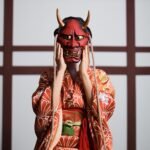
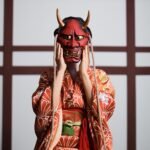
Artists frequently depict her with flowers, flowing garments, and a serene expression. These portrayals reinforce her status as a symbol of grace, fertility, and impermanence.
Curiosities
- Konohanasakuya-hime is sometimes treated as one of Japan’s most beautiful goddesses in later cultural imagination.
- Her mythology links beauty and mortality, a pairing that resonates strongly in Japanese aesthetics.
- The trial-by-fire story makes her one of the best-known divine figures associated with safe childbirth.
- She is often called upon in prayers related to women’s health and family continuity.
- Her cult is deeply connected to Fuji worship, showing how a single deity can merge flower symbolism with volcanic sacred geography.
- The contrast between her and Iwanagahime is one of the most famous paired-symbolism motifs in Japanese mythology.
- Her name is commonly used in literature, shrine names, and modern cultural references because of its poetic quality.
Frequently Asked Questions
1. Who is Konohanasakuya-hime?
Konohanasakuya-hime is a Japanese goddess associated with blossoms, Mount Fuji, fertility, and childbirth. She is an important figure in Shinto mythology.
2. What does her name mean?
Her name is usually interpreted as “Princess Who Makes the Flowers Bloom” or a similar form expressing blossoming and floral beauty.
3. Why is she linked to Mount Fuji?
She is connected to Mount Fuji because of her role as a mountain and volcanic deity, and because she is honored in the Fuji shrine tradition.
4. What is her most famous myth?
Her best-known myth is the story in which she proves the legitimacy of her children by giving birth in a burning hut, demonstrating divine truth and resilience.
5. What does she symbolize?
She symbolizes flower blooming, fertility, safe childbirth, mountain power, volcanic fire, beauty, and the fleeting nature of life.
6. Is she the same as a cherry blossom goddess?
Not exactly. She is not limited to cherry blossoms, but she is strongly associated with blossoms in general and is widely linked in modern culture with sakura.
7. Where is she worshipped today?
She is worshipped in many Sengen shrines across Japan, especially at Fujisan Hongū Sengen Taisha, the head shrine associated with Mount Fuji.
8. Does she have a Roman equivalent?
No direct Roman equivalent exists, though she shares some thematic similarities with Flora, Vesta, and Juno Lucina.
Conclusion
Konohanasakuya-hime is one of the most enduring and culturally significant deities in Japanese mythology. As a goddess of blossoms, childbirth, and Mount Fuji, she unites beauty with danger, fertility with fire, and sacred ancestry with the natural world. Her myths preserve important ideas about legitimacy, mortality, and the power of renewal.
Through her presence in the Kojiki, Nihon Shoki, shrine worship, and modern cultural memory, Konohanasakuya-hime continues to embody a distinctly Japanese understanding of life’s transience and radiance. She remains a powerful symbol of seasonal beauty, feminine divinity, and the sacred landscape of Japan.

Orin Vale has spent the better part of two decades tracing the threads that connect the world’s oldest stories — from the halls of Asgard to the banks of the Nile, from Olympus to the jungles of the Maya. What began as a childhood fascination with flood myths and trickster gods grew into years of independent study across comparative mythology and ancient religion, always chasing the same question: what did these stories mean to the people who first told them? Orin writes for readers who want more than trivia — the ones looking for the beliefs, fears, and truths that myths were built to carry.