Roman Basilisk
The Roman basilisk is not a major Roman deity with a formal cult, but rather the Roman reception of the basilisk, a legendary serpent-like creature inherited from Greek and later reworked in Roman literature, natural history, and medieval tradition. In antiquity, the basilisk was famous as a deadly creature whose gaze, breath, or mere presence could kill. Romans encountered the basilisk primarily through Hellenistic and Latin literary sources, especially in works that blended mythology, zoology, and moral symbolism.
Its importance lies less in state religion than in its long afterlife in classical learning, folklore, and European iconography. The basilisk became one of the most enduring monsters of the ancient world, bridging mythology, pseudo-science, and later Christian allegory. In Roman culture, it appears as part of a broader effort to classify marvelous creatures from the edges of the known world.
Origin and Meaning
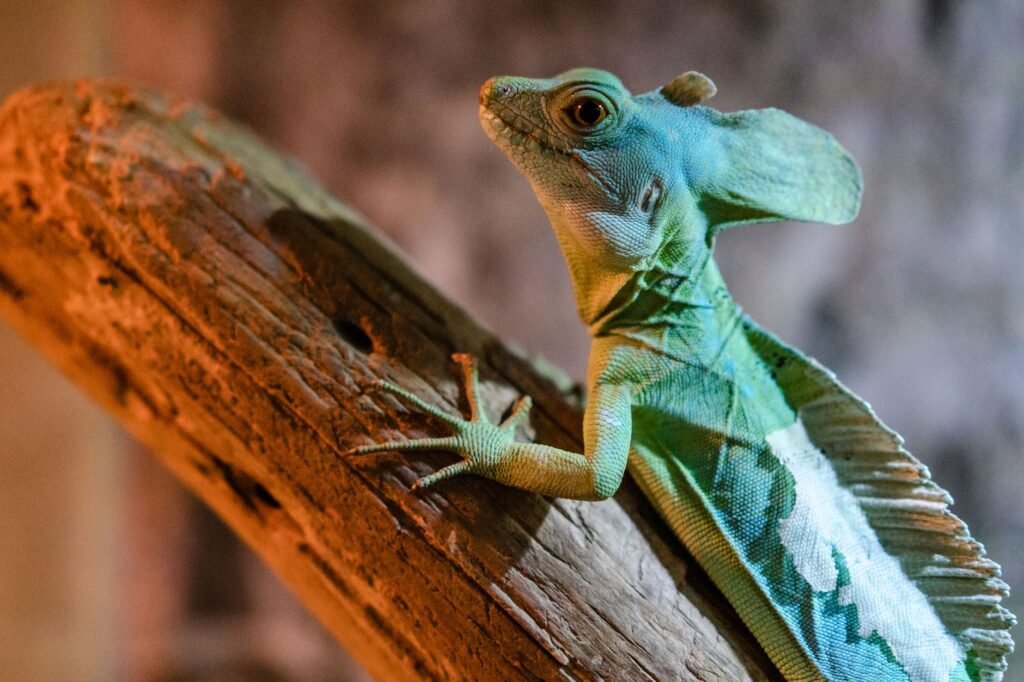
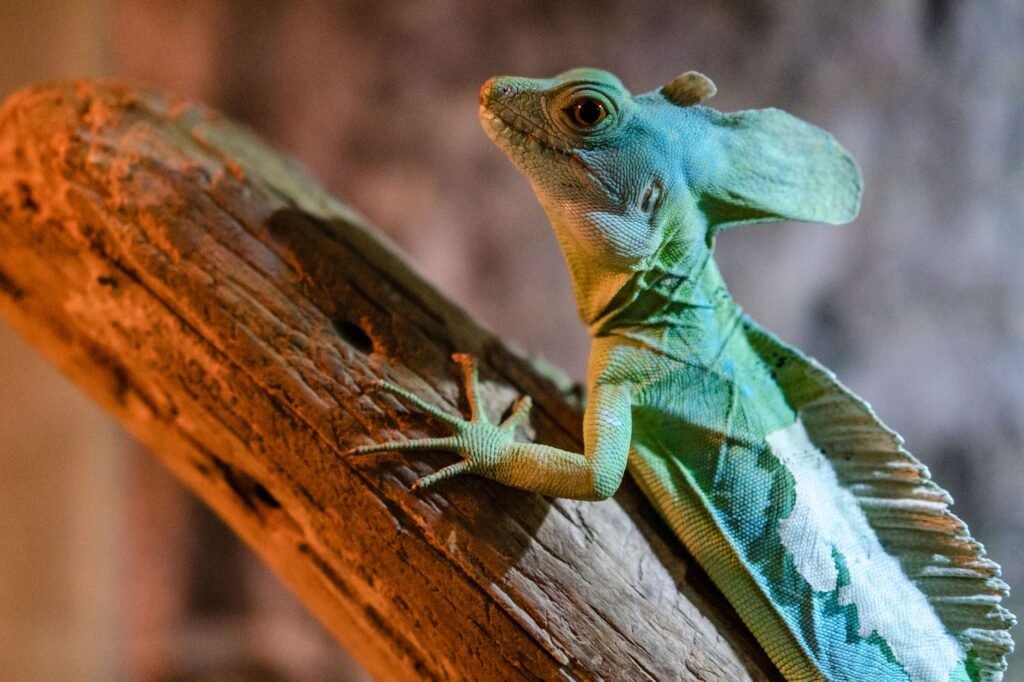
The word basilisk comes from the Greek basilískos (βασιλίσκος), meaning “little king” or “small king.” It is derived from basileus (βασιλεύς), “king.” The name likely refers to the creature’s supposed crest, crown-like marking, or royal bearing. Ancient authors used the term for a specific venomous serpent, and later writers expanded it into a more monstrous figure.
Roman Latin generally retained the Greek term in forms such as basiliscus. The creature’s name already conveyed uniqueness and authority, but in mythic and zoological writing it also carried a sense of danger: a “king” among serpents, yet deadly beyond ordinary snakes.
The basilisk’s origin is not tied to a single cult or local shrine. Instead, it emerges from ancient Mediterranean natural lore, especially the tendency to describe unusual animals from Africa and the Near East as wondrous or terrifying.
Historical Context
Greek background and Roman transmission
The basilisk belongs first to Greek learned tradition, especially writings that mixed observation and marvel. Romans adopted this material through translators, compilers, poets, and encyclopedists. In the Roman world, such creatures were often discussed in the context of:
- natural history
- geography of distant lands
- omens and prodigies
- moralized descriptions of nature
Roman readers were familiar with accounts of exotic animals from North Africa, Egypt, and the eastern provinces, and the basilisk was often placed in that imaginative landscape.
Roman interest in marvels
Roman intellectual culture valued collections of wonders as part of broader learning. Authors such as Pliny the Elder recorded creatures that occupied the boundary between zoology and myth. The basilisk fit this pattern perfectly: it was presented as an animal with extraordinary powers, yet described in a factual tone that made the unbelievable seem credible.
This combination of authority and marvel made the basilisk a useful literary device. It could serve as an emblem of extreme poison, a sign of the dangers of remote lands, or a rhetorical image of lethal evil.
Later Christian reinterpretation
Although Roman pagan religion did not formally worship the basilisk, the creature was later absorbed into Christian symbolism, where it often represented sin, death, Satan, or heresy. This later tradition strongly influenced how the Roman basilisk is remembered in modern culture, even though such meanings belong more to late antique and medieval reception than to early Roman religion.
Main Characteristics
Ancient sources do not always agree on the basilisk’s appearance, but several traits recur.
Common features
| Feature | Description |
|---|---|
| Shape | Usually described as a small serpent or serpent-like creature |
| Size | Often said to be relatively small compared with other snakes |
| Head marking | Frequently associated with a crown-like crest or white spot |
| Venom | Extremely deadly; sometimes said to kill by poison alone |
| Gaze | In later tradition, its look could kill or petrify |
| Breath | Sometimes described as lethal to plants and animals |
| Habitat | Often linked to arid regions, especially Libya or North Africa |
Distinctive traits in ancient accounts
In classical descriptions, the basilisk was often characterized by:
- extraordinary venom
- hostility to other serpents
- devastating environmental effects
- a regal or crowned appearance
- an aura of rarity and terror
Some traditions describe it as a creature so poisonous that it could burn vegetation, shatter rocks, or kill at a distance. These embellishments belong mainly to the literary tradition rather than to any empirical observation.
Relation to other serpents
The basilisk was often grouped with other dangerous serpentine beings such as:
- vipers
- asps
- hydras
- amphisbaenae
- dragons in later tradition
The basilisk was not simply one snake among many; it was treated as the most dangerous of serpents, a kind of apex creature in the monstrous taxonomy of antiquity.
Family and Genealogy
The basilisk does not belong to a divine family tree in the way gods, heroes, or monsters in Greek myth often do. Ancient authors usually describe it as a natural or quasi-natural creature, not as the offspring of named parents.
Traditions of origin
Different ancient and later sources give differing accounts of how it arose:
- Some writers present it as a species of venomous serpent native to a particular region.
- Later medieval traditions, building on ancient lore, sometimes connect it with a toad hatching from a serpent’s egg or other bizarre birth stories.
- These elaborate genealogies are not securely attested in the earliest Roman sources and should be treated as later developments.
Relationships with other beings
The basilisk is mainly defined by its relations with:
- snakes, which it dominates or destroys
- humans, whom it terrifies and kills
- mythic animal hunters, who attempt to defeat it
- the natural world, which it blights or contaminates
There is no standard spouse, offspring, or divine lineage in Roman tradition.
Symbols
Because the basilisk is not a Roman god, its “symbols” are better understood as iconographic and literary emblems associated with it.
Common symbolic associations
- Crown or crest: symbol of kingship, rarity, and dangerous superiority
- Snake body: poison, danger, hidden threat
- Destructive gaze: lethal power, evil eye, in later interpretation
- Dry wasteland: sterility, death, and the corruption of life
- Fire or scorching breath: overwhelming destructive force
Interpretive meanings
In Roman and later thought, the basilisk often symbolized:
- fatal poison
- the lethal power of sight
- the fragility of life
- distant and exotic danger
- the triumph of reason or heroic courage over chaos
Sacred Animals
Strictly speaking, the basilisk has no sacred animals in the religious sense. However, it is conceptually linked with several animals in symbolic and comparative traditions.
Associated animals
| Animal | Significance |
|---|---|
| Snake | Primary form and closest symbolic relation |
| Cock | In later folklore, sometimes linked to the basilisk’s origin or destruction |
| Weasel | In some traditions, one of the few creatures believed capable of killing it |
| Dragon | Later medieval and Renaissance overlap in monstrous symbolism |
| Scorpion | Shared associations with venom and danger |
Symbolic significance
The basilisk’s animal associations underscore its status as a creature of venom, liminality, and concentrated menace. The weasel, for example, appears in some traditions as a natural enemy because of its supposed resistance to serpents. These details vary widely by source and period.
Sacred Plants
There are no known sacred plants connected to the basilisk in Roman religion. Still, classical and later texts often place the basilisk in relation to plants it could allegedly destroy.
Plant associations in tradition
The basilisk was said to have such a lethal presence that it could:
- wither grass
- scorch herbs
- kill shrubs
- poison agricultural land
This makes it a symbol of sterility rather than fertility.
Later medicinal and literary uses
In later herbal and alchemical traditions, references to the basilisk sometimes appear in discussions of antidotes, protective herbs, and counter-magic. These are not central to Roman belief but belong to the wider history of the legend.
Sacred Places
The basilisk is associated not with sanctuaries, but with remote, dangerous regions. Ancient authors often locate it in Libya, North Africa, or other arid lands beyond the Roman center.
Geographic associations
Common locations include:
- Libya
- desert regions of North Africa
- the fringes of the inhabited world
- waste places and barren terrain
These settings reinforced the creature’s role as a symbol of the inhospitable outside—the territory beyond civilization, agriculture, and Roman order.
Literary places
In literary tradition, the basilisk also belongs to the marvelous geography of encyclopedic texts. It is “located” wherever ancient writers discussed exotic animals, poisonous creatures, or wonders of nature.
Powers and Attributes
The basilisk’s defining qualities center on its destructive abilities.
Attributed powers
Different ancient and later sources attribute the following powers to the basilisk:
- killing by venom
- killing by glance or gaze
- killing by breath
- causing plants to wither
- contaminating or spoiling water
- defeating other serpents
- spreading terror through mere presence
Nature of these powers
The exact mechanism of death differs across sources. Some focus on its poison, while others emphasize its vision. The famous lethal gaze became especially important in later European tradition, but the basic ancient idea was already clear: the basilisk was uniquely dangerous, even among venomous creatures.
Domain of influence
The basilisk belongs to the domain of:
- poison
- death
- desolation
- wilderness
- the monstrous edge of nature
Unlike gods, it does not govern a beneficial sphere. Its “power” is overwhelmingly negative and destructive.
Main Myths
The basilisk and the serpent world
In Roman and Greek natural lore, the basilisk is usually not part of a grand myth cycle but rather appears in descriptive anecdotes. The most common story pattern is simple:
- The basilisk is identified as an exceptionally deadly serpent.
- Its presence is said to destroy nearby life.
- Other animals die or flee from it.
- Human beings seek ways to avoid or defeat it.
Defeat by the weasel
One of the best-known traditions says that the basilisk can be killed by a weasel. This idea appears in ancient and later accounts, though details vary. The explanation may derive from observations about animal behavior or from symbolic opposition between creatures.
Mirror and self-destruction
A later and highly influential story claims that the basilisk can be killed by seeing its own reflection. This motif is widely known in medieval and modern adaptations, but it is not equally emphasized in all ancient sources. It reflects a broader folkloric theme: evil undone by itself.
Alexander the Great and the basilisk
In some later legendary material, figures such as Alexander the Great appear in stories involving the basilisk or similar marvels. These are not core Roman myths but examples of how the creature entered the expanding imaginative geography of the ancient world.
Relationship with Other Mythological Figures
The basilisk is not closely tied to the Olympian gods or standard Roman divine families. Its relationships are mostly indirect.
With serpent deities and monsters
The basilisk shares thematic space with serpent-like beings such as:
- Python
- Hydra
- Typhon
- draconic monsters in later literature
These figures represent chaos, danger, and the untamed natural world.
With heroes and protectors
In stories where it appears, the basilisk is often opposed by:
- heroic adventurers
- wise travelers
- animal enemies such as the weasel
- counterpoisons or protective devices
With Roman intellectual tradition
The basilisk’s most important relationships are actually with authors and compilers. Its survival depends on writers such as Pliny and later commentators who preserved, transformed, and moralized the tradition.
Worship and Cult
There is no evidence of formal worship of the basilisk in Roman religion. It was not a deity with temples, priests, festivals, or sacrifices.
What existed instead
The basilisk appears in contexts such as:
- natural history
- medical lore
- protective magic
- omens and marvels
- moralizing allegory
Apotropaic uses
Because of its deadly reputation, the basilisk sometimes appears in protective contexts as something to be avoided, named, or symbolically mastered. In later traditions, images of the basilisk could serve as warnings or as emblems of danger overcome.
Ritual significance
No standardized Roman ritual is known for the basilisk itself. Any alleged rituals involving it are generally later folklore or learned magical speculation rather than established Roman cult practice.
Ancient Sources
The basilisk is best known from classical and post-classical literature rather than from mythic epic.
Important ancient and classical references
Pliny the Elder, Natural History
One of the most important sources for the basilisk in Roman literature. Pliny presents it as a deadly serpent and includes details about its power and habitat.Lucan, Pharsalia
Lucan’s descriptions of Libya and its marvels contribute to the Roman literary landscape in which creatures like the basilisk appear.Isidore of Seville, Etymologies
Although later than classical Rome, Isidore helped preserve and systematize the tradition that became authoritative in medieval Europe.Later Latin bestiaries and encyclopedic works
These works expanded the basilisk’s attributes and popularized it in Christian moral interpretation.
On Homer, Hesiod, and earlier Greek authors
The basilisk is not a major figure in Homer or Hesiod. Its tradition is more closely associated with later Greek natural lore and Roman encyclopedic writing than with the earliest epic poets.
Caution on source criticism
Ancient accounts of the basilisk are often secondhand, literary, or moralized. They should not be read as scientific zoology in a modern sense. Different authors may describe different creatures under the same or related names.
Roman Equivalent
There is no exact Roman equivalent to the basilisk in the sense of a native Roman deity or uniquely Roman monster. The Roman basilisk is an adaptation of Greek tradition, preserved and amplified in Latin literature.
Roman adaptation
Romans largely treated the basilisk as:
- a foreign natural marvel
- a deadly serpent from distant lands
- a useful example in encyclopedic writing
- a symbol of extraordinary poison and destruction
Comparison with Roman cultural categories
If one seeks a Roman parallel, the basilisk resembles not a god but a monstrous natural prodigy, similar in function to other wonder-creatures described in Roman texts. It belongs to the same intellectual world as accounts of hydras, dragons, sea monsters, and exotic beasts.
Influence on Modern Culture
The basilisk has had a remarkably long afterlife.
Literature and folklore
The creature appears in:
- fantasy literature
- children’s stories
- horror fiction
- modern retellings of classical myth
- fairy tales and local legends
Its lethal gaze and serpent form make it an ideal symbol of hidden danger.
Film, television, and games
The basilisk is frequently reimagined in:
- fantasy films
- television series
- role-playing games
- video games
- animated features
Modern versions often borrow the Roman and medieval image of a creature that kills through sight or petrifies victims.
Art and heraldry
In art, the basilisk may appear as:
- a serpent with a crown-like head marking
- a hybrid serpent-dragon
- a symbolic creature of evil or warning
It also appears in heraldic and emblematic traditions, where it can represent vigilance, deadly power, or monstrous otherness.
Popular culture
The basilisk is especially familiar today because it combines several memorable traits:
- serpent form
- royal title
- supernatural gaze
- ancient prestige
- dramatic visual symbolism
This makes it one of the most adaptable monsters in Western tradition.
Curiosities
- The basilisk’s name means “little king,” which contrasts sharply with its terrifying reputation.
- Ancient writers did not always agree on whether its main weapon was venom, breath, or gaze.
- The basilisk’s later association with petrification is more prominent in medieval and modern storytelling than in the earliest Roman descriptions.
- It is one of the few monsters whose legend survives both as a natural-history curiosity and as a symbol of moral evil.
- In some traditions, the basilisk is treated almost like a benchmark of poison, the creature against which all serpents are measured.
- Its association with wastelands reflects ancient ideas about the dangers of the geographical margins of the known world.
- The basilisk helped shape later European ideas about the evil eye and deadly sight.
Frequently Asked Questions
1. What is the Roman basilisk?
The Roman basilisk is the Roman literary and cultural version of a legendary serpent called the basilisk, inherited from Greek tradition and described as extremely poisonous and deadly.
2. Was the basilisk a Roman god?
No. The basilisk was not a god and did not have a Roman cult. It was a mythical or semi-mythical creature described in literature and natural history.
3. Why is it called a basilisk?
The name comes from Greek and means “little king.” It likely refers to a crown-like marking or the creature’s supposed royal status among serpents.
4. Did ancient Romans believe the basilisk was real?
Some educated Romans may have accepted reports about it in the same way they accepted many marvels in ancient natural history. Modern scholarship treats it as a legendary creature rather than a zoological species.
5. What powers did the basilisk have?
Ancient and later sources credit it with deadly venom, a lethal gaze, poisonous breath, and the ability to blight plants and kill nearby animals.
6. Where was the basilisk said to live?
It was often associated with Libya, North Africa, and other remote or desert regions beyond the Roman center.
7. How was the basilisk defeated?
Different traditions say it could be killed by a weasel, by a mirror or reflection, or by other exceptional means. These details vary by source and era.
8. What is the basilisk’s legacy today?
The basilisk remains a powerful symbol in literature and popular culture, especially as a creature of deadly gaze, poison, and ancient mystery.
Conclusion
The Roman basilisk is best understood as a classical monster of transmission and transformation. Born in Greek natural lore, preserved in Roman encyclopedic writing, and expanded in medieval and modern imagination, it became one of the most enduring serpentine creatures in Western culture.
Although it was never a Roman deity or object of worship, the basilisk occupied an important place in ancient thought about nature, danger, and the marvelous. Its legend reveals how Romans understood the boundaries between fact and wonder, the known world and its fearful margins. Through centuries of reinterpretation, the basilisk has remained a compelling emblem of lethal power, making it a lasting figure in the mythology of the ancient Mediterranean and beyond.

Orin Vale has spent the better part of two decades tracing the threads that connect the world’s oldest stories — from the halls of Asgard to the banks of the Nile, from Olympus to the jungles of the Maya. What began as a childhood fascination with flood myths and trickster gods grew into years of independent study across comparative mythology and ancient religion, always chasing the same question: what did these stories mean to the people who first told them? Orin writes for readers who want more than trivia — the ones looking for the beliefs, fears, and truths that myths were built to carry.