Roman Manticore
Introduction
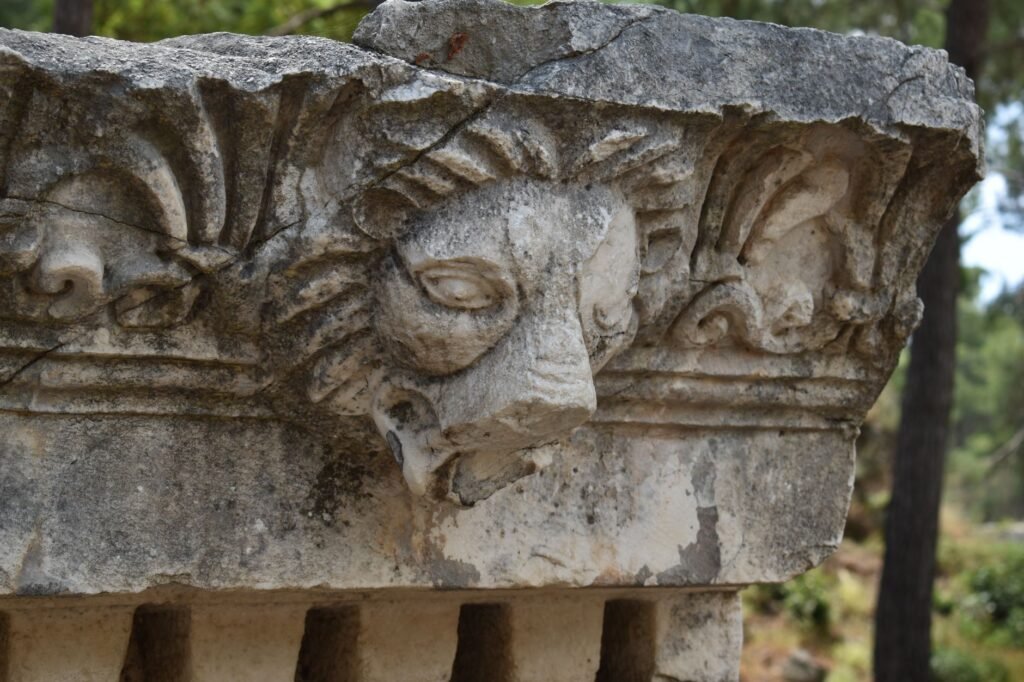
The Roman manticore is not a creature of Roman religion in the strict sense, but rather the manticore as it was received, adapted, and transmitted in the Roman world through classical literature and natural history. In Greco-Roman tradition, the manticore was understood as a monstrous hybrid beast associated with the distant East, especially India or Persia, and described as a fearsome predator with a human-like face, a lion’s body, and a tail armed with deadly stings or a scorpion-like appendage.
Although it never occupied a central place in Roman cult, the Roman manticore is important because it shows how Romans absorbed exotic creatures from earlier Greek and Persian traditions into their own literary and encyclopedic imagination. It also became part of the broader bestiary tradition that influenced medieval and early modern depictions of monstrous animals.
Origin and Meaning
The word manticore ultimately comes from the Greek mantikhoras or martikhora, a term reported in ancient sources as having been borrowed from Persian or an eastern language. Ancient writers did not agree on the exact meaning of the name, and its etymology remains uncertain.
Most classical explanations connect the name to the creature’s reputation for being:
- A man-eater
- A deadly predator
- A beast from the farthest East
Ancient authors often treated the name itself as foreign and exotic, reinforcing the idea that the creature belonged to lands beyond the Roman world. Because Roman authors inherited much of their knowledge from Greek natural histories, the term entered Latin literature as part of a wider tradition of marvels and monstrous ethnography.
Historical Context
The Roman manticore belongs to the cultural world of classical antiquity, especially the intersection of:
- Greek natural philosophy
- Roman encyclopedic literature
- Persian and Indian “marvel” traditions
- Hellenistic geography and ethnography
Romans were deeply interested in the wider known world, especially territories beyond the Mediterranean. Writers and readers alike were fascinated by reports of extraordinary animals from India, Ethiopia, Arabia, and other remote regions. In such texts, real animals, exaggerated accounts, and outright legendary creatures often appeared side by side.
The manticore fit this literary environment well. It embodied several themes that recur throughout ancient Roman and Greek writing:
- the danger of distant lands
- the instability of travel beyond the civilized world
- the existence of nature’s extremes
- the difficulty of distinguishing observation from rumor
Roman authors did not usually treat the manticore as an object of worship. Instead, they treated it as a creature of natural history, marvels, and moralized wonder. In this sense, the Roman manticore belongs more to the world of scholarship and storytelling than to formal religion.
Main Characteristics
Ancient descriptions of the manticore vary, but several traits appear repeatedly.
Typical Features
| Feature | Description |
|---|---|
| Head | Often human-like or with a human face |
| Body | Usually lion-like |
| Tail | Sometimes described as a scorpion tail or tail with sharp spines |
| Teeth | Frequently said to have multiple rows of teeth |
| Voice | Said to make eerie sounds, sometimes compared to a trumpet or mixed animal noises |
| Diet | Depicted as a man-eater or fierce carnivore |
Common Depictions
The most widely repeated ancient image is a hybrid beast combining:
- a man’s face
- a lion’s body
- a tail that could sting or launch deadly spines
Some accounts add even more alarming details, such as:
- triple rows of teeth
- red or blood-colored features
- a voice that mimics human sounds
- remarkable speed and ferocity
These descriptions should be treated cautiously. Ancient authors were not conducting zoological observation in the modern sense. They were often repeating hearsay or combining reports from travelers, local traditions, and literary motifs.
Symbolic Meaning
The manticore generally symbolized:
- danger in the unknown
- predatory violence
- the unreliability of monstrous rumor
- the boundary between human and animal
Because of its human face, it also suggested a disturbing inversion of order: something that looks partly human but behaves entirely as a beast.
Family and Genealogy
Unlike gods and heroes, the manticore does not have a settled genealogy in Roman or Greek mythology. It is not normally assigned parents, children, spouses, or descendants in classical sources.
Related Classifications in Ancient Thought
Some ancient writers and later interpreters tried to place it among other fabulous creatures, but this is not genealogy in the mythological sense. Instead, the manticore is sometimes grouped conceptually with:
- lions
- hybrids
- monstrous beasts of the East
- other bestiary creatures such as griffins and sphinxes
In medieval and early modern bestiaries, creatures like the manticore were sometimes assigned symbolic relationships rather than biological ones. However, these are literary or allegorical classifications, not family trees.
Symbols
The Roman manticore was not associated with a formal system of cult symbols, but several images became strongly linked to it in literature and later art.
Common Symbolic Elements
- Human face: intelligence, deception, or uncanny resemblance to humanity
- Lion body: strength, ferocity, kingship of beasts
- Scorpion tail or spines: hidden danger, sudden death, poisoned attack
- Red or dark coloration in later tradition: violence and bloodshed
Interpretation of Symbols
The hybrid form is especially significant. In ancient and later symbolic reading, the manticore represented the collapse of categories:
- human versus animal
- civilized versus wild
- known world versus unknown world
- appearance versus reality
This made it useful as a literary emblem of deception and menace.
Sacred Animals
Strictly speaking, the Roman manticore had no sacred animals in the religious sense, since it was not an object of cult. However, several animals are closely associated with its image.
Associated Animals
| Animal | Significance |
|---|---|
| Lion | Strength, predation, wild power |
| Scorpion | Poison, hidden attack, lethal tail |
| Human | Disturbing resemblance, false familiarity |
| Sometimes wild cats or big cats | General association with ferocity |
The lion is the most important animal in the composite form. It marks the manticore as a supreme predator. The scorpion or stinging tail enhances the sense that the beast kills not only by biting, but also by concealed weaponry.
Sacred Plants
There are no established sacred plants associated with the Roman manticore in ancient tradition.
That said, later symbolic and folkloric traditions sometimes linked monstrous beasts to:
- thorny plants
- poisonous herbs
- bitter or dangerous growths
- desert vegetation
These associations are interpretive rather than textual. In classical sources, the manticore is defined by animal hybridity and lethal aggression, not by a botanical cult.
Sacred Places
The Roman manticore was usually located in the far East, especially in literary descriptions of India or adjacent regions. This geographical placement mattered more than any fixed shrine or sanctuary.
Regions Associated with the Manticore
- India
- Persia
- remote eastern lands
- occasionally broader “barbarian” frontiers beyond the Roman world
These places functioned less as precise geography and more as zones of marvel and alterity. In Roman literature, distant lands often served as repositories for extraordinary creatures and customs.
Importance of Distant Geography
The manticore’s supposed habitat reinforced its identity as a creature beyond ordinary experience. It was not tied to a city, mountain, or temple. Instead, its symbolic “place” was the edge of the map: the uncharted or partially known world where natural history and legend overlap.
Powers and Attributes
The Roman manticore is best understood as a creature with no divine powers, but with several terrifying attributes.
Core Attributes
- extreme ferocity
- human-like intelligence or appearance
- lethal biting power
- a dangerous tail or sting
- speed and agility
- appetite for human flesh in some accounts
Functional Meaning
Its “powers” are not supernatural in the theological sense. Rather, ancient authors used the manticore to represent a concentration of natural menace. It was a beast whose anatomy itself seemed designed for killing.
Typical Domains
If the creature is described in terms of influence or domain, those domains would be:
- predation
- wilderness
- frontier danger
- monstrous wonder
- exotic marvels
Main Myths
The manticore does not have a single canonical myth comparable to the stories of Heracles, Perseus, or Aeneas. Instead, it appears in reports, descriptions, and legendary accounts.
The Best-Known Ancient Description
One of the most cited ancient accounts comes from Ctesias, a Greek author whose writings survive only in fragments and later summaries. Ctesias described the manticore as a beast from India with a human face, lion body, and a tail armed with stings. Later readers repeated or summarized his description.
Themes in Manticore Stories
The main narrative patterns are:
- travelers encounter a strange beast in the East
- the beast is described in sensational terms
- its anatomy is a mixture of human and animal features
- its habits are exceptionally violent
- its existence is reported as fact, though often with skepticism
Why These Stories Matter
These accounts reveal as much about ancient curiosity as they do about the creature itself. The manticore stood for the limits of knowledge and the possibility that the world contained beings beyond ordinary classification.
Relationship with Other Mythological Figures
The Roman manticore is not part of a divine family, but it does relate conceptually to several other mythic or monstrous beings.
Comparable Creatures
| Creature | Relationship to the Manticore |
|---|---|
| Sphinx | Human-headed hybrid beast; shares the motif of mixed anatomy |
| Griffin | Another eastern marvel; often associated with treasure and vigilance |
| Chimera | Composite monster, though from a different mythic tradition |
| Scorpion creatures | Shared lethal tail imagery |
| Dragons and serpentine beasts | Similar role as dangerous, liminal monsters |
Literary Relations
Ancient and later writers often placed such creatures in the same imaginative category: beasts that test the boundaries of natural order. The manticore is especially close to the sphinx in visual logic, though they arise from different traditions and serve different narrative functions.
Worship and Cult
There is no evidence of formal worship of the Roman manticore in the ancient Roman religious system.
Why There Was No Cult
The manticore was treated as:
- a monster
- a natural curiosity
- a legendary beast
- a subject for scholarship or storytelling
It was not a deity, hero, or protective numen.
Ritual Context
No established rituals, offerings, or temples are known. If the manticore appeared in later magical or folkloric contexts, those belong to post-classical traditions rather than Roman public religion.
Ancient Sources
Several classical and late antique authors mention the manticore or related extraordinary beasts.
Important Ancient and Classical References
| Author | Work or Context | Relevance |
|---|---|---|
| Ctesias | Indica (known from fragments and later summaries) | Early influential description of the manticore |
| Pliny the Elder | Natural History | Includes marvelous animals and reports on eastern beasts |
| Pausanias | Description of Greece | Useful for broader mythographic comparison, though not a central manticore source |
| Aelian | On the Nature of Animals | Preserves wonders and unusual animal lore |
| Isidore of Seville | Etymologies | Important for later Latin transmission of monstrous animals |
Caution About the Sources
The evidence is fragmentary and uneven. No single ancient author provides a complete, universally accepted account. Instead, the manticore emerges from a chain of transmission in which later writers often depended on earlier reports without independent verification.
Roman Equivalent
There is no direct Roman god or creature that exactly corresponds to the manticore. However, the Roman world adapted the creature into Latin literature and learned tradition.
Roman Adaptation
Roman authors generally treated the manticore as:
- an exotic monster from the East
- a specimen in natural histories of marvels
- part of a broader tradition of prodigies and monstrous races
Not a Domestic Roman Creature
It should not be confused with creatures native to Roman religion or folklore. The Roman manticore is best understood as a Romanized literary version of a foreign legendary beast.
Comparison with Other Romanized Monsters
Romans often absorbed foreign creatures into their intellectual world the same way they absorbed foreign gods, though not always in a religious sense. The manticore is an example of this cultural process at the level of literature rather than worship.
Influence on Modern Culture
The manticore has had a long afterlife in modern culture, especially through medieval bestiaries, fantasy literature, role-playing games, and visual art.
Literary Influence
Modern authors often use the manticore as a symbol of:
- dangerous hybridity
- ancient mystery
- monstrous East-West imagery
- predatory fantasy ecology
Cinema, Television, and Games
The manticore appears in:
- fantasy novels and short stories
- tabletop role-playing games
- video games
- films and television series that draw on mythic creatures
Its modern depictions often expand or alter the classical form, sometimes emphasizing:
- wings
- armor-like scales
- greater intelligence
- magical powers
These additions are later inventions rather than ancient features.
Art and Popular Imagery
Artists have long been drawn to the manticore because its hybrid body offers dramatic visual possibilities. It is especially common in:
- illuminated manuscripts
- heraldic fantasy art
- creature design
- collectible card games
- bestiary-inspired illustrations
Curiosities
- The manticore is one of several ancient monsters whose fame rests largely on textual transmission, not on a single authoritative myth.
- Ancient descriptions often combine the manticore with India, a region that Greek and Roman writers used as a setting for marvels.
- Some medieval authors repeated the creature as if it were a real animal, showing how strongly ancient natural history could blur into legend.
- The creature’s human face is one of its most unsettling traits because it makes the monster appear familiar before revealing its danger.
- In many modern fantasy settings, the manticore is given wings, but this is generally not part of the core classical description.
- The manticore often appears alongside griffins, sphinxes, and chimeras in monster encyclopedias, even though their origins differ.
- Ancient writers sometimes used sensational beasts to explore the limits of trustworthy reporting, making the manticore a useful case study in classical skepticism.
Frequently Asked Questions
1. What is a Roman manticore?
A Roman manticore is the Roman literary and cultural version of the manticore, a legendary hybrid beast described in Greco-Roman natural history as having a human face, a lion’s body, and a deadly tail.
2. Was the manticore a Roman god or demon?
No. The manticore was not a Roman god, demon, or object of formal worship. It was a monstrous animal in literary tradition.
3. Where did the idea of the manticore come from?
Ancient sources usually connect it to the East, especially India, and the name itself was considered foreign. The exact origin is uncertain and disputed.
4. What did the manticore look like?
Descriptions vary, but it was most often said to have a human-like face, lion’s body, and a tail capable of stinging or shooting spines. Some sources also gave it multiple rows of teeth.
5. Did Romans believe the manticore was real?
Some Roman and Greek writers presented it as real or possible within their understanding of natural history, though modern readers should recognize that these accounts were based on hearsay, not scientific observation.
6. Is the manticore the same as the sphinx?
No. Both are hybrid creatures with human and animal features, but they belong to different traditions and have different stories and symbolic roles.
7. Why was the manticore associated with India?
For ancient writers, India represented a remote and mysterious region where extraordinary creatures might exist. It served as a literary setting for marvels and exotic beasts.
8. How is the manticore used in modern fantasy?
Modern fantasy often uses the manticore as a dangerous monster, sometimes adding wings, magic, or new ecological roles. These modern traits often go beyond classical descriptions.
Conclusion
The Roman manticore is best understood as a creature of classical imagination rather than Roman religion. It reflects the Roman fascination with distant lands, strange animals, and the uncertain boundary between fact and marvel. Through Greek, Persian, and Roman literary transmission, the manticore became one of antiquity’s most memorable hybrid monsters: part lion, part human, and entirely threatening.
Its legacy is significant because it reveals how ancient writers classified the unknown. The Roman manticore survives not through worship or epic myth, but through the enduring power of descriptive literature, encyclopedic curiosity, and the human tendency to imagine monsters at the edges of the map.

Orin Vale has spent the better part of two decades tracing the threads that connect the world’s oldest stories — from the halls of Asgard to the banks of the Nile, from Olympus to the jungles of the Maya. What began as a childhood fascination with flood myths and trickster gods grew into years of independent study across comparative mythology and ancient religion, always chasing the same question: what did these stories mean to the people who first told them? Orin writes for readers who want more than trivia — the ones looking for the beliefs, fears, and truths that myths were built to carry.