Roman Phoenix
Introduction
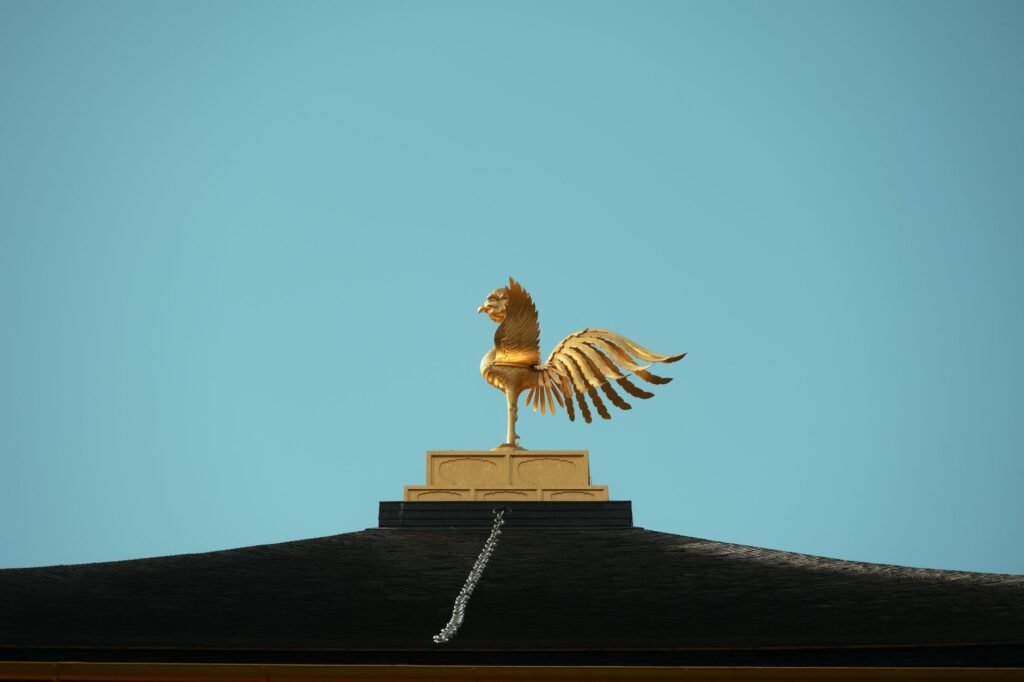
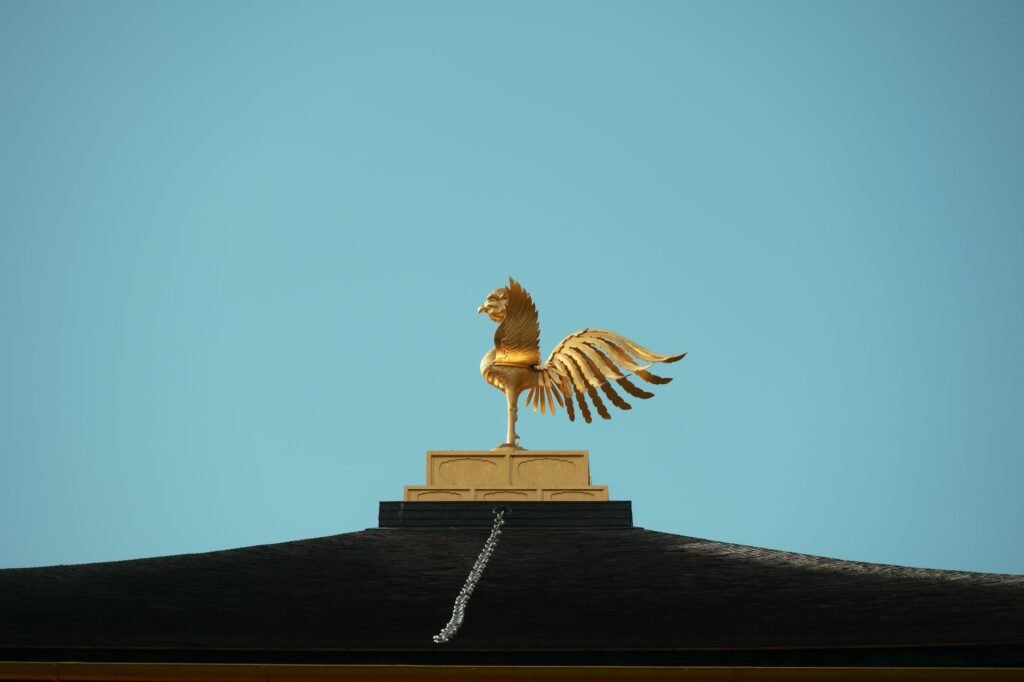
The Roman Phoenix is not a separate Roman deity in the strict sense, but rather the phoenix as it appears in Roman religion, literature, art, and imperial symbolism. In Roman usage, the phoenix was the legendary bird associated with renewal, cyclical rebirth, immortality, solar imagery, and the continuity of empire. It entered Roman culture through contact with Greek, Egyptian, and broader Near Eastern traditions, and was reshaped by Roman writers and emperors into a potent emblem of endurance and restoration.
The phoenix became especially important because it linked several Roman concerns: the passage of time, the return of order after crisis, the longevity of the Roman state, and the divine favor claimed by rulers. In imperial iconography, it could suggest that Rome, like the bird, would rise again after destruction.
Origin and Meaning
The word phoenix comes from the Greek phoinix (φοῖνιξ), a term with several related meanings in ancient Greek, including:
- the mythic bird
- the color purple-red or crimson
- the Phoenician people
- the date palm in some contexts
The exact etymology is debated, but the connection with red or purple coloration is often noted in scholarly discussions, since ancient descriptions sometimes portray the bird with radiant or fiery hues.
The Roman world inherited the phoenix primarily through Greek literature and Egyptian religious symbolism. Roman authors often repeated and adapted the Greek accounts, especially those attributed to Herodotus, Pliny the Elder, Tacitus, Ovid, and later late antique writers.
In Roman culture, the phoenix was not a standard cultic animal with a fixed temple-based worship. Instead, it functioned as a mythic symbol used in moral, philosophical, and political writing.
Historical Context
The Roman understanding of the phoenix developed in a world of intense cultural exchange. Rome absorbed religious and mythological ideas from:
- Greece
- Egypt
- the Levant
- Persian and broader eastern traditions
This was especially significant because Roman intellectuals were fascinated by ancient wisdom, cosmic cycles, and signs of dynastic legitimacy. The phoenix fit well into Roman thought because it could be interpreted as:
- a sign of natural cycles
- an emblem of the sun
- a symbol of imperial renewal
- proof of the wonders of the wider world
Egypt and Solar Associations
Many Roman and Greek traditions connected the phoenix with Heliopolis in Egypt, a city associated with solar worship. Some ancient sources describe the bird as arriving there at long intervals, bringing the body of its parent in a nest of aromatic materials. This made the phoenix part of an Egyptian-colored lore of sacred renewal, even if the story was filtered through Greek and Roman authors.
Roman Empire and Imperial Ideology
Under the Roman Empire, the phoenix acquired particular political value. Emperors and state propagandists could use it to suggest:
- the rebirth of the age
- the restoration of peace
- the eternal character of Roman rule
- continuity after death or catastrophe
The symbol was especially adaptable after crises such as civil war, dynastic transition, or urban destruction. In late antiquity, Christian authors also adopted the phoenix as a figure for resurrection and eternal life, although that is a later religious reinterpretation rather than an originally Roman doctrine.
Main Characteristics
Ancient sources do not agree on every detail, but the Roman phoenix is usually described with the following features.
| Feature | Common Ancient Description | Notes |
|---|---|---|
| Appearance | Bird of extraordinary beauty, often compared to an eagle or peacock | Descriptions vary by author |
| Color | Gold, red, purple, or fiery plumage | Linked to solar and flame imagery |
| Lifespan | Very long-lived, often 500 years or more | Numbers differ widely in sources |
| Death and rebirth | Dies and is reborn from its own remains or from a nest/ashes | Central feature of the myth |
| Longevity | Unique among birds | Often presented as singular or one of a kind |
| Geographic association | Arabia, India, or Egypt depending on source | Tradition varies |
Distinctive Traits
The phoenix is typically identified by:
- uniqueness: often one phoenix exists at a time
- cyclical regeneration: death is followed by rebirth
- rarity: sightings are exceptional and wondrous
- solar connection: the bird is linked to the sun, fire, dawn, and brilliance
- ritual order: its rebirth may involve sacred aromatic substances and careful self-transport
Some writers focus on the phoenix as a natural marvel, while others treat it as a moral allegory or a wonder of distant lands.
Family and Genealogy
The phoenix is unusual among mythic creatures because it is generally not given a conventional family tree. Ancient traditions usually present it as a singular species or unique individual rather than as part of a divine genealogy.
Parentage
There is no stable Roman account of the phoenix’s parents. In many versions, the bird reproduces itself or emerges from its own remains, making ordinary parentage irrelevant.
Offspring
Most classical accounts do not describe offspring in the normal sense. Instead, the phoenix is said to create a successor from:
- its own body
- a nest of herbs and spices
- ashes or the remnants of the previous bird
Spouses and Descendants
The phoenix generally has no spouse and no lineage in the usual mythological sense. This lack of family relations contributes to its symbolic status as a self-renewing being outside ordinary biological order.
Symbols
The Roman phoenix was associated with a rich set of symbols.
Major Symbols
- Fire: destruction that leads to renewal
- Sun: immortality, brilliance, cosmic order
- Ashes: death transformed into life
- Nest of spices and aromatic woods: purification, preservation, sacred preparation
- Gold and red: royal and solar coloration
- Circle or cycle: repetition, time, renewal
Symbolic Meaning
The phoenix often stands for:
- rebirth after ruin
- triumph over mortality
- the continuity of civilization
- the renewal of power
- the immortality of memory and reputation
In Roman imperial contexts, these meanings could be politically charged. The bird’s rebirth suggested that Rome, or a particular ruler, could survive catastrophe and emerge renewed.
Sacred Animals
The phoenix is itself an animal-symbol rather than a standard sacred animal in a cultic sense. However, Roman and late antique traditions often linked it with other animals through analogy.
Associated Animals
- Eagle: because of the phoenix’s majestic, bird-of-prey appearance
- Peacock: because of splendor, radiant colors, and associations with immortality in later traditions
- Swan: in some poetic contexts, because of beauty and song
- Serpent: indirectly, through the broader theme of renewal and cyclical renewal, though this is not a primary Roman association
Symbolic Significance
These comparisons emphasize:
- nobility
- beauty
- cosmic height
- divine favor
- long life
Sacred Plants
The phoenix is frequently linked with fragrant and resinous plants, especially in descriptions of its nest.
Commonly Associated Plants
| Plant | Role in Tradition | Symbolic Meaning |
|---|---|---|
| Cinnamon | Used in aromatic nest materials in some accounts | Luxury, distance, sacred fragrance |
| Frankincense | Often associated with eastern ritual and incense | Purification, divinity |
| Myrrh | Linked to incense and burial traditions | Death and ritual transition |
| Spices and herbs | General materials for the phoenix’s nest | Preservation and transformation |
| Palm | Sometimes connected through the word phoinix and eastern symbolism | Vitality, fertility, victory |
Not every ancient account includes these details, but aromatic substances are common because they reinforce the bird’s exotic, sacred character.
Sacred Places
The phoenix is most often connected with distant and symbolically charged locations rather than a single fixed sanctuary.
Frequently Mentioned Places
- Heliopolis in Egypt: the most famous location in classical traditions
- Arabia: often described as the bird’s origin or homeland
- India: sometimes named in later geographical imagination
- The desert or remote eastern lands: representing the edge of the known world
Why Place Matters
The phoenix belongs to the marvel literature of antiquity, where wonders are located at the edges of the world. Roman authors used this geographic remoteness to enhance its credibility and mystery. The bird’s association with Egypt also linked it to ancient priestly wisdom and solar worship.
Powers and Attributes
The phoenix has no powers in the sense of a classical god who controls a domain, but it possesses a set of extraordinary attributes.
Core Attributes
- Self-renewal
- Longevity
- Resistance to ordinary death
- Association with immortality
- Transformation through fire
- Connection to the sun and cosmic cycles
Conceptual Domains
In Roman thought, the phoenix could represent:
- time and cyclical history
- rebirth after destruction
- memory and continuity
- order after chaos
- imperial eternity
Its power is primarily symbolic and philosophical. It teaches that destruction is not always final and that new life can emerge from apparent ending.
Main Myths
The phoenix myth was not a single fixed story. Ancient sources preserve multiple versions, and Roman authors often inherited a mixture of Greek, Egyptian, and literary traditions.
The Cycle of Death and Rebirth
The best-known version says that after a very long life, the phoenix:
- builds a nest of aromatic materials
- enters a final stage of life
- dies in or on the nest
- produces a new phoenix from the remains, ashes, or a preserved seed-like successor
This story appears in several ancient accounts, though the details vary.
The Journey to Egypt
Another recurring motif describes the phoenix flying to Heliopolis or another sacred city, sometimes carrying the remains of its parent in an egg, nest, or ball of embalmed matter. This image resembles both funerary custom and ritual transport, and it may have helped ancient audiences connect the myth with Egyptian sacred geography.
Time and the Great Year
Some ancient traditions connect the phoenix with a vast chronological cycle, often of 500 years, though this number is not universal. The bird’s return may coincide with cosmic renewal, suggesting that its life is part of a larger pattern in nature and history.
Symbol of Restoration
In Roman political usage, the phoenix could be treated less as a literal wonder and more as an emblem of a new beginning after turmoil. This made it especially useful in periods of civil conflict, imperial succession, or urban reconstruction.
Relationship with Other Mythological Figures
The phoenix has no large family network like Olympian gods or Roman deities, but it interacts symbolically with several important figures and traditions.
Egyptian Deities and Solar Cult
The phoenix is often associated with Ra or solar theology through Heliopolis, although ancient authors do not always specify direct identification. The relationship is more one of shared symbolism than of strict equivalence.
Greek Tradition
Greek authors preserved the earliest literary forms of the phoenix in Roman knowledge. The bird is therefore closely tied to Greek natural history, travel writing, and mythography.
Christian Reinterpretation
In late antiquity, Christian writers adopted the phoenix as a figure of:
- resurrection
- eternal life
- divine renewal
This did not replace Roman meanings, but it added a new interpretive layer. In Christian usage, the phoenix could serve as an apologetic example from nature supporting belief in resurrection.
Imperial Figures
Roman emperors and dynastic propaganda sometimes used phoenix imagery to associate a ruler with:
- the renewal of the age
- divine continuity
- the restoration of the state after crisis
This was not a personal relationship in mythological terms, but it was a strong symbolic connection in Roman political culture.
Worship and Cult
There is no evidence for a widespread formal cult of the Roman phoenix comparable to the cult of Jupiter, Isis, or Apollo. The phoenix was not ordinarily worshipped as a god.
Forms of Reverence
Instead, the phoenix appears in:
- literary symbolism
- philosophical reflection
- imperial iconography
- funerary and resurrection imagery
- educational and moral discourse
Ritual and Offerings
Ancient texts do not describe a standardized offering system to the phoenix. However, the bird’s association with incense, aromatic woods, and solar purity gave it a ritual atmosphere. In symbolic terms, it was linked with:
- purification
- burning offerings
- funerary memorial
- solar devotion
Festivals
No major Roman festival is securely documented as a phoenix festival. Claims about direct festivals should therefore be treated cautiously.
Ancient Sources
The phoenix is discussed by a range of classical authors. The accounts differ in detail, but together they shape the Roman image of the bird.
Important Ancient Authors
| Author | Work | Relevance |
|---|---|---|
| Herodotus | Histories | Early Greek mention of the phoenix, influential in later tradition |
| Hesiod | Fragments and related tradition | Often mentioned in later discussions, though evidence is indirect and not always secure |
| Manilius | Astronomica | Links celestial order and cosmic symbolism |
| Ovid | Metamorphoses | Describes the bird’s renewal in poetic form |
| Pliny the Elder | Natural History | Gives a famous rationalizing account and notes traditions and skepticism |
| Tacitus | Annals | Reports the phoenix in relation to Roman-era discussion and public curiosity |
| Claudian | Poems | Uses phoenix imagery in late Roman literary contexts |
| Lactantius | De ave phoenice | Famous late antique poem centered on the phoenix |
| Eusebius and other Christian writers | Various works | Phoenix as evidence for resurrection theology |
Source Criticism
Ancient sources do not always agree:
- some treat the phoenix as a marvel of natural history
- some present it as a legendary bird from distant lands
- some use it as allegory
- some express skepticism about its existence
Pliny, in particular, is important because he records both the story and doubts surrounding it.
Roman Equivalent
Strictly speaking, the phoenix does not have a simple Roman equivalent because it is already a Roman-adopted figure. However, Roman religion and symbolism often placed it in relation to several concepts and deities.
Closest Roman Associations
- Sol: the sun god, due to solar imagery
- Aeternitas: eternity, especially in imperial symbolism
- Roma: the eternal city and imperial continuity
- Fides: stability and reliability of the state, in a broad symbolic sense
- Resurrections themes in late Roman and Christian thought
The Roman version of the phoenix is best understood as a cultural adaptation of a wider eastern and Greek mythic bird, not as a direct translation of a single Roman god.
Influence on Modern Culture
The Roman phoenix has had an enormous afterlife in modern culture, largely because its symbolism is immediately understandable across languages and religions.
Literature
The phoenix appears in:
- poetry about renewal and transformation
- fantasy literature
- religious and philosophical writing
- political allegory
Writers often use it to represent recovery after disaster, personal transformation, or national rebirth.
Art and Heraldry
The phoenix appears in:
- emblems of rebirth
- coats of arms
- decorative arts
- book illustration
- state and civic symbolism
Its Roman associations with eternity and empire helped shape later European uses.
Cinema and Television
Modern film and television frequently use the phoenix as:
- a magical creature
- a sign of resurrection
- a metaphor for a hero’s return
- a visual symbol of fire and renewal
Games and Popular Media
In games and fantasy franchises, the phoenix commonly represents:
- rare magical power
- rebirth mechanics
- fire-based abilities
- a companion creature of wisdom or nobility
Political and Cultural Symbolism
The phoenix is widely used in modern discourse to suggest:
- recovery after war
- urban rebuilding
- national rebirth
- institutional renewal
This modern symbolism is strongly influenced by ancient Roman and late antique traditions.
Curiosities
- Ancient authors often disagreed on how often the phoenix returned. The famous 500-year cycle is not universal.
- Pliny the Elder includes the phoenix among marvels of the natural world while also showing a skeptical, almost investigative attitude.
- The bird’s association with incense and spices reflects both its exotic status and the ancient imagination of the East as a land of luxury and wonders.
- In some late traditions, the phoenix became a major argument for Christian resurrection theology.
- The phoenix is one of the few mythic creatures whose meaning moved easily from pagan cosmology to imperial propaganda and then to Christian symbolism.
- Roman use of the phoenix was often less about zoology and more about time, empire, and renewal.
- The bird’s self-renewal made it especially attractive to cultures that wanted to express the idea of survival after catastrophe.
Frequently Asked Questions
What is the Roman Phoenix?
The Roman Phoenix is the phoenix as understood in Roman culture: a legendary bird associated with rebirth, immortality, solar symbolism, and imperial renewal.
Was the phoenix a Roman god?
No. The phoenix was not a Roman god. It was a mythic bird and a symbolic figure in Roman literature, religion, and art.
Where did Romans think the phoenix came from?
Ancient sources place it variously in Arabia, Egypt, India, or other distant eastern lands. Heliopolis in Egypt is especially prominent in some traditions.
What did the phoenix symbolize in Rome?
It symbolized rebirth, longevity, the sun, cyclical time, and sometimes the eternal nature of Roman rule.
Did Romans worship the phoenix?
There is no evidence of a formal, organized cult dedicated to the phoenix. It was primarily a literary and symbolic figure.
Which Roman authors wrote about the phoenix?
Important Roman and late Roman authors include Pliny the Elder, Tacitus, Ovid, Claudian, and Lactantius, among others.
Why is the phoenix connected to fire?
Fire represents destruction, purification, and transformation. In the phoenix myth, fire is the agent through which death leads to renewed life.
Is the Roman Phoenix the same as the Greek phoenix?
They are closely related. The Roman phoenix is the Roman reception and adaptation of a tradition that was already Greek and likely older in origin.
Conclusion
The Roman Phoenix is one of the most enduring symbols of transformation in the ancient world. Although not a god in the Roman pantheon, it became deeply important in Roman imagination because it fused exotic lore, solar imagery, philosophical reflection, and political meaning. Ancient writers used the phoenix to think about time, mortality, and the possibility of renewal after destruction.
Its legacy is unusually strong. From imperial emblem to Christian allegory and modern cultural symbol, the phoenix has remained a powerful image of rebirth. In Roman culture, as in later traditions, it expressed a profound idea: that endings need not be final, and that from loss and fire something new may arise.

Orin Vale has spent the better part of two decades tracing the threads that connect the world’s oldest stories — from the halls of Asgard to the banks of the Nile, from Olympus to the jungles of the Maya. What began as a childhood fascination with flood myths and trickster gods grew into years of independent study across comparative mythology and ancient religion, always chasing the same question: what did these stories mean to the people who first told them? Orin writes for readers who want more than trivia — the ones looking for the beliefs, fears, and truths that myths were built to carry.