Introduction
The Shield of Achilles is one of the most famous objects in Greek literature. In Homer’s Iliad, it is a magnificent shield forged by the god Hephaestus for the hero Achilles at the request of his mother, Thetis. More than a weapon, the shield is a richly symbolic artwork that depicts an entire vision of the world: cities at peace and war, agriculture, law, festivals, dance, and the cosmic order of earth, sky, sea, and stars.
Its importance lies in both myth and literary history. The shield is often studied as a masterpiece of ancient poetic description and as an early example of ekphrasis, the vivid verbal representation of a work of art. It also has lasting cultural significance because it contrasts human life’s beauty and fragility with the violence of war.
Origin and Meaning
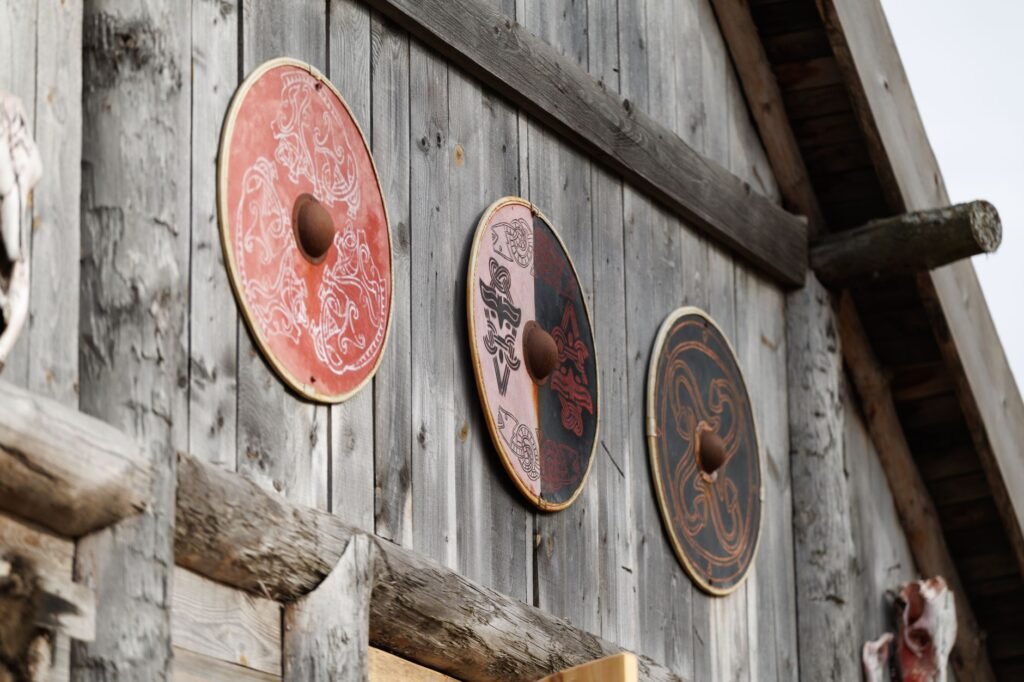
The term “Shield of Achilles” is a modern English phrase used to refer to the shield described in the Iliad. In Greek, the shield is not given a special personal name; it is simply Achilles’ aspis or sakos, meaning a shield or large shield.
The object’s literary origin is found in Book 18 of the Iliad. After Patroclus is killed by Hector, Achilles mourns deeply. Thetis appeals to Hephaestus to forge new armor for her son, since his original armor has been taken by Hector. The shield is the most celebrated piece of this new armor.
Its meaning is layered:
- It is a symbol of heroic protection.
- It represents the cosmos, or ordered universe.
- It serves as a miniature world containing scenes of peace, conflict, and daily life.
- It reflects the poet’s meditation on the human condition, especially the relationship between war and civilization.
Historical Context
The Shield of Achilles belongs to the world of archaic Greek epic poetry, traditionally associated with the eighth century BCE, though the poem draws on older oral traditions. The Iliad itself reflects a legendary Bronze Age setting, but it was composed in a later Greek cultural environment.
The world of Homeric epic
In Homeric society, armor was a crucial marker of status, identity, and divine favor. A hero’s equipment was not merely practical; it expressed honor, lineage, and prestige. The shield of Achilles therefore has both martial and symbolic importance.
Divine craftsmanship
Greek myth often presents exceptional weapons as the work of divine smiths. Hephaestus, the god of fire, metalworking, and craftsmanship, creates armor that surpasses human art. The shield embodies the ancient idea that divine artistry can compress the whole world into a single object.
Literary and cultural setting
The shield is also part of a larger ancient tradition in which poets describe elaborately decorated objects. Similar examples appear in later Greek and Roman literature. However, the Shield of Achilles is especially important because Homer presents it as a microcosm of human existence.
Main Characteristics
The shield is described in extraordinary detail. Homer devotes a long passage to its imagery, creating one of the most famous passages in ancient literature.
Key features
| Feature | Description |
|---|---|
| Maker | Hephaestus, god of fire and craft |
| Owner | Achilles |
| Material | Metalwork of exceptional divine quality |
| Function | Protective armor and symbolic representation |
| Imagery | Cities, fields, courts, weddings, war, ocean, sky, constellations |
| Literary form | Ekphrasis, or detailed artistic description |
The five layers or zones of imagery
Homer’s description is not always presented as a strict technical diagram, and ancient scholars sometimes interpret it differently. Still, the shield is commonly understood as containing several major scenes:
- The cosmos: sun, moon, stars, and constellations.
- Two cities of men:
- one at peace, with weddings and law courts;
- one at war, under siege.
- Agricultural life: plowing, harvesting, vineyard labor.
- Pastoral life: cattle and herds, including animals threatened by lions.
- Dance and celebration: a lively scene of communal festivity.
These scenes give the shield its enduring fame. It is not simply decorative; it is a symbolic panorama of human life.
Family and Genealogy
Because the Shield of Achilles is an object rather than a deity or hero, it does not have a genealogy in the usual mythological sense. However, its “family” context can be described through the figures connected to its creation and use.
Associated figures
- Achilles: the great Greek hero of the Iliad.
- Thetis: Achilles’ mother, a sea nymph who petitions Hephaestus.
- Hephaestus: divine smith who forges the shield and the rest of Achilles’ new armor.
- Patroclus: Achilles’ companion whose death leads to the making of the armor.
- Hector: Troy’s champion, who previously wears Achilles’ old armor after killing Patroclus.
Relationship network
The shield is tied to a chain of relationships shaped by grief, honor, and heroic obligation:
- Thetis seeks to restore her son’s honor.
- Hephaestus responds with divine craftsmanship.
- Achilles receives armor that marks both his renewed role and his fate.
- The conflict between Achilles and Hector frames the shield’s dramatic context.
Symbols
The Shield of Achilles is rich in symbolism. Its images are more than illustrations; they reflect ancient Greek ideas about order, violence, and human life.
Major symbolic meanings
- Cosmic order: The celestial images suggest the structure of the universe.
- Civilization: The cities and festivals show law, marriage, and communal life.
- Labor: Agricultural scenes honor human work and seasonal rhythms.
- War: The siege scene reminds readers that violence is always present.
- Art within art: A crafted object containing a crafted image symbolizes the power of artistic representation.
- Totality of life: The shield compresses the human world into a single artifact.
Common interpretive themes
Scholars often see the shield as a meditation on:
- the contrast between peace and war;
- the fragility of human happiness;
- the cyclical nature of time and labor;
- the relationship between mortality and divine craftsmanship.
Sacred Animals
The Shield of Achilles is not a cult object with a fixed bestiary, but animals play an important role in the imagery described on it.
Animals depicted or implied
- Cattle: associated with wealth, agriculture, and pastoral life.
- Lions: represent danger, predation, and the vulnerability of herds.
- Sheep or flocks: in pastoral settings, they symbolize order and livelihood.
- Oxen: often linked to plowing and agricultural labor.
- Dogs: in Homeric imagery, they may appear in hunting or guarding contexts.
Symbolic significance
The animal scenes reinforce the shield’s broader themes:
- domesticated animals signify civilized life;
- predators signify threat and chaos;
- herds and flocks highlight the dependence of human communities on the natural world.
Sacred Plants
No specific sacred plants are directly associated with the Shield of Achilles in the way that certain deities are linked to olive, laurel, or ivy. However, plant imagery appears in the scenes depicted on the shield.
Agricultural and natural imagery
- Wheat or grain fields: symbolize cultivation, survival, and seasonal labor.
- Vineyards: represent fertility, celebration, and agricultural wealth.
- Plowed land: marks the transformation of nature through human effort.
- Flowing landscapes: evoke the broader environment in which human life unfolds.
Significance
Plants in the shield’s imagery are not sacred in a ritual sense, but they are culturally meaningful. They point to the ancient Greek awareness that civilization depends on the land, the harvest, and the labor of farmers.
Sacred Places
The Shield of Achilles is not linked to a single shrine, temple, or mountain. Instead, it contains many places within its imagery.
Places represented on the shield
- A city at peace: with marriage processions and legal assemblies.
- A city at war: under siege, surrounded by conflict.
- Fields and vineyards: landscapes of agricultural life.
- Pastures: rural spaces where livestock are tended.
- A dance ground: a communal space for celebration.
- The heavens: including the earth, sea, sun, moon, and stars.
Mythic geography
In a broader sense, the shield maps the universe itself. It includes:
- the sky and celestial bodies;
- the earth with its human settlements;
- the sea, often imagined as a surrounding boundary.
This gives the shield a cosmic rather than local geography.
Powers and Attributes
The shield does not have independent supernatural powers in the way a god or magical talisman might. Its significance lies in its symbolic and narrative functions.
Primary attributes
- Protection: it shields Achilles in battle.
- Legitimacy: it marks Achilles as a divinely favored warrior.
- Narrative depth: it expands the Iliad beyond combat into social and cosmic reflection.
- Artistic mastery: it demonstrates the skill of Hephaestus.
- Total vision: it represents the entire human world.
Functional and symbolic role
The shield is both practical and conceptual. On the battlefield, it serves as armor. In literature, it becomes a meditation on existence. This dual role is one reason it remains one of the most analyzed objects in classical studies.
Main Myths
The Shield of Achilles appears primarily in the Iliad, but its significance is shaped by the surrounding mythic story of Achilles and the Trojan War.
The death of Patroclus
The immediate cause of the shield’s creation is Patroclus’ death. Achilles’ original armor has been taken by Hector after Patroclus enters battle wearing it. When Patroclus is killed, Achilles’ grief becomes the emotional catalyst for divine intervention.
Thetis petitions Hephaestus
Thetis descends to Hephaestus and asks him to forge new armor for her son. Hephaestus remembers past kindness from Thetis, who once protected him when he was cast out from Olympus according to some mythic traditions. In response, he creates armor of extraordinary beauty and power.
The forging of the shield
Hephaestus labors at the forge and produces the shield with scenes of the world engraved or inlaid upon it. Homer emphasizes the divine skill involved, showing the god as a cosmic artist.
Achilles’ renewed entrance into battle
After receiving the armor, Achilles returns to combat with heightened force and tragic destiny. The shield does not save him from mortality, but it marks the climax of his heroic role.
Relationship with Other Mythological Figures
The Shield of Achilles is best understood through its connections to several important mythological figures.
Achilles
The shield is inseparable from Achilles’ identity. It is tailored to the greatest warrior of the Greeks, whose glory and fate dominate the Iliad.
Thetis
As mother and protector, Thetis is central to the shield’s creation. Her plea to Hephaestus reflects maternal devotion and divine intercession.
Hephaestus
Hephaestus is the craftsman of the gods. In the shield episode, he stands as the model of artistic intelligence and technical skill. His role elevates craftsmanship to divine significance.
Hector
Although Hector does not interact directly with the making of the shield, his killing of Patroclus sets the whole sequence in motion. In the wider story, he becomes Achilles’ main opponent.
Zeus and the gods
The cosmic order on the shield resonates with the authority of Zeus and the other Olympian gods, though they are not central actors in the shield-making episode. The shield reflects a world structured by divine oversight.
Worship and Cult
The Shield of Achilles was not itself an object of worship. It did not function as a cult statue, relic, or sacred artifact in historical Greek religion.
Religious status
Unlike divine images in temples or ritual objects used in mysteries and ceremonies, the shield belongs to epic narrative. Its importance is literary and symbolic rather than cultic.
Ritual associations in the Iliad
The shield’s creation is linked indirectly to heroic values that were culturally important in ancient Greece:
- honor in battle;
- gifts and reciprocity;
- divine favor;
- memorialization through poetry.
Broader religious ideas
Even though the shield was not worshiped, it reflects Greek religious thinking:
- gods can intervene in human affairs;
- divine artisans can create objects beyond human ability;
- the cosmos is ordered and meaningful, though human life remains fragile.
Ancient Sources
The primary source for the Shield of Achilles is Homer’s Iliad, Book 18, one of the most famous passages in all of Greek literature.
Important ancient sources and references
- Homer, Iliad 18: the fullest description of the shield.
- Homer, Iliad 19: Achilles receives and dons the armor.
- Later ancient commentators and scholiasts: discuss details of Homer’s description.
- Apollonius of Rhodes: later epic traditions continue the literary fascination with crafted objects, though not the same shield.
- Virgil, Aeneid: the Roman epic tradition echoes Homeric shield descriptions with the Shield of Aeneas.
- Pausanias: while not describing Achilles’ shield as a cult object, he preserves important information about Greek religious art and heroic traditions.
- Hesiod: not a source for the shield itself, but important for understanding divine craftsmanship and cosmic imagery in Greek myth.
Interpretation in antiquity
Ancient readers often admired the shield as a technical and poetic marvel. It became a model for later descriptive poetry and a touchstone for discussions of art, representation, and epic style.
Roman Equivalent
There is no exact Roman equivalent in religion, because the Shield of Achilles is a unique Homeric object rather than a deity or cult symbol. However, Roman literature produced a close parallel.
Shield of Aeneas
In Virgil’s Aeneid Book 8, the god Vulcan forges a shield for Aeneas, Achilles’ Trojan counterpart and a legendary ancestor of the Romans. Like Homer’s shield, it presents a symbolic panorama, but the imagery centers on Roman history and destiny.
Vulcan and Hephaestus
The Roman equivalent of Hephaestus is Vulcan. Virgil deliberately models the Shield of Aeneas on the Shield of Achilles, adapting the Greek epic tradition for Roman national myth.
Comparative significance
| Greek tradition | Roman tradition |
|---|---|
| Shield of Achilles | Shield of Aeneas |
| Hephaestus | Vulcan |
| Iliad | Aeneid |
| Human life and cosmic order | Roman history and imperial destiny |
Influence on Modern Culture
The Shield of Achilles has had a lasting influence on literature, art, philosophy, and criticism.
Literature and criticism
The shield is frequently discussed in studies of:
- ekphrasis
- narrative art
- war and civilization
- the relationship between image and text
A notable modern reference is W. H. Auden’s poem “The Shield of Achilles” (1952), which contrasts Homeric images of heroic and communal life with a more desolate modern world.
Art and visual culture
Artists and illustrators have repeatedly attempted to depict the shield’s scenes. Because Homer’s description is verbal rather than visual, each reconstruction involves interpretation. This has made the shield a fertile subject for classical art and modern imagination.
Film, television, and games
The shield appears or is referenced in adaptations of the Trojan War myth, including:
- films about Achilles or the Trojan War;
- television documentaries and drama series on Greek mythology;
- video games featuring Greek heroes and divine armor.
Its iconography often serves as shorthand for heroic antiquity, divine craftsmanship, or epic war.
Intellectual influence
The shield is also influential in:
- philosophy, where it is read as a symbol of ordered totality;
- literary theory, where it is used to discuss representation;
- cultural history, where it helps explain ancient Greek conceptions of art and society.
Curiosities
- The Shield of Achilles is one of the earliest and most famous examples of a literary object described in extraordinary detail.
- Homer’s description includes scenes of peaceful civic life, not just war, making the shield unusually comprehensive for epic armor.
- The shield is often called a microcosm because it presents a small-scale version of the universe.
- It is one of the main reasons the Iliad is studied not only as martial poetry but also as a work of social and philosophical reflection.
- The shield’s fame has inspired countless artistic reconstructions, but no ancient image can be verified as the definitive one.
- Some scholars debate the exact arrangement of the scenes, since Homer’s poetry is vivid but not always mechanically precise.
- The shield influenced later epic descriptions of armor, especially Virgil’s shield of Aeneas.
- It has become a key example in discussions of how literature can “paint” with words.
Frequently Asked Questions
What is the Shield of Achilles?
The Shield of Achilles is the elaborate shield forged for Achilles by Hephaestus in Homer’s Iliad. It is famous for its detailed depiction of the world.
Why is the Shield of Achilles important?
It is important because it is one of the greatest examples of ancient ekphrasis and because it symbolizes the totality of human life, including peace, war, labor, and celebration.
Who made the Shield of Achilles?
According to Homer, the shield was made by Hephaestus, the Greek god of fire and craftsmanship.
What scenes are shown on the Shield of Achilles?
The shield includes scenes of the cosmos, two cities, agricultural labor, pastoral life, and a dance or festival scene.
Is the Shield of Achilles a real historical object?
No surviving historical shield can be identified as the Shield of Achilles. It is a mythological and literary object described in Homer’s epic poetry.
Does the Shield of Achilles have a Roman equivalent?
Yes. The closest Roman parallel is the Shield of Aeneas in Virgil’s Aeneid, forged by Vulcan.
What does the Shield of Achilles symbolize?
It symbolizes the human world in its fullness: order and conflict, civilization and violence, work and celebration, mortality and divine artistry.
Where is the Shield of Achilles mentioned?
Its most famous description appears in Book 18 of Homer’s Iliad.
Conclusion
The Shield of Achilles is far more than a mythic weapon. In Homer’s hands, it becomes a condensed image of the universe and of human experience itself. Through Hephaestus’ craftsmanship, the shield brings together cosmic order, social life, labor, danger, and joy in a single object of extraordinary poetic power.
Its legacy is immense. It remains central to the study of Greek epic, ancient art, and literary representation. As a symbol of both protection and revelation, the Shield of Achilles continues to fascinate readers because it shows, within one artifact, the grandeur and fragility of the world Achilles fights to defend.

Orin Vale has spent the better part of two decades tracing the threads that connect the world’s oldest stories — from the halls of Asgard to the banks of the Nile, from Olympus to the jungles of the Maya. What began as a childhood fascination with flood myths and trickster gods grew into years of independent study across comparative mythology and ancient religion, always chasing the same question: what did these stories mean to the people who first told them? Orin writes for readers who want more than trivia — the ones looking for the beliefs, fears, and truths that myths were built to carry.