Greek mythology

Endymion and Selene: Greek Myth of Moon and Love
Endymion and Selene is a classic Greek myth that joins mortal beauty, divine longing, and the moon’s quiet power in a story of sleep and enchantment. This article traces the myth’s shifting ancient versions, the meanings behind its names, and the ways it shaped later poetry, art, and interpretations of love, immortality, and dreams.

Phaethon and the Sun Chariot: Greek Myth Explained
Phaethon and the sun chariot is a foundational Greek myth about a young man who seeks to prove his divine heritage by driving the Sun’s chariot, only to lose control and endanger the world. Ancient sources, especially Ovid, turn this episode into a rich meditation on ambition, cosmic order, and the consequences of exceeding human limits, making the story far more complex than a simple cautionary tale.

Orpheus and Eurydice: Greek Myth Explained
Orpheus and Eurydice is one of Greek mythology’s most haunting stories, uniting love, music, death, and the fragile hope of return from the underworld. This excerpt traces the myth’s origins, its symbolic meaning, and the decisive moment that has inspired poets, artists, and thinkers for more than two millennia.

Pygmalion and Galatea: Myth, Story, and Meaning
Pygmalion and Galatea is a classic myth of artistic creation, desire, and divine transformation, in which a sculptor falls in love with the ivory statue he has made. Tracing its ancient sources and later literary afterlife reveals how the story evolved from myth into a lasting symbol of beauty, identity, and the power of art.

Abduction of Persephone: Greek Myth and Story Explained
The Abduction of Persephone is a foundational Greek myth in which Hades carries Demeter’s daughter into the Underworld, setting in motion the story’s enduring explanations for seasonal change, death, and rebirth. Rooted in ancient religious tradition and the Eleusinian Mysteries, it reveals how the Greeks understood loss, transformation, and the cycle of agricultural renewal.

Judgment of Paris: Greek Myth and Art History
The Judgment of Paris is a pivotal Greek myth in which Paris of Troy must choose the fairest goddess—Hera, Athena, or Aphrodite—after Eris’s golden apple sparks divine rivalry. His choice of Aphrodite, won by the promise of Helen, sets in motion the events that lead to the Trojan War and a lasting symbol of consequences shaped by desire and vanity.

The Trojan War: History, Myth, and Major Battles
The Trojan War is the legendary conflict between the Greeks and Troy that became a cornerstone of ancient Greek tradition and Western literature. Blending heroic combat, divine intervention, and tragic fate, the story spans the abduction of Helen, Achilles and Hector’s deaths, and the Wooden Horse, inviting readers to explore its enduring cultural power.

The Twelve Labors of Heracles: Greek Mythology Explained
The Twelve Labors of Heracles recount the punished hero’s impossible feats, from slaying monsters to mastering wild landscapes, as he seeks purification after a tragic act of madness. Rooted in Greek mythology and cultural memory, this cycle reveals how Heracles became a lasting symbol of endurance, divine conflict, and heroic achievement.
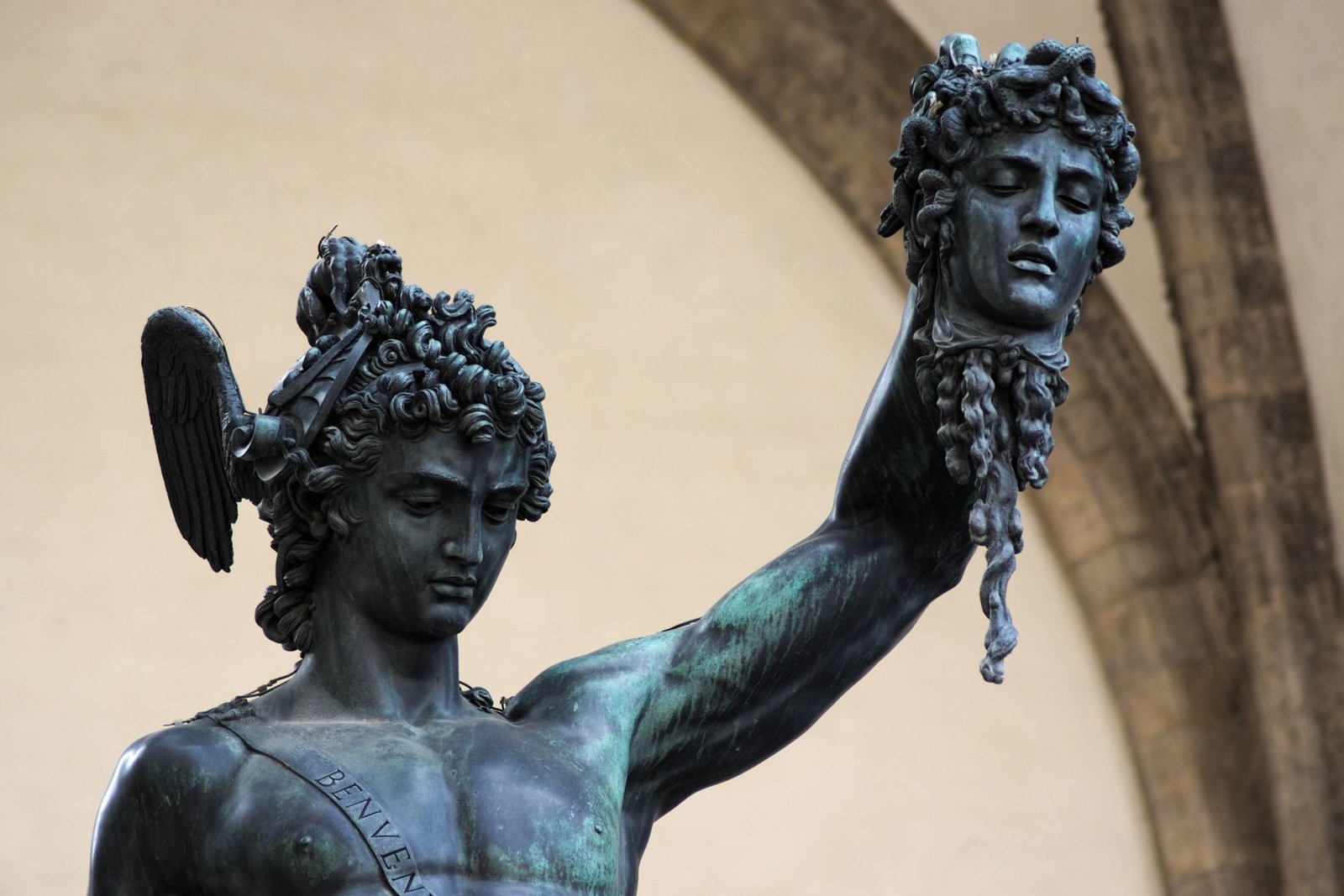
Perseus and Medusa: Greek Mythology Story and Meaning
Perseus and Medusa is a foundational Greek myth in which a divinely aided hero undertakes the perilous task of beheading the mortal Gorgon, Medusa, whose gaze turns living beings to stone. Across ancient and later retellings, the story explores heroism, danger, and the triumph of intelligence over force, inviting readers to trace its deeper meanings and enduring cultural influence.

Theseus and the Minotaur: Greek Myth Explained
Theseus and the Minotaur is a foundational Greek myth that links Athenian heroism with Cretan power, telling of a deadly tribute, a hidden labyrinth, and a monster born from royal scandal. Beyond its adventure, the story reveals ancient ideas about sacrifice, identity, and the triumph of wit over chaos, inviting closer attention to its historical and symbolic meanings.