Tantalus and His Eternal Punishment
Introduction
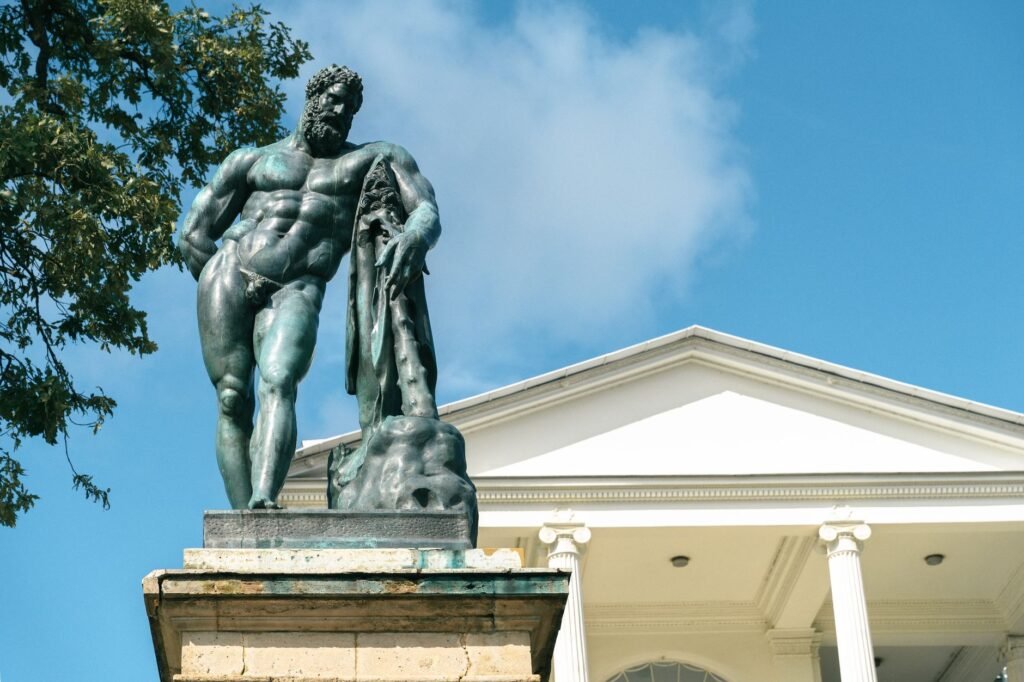
Tantalus is one of the most enduring figures in Greek mythology, remembered above all for Tantalus and his eternal punishment in the underworld. His story is a classic example of divine retribution: a mortal, favored by the gods, commits grave offenses and is condemned to an endless and hopeless torment. In later literature, the phrase “tantalizing” entered English and other languages as a direct reference to his punishment, in which food and water remain forever just out of reach.
The myth of Tantalus is important not only as a story of punishment after death, but also as a meditation on hubris, impiety, broken trust, and the limits of human desire. Ancient authors used his example to illustrate the consequences of transgressing divine and moral boundaries. Over time, the tale became a central reference point in Western literature, philosophy, art, and even everyday language.
Origin and Meaning
The name Tantalus appears in Greek as Τάνταλος (Tántalos). Its exact etymology is uncertain and has not been securely established. Like many ancient mythic names, it may predate surviving Greek literary sources, and scholars have proposed various explanations without reaching consensus.
In mythic genealogy, Tantalus is usually presented as a king associated with Mount Sipylus or Paphlagonia/Phrygia in Asia Minor, depending on the source. He is sometimes linked to a historical or semi-historical royal figure, but the myth is far more important than any possible historical kernel.
The term “tantalize” derives from his punishment and means to tease or torment by offering something desirable that cannot be obtained. This linguistic legacy has made Tantalus one of the most recognizable figures from classical mythology.
Historical Context
The myth of Tantalus belongs to the broader Greek tradition of stories about:
- kings who violate divine or social order,
- punishment in Hades,
- and the moral consequences of arrogance before the gods.
Greek myths often emphasized the fragile boundary between mortal and divine spheres. Tantalus, who is said in some traditions to have been especially favored by the gods and even admitted to their table, represents the danger of abusing privileged access. His punishment reflects a recurring Greek idea: those who transgress most seriously suffer the most exemplary consequences.
The story also fits into the ancient Greek concern with xenia (guest-friendship or hospitality). Several versions accuse Tantalus of violating sacred hospitality, either by stealing from the gods, revealing divine secrets, or testing the gods’ omniscience. In the harsher traditions, he commits a horrific crime against his own child, making him one of the most infamous figures in myth.
His punishment in the underworld became one of the archetypal images of eternal suffering, alongside Sisyphus, Ixion, and the Danaids.
Main Characteristics
Tantalus is typically characterized as:
- a wealthy and powerful king,
- a favored companion of the gods in some traditions,
- arrogant, impious, or reckless,
- the perpetrator of a terrible offense,
- and a soul condemned to everlasting frustration in Hades.
He is not usually depicted as a warrior or culture hero. Instead, he functions as a negative moral exemplum. His identity in myth is defined less by heroic action than by catastrophic failure.
The most famous image associated with him is the punishment in the underworld:
- he stands in water that recedes when he bends down to drink,
- fruit hangs above him or near him, but withdraws when he reaches for it,
- and he suffers perpetual hunger and thirst.
Different sources vary in the exact details, but the core idea is the same: desire is constantly aroused and constantly denied.
Family and Genealogy
Tantalus’s family connections are complex and differ somewhat across sources.
Commonly Reported Family
He is usually described as the son of:
- Zeus, in some traditions,
- and Plouto or another local divine or semi-divine figure.
His consort is generally identified as:
- Dione, Euryanassa, Eurthemista, or other names depending on the source.
His children are among the most important figures in Greek myth. The most famous are:
- Pelops
- Niobe
- Broteas or Brotos in some traditions
Descendants
Tantalus is the eponymous ancestor of the House of Atreus, one of the most tragic royal lineages in Greek mythology. Through Pelops come:
- Atreus
- Thyestes
- Agamemnon
- Menelaus
- Orestes
- Electra
- and other major figures of Greek heroic legend
This makes Tantalus a foundational figure in the mythic genealogy of one of antiquity’s most cursed families. His crime is often treated as the first in a chain of disasters affecting his descendants.
Family Summary Table
| Figure | Relationship to Tantalus | Notes |
|---|---|---|
| Zeus | Father in some traditions | Not universally agreed |
| Plouto / local mother figure | Mother in some traditions | Varies by source |
| Dione / Euryanassa / other names | Wife or consort | Source-dependent |
| Pelops | Son | Central to the House of Atreus |
| Niobe | Daughter | Famous for her own tragic punishment |
| Broteas/Brotos | Son in some traditions | Less prominent |
| Atreus and Thyestes | Grandsons through Pelops | Key tragic figures |
Symbols
Tantalus does not have a broad cultic symbol system in the way gods do, but several images are strongly associated with him.
Principal Symbols
- A bowl or cup: linked to his thirst and the unreachable drink.
- Fruit hanging overhead: typically branches heavy with pears, apples, figs, or other fruit.
- Water below his feet: symbol of failed satisfaction.
- Underworld imagery: shadow, darkness, and eternal deprivation.
Symbolic Meaning
These images represent:
- unfulfilled desire,
- the punishment of greed or impiety,
- the collapse of privilege,
- and the endless frustration of appetite.
In literary and artistic traditions, the scene of Tantalus reaching for water or fruit became a universal symbol of perpetual denial.
Sacred Animals
No specific sacred animals are clearly and consistently associated with Tantalus in the way they are with major gods. However, animals appear in some versions of the myth indirectly.
Animals in the Mythic Tradition
- Dogs sometimes appear in accounts of the murder of Pelops, when Tantalus cooks or serves his son to the gods.
- Birds may be invoked in later artistic or poetic representations of Hades, though not as exclusive symbols of Tantalus.
Because Tantalus is not a deity with an organized cult, his symbolic animal associations are limited and secondary.
Sacred Plants
There are no securely established sacred plants associated specifically with Tantalus. Nevertheless, the underworld setting of his punishment often includes fruit-bearing trees in artistic and literary representations.
Commonly Depicted Fruit
Ancient and later sources may mention:
- pears,
- apples,
- figs,
- pomegranates,
- or other generic fruit.
These are not sacred plants in a formal religious sense, but they serve the narrative purpose of making the punishment visible and immediate. The fruit symbolizes the promise of satisfaction that can never be achieved.
Sacred Places
Tantalus is connected with both the mortal world and the underworld.
Mount Sipylus
A major association in later tradition is Mount Sipylus in Lydia, in western Asia Minor. This region is often connected with his rule and family. The mountain also became associated with other mythic figures, especially Niobe.
Hades / The Underworld
Tantalus’s punishment takes place in Hades, the Greek underworld. His eternal torment became one of the standard scenes of the dead suffering for crimes against the gods.
Possible Regional Kingship
Some traditions place Tantalus in:
- Phrygia
- Lydia
- or nearby areas of Asia Minor
These geographical attributions vary and reflect the fluidity of Greek myth, which often attached famous figures to different local landscapes.
Powers and Attributes
Tantalus is not a god and possesses no divine powers in the strict sense. His importance lies in what he represents.
Attributes Often Associated with Him
- extreme wealth,
- royal status,
- intimate knowledge of the gods,
- transgressive boldness,
- and posthumous punishment.
He may also be portrayed as someone who had access to divine favor before his fall. This makes his punishment more dramatic, because he is not an outsider to the gods but a former insider who misused privilege.
Moral and Narrative Role
Tantalus functions as:
- a warning against hubris,
- an illustration of divine justice,
- a prototype of eternal frustration,
- and an ancestor whose crime stains his descendants.
Main Myths
The myth of Tantalus has several important variants. Ancient sources do not always agree on the exact offense that led to his punishment.
1. Theft or Misuse of Divine Privileges
In some traditions, Tantalus is punished because he:
- stole nectar and ambrosia from the gods,
- divulged divine secrets to mortals,
- or tested the gods’ knowledge and trust.
These versions focus on impiety and betrayal.
2. The Murder and Serving of Pelops
The best-known and most shocking version says that Tantalus killed his son Pelops, dismembered him, boiled or roasted him, and served the meat to the gods to test whether they could recognize the crime.
The gods were said to detect the deception. Only Demeter, distracted by grief for Persephone, may have eaten part of Pelops—often described as his shoulder.
The gods then restored Pelops to life, replacing the missing shoulder with one made of ivory in many later retellings.
This version emphasizes:
- cannibalistic horror,
- sacrilege,
- and the violation of natural and familial bonds.
3. The Eternal Punishment
Tantalus’s punishment in the underworld varies in details but is consistent in spirit. He stands:
- in water that retreats when he tries to drink,
- beneath fruit that rises or withdraws when he reaches for it,
- while a stone, branch, or another threat may hang over him in some versions.
The punishment is ingenious because it matches the nature of his crime: he sought forbidden access and is now condemned to meaningless proximity without fulfillment.
Summary of Major Myth Versions
| Mythic element | Description | Source variation |
|---|---|---|
| Offense against gods | Theft, secrecy, impiety | Varies widely |
| Crime against Pelops | Murder and serving of his son | One of the most famous versions |
| Underworld punishment | Unreachable food and drink | Core tradition is stable |
| Regained life for Pelops | Gods restore him | Details vary |
Relationship with Other Mythological Figures
Tantalus’s relationships are central to his myth.
Zeus
Zeus is sometimes described as Tantalus’s father, which heightens the irony of his crimes. If true, Tantalus not only offended the gods but also violated trust within a divine kinship framework.
Pelops
Pelops is the key figure in Tantalus’s family narrative. In some traditions, Tantalus’s crime against Pelops becomes the origin of future suffering. Pelops survives, is restored, and later becomes an important heroic ancestor.
Demeter
Demeter’s role is especially notable in the cannibalistic version. Her distracted consumption of Pelops’s shoulder links Tantalus’s crime to the broader cycle of loss, mourning, and divine response.
Niobe
Tantalus is also the father of Niobe, whose own tragedy echoes themes of pride and punishment. Her story, like his, involves overreaching human arrogance and devastating loss.
The House of Atreus
Through Pelops, Tantalus stands at the head of the House of Atreus, a lineage marked by:
- murder,
- revenge,
- betrayal,
- and curse.
His myth therefore functions as an origin story for later tragedies.
Worship and Cult
Tantalus was not widely worshipped as a god. There is no major pan-Hellenic cult devoted to him. Unlike Zeus, Athena, or Demeter, he belongs to the category of mythic mortal or heroic figure rather than an object of regular public worship.
Possible Local Memory
Some locales may have preserved:
- tomb traditions,
- local legends,
- and geographic associations with his name.
However, evidence for formal worship is limited and not central to his historical significance.
Ritual Meaning
Although Tantalus was not commonly worshipped, his story likely served a ritual and educational function in Greek culture by reinforcing norms such as:
- respect for the gods,
- proper hospitality,
- restraint,
- and the dangers of arrogance.
Ancient Sources
The story of Tantalus appears in several ancient authors, though no single version is definitive.
Major Classical Sources
- Homer: In the Odyssey, Tantalus appears among the punished souls in Hades, tormented by unreachable food and water.
- Pindar: Offers alternative traditions, including the restoration of Pelops and reflections on divine punishment.
- Apollodorus: Provides genealogical and mythographic details, including variants of Tantalus’s crime.
- Pausanias: Preserves local traditions and geographical associations.
- Ovid: In the Metamorphoses, Tantalus becomes part of the Roman literary imagination, especially in underworld imagery.
- Hyginus: Gives concise mythographic summaries, though sometimes in late or abbreviated form.
Notable Variation Between Sources
Ancient writers do not agree on:
- Tantalus’s parentage,
- the exact nature of his offense,
- the identity of his wife,
- and the precise structure of his punishment.
This is typical of Greek myth, where multiple traditions often coexist rather than being reduced to one authoritative version.
Roman Equivalent
There is no exact Roman god or figure who matches Tantalus. He was, however, fully adopted into Roman literature and moral imagination.
Roman Adaptation
Roman authors such as Ovid treated Tantalus as a familiar mythic example of punishment. The story was useful in Roman moral discourse because it illustrated:
- the consequences of impiety,
- the misuse of privilege,
- and the vanity of greed.
The word tantalize in later European languages helped preserve his story long after classical religion declined.
Influence on Modern Culture
Tantalus has had a long afterlife in modern culture, especially because his punishment is so visually and psychologically powerful.
Literature
He appears or is alluded to in:
- poetry,
- philosophical writing,
- novels,
- and moral allegory.
Writers often use Tantalus to symbolize unattainable desire or painful anticipation.
Psychology and Language
The word tantalizing is perhaps his most familiar modern legacy. It is used for anything that excites desire but remains frustratingly out of reach.
Art
Artists from antiquity to the modern era have depicted:
- the underworld scene,
- the unreachable fruit,
- the water at his feet,
- and the pathos of endless frustration.
Film, Television, and Games
Tantalus may appear directly in fantasy retellings of Greek myth, but more often his influence is indirect. The structure of his punishment has inspired many fictional scenes involving:
- cursed hunger,
- impossible choices,
- and endless delay.
Cultural Significance
He remains a powerful archetype because his punishment is simple, memorable, and universal. The idea of wanting something just beyond reach resonates across time and culture.
Curiosities
- Tantalus is one of the few mythic figures whose punishment gave rise to a widely used English verb.
- His story is often grouped with those of Sisyphus, Ixion, and the Danaids as a classic example of eternal punishment.
- The myth of Pelops’s restoration is sometimes connected to the origin of his ivory shoulder in later tradition.
- In some interpretations, Tantalus’s punishment is psychological as much as physical: he is forced to experience desire without hope.
- The story illustrates a recurring mythological pattern in which a family curse originates with a founder’s crime.
- Ancient sources preserve more than one reason for his punishment, which is common in Greek myth but can be confusing to modern readers.
- His name survives not only in literature but also in modern scientific and technical terms in some fields, though these uses are indirect and not always widely known.
Frequently Asked Questions
Who was Tantalus in Greek mythology?
Tantalus was a mythological king associated with Asia Minor and remembered chiefly for his punishment in Hades, where he stands in water and beneath fruit he can never reach.
Why was Tantalus punished?
Different ancient sources give different reasons. Common explanations include theft from the gods, revealing divine secrets, or the murder and serving of his son Pelops as food to test the gods.
What is the meaning of “Tantalus and his eternal punishment”?
It refers to the famous underworld torment in which Tantalus is perpetually denied water and food, symbolizing endless frustration and punishment for sacrilege.
What does the word “tantalize” come from?
The word comes from Tantalus’s myth. It means to tease or torment someone by offering something desirable that cannot be obtained.
Was Pelops really killed by Tantalus?
In one major version of the myth, yes. Tantalus kills Pelops, serves him to the gods, and Pelops is later restored to life. Other versions of Tantalus’s offense do not include this episode.
Did the gods punish Tantalus forever?
Yes, in the best-known tradition his punishment is eternal. He suffers ongoing hunger and thirst without relief.
Is Tantalus worshipped today?
No. He is studied as a mythological figure rather than worshipped as a deity.
Why is Tantalus still important?
He remains important because his myth captures universal themes: desire, frustration, punishment, and the consequences of abusing privilege.
Conclusion
Tantalus is one of the most powerful figures in Greek mythology because his story combines family tragedy, divine retribution, and the psychological reality of unfulfilled desire. Tantalus and his eternal punishment have become shorthand for all forms of impossible longing, making his myth one of the most enduring in classical tradition.
Although the ancient sources differ on the exact crime that led to his condemnation, they agree on the essential moral lesson: a mortal who crosses sacred boundaries and abuses divine favor faces an appropriate and relentless punishment. Through his descendants, Tantalus also becomes the source of one of mythology’s most tragic family lines, extending his significance far beyond his own suffering.
His legacy survives in literature, language, art, and cultural memory. Even today, the image of Tantalus reaching forever for water and fruit remains a vivid symbol of human desire denied at the moment of apparent fulfillment.

Orin Vale has spent the better part of two decades tracing the threads that connect the world’s oldest stories — from the halls of Asgard to the banks of the Nile, from Olympus to the jungles of the Maya. What began as a childhood fascination with flood myths and trickster gods grew into years of independent study across comparative mythology and ancient religion, always chasing the same question: what did these stories mean to the people who first told them? Orin writes for readers who want more than trivia — the ones looking for the beliefs, fears, and truths that myths were built to carry.